Showing posts with label bookmobile. Show all posts

Monday, May 5, 2025

Free for All: The Public Library (PBS: Independent Lens)

Featuring viewpoints from PEN America, The American Library Association, librarians, and library users this documentary film provides an historical perspective of libraries from Benjamin Franklin, Melville Dewey, and Andrew Carnegie to the present day culture wars that involve drag queens and a book banning crisis. In addition to many little known librarians throughout history the film gives insight into Arturo Shomburg who built a black history collection during the Harlem renaissance and to Ruth Brown who was fired during the McCarthy era for "harboring" subversive materials. Throughout, the film demonstrates the importance of libraries in all parts of the country (urban, rural, and suburban) as well as the tenacity of librarians in the face of tax cuts and calls to shut down libraries completely.

The documentary Free for All: The Public Library is available for free for all at pbs.org

Friday, February 3, 2023

The Librarian of Auschwitz - by Antonio Iturbe

People like to share memes with me about book collecting and book hoarding. These are meant to be humorous, but I generally don't find them especially funny. I do have quite a few books in my house, but I do not let them take over. I often read books from the library and then return them, or when I buy them I have a "one in, one out" policy. Purged books go to free book shelves, or are donated to libraries. They are shared. Books are meant to be read and shared, not simply put on display. I thought a lot about all of this as I read The Librarian of Auschwitz. This novel is based on the real story of Dita Kraus who, along with her family was sent to the family camp at Auschwitz-Birknenau during the Holocaust. Although she was only 14 years old Dita was asked to be the clandestine librarian at the clandestine school run by fellow prisoner Fredy Hirsch. She took on the task although the punishment for keeping the books would surely have been death had she been discovered. The eight tattered books entrusted to Dita's care were shared among the classes at the school, and otherwise hidden beneath a floor board. All the books had value, even the Russian grammar book, written in Cyrillic which no one in the camp read.

Early in the book the forbidden works are described as dangerous although they do not have "a sharp point, a blade or heavy end". 

Throughout history all dictators, tyrants, and oppressors, whatever their ideology - whether Aryan, black, oriental, Arab, Slav or any other racial background; whether defenders of popular revolutions, or the privileges of upper classes, or God's mandate, or martial law - have had one thing in common: the vicious persecution of books. Books are extremely dangerous; they make people think.

Even among the prisoners there was concern about what was to be found in some of the books. Fredy Hirsch tried to warn Dita off reading The Good Soldier Svejk, telling her that it was "not appropriate for children, especially girls". To which our heroine responds "Do you honestly believe that after observing on a daily basis the dozens of people entering the gas chambers...[that] what I read in a novel might shock me?". The same book is demonized by some other prisoners, and again Dita puts them in their place.

Reading this in light of the unprecedented book-banning that we are seeing in the United States today makes it especially chilling. Concerns about what someone might find in a book seem rather ridiculous in a country where children are gunned down in their classrooms and by police. 

In addition to the eight books, the school also runs a "library on legs". Similar to the human books in Ray Bradbury's Fahrenheit 451, people who have memorized stories share them verbally.

Before being sent to the Auschwitz Dita and her family were first sent to the ghetto in TerezĂ­n, a place with a library-on-wheels, a trolley pushed through the streets which was generally "warmly welcomed" although the "books were often stolen, and not always so they could be read. They were also used as toilet paper or as fuel for the stoves".

One of the books entrusted to Dita is H.G. Wells The Time Machine. Dita determines that Wells was right, time machines do exist, in the form of books. Furthermore, she realizes that books can take us "much farther than any pair of shoes".


Wednesday, July 6, 2022

Holly & Ivy (the movie)


Melody (Janel Parrish), a young, eager, recent library school graduate moves to Chippewa Falls, Wisconsin and starts haunting the Bridgewater Branch of the public library hoping to get a job. She keeps hopping around with ideas for the endlessly patient children's librarian (Anne Sward) even though it has been explained to her, repeatedly, that there is no funding for any new hires. Meanwhile, she befriends her neighbor Nina (Marisol Nichols) and Nina's daughters (Holly and Ivy). Of course, in true Hallmark Christmas movie fashion, there is also a dreamy new beau, Adam (Jeremy Jordan). As the movie takes place during the Christmas season all of the following take place over a few weeks: we learn that Nina is dying and has no family who will be able to care for her daughters when she is gone; Melody is a foster child who had only herself to rely on; Melody bought a fixer-upper house that needs serious renovation; Adam is both a building contractor (what his parents want) and a furniture builder (his true passion). There are a lot of deadlines that stretch credulity, and of course everything comes together just in time for the holidays. 

My father-in-law recommended this movie for its librarian-theme, its Wisconsin setting, as well as its Bridgewater connection. 

Wednesday, April 7, 2021

Ready to Fly: How Sylvia Townsend Became the Bookmobile Ballerina - by Lea Lyon and A. LaFaye

This week is National Library Week and today is National Bookmobile Day. Ready to Fly tells the story of Sylvia Townsend who grew up in a segregated America in the 1950s. She desperately wanted to take ballet lessons, but her family could not afford them so when the bookmobile rolls into her town she asks the librarian to help her find books on ballet. She checks out new books each time the bookmobile comes and helps the other girls in her neighborhood to learn ballet too. Young Sylvia learns to dance so well that a teacher offers to pay for her ballet lessons. However, her dreams are almost crushed when she is denied a place in the "whites only" classes. Ready to give up she is given another chance to take classes when she and her friends perform in the school talent show and learn that a famous dance instructor was in the audience. 

Thursday, July 9, 2020

Mobile Library - by David Whitehouse


Mistreated by his father, and missing his only friend Sunny, Bobby takes off on a road trip with Val Reed and her daughter Rosa in a recently de-commissioned bookmobile. Val had been charged with the weekly cleaning of the Mobile Library and allowed Bobby and Rosa to come with her while she worked so they could read books (and take some home, as long as they brought them back). As she works, Val explains to the children that not all mobile libraries are trucks; in some parts of the world they use animals. In Kenya they use camels and in Zimbabwe they have a library cart pulled by a donkey and in Thailand they use elephants. Val also explains that in Norway they have a library boat that "can take the books to all of the old people who live on little islands" (see my post on Swamplandia! for a fun library boat read) and more about book mobiles can be found here

Val makes clear to Bobby that she is not the librarian, although she wishes she were. She does tell a gas station clerk that she is the librarian when he questions her about driving the big truck "I wouldn't make much of a truck driver with these little, feminine arms, now would I?" she offers by way of explanation. Neither is she afraid to shush like a pro those who say inappropriate things.

When Val learns that the mobile library service has been stopped "because it costs too much money" the she decides to take the children off on an adventure, disguising the truck with some stolen paint. Val's biggest concern with the closing of the mobile library was the loss of  "the stories...[and] discoveries they had made in them...they had cheered a victorious hero and willed a villain's comeuppance...Parts of themselves they'd never noticed absent, concealed in the ink on the page". Bobby likewise had pangs of missing the library even before it closed.
Despite the many ways his imagination had been opened up by the mobile library, he could not imagine wanting to be anywhere else, with anyone else. The mere thought of it filled his bones with the inexorable ache of yearning.
In addition to missing his friend Sunny Bobby is also missing his mother, who left the family some time before. Bobby had been collecting pieces of his mother's clothing, hair, and other relics so that when she returned they would be able recreate everything just as it had been. Bobby considered himself his mother's archivist, and kept his files hidden under his bed. They are the only thing he takes with him from home when he starts on his grand adventure.

There are a lot of references to other works (mostly children's books) both subtle and overt in this one.

Wednesday, January 29, 2020

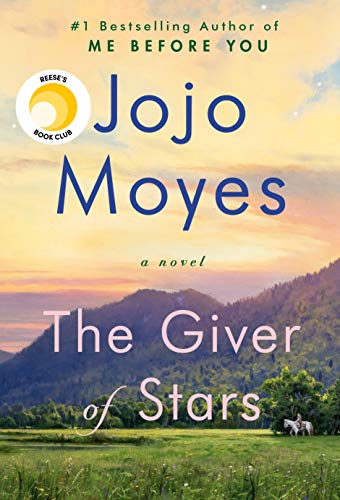
The Giver of Stars - by Jojo Moyes


People often share with me articles such as this one about the Kentucky Packhorse librarians, one of President Roosevelt's Works Progress Administration (WPA) projects. During the Great Depression these bad-ass librarians rode through rough mountain terrain in all weather in order to deliver books to rural Kentuckians. Moyes' novel tells the story of Margery O'Hare, Alice Van Cleve, Sophia Kenworth, Beth Pinker, Kathleen Bligh, and Isabelle (Izzy) Brady who took on the challenge of ensuring all in the mining town Baileyville could access reading materials.

Not everyone in town was happy about the set up. There were those who were not happy that Sophia a "colored" woman was working in the library. And some residents preferred that the librarians not bring any reading materials to their families (except perhaps the Bible), lest they "spread all kinds of crazy notions". Nevertheless even amid reports of 
wives no longer keeping house because they're too busy reading fancy magazines and cheap romances...[and] children picking up disruptive ideas from comic books 
the librarians took their charge seriously, and delivered materials to homes and schools across the mountainside. 

Newlywed Alice volunteered for the duty despite the vigorous objections of her husband and father-in-law who felt that as a proper woman she should stay home. The Van Cleve men, along with Pastor McIntosh and his sister Pamela also insisted that the horse riding was interfering with Alice's ability to have children. "It's like if you shake a jar of milk up too much, it turns sour. Curdles, if you like". Explains the clueless elder Mr. Van Cleve. Pastor McIntosh adds that he'd in fact read an article indicating as much. Although Alice is a bit naive about certain sexual matters, she is well aware of the real reason she hadn't conceived, and it had nothing to do with horseback riding. Rather than pointing out her husband's disinterest in sex she instead launches into an explanation of the importance of information literacy.
Knowledge is so important, don't you think? We all say at the library, without facts we really do have nothing. If I'm putting my health at risk by riding a horse, then I think it would only be responsible for me to read the article you're talking about. Perhaps you could bring it next Sunday, Pastor?
Alice further points out that
in England [whence she hails] nearly all well-brought up ladies ride. They go out hunting, jumping ditches, fences, all sorts. It's almost compulsory. And yet they pop out babies with extraordinary efficiency. Even the Royal Family. Pop, pop, pop!  
One of the more popular books in the library was a discretely requested manual called Married Love by one  Dr. Marie Stopes. The women who ventured to read the work found that their husbands spent less time at the honky tonks and more time at home "shorn of their usual short tempers".

It even worked for those women who preferred not to be married. Margery O'Hare read it twice and she and her beau Sven Gustavssen and made good use of the advice therein. Curious? You can read the whole thing here.

This book has something for everyone - murder, romance, intrigue, censorship, and more. My husband and I listened to the audio version. An excellent tale it is.

See also my post for That Book Woman for a children's picture book about the Packhorse librarians.


Wednesday, August 28, 2019

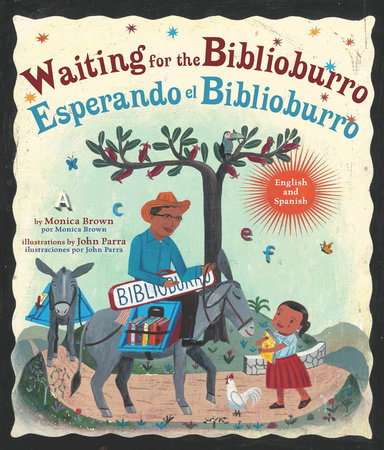
Waiting for the Biblioburro=Esperando el Biblioburro - by Monica Brown


Ana lives in rural Colombia and owns one book. She loves to read, but her village has no teacher, so she has no access to more books. One day she hears the clip-clop of hooves and discovers a librarian coming with two donkeys who are carrying books! The librarian tells her she can borrow some books and he will come back in a few weeks so she can return them and borrow others. Ana not only loves to read stories, she likes to tell them, too, so she writes her own book. A book about the biblioburros!

This is the second book I've read about the Biblioburro, but the first that is written in parallel English and Spanish text, which means this one is my favorite.

Thursday, May 2, 2019

The Library at the Edge of the World - by Felicity Hayes-McCoy


When I read a review of this work I was intrigued not only because it was about a library, but also because the author has a hyphenated name that starts with Hayes, which is also true of me. I downloaded this and my husband and I listened to it on the Kindle app during a long drive back to our New England home from Chicago. 

We listened to it almost two months ago, making it rather hard to write about now. Also, since I was listening to it, rather than reading it I didn't mark anything. And a search on the word library, or librarian would be rather like a google search resulting in so many hits as to be overwhelming. In any case I will make my attempt to create a post, giving this work its due. 

The story takes place in the fictitious town of Finfarran, Ireland. Our heroine/librarian is Hanna who has returned to Finfarran (her childhood home) following her divorce and taken a job as the director of the public library - a job that she isn't particularly excited about. Mostly she keeps things going, and tries not to rock the boat, until she discovers a dastardly plan to shut the library down. With the help of some elderly nuns she discovers the importance of keeping the library relevant and how to rally the town in support. 

A lovely listen, read by Emma Rowe in her beautiful Irish lilt.


Friday, April 13, 2018

Library on Wheels - by Sharlee Glenn


This week (April 8-14) is National Library Week. Wednesday (April 11) was National Bookmobile Day. It was also the day that Glenn's book about the very first Bookmobile was published. I had pre-ordered it from Amazon, and it was shipped on Wednesday, arrived to Thursday, and read (by me) on Friday. Well researched and illustrated with historic photographs, letters, and other period artifacts, this book tells the story of Mary Lemist Titcomb, chief librarian of the Washington County (Maryland) Free Library from 1901-1931. Titcomb established several innovative library programs in the early 19th century, including instituting one of the first children's rooms, and delivering books and other library materials to schools. Not content with simply serving those who were able to come to the public library in Hagerstown (the county seat) Titcomb launched a story hour program for rural children, and set up book depositories in smaller towns, to ensure that access to books and reading was widespread. Realizing she was still not serving all residents, she commissioned the first bookmobile in the United States - a horse drawn wagon whose route included family farms and other isolated areas. The wagon was driven by the library's janitor, Joshua Thomas, who proclaimed himself to be a "Book Missionary" on the 1910 U.S. census.

My favorite part of this book has to be this bit from a newspaper article written about Ms. Titcomb for The (Hagerstown) Builder 
The hostess was most gracious, most charming. She wore a soft gray silk and a dainty slipper was visible. The hostile one saw it, saw too-could she believe it?-the feminine frivolity, a jeweled buckle. She heard too, the little woman discussing "Spring Fashions" vivaciously, knowingly, for Miss Titcomb is no mean authority on style and her dress, like her work, is always up-to-date.
It seems you can be fashionable while wearing sensible shoes.

For more books that feature bookmobiles (including another one about the very first bookmobile) you can see my previous posts here.

Thursday, March 1, 2018

The Night Bookmobile - by Audrey Niffnegger


The unnamed narrator in this surreal tale discovers a special mobile library that contains everything she has ever read - not just the books but also "periodicals and ephemera-cereal boxes and such". "It's a very complete collection" the enigmatic librarian, Mr. Openshaw, tells her. She spends a few hours with her books, but as the sun rises Mr. Openshaw shoos her out of the shabby Winnebago that serves as her literary memory explaining that the library's hours are "dusk to dawn". The narrator's obsession with finding the bookmobile again leads to several major life changes for her - including becoming a librarian herself.

A story about the love of books, and reading, and how books hold and become our memories.

Thursday, August 3, 2017

Splendora - by Edward Swift


Originally published in 1978, Swift's tale of about the new librarian (Miss Jessie Gatewood) in a small east Texas town features an ensemble cast of quirky characters. When the enigmatic Miss Jessie arrives in Splendora from New Orleans to set up the town's new bookmobile  (really just "a battered-up school bus with shelves") women begin to imitate her Victorian style of dress and vie to become her new best friend. Miss Jessie has eyes for Brother Anthony Leggett, assistant pastor of the First Baptist Church. He is likewise smitten with the new librarian. Each, however, has a secret that they believe may keep them apart.

Beyond her wearing her hair in a loosely twisted bun, Miss Jessie goes all out in dressing the part of a librarian.
That morning she had dressed beyond her thirty-three years in order to meet the town's and the committee's approval. She was well aware that her hemline fell halfway below her knees and a little farther still for good measure. She was secure in her dress of white eyelet over mint green cut with leg-o'-mutton sleeves, a high neckline, and trimmed with white silk ribbons...Her friend Magnolia had designed the dress and had carefully chosen the accessories: white silk, sweet-scented gloves, flowers at her throat, a pocket watch on a hold chain around her neck, and a white sash tied about her waist giving to her dress a slightly blousy effect, so right for her role...from her elbow dangled a white linen bag...and on her wrist hung a beaded reticule inside which she carried a white lace handkerchief, her cosmetics, and a few cigarettes she had no intention of smoking in public. Her lace-up shoes with one-inch heels have her the feeling a a matron, and her gold wire-rimmed glasses and Gibson-girl hair were just the right touches...
This costume is important, especially considering her credentials are fabricated. She has no library degree or training, Nevertheless, she set to work
converting the school bus into a library on wheels. She designed shelves of various sizes and asked the Ag boys to construct them. She sewed gingham curtains with lace trim for all the windows and found space in the back for a small table and three chairs. Then she began stocking the shelves with every title available and ordered more with funds the county provided.
Miss Jessie, furthermore, makes a map of the county "and a list of all the communities and crossroads to be included on [her] stops" and types "hundreds of file cards" - these of course would be for the card catalog, which libraries in 1978 would most certainly still have been using.

I was most intrigued by Miss Jessie's concern over some donated works, many of which "she lamented, are not suitable as they contain nothing that will advance the mind." This kind of thinking among librarians - that we should be gatekeepers of information, rather than connecting people with whatever information they want - was more common in the mid 1800s  (according to Wayne Wiegand's A Part of Our Lives: A People's History of the American Public Library) than it is today, but certainly fit perfectly with Miss Jessie's Victorian ideals.

The rather Victorian courtship between the assistant pastor and the librarian was, of course, hot gossip for the town.
Chester Galloway saw them in his pasture and said that he did not think it looked too good for the assistant pastor and the town librarian to be entertaining themselves on the ground. His main concern was what the young people would think. But his wife, Verna, said that it looked perfectly all right as long as they were carrying a Bible. 
A quick check through spy glasses (and what's wrong with that?!) confirmed that the two were indeed using a Bible to hold down one corner of the blanket.

Their relationship takes some rather unexpected twists, especially when the town conspires to make it the focus of the annual Crepe Myrtle Pageant. Ultimately, the two find their own way, and more importantly, the town library finds a permanent home on the top floor of the newly renovated courthouse.

Wednesday, April 20, 2016

That Book Woman - by Heather Henson


Franklin D. Roosevelt's Works Progress Administration (WPA) program put people to work during the depression. According to this article many more men than women benefited from the WPA. However, the Pack Horse Library Project employed mostly women. The "Book Women" traveled on horseback to remote areas where schools and libraries were scarce. That Book Woman tells the story of Cal, who lives in the Appalachian mountains of Kentucky. His resentment that the Book Woman is keeping his sister from doing more chores changes to admiration as she comes through snow, fog, and rain to bring books to the entire family. Cal eventually realizes that he wants to read, and asks his sister for help. 

This picture book turned out to be a real tear-jerker for this librarian. Get out your hankies and listen to the whole story on the YouTube video above.


Wednesday, April 13, 2016

My Librarian is a Camel - by Margriet Ruurs


I like to do special posts for National Bookmobile Day. I haven't been to a bookmobile in a long time, but I have such fond memories of going to the Baltimore County Public Library bookmobile when I was young. Although we often went to the branch library in Catonsville, I was always enchanted by the library bus.

Ruurs' book takes readers on a journey around the world, to 13 countries on six continents, where library services are delivered in unexpected ways. From libraries on wheels (including a wheelbarrow on at the Blackpool beach in England) and boats, horses, elephants, and (of course) camels the book demonstrates a universal love of books and reading. As explained by a the librarian in the blue truck library in Azerbaijan "the mobile library is as important as air or water." Or, as a young patron of the Storyteller bus in Pakistan enthuses "This bus is magic!"

Volunteers from Hope Worldwide may get the prize for toughest book delivery
They begin their journey in a four-by-four truck, on a road cut into the steep hillside. After a long bumpy ride they eventually come to a village called Mogi-agi, which means "up-and-down road,"...but the volunteers aren't done yet. They still have to reach a further destination deeper into the jungle: the village of Amia. They ford a river in their truck and drive until they can go no farther. Then they unload the boxes of books to take them to the small villages in the highlands. From there they must walk for four hours, up the pass and over several ridges, crossing log bridges while carrying the boxes of books on their shoulders.
They are rewarded when they reach Amia and "young people come running to meet them...[who] gratefully read their books and look forward to the next supply!"

Monday, January 11, 2016

Improbable Libraries - by Alex Johnson


The subtitle of this book is "A Visual Journey to the World's Most Unusual Libraries". It is indeed a visually stunning book with some fabulous photography of a variety of different kinds of libraries including some that I have blogged about before:

Little Free Libraries

I learned about libraries in airports, metro stations, and hotels. In addition to the horse-drawn carriage and the donkey-transported libraries (referenced above) I found out about a library carried by a camel (The Mongolian Children's Mobile Library) and that Boom-Boom the elephant brings books to children in rural villages in Laos (I also learned that "boom" means "book" in Lao).

A quick read with lovely pictures, this is a treat for those of us who are passionate about books and libraries.

Wednesday, April 15, 2015

Clara and the Bookwagon - by Nancy Smiler Levinson (In honor of National Bookmobile Day)


This easy-to-read book for children is based on the story of the first bookmobile, a horse-drawn wagon that served rural Maryland (my home state) at the turn of the 20th century.

Young Clara very much wants to learn to read, but her parents tell her they have no money for books, and are too busy running the farm to read in any case. When the bookwagon comes to her farm she and the librarian convince her parents that learning to read with the books she can borrow free of charge, will not only add to the quality of her life, but may also help her learn new things that will benefit the farm.

Wednesday, April 16, 2014

Wild About Books - by Judy Sierra


In honor of  National Bookmobile Day I read Wild About Books about "Springfield librarian Molly McGrew [who] by mistake drove her bookmobile into the zoo" (there are a lot of rhymes in this book). She has books for all the animals and instills in them a love of reading. So much so, in fact, that the animals ultimately build their own branch library right at the zoo!

Wednesday, October 30, 2013

Biblioburro: A True Story from Colombia - by Jeanette Winter


From author Jeanette Winter, who brought us The Librarian of Basra,is another true story of a librarian who goes beyond the unexpected.

I've blogged about the Biblioburro before (here and here). I did not realize that there was a book about the Biblioburro though (although, really, I should have!). This book relates the story of Luis Soriano; his wife, Diana; and his two trusty burros Alpha, and Beto. Luis' own love of reading and his work as a teacher prompted him to share books with people in remote parts of Colombia, many of whom had no books of their own. This is a wonderful story that demonstrates how librarians are called to their work through a passion not only for books, but for sharing information.

This book's brightly-colored illustrations also give it an authentic Latin flair.


Thursday, August 1, 2013

Revenge of the Saguaro - by Tom Miller


Two decades ago, when I was but a mere library school student at the University of Arizona, I had the opportunity to work for an author (Tom Miller) who was then working on a book about his travels in Cuba. I did some research and fact checking for him, and was eventually gifted with a signed copy of the book Trading with the Enemy: A Yankee Travels through Castro's Cuba. It was the first time I would see my own name on an "Acknowledgements" page - so thrilling. It was especially fun reading the book and seeing things that I'd helped the author to research.

I moved away from Tucson shortly thereafter, and lost touch with Tom. A few years ago, as I was doing some book ordering I came across a review of TWtE which had just been reprinted. I ordered the book for my library, and then did a bit of online searching and found Tom's webpage with an e-mail address and sent him a greeting. From that bit of online contact, we exchanged some more e-mails, and have since traveled to Cuba together when he lead a tour of "Literary Havana" this past January. As well, he has come to Bridgewater State University to talk to some writing students and Latin American Studies students about his work. While he was here, my husband and I purchased one of his more recent books Revenge of the Saguaro: Offbeat Travels Through America's Southwest - a collection of quirky essays. The titular essay tells of a majestic Saguaro cactus that in a final act of poetic justice, snuffs its own killer by toppling on him.

My husband, James, read the book before I did and assured me that there were librarians in it, but I was beginning to despair that the only thing I would have to blog about was one mention of Joan "a feisty high-school librarian with fire-engine-red toe-nail polish" who picked up trash with a group of volunteers along High Lonesome Road near Bisbee, Arizona. But the final essay in the book, "The Occidental Tsuris" was a true gold (or should I say copper) mine of all things library. (BTW I tried looking up tsuris in two different dictionaries, before I resorted to Googling it - here's the definition for those readers who are yiddish-ly challenged, as I am.)

In "Tsuris" Miller writes about Cochise County, Arizona, and its county seat, Bisbee, an old copper mining town on the U.S. / Mexico border. Cochise County is a place I occasionally enjoyed visiting during my own stint as an Arizonan, but I never knew about its sordid history of book banning. During the 1980s Saint David (a town I had not heard of before reading Miller's book) removed Steinbeck's Of Mice and Men, and Conrad's Lord of the Rings from the high school reading list. Likewise, a history textbook was rejected for use when one (woman) citizen who had "gone through it very carefully, making a note of each time there was a reference to a woman" showed up at a school committee meeting, and explained that "Women belong in the home. Not in history". Miller writes about three bookstore owners, two of whom worked in libraries, and one (Walter Swan) who earned a D- in library in school, before dropping out in eighth grade. I remembered meeting Swan, author of me 'n Henry, and proprietor of the One Book Bookstore. Swan's brilliant plan of publishing the book himself, and selling only it in his storefront on Main Street in Bisbee earned him quite a bit of celebrity, so much so that he had articles written about him in several national publications, and he knew that "every library in the state's got a copy" of his book. I purchased a copy of the book for my mother many years ago, and had a Polaroid picture taken with him. I imagine I read the book, but I don't remember it well, and I have no idea what happened to the photograph, perhaps it is in my folder of unsorted mementos marked "Arizona".

The two other bookstore owners were John Kuehn, who also drove the county bookmobile; and former librarian David Eshner. Their bookstores were adjacent to each other, and the strengths of their collections complemented one another. On the day that Miller rode in the bookmobile with Kuehn, he (Kuehn) signed up a young couple for library cards. They had just moved to town and told him that "one of the first things [they] wanted to do was get library cards." It reminded me of my arrival in Bridgewater, Massachusetts 16 years ago. James and I moved here on August 5, 1997. Our daughter was born on August 19 of that year. One of the few things we managed to do between our arrival and our baby's arrival was get our library cards. Essential.

Swan, Kuehn and Eshner have all since died. Swan's book is still available through amazon.

Tom talks about "Revenge" in this YouTube video.

Saturday, April 20, 2013

With a High Heart - by Adele de Leeuw


In honor of National Bookmobile Day (April 17) BookRiot posted reviews of "5 Great Books about Bookmobiles". I couldn't resist this title, and the fact that I found it in the very library where I work seemed to be destiny. I've always been fond of bookmobiles, and there are still a few around even in the 21st century. I got my first library card from the Baltimore County Public Library Bookmobile in the early 1970s. I thought it was much better than my older sister's card, which came from the Catonsville Branch Library, because mine had a blue star stamped on it, whereas hers had a boring old black star. There is a certain romance about bookmobiles, and this book is a romance novel about a bookmobile.

Poor Anne McLane was so counting on being assigned to the oh-so-modern Claremont Library for her summer library work experience, after all she was the star student. How could Miss Pruitt have given that cushy assignment to mousey Sophie Whitcomb, while she (Anne) is exiled to Kenyon County Library? But it seems wise Miss Pruitt knew what she was doing. Not only did Anne learn a heck of a lot more about running a library than she bargained for, how else would she have ever met dapper Matt England, the smart young farmer, if the bookmobile she was assigned to drive had not broken down near his property? She also saves a drowning child, mollifies a bitter blind man, saves the day when she keeps an event from cancellation, and otherwise keeps the dreams of the citizens of Kenyon County alive - all this in the space of one very hot summer, whew! Likewise, Sophie's assignment brings her out of her shell.

This book was written in 1945 and certainly gives a great sense of the times. War rationing is an issue when the bookmobile is threatened with a cut in gas and tire rations, which would have prevented the satellite stations from receiving their books. Beyond this though, is a clear subtext about women's roles, even working women. There is no judgement about Rilla, who is only working in the library until her soldier fiance returns home so she can marry him. Her co-workers do seem unsympathetic to her, though, when his daily letters stop coming, which makes her pretty (understandably) grouchy. When she receives word that Dill has been killed they offer "mute and awkward sympathy", and suggest that she keep working!  Indeed, there are several passages that suggest that women should remain "cheerful" and even decorative, even in the face of adversity. The book opens with this description of the aforementioned Sophie Whitcomb, who actually has the nickname "the Mouse"
she was so mousy...[d]un-colored hair and gray tweeds and no make-up whatsoever were bad enough (emphasis mine)..she tiptoed down corridors and spoke in a subdued voice that sounded half-frightened, and she was apologetic and effacing when she should have been vigorous and prominent
The book makes evident when it is appropriate to be vigorous and prominent (for instance to save the bookmobile) but it just as evident when a woman should keep her opinions to herself. Anne's dissatisfaction with her work assignment is obvious to those around her and she is given a dressing down by Matt when when he notices that she doesn't seem thrilled with her assignment, and suggests she go about it "with a high heart". Of course Anne must eat crow in the end, when it turns out he was absolutely right.

It is also evident that anyone can learn to do the job of a librarian (which after all is women's work), as Ada Howland, former actress, tells Anne
...when they started the Library...I just jumped at the chance of being in charge. Of course I didn't know a thing about books; but I was a great reader and was terribly fond of them, and no one else seemed to have the time, and the salary was so tiny...
This short passage hits two hot buttons for me: a myth that all it takes is a love of books to be a librarian (especially interesting in a book about a library school student); and a sad truth that the salaries remain small (after all it is women's work).

I think my favorite "library lesson" though was when young Anne learns that Carrie Newton, the flighty librarian at the Gansville station has an "unorthodox" system for identifying books that would never fly in her library school classes. "Systems have to be invented by somebody, and I might as well have my own" Newton tells the whippersnapper, wanna-be librarian. Anne not only comes to realize that the system does have a certain charm, but that there are some things can't be taught in the classroom. Those instructors sure can be anal retentive, can't they?

Beyond bookmobiles, some Latin American Countries have found other innovative ways to deliver books to off-the-beaten-path villages. Find out about the Biblioburro and the Bibliolancha.