Each essay in this collection features an unsung federal government employee. People we've never heard of who go to work daily and keep the government going. These profiles of humble yet remarkable workers include number crunchers, data keepers, and health workers. Of special interest to me was Sarah Vowell's essay on one of her fellow Montanans Pamela Wright of the National Archives aka "The Equalizer". Wright intends to digitize all documents available in the National Archives so that anyone can access them online no matter where they are in the world, and so that they are preserved for future generations. Presidential records, maps, censuses as well as original documents including the United States Constitution and the Declaration of Independence are all part of what is preserved in the National Archives. That is unless a convicted felon steals them and puts them in a private bathroom.
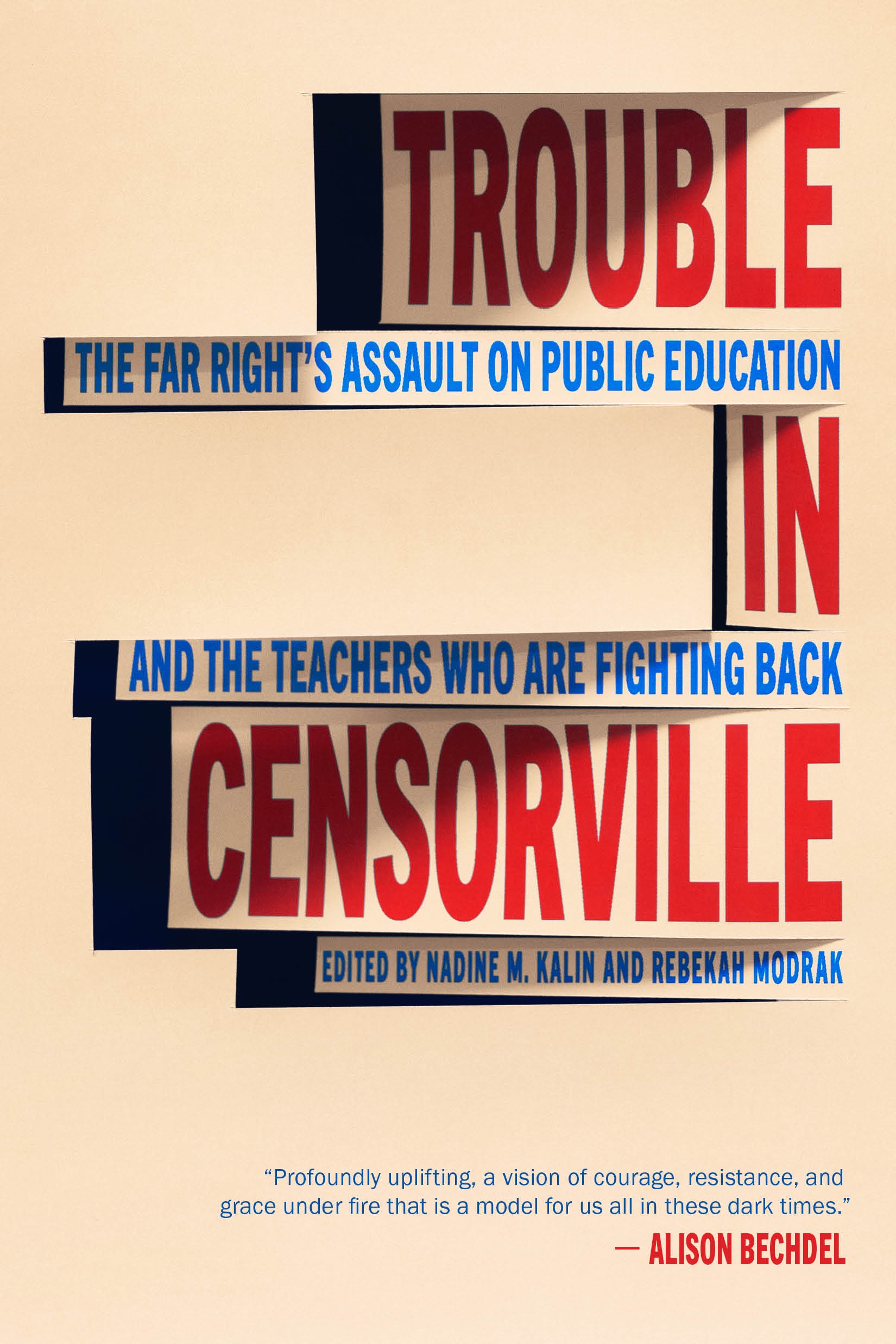
It should come as no surprise to anyone following the news, be it local or national, that book challenges are on the rise. According toPEN Americathere have been over 10,000 book bans in public schools in the last year.
This book is a collection of essays by teachers and librarians across the country who have been targeted and harassed for having a diverse collection of books in their classrooms and libraries.
I would recommend to those who are interested in this topic not to read the book in its entirety, cover to cover, over a short period of time, as I did. The tone weighed on me, even though I knew what to expect.
There is also a certain same-ness to these stories (even as each is unique), which again may weigh on the reader. It is important to note, however, that the same-ness is due to the fact that those who are attacking the educators are all using the same playbook, and attacking the same books. Allegations of pornography in the children's section and grooming young children are de riguer from those who purport to protect children.
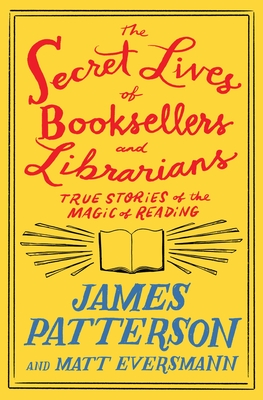
At least two of the essays in this work were written by the same librarians I read about in The Secret Lives of Booksellers and Librarians. Notably included in both are Martha Hickson (school librarian in New Jersey) and Carolyn Foote (retired school librarian in Austin, Texas). The tone of the two works couldn't be more different, however. Overall, Secret Lives is light, whereas this one is heavy. Secret Lives is a celebration of books and reading. Censorville is a call to arms and indeed includes a list of things we can do to "resist attacks on public education".
More information about this work, the educators who are profiled, and and additional links to more resources can be found at Censorville.com.
EveryLibrary sponsored a panel discussion with Kalin and Modrak along with some of the authors from this work which can be found online here.
This was the first James Patterson book I ever read. I do not know if I will read others, but I did thoroughly enjoy this one. I read this out loud to my Geographer husband and he couldn't help but make a map of all the places mentioned. The ones we've visited are in re(a)d - you see what I did there?
The best thing I learned from this was that the Barnes & Nobel store closest to our house allows dogs. What could we do but put our hound in the car and head over!
Here's our book-loving dog smiling in front of the David Sedaris display. She was named for his alter-ego in the Santaland Diaries
In a world of book banning gloom and doom the essays in this work bring a sense of joy. Each short essay profiles a different person who works in the world of books and loves recommending books to others.
When I read Sedaris' first book of diary entries (Theft by Finding) I lamented that he did not include enough about libraries and that I hoped that the second volume would include more. Alas, this 566 page work mentioned libraries a measly seven times. The first was the sad entry on January 11, 2005
The Guardian ran a story on Gerald Allen, an Alabama state representative who wants to ban books with homosexual characters. They can still sell them in shops, but he wants them out of schools and publicly funded institutions, like libraries and state universities. If the book presents a tragic homosexual, the type who suffers and then commits suicide, that's okay. He just doesn't want the happy kind, the ones who, in his words, "promote homosexuality as a healthy and accepted lifestyle." Which one am I? I wonder.
Other uses of the library include:
Waiting
Taking a Citizenship Test
As part of a tour (grandmother unimpressed that granddaughter wanted to see this)
A place not to practice archery
A place with "nothing but a coloring book and a box of crayons" - this would be a disparaging remark about George Bush (43)'s Presidential Library
My favorite was this: someone checking out a CD of Lightnin' Hopkins' music wants to know "is that a person or a thing?" Sedaris is able to help where the librarian is not. The young man who checked the CD out kept asking himself "Does it matter?" And eventually returns to the librarian to ask "Does it matter?" "Definitely not" they librarian said.
I have read many of Margaret Atwood's works, but there are many others that are still on my "To Be Read" list. While I would like to be able to read them all before I die, I know this will not be possible. As the first author invited to be part of Katie Paterson's Future Library project, a 100-year endeavor, not even Atwood herself will live to see her contribution published. Neither for that matter will Paterson. Paterson's project is a leap of faith. Each year between 2014-2114 different authors will be invited to submit their works to be published, printed on paper made from a forest growing in Norway, when the project ends.
Atwood's short essay about the Future Library explores questions of Time Travel, language, and climate change. "Will any human beings be waiting to receive it? Will there be a 'Norway'? Will there be a 'forest'? Will there be a 'library'?" she asks, and offers hope that they will.
Since she wrote this piece in 2015 she could not have known that libraries would be under such a threat as they are today, only eight years later. I can only hope that the censorship contagion in the United States does not make its way to Norway.
I picked this book up at a used book sale a few years ago and it was sitting on my to-be-read shelf (along with so many others) until the pandemic and consequent stay-at-home orders had me finally taking a look at some of these neglected works.
Moore's now 17-year-old book written in the aftermath of 9/11 when Bush (43) was president harkens back to a kinder, gentler sort of evil - a time when we could not have imagined living in a this dystopian landscape headed by a complete incompetent. Moore pulls no punches as he points to specific examples of President Bush's poor leadership, both unintentional and willful, following the terrorist attacks in 2001.
He begins by describing the problems he had in distributing his previous book Stupid White Men in the wake of the crisis
The first 50,000 copies...came off the printing press the day before 9/11, but when tragedy struck the next morning, the trucks that would carry them to the nation's bookstores never left the loading dock. The publisher then held the books hostage for five long months-not simply out of good taste and respect (which I might have been able to understand), but out of a desire to censor me and the things I wanted to say. They insisted I rewrite up to 50 percent of the book and that I remove sections that they found offensive to our leader, Mr. Bush.
Facing the potential of having the books "pulped" if he did not acquiesce, it was a librarian, Ann Sparanese, who came to the rescue. Without benefit of Facebook (which did not exist at the time) Sparanese learned of the impending censorship and mobilized all the other librarians on her e-mail list to contact Regan books.
Fearing there would soon be a crazed mob of wild librarians storming down Fifth Avenue and surrounding the HarperCollins building...the News Corp surrendered. They dumped my book in some bookstores with no advertising, no reviews, and the offer of a three-city tour...In other words, the book was sent to the gallows for a quick painless death...within hours after the book's release, it went to number one on Amazon-and within five days it had gone to its ninth printing.
There is, not surprisingly, a lot about the USA PATRIOT Act here, and how it allows the government to access otherwise confidential information, especially where library records are concerned. Likewise Moore makes clear throughout that American citizens like and use their libraries and want the government to support them.
When I start reading a book I am always glad to find the first mention of libraries, and in this case I believed it to be in the Introduction (so early in the work the pages are numbered in lower case roman numerals). However, when I opened the book again to write this post I found that the real first time is actually even earlier than that, on the page before the title page (a place one does not usually find any writing). It contains this bit of satire
In July I logged in to a virtual author event - "Bookshop Author's Unite" - which featured three bookstore owners who were also authors: Jeff Kinney owner of An Unlikely Story in Plainville, Massachusetts (the only store of the three I've been to); Ann Patchett owner of Parnassus Booksin Nashville, Tennessee; and Peter H. Reynolds owner of Blue Bunny Books in Dedham, Massachusetts. Fifty-six year old Ms. Patchett spoke first and I especially liked what she said about the pandemic giving her an opportunity to slow down. Without a book tour to go on she was able to enjoy the time she was spending with her husband and dog and wondered if perhaps she should just rethink the whole book tour idea as being a waste of precious resources. She also mentioned that she had recently been having trouble finding something she really wanted to read. As a fifty-six year old myself who also has been taking this time to enjoy spending time with my husband and dog, and wondering how the pandemic might be changing our collective minds about sustainable practices, and who has likewise had a hard time finding a book that I wanted to read past page 50 I could relate, and I wondered if perhaps I had read any of her books. Turns out not only that I had, but that the last line of my blog postsuggested that I would have to look for more of her books, but apparently I hadn't. Until now.
I picked this collection of essays mainly because it was on the shelf at the library where I work. The building is open with limited services and hours so although I am mainly working at home I walked over and checked it out. Not surprisingly, as an author Patchett has a lot to say about books, reading, and libraries.
In the essay "Fact vs. Fiction" Patchett explains about the two kinds of educational experiences one has in college: passive and active
In the first you are a little bird in the nest with your beak stretched open wide and the professor gathers up all the information you need and drops it down your gullet...your only role is to accept what you are given...In the second kind, you are taught to learn how to find the information, and how to think about it, for yourself. You learn to question and engage. You realize that one answer is not enough and that you have to look at as many sources as are available to you so that you can piece together a larger picture.
Helping people to find the sources and to think about them to determine if they are any good is exactly what I do as a reference and instruction librarian. One might argue that the role of the librarian is even more important than the role of the professor here.
In "The Love Between Two Women is Not Normal" and "The Right to Read" in which she describes what happened when Clemson University assigned her memoir Truth & Beauty to the freshman class of 2006, she discusses the problems and rewards of common reading programs, censorship, and, of course, the right to read.
As a person who loves going to author events and readings I could very much relate to Patchett's analogy of going to her first reading and meeting author Eudora Welty as "heart-stopping, life changing wonder" that she would put up "against anyone who ever saw the Beatles" an event she describes in "The Best American Short Stories 2006".
I highlighted just a few of the library passages here. There are many others throughout.
While I do wish the pandemic were over so we could all go back to some more normal activities one positive thing I can say about all of this is that since author events have gone virtual geography is no longer a barrier to attending them. In fact, since the event in July which prompted this post, I already attended another event featuring Ann Patchett in which she interviewed one of my other favorite authors, Margaret Atwood, on the occasion of the release of the paperback version of The Testaments. My own signed copy of the book, a bonus for purchasing a ticket to the event, arrived yesterday.
What's the anthem of our generation doing on a Library Books blog post? Helping us to introduce a new sex analogy, that's what!
In honor of Read-a-Romance Month my husband of 33 years and I decided to create a new sex metaphor using books and reading rather than baseball. The following literary alternative rejects the popular (hetero) male-centric analogy represented in the music video. It is presented here in a librarian-friendly alphabetical format, rather than a linear setup because sex doesn't always follow a simple path. We may do some things sometimes and not others. Certain acts may be reserved for special circumstances or partners. And we may take a circuitous route, or start and stop and start again before we know it's right. For all these reasons literary analogies have much more to offer than the tired old four-bag sequence of America's second-favorite pastime.
This list demonstrates anticipation, frustration, excitement, pleasure (and of course climax) among many other emotional states.
Acknowledgements: After the deed is done, thank yous all around.
Author Photo: Profile Picture (which perhaps flatters the subject just a bit) (See also Cover Art).
Book Review: Bragging and exaggerating after the fact.
Bookmark: To be used when the act is interrupted at any stage; we may have a chance to come back to it (or not) once the baby is fed, the phone is answered, or the dog is let out.
Cliff's Notes: Speed dating.
Comfort Read: The one you know will always there waiting to make you feel good (See also Reread).
Cover Art: The dating profile (let's face it, we do judge a book by its cover). (See also Author Photo).
Dedication: To the One I Love.
Epilogue: Was there a call back, a second, third, fourth date? Did they live happily ever after?
First fifty pages: The point at which you can decide to continue or give up (according to the librarian's librarian Nancy Pearl) and remember, if you are over 50 years old you can subtract one page for each year. Also there is really nothing magical about 50 pages. Consent can be revoked at any time.
Footnotes or citations: Giving credit to things you learned elsewhere.
Foreword: Foreplay.
Introduction: First date.
Index: Where was that spot?
Preface: Any of a number of activities that can be undertaken as a prelude to passion.
Prequel: When you got it right the second time around (See also Sequel or series).
Reread: Falling back on an old favorite (See also Comfort Read).
Second (third, fourth, etc.) editions: After a bit of time we gain some perspective.
Sequels or series: The ones you can't get enough of (and how about all those things we read while we wait for the next installment?) (See also Prequel).
Signed copies: A good memory of a magical encounter - you know you will probably never meet again but you've been provided some masturbation fodder for a long time to come.
Teaser: When you think there is more to come, but sadly discover that it is just a preview of the next novel.
The End: Finishing - it doesn't count unless all parties involved get there.
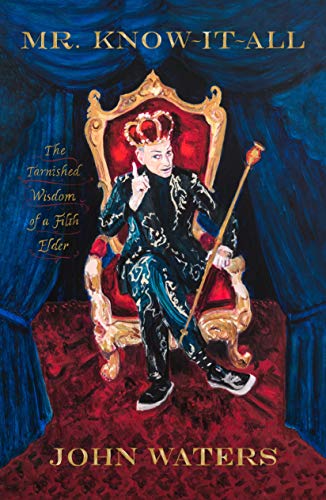
John Waters was the keynote speaker at the Association of College and Research Libraries Conference at the Baltimore Convention Center in 2007. And I was there. As a dyed-in-the-wool Baltimoreon I was happy to visit my hometown and hear this native son giving us exceptional advice on how to get more people to visit the library ("be nude").
In this collection of essays he reflects on his work over the last 50 years, and looks at his life today. I was glad to find five places where libraries were mentioned, although all were a bit unusual.
In "Bye, Bye Underground" in which he describes his "odorama" gimmick in the film Polyesterusing scratch and sniff cards he tells of 3M's inspriational "library of smells".
He recounts many of the strange things people have asked him to autograph, including a freshly used tampon, in "Overexposed". It is of course not unusual to ask an author to sign a book and he relates the story of a girl he scolded for "bending the paperback cover back far enough to break the spine when she asked for autograph on the title page". The fan snapped back at him "I bought the book, so I can do anything I want with it." Waters accepts this and paraphrases the young woman: "In other words, take your library-science bullshit and shove it, Mr. Know-It-All."
Few people would suggest that their ideal home would be in the Brutalist architecture style, but Waters' describes a house of horrors to rival the Addams Family's in "My Brutalist Dream House". The house does have a library, though which one would be able to enter a panic room
by pulling a faux spine of a book you grab like a handle and the whole shelf spins around. Once you saw the horrifying selection of fascist books displayed here in my satellite reading room, you'd feel anything but safe. Hitler at Home, Dead Funny: Humor in Hitler's Germany, Magda Goebbles: First Lady of the Third Reich, and Born Guilty: Children of Nazi Families. We've got all the other monsters, too: Idi Amin, Pol Pot, Ronald Reagan, even On Democracy by Saddam Hussein.
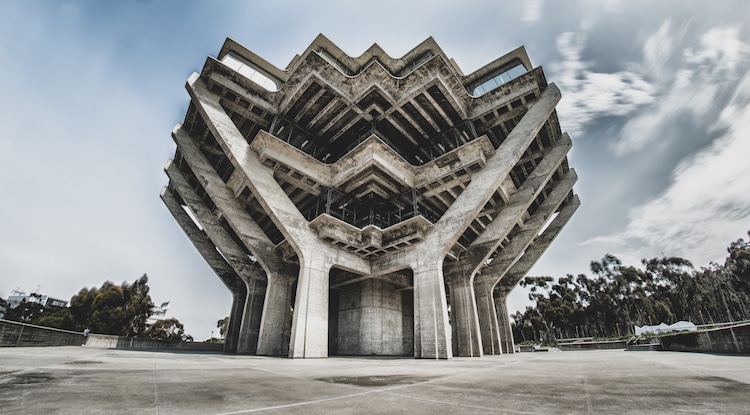
As this essay wraps up Waters fetishizes Brutalism as he fantasizes about his favorite coffee-table book This Brutal World by Peter Chadwick. "Damn" he says "that giant concrete mushroom sprouting rigidly from the top of the Geisel Library in San Diego (architect: William Pereira) is hot!"
I'd never heard about Betsy the finger-painting chimpanzee before reading "Betsy". This monkey artist, like Waters and me, hailed from Baltimore. Betsy had some fame in the 1950s, but it was short-lived. Likewise her boyfriend Dr. Thom (a relationship created by her managers) was unable to find success playing piano.
Dr. Watson tried to make him a star in his own right, buying him a piano and hoping to donate some of the recordings of his banging on the keys to the public library to be cataloged and placed alongside the the composers Beethoven, Bartók, and Brahms. The library politely declined.
I do wonder which library was contacted. Enoch Pratt? Baltimore County Public?
Fans of Waters won't be surprised by his raunchy brand of humor. Those who don't like him, still won't like him, and those who don't know him will likely find out more than they bargained for.
My husband and I read this collection of Atwood's writings over an eight-month period. Thought provoking, as well as conversation provoking, we both just felt smarter each time we read some of this work.
Atwood gives libraries and librarians their due in various essays - starting with the Introduction
As one early reader of this book pointed out, I have a habit of kicking off my discussion of a book or author or group of books by saying that I read it (or him, or her, or them) in the cellar when I was growing up; or that I came across them in the bookcase at home; or that I found them at the cottage; or that I took them out from the library. If these statements were metaphors I'd excise all of them except one, but they are simply snippets of my reading history. My justification for mentioning where and when I first read a book is that...the impression a book makes on you is often tied to your age and circumstances at the time you read it, and your fondness for books you loved when young continues with you through your life.
This custom of telling of the history of reading a book is something that can be found in my blog as well. I often begin my posts by saying where I found a book, or when I first read it. There is in fact something rather meta in my description of my first encounter with Atwood's The Handmaid's Talewhen I consider it in light of what Atwood says here. And in honor of this tradition, I will divulge that I checked this book out of the Maxwell Library, the one in which I work. I picked it out specifically because I wanted to read Atwood, and this seemed like it would be a good read along with my husband.
Atwood gives a shout out to librarians and archivists as "guardian angels of paper" in her essay "In Search of Alias Grace".
Without them there would be a lot less of the past than there is, and I and many other writers owe them a huge debt of thanks.
This was written in 1996, and seems to set up her comments in a later work - a review of A Story as Sharp as a Knife: The Classical Haida Mythtellers and Their World by Robert Bringhurst (2004). Bringhurst's book tells of two poets Skaay and Ghandl who were from Haida "one of the many cultures that flourished along the northwest coast of North America before the arrival of the smallpox-carrying, Gospel-bearing Europeans in the nineteenth century." The two survived the disease, but were left blinded. They told their stories, in the original Haida language to John Reed Swanton, an ethnography/linguist who was "collecting stories as a way to learn a language." The poets died in the early twentieth century and "their stories gathered dust in libraries for almost a hundred years" before Bringhurst found them and over a twelve-year period taught himself the language and wrote a book about it.
It is a good thing we have archivists and librarians, otherwise we wouldn't know this story at all.
In her discussion of author Dashiell Hammett Atwood laments the lack of a library in northern Canada where she spent her preadolescent summers, and informs the readers that she, therefore, had to re-read a lot of detective fiction. Where she found Erle Stanley Gardner, or Ellery Queen "dry", Hammett's writing was, conversely, "fast-paced, sharp-edged, and filled with zippy dialogue." We also learn that "as a boy [Hammett] wanted to read all the books in the Baltimore public library". I imagine she means the Baltimore City library, rather than the Baltimore County library, which is where I got my first library card. Nevertheless, this bit of trivia gave me a special thrill.
Atwood describes her foray's into Harvard's Widener Library as a graduate student in the 1960s in her Introduction to She by H. Rider Haggard
Once I was let loose in the stacks, my penchant for not doing my homework soon reasserted itself, and it wasn't long before I was snuffling around in Rider Haggard and his ilk...
In her introduction to "The Complete Stories, Volume 4 by Morley Callaghan" we learn that Callaghan's books were
sometimes banned by the public library in Toronto - I forget what the rationalization was, but the real reason could only have been that if a Canadian were to do anything so ethically dubious as write, he should at least write like a proper colonial and not like someone who had lived in the Paris of Joyce and Gertrude Stein.
Totally appropriate that I'm writing about this during Banned Books Week.
And speaking of banned books, Atwood's review of Reading Lolita in Tehran: A Memoir in Books by Azar Nafisi begins with the question of where to categorize such a book. After making, and rejecting several suggestions she says
A mischievous soul might stash it under "book groups," which would be about as close as my college library's choice of "veterinary medicine" for Hemingway's Death in the Afternoon.
This same kind of questioning of classification is used in her review of W.S. Merwin's The Mays of Ventadorn. She clearly understands the kind of struggles cataloging librarians face when she recognizes that
It is...the sort of book that poses a problem for classifiers: What shelf to put it on? Is it a memoir? Not exactly, but sort of. Is it a rumination upon memory? Yes and no. It is about poetry? Not only.
I image that not everyone will read this book cover to cover. I expect many scholars will likely read the most relevant parts for their specific research and then return the book to the shelf.
But those who decide to take the deep dive will be richly rewarded.
I read a review of this book a few years ago, and wrote it down on my list of potential reading. I decided it would be a good choice for a read aloud with my husband during our Christmas break. I checked it out at my local public library and we did enjoy reading it together, and the short essays were perfect for wrapping up an evening before bed.
Warren's essays are funny, and also highlight some of the issues that librarians struggle with such as censorship, crappy wages, and patron privacy. None of these things is black and white, and there are, of course, fifty shades of grey in between.