Showing posts with label Louisiana. Show all posts

Friday, January 10, 2025

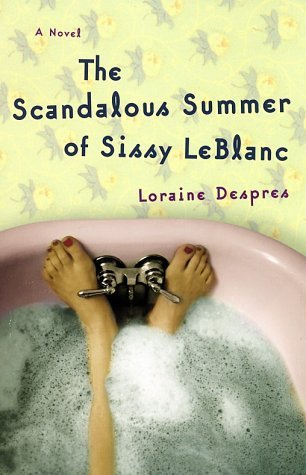
The Scandalous Summer of Sissy LeBlanc - by Loraine Despres


Set in the summer of 1956 (with a bit of backtracking to fall 1941) Sissy LeBlanc (neĆ© Thompson) is surprised when her high school sweetheart returns to Gentry, Louisiana and thus begins her scandalous summer. 

As a  high school student Sissy uses the library as an excuse to get out of the house in order to "take care" of an unwanted pregnancy.

As an adult Sissy helps her mixed-race cousin, Clara, to use the public library which was "open to all" but only allowed "white folks" to check out books. A sympathetic librarian "who believed it was her Christian duty to eradicate ignorance wherever she found it...liked Clara, a smart, sensible teenager and a credit to her race...[and] took it upon herself to break the rules and allow her checkout privileges".

Wednesday, September 25, 2024

That Librarian: The Fight Against Book Banning in America - by Amanda Jones


I first heard of Amanda Jones last fall when I attended an online workshop about banned books. Jones was one of the speakers and described being targeted by a radical a right-wing group for comments she made at a local public library board meeting. 

Jones was an award-winning school librarian who was celebrated in her home town of Watson, Lousiana where she still lived, and worked as a middle school librarian. When she learned that "book content" was on the Board agenda in in the summer of July 2022 she went to speak as a citizen against book banning and censorship. And although dozens of other citizens also spoke out against book bans and censorship, Jones was the only one who was harassed. The trolls made up, and repeated, lies about her calling her a pedophile and "groomer", and indicating that she advocated teaching anal sex to middle school children.

There were two things Jones said about book banning that I disagree with (but promise not to personally attack her for them). One is that "all book banners seem to be Republican...". While I agree that the current wave of book banners have a decidedly right-wing bent, it is absolutely true that book banners come in all all political stripes. One example of a "liberal" challenge is described in this article from the New York Times. It also appears to be the case that left-wing warriors have been successful in preemptively censoring work, as we saw with Jack Gantos' A Suicide Bomber Sits in a Library

Jones also, incorrectly asserts that "Librarians do not purchase pornography" Well, yes, they do. And while you probably won't find "issues of Playboy next to Time magazine" in your local public library, some libraries, do indeed carry Playboy. A quick search of the WorldCat database tells me, for instance, that I can see it at the Boston Public Library (among others).

Overall, Jones' work is heartfelt and introspective. She is honest about her questioning of the Little House books by Laura Ingalls Wilder. She loved them as a child, but re-reading them in the twenty-first century cast a new light on them.

My realization was a bitter pill to swallow because of how much I loved the books as a child. But the books are not what I thought they were as a child. Strip away my nostagia, and I knew the books could be harmful. Is it censorship if I take them off the shelf though?
Her decision to remove the books from her library was ultimately based on the collection development policy (which is what should always be used) which indicated that books that haven't circulated in five years be weeded from the collection. "The kids just weren't interested in them anymore, and I needed the shelf space for books that they kids would check out".

Jones also rightly points out that kids are not going to the library to look for porn, when they "have full access to the internet in the palm of their hand" and that politicians who are pandering to a hate-filled base to attack libraries and librarians are ignoring spaces where real sexual abuse is taking place, often in religious spaces.

Jones spoke with John Chrastka from EveryLibrary about her book. You can find the interview here.

Jones' homepage can be found here. 

Banned Books Week runs from September 22 to September 28, 2024.

Tuesday, March 8, 2022

The Yellow House - by Sarah M. Broom


My husband and I attended Broom's virtual session last year at Boston University's Anti-Racist Book Festival. We had not heard of her before, but she piqued our interest, and we ordered the book on Audible and listened to it together. The Yellow House is a memoir not only about the specific house in New Orleans where the author grew up, it is a book about our relationships with the places that form us. 

The youngest of twelve children, Sarah was born into the Yellow House where she lived with many of her siblings, although some of the oldest never lived there. The Yellow House was located in New Orleans Eastpart of the city's Ninth Ward. Hurricane Katrina was the second Hurricane the author, and the Yellow House experienced. As a baby Broom and her family were evacuated when Hurricane Betsy rampaged their home in 1965.

Although her school libraries get barely a passing mention, as a college student at the University of North Texas (where the "cost of [her] ignorance about college was high") she was
ravenous about learning, nearly living at the Willis Library where [she] spent seven or eight hours at a time hunched in a cubicle reading books about subjects fellow students seemed already to know.
After graduation, and a Master's degree from the University of California, Berkeley, Broom moved to New York to take a job with O Magazine. There she met Samantha Power, author of A Problem from Hell at an author event at the New York Public Library. Power convinces Broom to go to Burundi (a small African country mostly known as a neighbor to Rwanda). 

Bloom eventually makes her way back to New Orleans where she researches the history of the (now destroyed) yellow house at the New Orleans Public Library. 
To find the history of the Yellow House, I had to search original deeds, chains of titles, successions. I stalked the Conveyance Office, the Office of Vital Records, the Real Estate and Records Office in city hall, the Notarial Archives, and libraries. The search was full of cross-referencing and confusion.

I arrived many mornings at the main branch of the New Orleans Public Library in the business district, just across from city hall, and waited in line for the doors to open. If you didn't know better, you'd think the city was full of people eager to read, but actually the line was full of homeless people who had slept outdoors and were trying to get to the bathrooms. 
Broom goes on to describe posted rules of using the library that include the following "disallowed" behaviors: stalking patrons; using or exchanging drugs; bathing; shaving, washing up, or washing clothes in bathroom sinks; bad smells; oblivious  transmission of germs or excessive coughing; preaching or forcing your ideas on others. Also disallowed: weapons and shopping carts. "Most of these things still happened anyway...The library staff spent much of the time policing, which made it hard to get research assistance". 

Any library worker in public service can relate to this. Too much of our time is devoted to policing behavior. Many administrators, as well as library users, are unable to understand our work as anything beyond study hall monitors. We actually would prefer to help people with research rather than spending our time explaining how to use a photocopier, refilling printer paper, or (most recently) incessantly reminding people to wear their masks above their nose.

Find out more about Sarah Broom at https://www.sarahmbroom.com/

Wednesday, December 8, 2021

America for Beginners - by Leah Franqui

Recently widowed Mrs. Pavil Sengupta of Kolkata, India decides to venture out of her bubble and travel to the United States in search of answers about her deceased gay son Rahi. She employs the First Class India USA Destination Tour Company to hire her a tour guide (Satya) and a traveling companion (Rebecca) for her trip. The three set off on a cross-country trip and learn not only about the United States, but some things about themselves as well.

One of the stops on their trip was the Corning Museum of Glass in New York. Mrs. Sengupta asks her guides if  there were "many places like this...places where things can be studied"? To which Rebecca responds "Oh, yeah. Tons. My dad always said growing up he learned more in museums and libraries than anywhere else".

Mrs. Sengupta does make a stop in a library at the end of her trip, at UC Berkeley, where she reverently "touched the pages of [Rahi's] thesis, printed, bound, and carefully stored in the university library".

I marked one other passage of this book while I was reading it, although it had nothing to do with libraries. This is my only book blog, so I have no where to vent on this particular topic but here: 

During a regrettable night of drinking in New Orleans' French Quarter Rebecca refuses "to have sex in a public bathroom for reasons of hygiene, good taste, and physical comfort." I have noticed recently that a public bathroom sex scene seems to be de rigueur in twenty-first century television and movies. Every time it happens I roll my eyes and make a snide comment to my husband about "here we go again". For the exact reasons that Rebecca gives, I am having a hard time believing it is as common as pop culture might lead us to believe. I can only hope that this tired trope, along with  "making up your bed to look like you're sleeping in it", and "crawling through an air duct to escape a locked room", has a  screen time to real life ratio of something like a bajillion to one.


Wednesday, May 13, 2020

The Book of M - by Peng Shepherd


May is Mystery Month and I don't really like mysteries. I especially don't like the serial mysteries that involve some amateur sleuth in a small town with a disproportionate number of murders. It seems like a lot of library mysteries are of this type. People keep recommending them to me, and I keep not liking them. However, I do like to have a variety of genres on this blog, so I googled library mysteries and found this title. The description appealed to me because it looked supernatural, surreal, and, most decidedly, not part of a murder series. If you are a person who likes this genre I do have some posts which you can find here and here.

It turned out that much of what takes place in this dystopian novel is rather prescient. A mysterious disease causes people to lose their shadows, and eventually their memories. Quarantines, food shortages, suspicion and fear abound. Shadowless people not only lose their own memories, but memories of virtually everything. Some don't remember how to eat, to read, or to talk. Women don't understand what their periods are (and as a bonus have no idea that they'd been taught to be ashamed of them). Shadowless also eventually forget that there are laws of physics, and once they forget that, they can simply ignore those laws. People can mutate themselves and others; prison cells become their own means of escape.

I read quite a bit of this without seeing anything about a library, so I naturally grew concerned that I'd been duped. Fortunately, I was reading an e-version of the book which allowed me to search easily for the word library to find out if indeed this were a library-centric book. Although the first instance of the word doesn't show up until about 40% in, it then becomes quite important. The Martin Luther King, Jr. Memorial Library in Washington, DC is the location of a battle for books between the shadowed and the shadowless. Of no surprise to this librarian the books ultimately prove to be the salvation of all. 


Tuesday, May 3, 2016

Divine Secrets of the Ya-Ya Sisterhood - by Rebecca Wells


Siddalee (aka Sidda) Walker didn't intend to portray her mother (Vivi) as "a tap-dancing child abuser" when she was interviewed by a New York Times reporter after directing a hit play. The article, not surprisingly, however, causes an estrangement between the two women, which in turn causes Siddalee to postpone her upcoming wedding and do some soul searching. She retreats to a cabin in Washington state and attempts to get some insight into her mother (and herself) via Vivi's scrapbook, and through the "Ya-Yas," her mother's three lifelong friends.

I got almost all the way to the end of this book believing I would not be writing a blog post about it, but on page 341 of this 356-page book there appeared a library reference that could not be ignored. On her homecoming for Vivi's birthday Sidda considers all the things her relations had to face during the standoff
Sidda knew the scenes they'd had to witness down there in the thick of things: Baylor refusing to represent Vivi in a lawsuit against Sidda. Vivi's letters, sent certified mail to everyone in the extended family, announcing that she had disowned her oldest daughter. Vivi's highly publicized...firing of the lawyer who'd represented the Walkers for decades because he dared advise her to think it over before she cut Sidda out of her will. Vivi's monthlong attempt o reach Arthur Ochs Sulzberger Jr., publisher of the New York Times, to give him a piece of her mind. Vivi's wild attempt to force the Garnet Parish Library to burn their issue-and the microfiche- of the New York Times that carried the offending article. Then Vivi's desperate cancellation of her library card when they refused. And of course her delight in the subterfuge when she later reapplied for a card under an assumed name.
So much going on here with the attempted censorship and attempted blackmail. Of course today burning a single copy of a newspaper (or all copies in town for that matter), would not prevent people from reading an article published in a national newspaper which is now available online. Even so, it was good to read that even this fictitious would-be censor was thwarted by the librarians, who were certainly not going to change their minds over a patron's decision to cancel her card! Likewise they were probably not fooled when she used an alias to apply for a new card. This passage not only illustrates the power of the public library, but the necessity of it as well. Vivi's deception in applying for another card, even after she has expressed her anger toward the library demonstrates just how important libraries are. Library cards are like keys for unlocking information.

Friday, June 1, 2012

Going Bovine - by Libba Bray


One can only guess how much the author must love libraries, in order to have changed her name to something that looked, and sounded like the word. Born with Bray as her last name, she changed her first name from Martha, to Libba.

This book answers that age old question "What happens when a teenager afflicted with mad-cow disease, a hypochondriac dwarf, an enchanted garden gnome, and a Goth angel take a road trip in a quest to save the world?"

In his brain-sponge-ified delirium, 16-year old Cameron begins to lose some of his youthful cynicism, and starts to remember some better times, back when he didn't think his parents were useless, and when his twin sister, Jenna, was still his friend.

Recollections of libraries, of course, are good ones. As Cameron's mother reads Don Quixote to him in the hospital she recalls taking him to the library when he was little, when she'd let him pick out five books, and he could never wait to get home to read them. At first Cameron doesn't share this memory, but later it comes back to him.
Crystal clear I could see myself sitting in my mom's lap over near the water fountain, and she was reading some rhyming book about monsters to me. She had on sandals and she smelled good, like shampoo. And I was happy. How did I manage to forget that?
In what one might analogize as his "siren's song" Cameron and his friends get waylaid at CESSNAB (the Church of Everlasting Satisfaction and Snack 'N' Bowl) where everyone is happy. Well, everyone except Library Girl. Library Girl is fed up with stocking thousands of copies of Don't Hurt Your Happiness, and nothing else. As she explains to Cameron, Don Quixote is "complicated" and some readers "felt inadequate about not understanding it right away" which introduced "nonpositive feelings". Furthermore Catcher in the Rye  was "very angry, very negative" and included prostitutes and "bad words"; Lord of the Flies was "too violent"; and comic books were "scary," "dark" and the superheroes' "unattainable powers...might make kids feel bad about themselves". Even Winnie-the-Pooh was verboten. Library Girl does what any librarian worth her salt would do when faced with censorship: she starts a revolution - giving away forbidden reading materials, and taking over the CESSNAB airwaves. She is perhaps my favorite "library book" character so far.

This book is written for teenagers, and I wonder how many of them will understand the description of the "card-catalog-sized drawers" from whence Cameron's "magic screw" is delivered. For those who don't get it, see my Library Book post for a description and picture. Also see Dance of the Card Catalog.

An irreverent romp - I read this book at the suggestion of my sister, who knows that I like quirky things (and that I hate censorship).


More information at http:/www.libbabray.com/

but not, followthefeather.com