Showing posts with label new york. Show all posts

Friday, August 14, 2026

The Cartographers - by Peng Shepherd

This supernatural story about the Map Division at the New York Public Library was a natural choice for this librarian to read aloud to her geographer husband. The book was recommended to us by one of our friends.

While we are hardly experts, we do know a bit more than your average Joe about maps and mapmaking, so we were familiar with the concept of a phantom settlement - a place on a map that doesn't exist in real life. Mapmakers of yore sometimes included these "paper towns" in order to catch copyright infringers. 

But what if the phantom settlements were real, if only a person had the right map that could lead them there? Some spunky graduate students (aka "The Cartographers)" discover just such a place on a decades-old gas station highway map. Nell Young discovers a rare copy of the map after her father dies in his office at the New York Public Library. Her investigation into his death leads her to some impossible places!

While the Map Division of the NYPL is at the center of this mystery, there are other libraries in this work as well: 

  • Nell reads her mother's obituary using old library microfilm machines.
  • A robbery at a high school in Scranton, Pennsylvania left an employee with a broken leg and the geography section in shambles. 
  • The Cartographers, doing some research through newspapers stories in the Rockland (NY) Public Library, learn of a string of robberies nationwide in libraries, schools, gas stations, museums, and even private homes. They suspect that someone is hunting down copies of what they call the "Agloe map".
A fun summer read.

Sunday, December 29, 2024

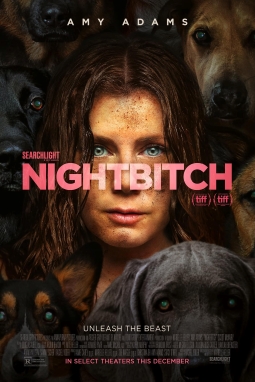
Nightbitch (the movie)

First and foremost I must say how much I hate the word "bitch". I avoid using it in just about any context, which is not to say I never say it. For instance, I might use it if it were part of the title of a movie I watched.


This film is tagged as Body Horror, Dark Comedy, Comedy, and Horror on IMDB. Yes, all of those things. Most importantly though, is that the library, and a librarian play piviotal roles in this film. Although the unnamed main character (Amy Adams) claims to hate Book Babies at the library and the other Moms she meets there, she discovers that they aren't so bad after all, and furthermore, the the librarian, Norma, (played by Jessica Harper) knows a lot more than just how to shush loud patrons. She has insights into motherhood as well as book knowledge. Our heroine not only recognizes Norma's worth, she commemorates it.

Wednesday, November 1, 2023

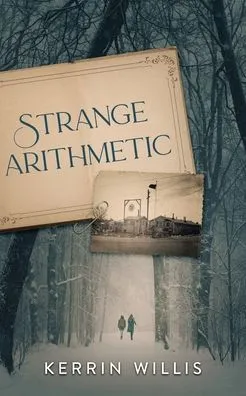
Strange Arithmetic - by Kerrin Willis


In 1945 Maggie O'Callaghan discovers she's pregnant. The father of the baby is an Italian POW being held at Camp Myles Standish in Taunton, Massachusetts. The complications of this situation are many and the resolution is bad all around.

In 2016 Niahm Reilly really wants to be pregnant. The situation is complicated and the resolution turns out to be better than expected.

My husband and I heard this author speak earlier this year at An Unlikely Story Bookstore. We purchased both of the authors' books intending to read them together after we finished Margaret Atwood's recent book of Essays Old Babes in the Wood (which we had just started). Then we learned that Willis' book was our town's One Book One Community selection for this fall, so we moved it up to the top of the pile. We had not known that there was a POW camp nearby. We learned quite a bit of local history from reading this.

Niahm has a special place in her heart for libraries-her deceased mother was a librarian who'd bring her daughter to work with her. However, I cringed at the description of Niahm curled up under her mother's desk by her her "high-heeled feet". WTF?! What self-respecting librarian wears anything other than sensible shoes.


Monday, September 25, 2023

Carnival of Snackery: Diaries 2003-2020 - by David Sedaris


When I read Sedaris' first book of diary entries (Theft by Finding) I lamented that he did not include enough about libraries and that I hoped that the second volume would include more. Alas, this 566 page work mentioned libraries a measly seven times. The first was the sad entry on January 11, 2005
The Guardian ran a story on Gerald Allen, an Alabama state representative who wants to ban books with homosexual characters. They can still sell them in shops, but he wants them out of schools and publicly funded institutions, like libraries and state universities. If the book presents a tragic homosexual, the type who suffers and then commits suicide, that's okay. He just doesn't want the happy kind, the ones who, in his words, "promote homosexuality as a healthy and accepted lifestyle."
Which one am I? I wonder.

Other uses of the library include:
  • Waiting
  • Taking a Citizenship Test
  • As part of a tour (grandmother unimpressed that granddaughter wanted to see this)
  • A place not to practice archery
  • A place with "nothing but a coloring book and a box of crayons" - this would be a disparaging remark about George Bush (43)'s Presidential Library
My favorite was this: someone checking out a CD of  Lightnin' Hopkins' music wants to know "is that a person or a thing?" Sedaris is able to help where the librarian is not. The young man who checked the CD out kept asking himself "Does it matter?" And eventually returns to the librarian to ask "Does it matter?" "Definitely not" they librarian said. 

That's what I would have said, too.

Friday, September 1, 2023

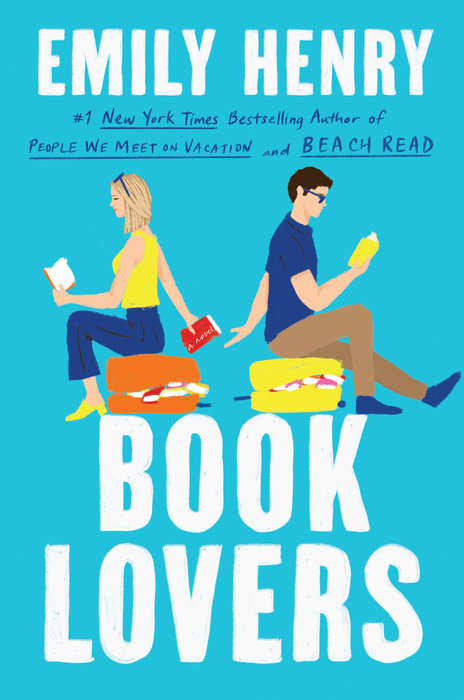
Book Lovers - by Emily Henry


I had high hopes for this book when I read the prologue. In it the narrator tells us that she is "the uptight, manicured literary agent, reading manuscripts from atop her Peloton", the jilted love interest in the rom com when the boyfriend gets sent to Small Town, USA and meets someone who is trying to save her family business. She's the one "you can tell [is] evil because her hair is an unnatural blond, slicked back à la Sharon Stone in Basic Instinct, and also she hates Christmas decorations." 

I must admit I often think about this character when watching Hallmark movies. Always such an unsympathetic character, but the audience never really knows her. I always try to think of her as a multi-dimensional person and wonder what becomes of her. And I bet she ends up having a great life.

I picked this out to read on August 9 because that was National Book Lovers Day, so really I had no choice. 

The story takes place in the fictitious town of Sunshine Falls, North Carolina ("just a little ways outside Asheville") which also the location of Once in a Lifetime, novelist Dusty Fielding's surprise hit. Literary agent Nora (who has "a beautiful Dewey-decimal organized brain"), and her sister Libby decide to take a vacation there, where, of course there is a lending library, just like the book says (although apparently Dusty has never visited Sunshine Falls herself). The library is set to get Wi-Fi in the fall. It is a "hulking" three story building "of pink brick and gabled peaks". 

Nora and Libby attend the local community theater production of Once in a Lifetime in which a thirteen year old boy plays "Old Man Whittaker" opposite a grandmother playing Mrs. Wilder - the owner of the lending library.

A surprise awaits Nora in Sunshine Falls. Her nemesis Charlie (an editor) happens to be there as well. Romance ensues.

Charlie and Nora agree to meet at the library to discuss Dusty's new book. He tells her he'll reserve a room for them. "At my expression, he laughs. At the library Stephens. A study room. Get your mind out of the gutter.

Apparently Nora has read The Seal's Rebel Librarian and therefore understands the true purpose of a study room. They end up making good use of the study room, but stop short of going all the way.

When we finally do this, Nora", [Charlie] says, straightening away from me, his hands slipping my buttons back into buttonholes as easily as he undid them, "it's not going to be on a library table, and it's not going to be on a time crunch."...."We're going to do this right. No shortcuts."

Nora is surprised to learn that Charlie was held back in school. She tells him that "you put off this... academic vibe. I would've expected you to be, like, a Rhodes scholar, with a tattoo of the Bodleian Library on your ass." He tells Nora that he "spent half of middle school in the library and the other half in the principal's office for getting into fights...the only two places [he] felt like [he] had any control...

In the end, this book was just another rom com. It just had the pieces put together differently. And, yes, a family business does get saved in Small Town, USA (a bookstore, no less).

Sighting: In the wonderfully enchanting Netflix series Heartstopper bookworm Isaac (Tobie Donovan) is seen reading this work.

Wednesday, July 5, 2023

Class Act - by Jerry Craft

Jerry Craft's sequel to New Kid continues the story of friends Jordan and Drew at the prestigious Riverdale Academy Day School in the Bronx. Jordan and Drew have a hard time fitting in to the mostly white school. 

The Riverdale School's Morgan Library is "state of the art" at least that's what Principal Mr. Roche tells some potential students from the underserved Cardi De Academy. The students from Cardi De respond that their library "is six boxes of old books...five of them...on Martin Luther King". 

Jordan and Drew are asked by Librarian Miss Brickner to "help pick out diverse books for the library", they are initially eager to help but when they suggest that graphic novels be included she retorts that "graphic novels aren't real books". I always like to see a bit of metafiction in a book.

Both New Kid and Class Act have been challenged in a number of school districts across the country, most notably in Katy, Texas where an event with Craft was cancelled in 2021 after a parent complained that the books advocated Critical Race Theory (something that the author had never even heard of before).

 I picked this book up from a Little Free Library  with this cool sticker on it.


Monday, May 22, 2023

Our Missing Hearts - by Celeste Ng

This dystopian novel, reminiscent of The Handmaid's Tale, gives us a glimpse of what happens when prejudices go unchecked. As we watch the far right cycle through villanzing every marginalized group, (landing most recently on the LGBTQ+ community) this work is prescient in more ways than one.

In Our Missing Hearts Anti-Asian sentiment is sanctioned by the government through PACT (the Preserving American Cultures and Traditions Act). PACT also encourages citizens to report their neighbors for un-American activities (broadly defined) and allows great leeway in banning books. Children are removed from their homes and permanently re-placed if their parents are deemed to be un-American. Current news from Florida and Texas regarding trans children echoes this story line. Ng's book centers on a mixed race family: Asian-American mother Margaret; Caucasian father (Ethan); and their son Bird (aka Noah).

When Margaret's little-known (and apolitical) book of poetry unwittingly becomes a symbol of a protest movement Margaret goes on the lam leaving Bird and Ethan behind in hopes of keeping father and son together even as she cannot be with them. When asked about Margaret's whereabouts Bird and Ethan always answer that they do not know, and that she is no longer a part of the family.

There is much in this book about libraries and censorship. Although libraries exist they are largely empty (of people and books). Described as a "ghost town" the public library is still a sanctuary for Bird (and his friend Sadie). The librarian helps Bird to find a book based on only a vague description. They use an old card catalog to find it but the book has been removed from the library. As was his mother’s poetry book - Our Missing Hearts. The librarian tells him “We don’t burn books here this is America…we pulp them. She says his mother’s book was probably turned into toilet paper and wiped someone’s butt a long time ago. Although they do not traffic much in books, the librarians are still connecting people and information. "The brain of a librarian is a capacious place." 

The public librarians are part of a subversive group that provides information to parents whose children have been “re-placed” - surreptitiously passing notes between the pages of interlibrary loan books. The librarians also hide Sadie away from her foster family as she tries to reunite with her parents. Train and bus schedule information is provided to Bird at the library. The librarian tells him that she is only letting him know how to find the information: what he does with it is his business. 

Likewise classrooms are described with empty bookshelves because “books are outdated the minute they're published”. However, students are informed by their teachers that books haven’t been banned, obviously, because that would contradict the first amendment. Rather, the books have been removed so as not to expose students to harmful ideas. This is eerily reminiscent of a viral video that recently made the rounds online of an empty school library in Florida.


Ethan shelves books in a Harvard University library. A PhD, he used to teach linguistics there, but lost the job over Margaret's "politics".  As a linguist, Ethan is especially interested in word derivations. He enjoys explaining where words come from (in multiple languages) to his son. The book included an explanation about the derivation of the word library coming from the word for tree bark, something I had never known before.


Friday, May 12, 2023

Playing with Myself - by Randy Rainbow (yes, that's his real name)


 In this house we believe...

that if a gay man writes a memoir it is best to "read" it as an audiobook, read by the author himself. Listening to Rainbow's work solidified this belief. We laughed, we cried, we felt.

Of course my favorite part of his heartfelt memoir was hearing that the author (as part of his work as a cruise ship performer) also checked out books to passengers from the ship's library. His name tag read "social staff and entertainment".

I don't wear a name tag at my job as a university librarian. If required I would insist on having it read "Puddin' Tame". Since the university prides itself at respecting preferred names I imagine I could actually get away with it.

Wednesday, January 4, 2023

Only Murders in the Building - Season 2 episode 8 "Hello Darkness"

 I watched season 2 of this Hulu series back in the summer when it first aired and I've been meaning to write about it ever since. Now that I am on sabbatical I had time to re-watch it and make my post.

For the uninitiated Only Murders in the Building is a comedy series starring Steve Martin, Martin Short, and Selena Gomez. The three play neighbors in a posh apartment building in Manhattan who solve crimes  (only murders in the building) together while producing a podcast.

Season 2, episode 8 takes place during a blackout. Two of the other tenants Lester (Michael Cyril Creighton) and Jonathan (Jason Veasey) begin to flirt by asking each other for batteries for their flashlights. Lester invites Jonathan into his apartment where the two begin to get to know each other by candlelight.

Lester is the Assistant Director of Collection Development at the Central Manhattan Public Library.  Jonathan plays a hyena in the Broadway production of The Lion King but yearns for something more. "What could a Broadway star want to be instead?" asks Lester. "Don't laugh" comes the reply. "I've always wanted to be a children's librarian". Incredulous Lester responds "I'm a librarian". "Shut up!" says Jonathan. Lester then demonstrates his wit with the retort "That's our slogan!" 

Their poignant duet of "The Sound of Silence" not only brings these two together, but the entire building as well.


Wednesday, June 1, 2022

Anne of Manhattan - by Brina Starler


In this reimagined Anne of Green Gables for the twenty-first century, Anne is a graduate student in Manhattan, getting her Masters Degree in Education at the fictitious Redmond College. Diana is her roommate. Anne is a go-getter who somehow manages to work full time at a bookstore, go to school full time, serve as a teaching assistant in a Shakespeare class, and run an after-school program for aspiring middle school writers. And if that isn't enough she can suck a mean dick, too. She also knows how to use the term quid pro quo when oral sex is on the table.

While I appreciate a story of a woman who owns her sexuality, there was much about this one that I just couldn't wrap my head around. The kind of time a person needs to do the amount of work (and play) that Anne does frankly defies the laws of physics. I'm also not sure the author has a firm grasp on what a person needs in order to get an Associate Professorship. Anne manages to score one of these increasingly rare gems of a job after earning her Master's degree. She even has the luxury of turning one job down in order to hold out for the one she really wants. Ummm...no. To begin with one needs a PhD to get that sort of position, and no one turns down such a position simply in hopes of getting the exact job they want.

The library of the Redmond Writers House, located on the ground floor, is one in which we can picture Anne Shirley settling right in

Three original fireplaces had been bricked over decades before, and now contained arrangements of silk flowers or sinuously twisted clay sculptures. Bookcases lined the walls, and although the rooms were small and crowded, with intimate seating arrangements, tall arching windows let in plenty of natural light tinted by multiple verdant green plants spilling out of hanging baskets. The entire library had an airy, bohemian feel to it...  

The library is also a dandy place for Anne and Gil to meet to work on their combined thesis project (again, really, not a thing in academia). As it turns out the "middle ground between their two apartments was technically the school library."

Caveat Lector
This ultimately is a romance novel with a rather trite resolution, so Anne of Green Gables fans should take heed. While the protagonist is still a feisty feminist, there are some hard-to-take romance tropes. 

My husband and I listened to this on Audible during a road trip. 


Tuesday, March 8, 2022

The Yellow House - by Sarah M. Broom


My husband and I attended Broom's virtual session last year at Boston University's Anti-Racist Book Festival. We had not heard of her before, but she piqued our interest, and we ordered the book on Audible and listened to it together. The Yellow House is a memoir not only about the specific house in New Orleans where the author grew up, it is a book about our relationships with the places that form us. 

The youngest of twelve children, Sarah was born into the Yellow House where she lived with many of her siblings, although some of the oldest never lived there. The Yellow House was located in New Orleans East, part of the city's Ninth Ward. Hurricane Katrina was the second Hurricane the author, and the Yellow House experienced. As a baby Broom and her family were evacuated when Hurricane Betsy rampaged their home in 1965.

Although her school libraries get barely a passing mention, as a college student at the University of North Texas (where the "cost of [her] ignorance about college was high") she was
ravenous about learning, nearly living at the Willis Library where [she] spent seven or eight hours at a time hunched in a cubicle reading books about subjects fellow students seemed already to know.
After graduation, and a Master's degree from the University of California, Berkeley, Broom moved to New York to take a job with O Magazine. There she met Samantha Power, author of A Problem from Hell at an author event at the New York Public Library. Power convinces Broom to go to Burundi (a small African country mostly known as a neighbor to Rwanda). 

Bloom eventually makes her way back to New Orleans where she researches the history of the (now destroyed) yellow house at the New Orleans Public Library. 
To find the history of the Yellow House, I had to search original deeds, chains of titles, successions. I stalked the Conveyance Office, the Office of Vital Records, the Real Estate and Records Office in city hall, the Notarial Archives, and libraries. The search was full of cross-referencing and confusion.

I arrived many mornings at the main branch of the New Orleans Public Library in the business district, just across from city hall, and waited in line for the doors to open. If you didn't know better, you'd think the city was full of people eager to read, but actually the line was full of homeless people who had slept outdoors and were trying to get to the bathrooms. 
Broom goes on to describe posted rules of using the library that include the following "disallowed" behaviors: stalking patrons; using or exchanging drugs; bathing; shaving, washing up, or washing clothes in bathroom sinks; bad smells; oblivious  transmission of germs or excessive coughing; preaching or forcing your ideas on others. Also disallowed: weapons and shopping carts. "Most of these things still happened anyway...The library staff spent much of the time policing, which made it hard to get research assistance". 

Any library worker in public service can relate to this. Too much of our time is devoted to policing behavior. Many administrators, as well as library users, are unable to understand our work as anything beyond study hall monitors. We actually would prefer to help people with research rather than spending our time explaining how to use a photocopier, refilling printer paper, or (most recently) incessantly reminding people to wear their masks above their nose.

Find out more about Sarah Broom at https://www.sarahmbroom.com/

Wednesday, December 8, 2021

America for Beginners - by Leah Franqui

Recently widowed Mrs. Pavil Sengupta of Kolkata, India decides to venture out of her bubble and travel to the United States in search of answers about her deceased gay son Rahi. She employs the First Class India USA Destination Tour Company to hire her a tour guide (Satya) and a traveling companion (Rebecca) for her trip. The three set off on a cross-country trip and learn not only about the United States, but some things about themselves as well.

One of the stops on their trip was the Corning Museum of Glass in New York. Mrs. Sengupta asks her guides if  there were "many places like this...places where things can be studied"? To which Rebecca responds "Oh, yeah. Tons. My dad always said growing up he learned more in museums and libraries than anywhere else".

Mrs. Sengupta does make a stop in a library at the end of her trip, at UC Berkeley, where she reverently "touched the pages of [Rahi's] thesis, printed, bound, and carefully stored in the university library".

I marked one other passage of this book while I was reading it, although it had nothing to do with libraries. This is my only book blog, so I have no where to vent on this particular topic but here: 

During a regrettable night of drinking in New Orleans' French Quarter Rebecca refuses "to have sex in a public bathroom for reasons of hygiene, good taste, and physical comfort." I have noticed recently that a public bathroom sex scene seems to be de rigueur in twenty-first century television and movies. Every time it happens I roll my eyes and make a snide comment to my husband about "here we go again". For the exact reasons that Rebecca gives, I am having a hard time believing it is as common as pop culture might lead us to believe. I can only hope that this tired trope, along with  "making up your bed to look like you're sleeping in it", and "crawling through an air duct to escape a locked room", has a  screen time to real life ratio of something like a bajillion to one.


Wednesday, October 27, 2021

Let It Rain Coffee - by Angie Cruz

My husband (James) and I learned about this book and author via the National Anti-Racist Book Festival this past spring. The title of this book intrigued us as James teaches several classes about coffee and often does community presentations and tastings. The author takes the title of the book from the song "Ojalá que llueva café" by Juan Luis Guerra, a song that James often plays for his students.

Cruz's novel tells the story of the Colón family, immigrants to New York City from the Dominican Republic. Most of the story takes place in 1990s New York, but there are also flashbacks to 1960s Los Llanos, DR and stories of the resistance.

In their crowded New York apartment the Colón family faces challenges of debt, death, incarceration, and racism. When a young, pregnant friend (Hush) moves in with the Colóns young Bobby learns lessons in community and love. Hush passes her time confined to the Colon's couch propped up on pillows and reading books from the library. Bobby is glad to pay her overdue fines, and to pile "the books on her left to the library" and pile "the books she was about to read on her right...He fed her books in exchange for seeing her thank him with a half smile."


Monday, August 30, 2021

Too Much and Never Enough - by Mary Trump

Beyond a "tell all" the forty-fifth president's niece provides a deep insider's knowledge of the Trump family through a psychological lens in this bestselling book. Not surprisingly, there was no mention of the young Trump family heading to the public library for story hour, in fact the only library mentioned is the one in "the House" (the residence where Donald and his four siblings grew up in Queens, New York). I probably wouldn't have bothered at all to create a blog about this except that the description of said library is so telling. About halfway through the book Mary provides this tidbit

When the family was together, we spent most of our time in the library, a room without books (emphasis mine) until Donald's ghostwritten The Art of the Deal was published in 1987. The bookshelves were used instead to display wedding photos and portraits.

Well there you have it. A whole room that could have been dedicated to books but wasn't. I must say, I'm not surprised.


Monday, January 11, 2021

Everything All at Once - by Katrina Leno

About to graduate from high school Lottie is mourning the death of her favorite aunt (Helen) a famous children's book author. Aunt Helen's books are about a pair of immortal siblings (Alvin and Margo Hatter) and are wildly popular among people of all ages. There are of course those who do not like her books "the Anti-Hatters [who] burn the books on YouTube...They say the idea of immortality is a sin against God".

Aunt Helen donated half of her estate to "various charities and libraries of her choosing". She clearly understands the importance of libraries to authors. Some authors seem to think that libraries are somehow stealing royalites from them.

Aunt Helen also had owned the "most expansive private library" of anyone Lottie knew. Helen was even "featured on the front page of Libraries International twelve separate times". Lottie is emphatic in her instance that "Libraries International was an actual magazine". I, however, could find no evidence that such a magazine exists.

We don't actually see much of Lottie using the library although she does meet her friend Sam at one. Sam travels a lot and tells her that he gets a library card wherever he goes "that's important" he tells her.


Thursday, October 29, 2020

The Dutch House - by Ann Patchett


Danny and Maeve live with their father, wicked stepmother (Andrea), and two stepsisters in a grand home in Elkins Park, Pennsylvania. When their father dies Andrea tells Maeve (a recent college graduate) that she and Danny are no longer welcome in the house and that Danny (still in high school) is now Maeve's responsibility. Left with little of their father's estate the siblings conspire to make the most of a trust fund marked specifically for their education. 

The house itself had a library (of course what grand house wouldn't?). The house was also mistaken for a library the first time Danny and Maeve's mother saw it. It had been purchased for her by their father as a surprise and despite that fact that it both had a library and looked like one, she had never liked it.

Danny and Maeve each make use of libraries. Danny describes reading library books on self-hypnosis as a child, and as and adult he researched property taxes and building prices in areas where he wanted to purchase real estate. For her part Maeve took advantage of the programming at the Philadelphia Free Library.

The story is told from Danny's point of view, but Maeve's story is very much a part of his. Maeve is a rare person who recognizes that a good life can be lived without having to constantly chase the next big promotion. She has a job she likes, and lives in a comfortable home and refuses to allow others to tell her to get a better job, or a bigger house. My father used to ask me when I was going to become a library director. Each time I would tell him that my position as a tenured university librarian was a better deal. Of course I could make more money as a director, but I wouldn't have the autonomy to decide what kind of research I wanted to do, or academic freedom to teach how I wanted to teach. My vacation time is generous and even without the big administrative bucks my husband and I managed to own our own home, send our child to private school, and to travel pretty much where ever we want, provided we are not living in a pandemic-ridden dystopia, of course.

Wednesday, December 18, 2019

Two Naomi's - by Olugbemisola Rhuday-Perkovich & Audrey Vernick


I found this novel on the free book exchange shelf at my library. The back blurb indicated that "Naomi Marie starts clubs at the library..." so I took it home to read. It turned out that there was actually quite a bit about libraries in this story of two ten-year olds named Naomi whose parents are dating.

The first page of the story opens with Naomi Marie at her local branch of the New York Public Library talking to librarian Ms. Starr about her new club (Bored? Bored Games!) which appears not to be as popular as Naomi Marie had hoped. Naomi Marie uses the verb "sparkle" when describing how Ms. Starr speaks to her "which must be something they teach in library school" Naomi Marie thinks because her mother, a school librarian, "is like that too, especially ...when she talks about Tom."

Naomi Marie thinks about the library a lot. Even while she's at the beach she's thinking about what books she needs to check out next. And she imagines herself there "accidentally in purpose" pulling up the computer game she and Naomi Edith are creating in order to impress the kids in the Teen Gamez Crew. The adventure game requires the player to use different skills to navigate through different worlds, including naming three Coretta Scott King Book Award Winners and a Newberry. The two Naomis' parents had enrolled both of them in the in the the Girls Gaming the System workshop at the Y, without telling them, in the hopes that it would help them become friends. Their plan turned out to have mixed results. Ultimately everyone learns that just because parents may make unpopular decisions, and are a bit dorky, it doesn't make them bad people.

Naomi Marie really makes good use of the library including placing books on hold. She is excited to be able to walk there with Naomi Edith to pick up the book on "making your old clothes into new ones" that is waiting for her. It is a bit ironic that Naomi Marie's best friend Xiomara (aka Xio) is so uninterested in the library that she needs to be bribed by her parents into going there with a sleepover at Naomi Marie's house.

This is a sweet tale with believably-flawed characters. I read it in an day and allowed myself to bask in some nostalgia about how proud I used to feel as a child when I finished a chapter book.

Visit the authors' websites at
https://www.olugbemisolabooks.com/
http://www.audreyvernick.com/

Wednesday, October 9, 2019

Behold the Dreamers - by Imbolo Mbue


Jende Jonga lives in Harlem with his wife Neni, and son Liomi. Immigrants from Cameroon, Jende lands a job as a chauffeur for an executive at Lehman Brothers while Neni studies to become a pharmacist. They don't have a lot of money, and they know that they can get good, free assistance at the library. This is evident in the first paragraph of the first page of the book.
He'd never been asked to wear a suit to a job interview. Never been told to bring along a copy of his résumé. He hadn't even owned a résumé until the previous week when he'd gone to the library on Thirty-fourth and Madison and a volunteer career counselor had written one for him...

Neni also makes good use of her college library to do her homework.


Wednesday, August 21, 2019

American Dreamer - by Adriana Herrera


The most important criterion I have when I make my selection for Read-A-Romance-Month is that the book have a librarian as one of the main characters. Of course many books fill the bill, but since I only read 1-2 books of the genre per year any book I select has to be extra. Herrera's book made the final cut for this gringa bilingual librarian because Jude Fuller.

When blond librarian Jude surprises the swarthy Ernesto (Nesto) Vasquez (owner of the Afro-Caribbean food truck parked outside the library) by flirting with him in Spanish Nesto falls hard. The two waste no time in beginning a hot and steamy relationship. So lucky that it turns out they are neighbors, too!

This one follows the expected three point romance plot with a "boy meets boy" twist. I also liked that in lieu of the "sassy gay friend" we so often see in boy-girl romances Herrera gives that role to the meddling Carmen, smart-aleck straight friend to Jude. And, of course, I loved that Herrera recognizes that not only do librarians have sex, it can actually be intense.

I have to admit though that the millennial main characters in this book stressed this baby boomer out a bit. They worked 12-14 hour days and then came home and seemed to have energy for acrobatic sex at 11:00 at night. I was always worried that they would oversleep the next day, or simply burn themselves out.

Find out more about the author and her works at https://adrianaherreraromance.com/

Tuesday, July 30, 2019

Finding Dorothy - by Elizabeth Letts


When I was very young everyone I knew enthusiastically anticipated the annual airing of The Wizard of Oz on network television. When our family finally got a color television set in the mid '70s I was stunned to discover that the Wizard  was filmed in black and white. My mother assured me that the color scenes were coming. It seems that the tradition of the yearly national viewing ended in 1980, around the time that the VHS tape became popular. Once anyone could record or purchase the movie to watch whenever they wanted the ritual viewing was relegated to nostalgia. As for me, I purchased the 50th anniversary edition of the tape in 1989, after I'd seen the movie perhaps 20 times. It came with some extra footage including deleted scenes, and a Wizard-themed commercial for Downy fabric softener. It also had a little booklet with trivia and other information about the filming of the movie. I still own this tape and a videocassette player on which to view it.

The movie is based on L. Frank Baum's book of the same title, the first of many books in the "Oz" series. Elizabeth Letts' book is a fictionalized account of the life of Maud Baum, widow of the author. The story alternates between 1939 and Maud's involvement in the filming of the movie and her relationship with Judy Garland, and her life in the late 1800s - growing up, meeting and marrying Frank, and raising a family with him. A dreamer with a vivid imagination L. Frank Baum wasn't exactly the person suffragist Matilda Gage had in mind to marry her daughter. Maud was one of the early co-eds accepted to Cornell University and Matilda had great plans for her. But the elder Gage also knew she had raised a daughter who would make up her own mind, and that she wasn't going to be browbeat by her mother into a decision not her own. The Baums moved a number of times as Frank chased jobs and financial opportunities. Maud always made the best of whatever life had in store for them. They never could have imagined the success they found when Frank's first "Oz" book was published.

There are several passages describing Maud's time at Cornell, including some in which she utilized the Sage library, a place she knew she could find quiet and solitude.

I was especially intrigued by the two passages regarding censorship of feminist materials. Matilda Gage was a force to be reckoned with and not one to let censorship prevent her from sharing knowledge and information. On the eve of Maud's marriage she lets her daughter in on the secret to limiting family size - information found in a booklet entitled A Woman's Companion - a book "outlawed" by Anthony Comstock "the United States postal director and...vehement anti-suffragist". The booklet advised soaking a sponge in carbolic acid and "push[ing] it all the way to the mouth of the womb" in order to prevent pregnancy. More about Anthony Comstock and his war on contraception can be found here.

As Matilda Gage nears her death she tells her daughter how she'd like her fortune distributed, a fortune that is not as big as she'd hoped. As her own book Woman, Church and State had been "banned from libraries" she did not "earn as much as [she] should have." I expect she would be happy to know that her book is now freely available online for anyone who wishes to read it.

As is often the case with historical fiction the reader wonders which parts are true and what is imagined. Letts helps with this in the Afterword, explaining how she did her research, and where she took artistic licence. One thing we learn is that women in Hollywood (and elsewhere) have been enduring sexual harassment since long before "me too" was a hashtag.