Showing posts with label audiobook. Show all posts

Wednesday, August 12, 2026

The Adjunct - by Maria Adelmann

This dark satire about the Academy's gig economy tells the story of Samantha, a PhD living in Baltimore, Maryland (my home town) trying to teach enough classes at two different colleges to keep the wolves at bay. Sam's plight, and that of her fellow adjuncts, is becoming more common as colleges and universities eschew hiring tenure track faculty and rely more on part-time contract faculty. As my husband (James) and I listened to the audiobook we reflected on our own times working as adjunct faculty. While we would never suggest that we were paid well for the work, for us it was never about survival. My contract teaching work was done at a time when a part-time job was exactly what I needed while I was the primary caregiver for our young child. James' part-time teaching was done while he was finishing his PhD and he had a full-time job in IT. He took evening teaching jobs so as to have recent teaching experience when he started looking for a tenure track job. We were lucky. Many of our colleagues had no health insurance, no spouse's salary to fall back on, and no guarantee that they would even have jobs at the end of any given semester.

As a "campus novel" libraries are sprinkled throughout the work providing insight into their myriad uses, including as a student job, a meeting place, and a space for study. Sam also borrows a Chromebook from the Baltimore Public Library because although her department expects her to have one, they do not provide her with one. 

There is a lot of "meta" in this work, including a meta librarian. Sam is an aspiring writer and describes a romance she wrote in which a librarian (who doesn't like romance novels) befriends her stalker, unaware that he is stalking her. Once they develop a relationship he loses interest, and she begins to take an interest in romances.

Of course I always like reading about a library in any book, but it is especially fun when one I've actually been to is mentioned. In this book the Enoch Pratt Free Library was given a shout out.

Wednesday, July 15, 2026

Mennonite Valley Girl - by Carla Funk

This memoir, written as a collection of essays, details Funk's upbringing in the Mennonite Community of Vanderhoof, British Columbia in the 1980s and 90s.

In the chapter called "The Changeroom" Funk describes the cringey awkwardness of her mother and older girl cousins trying to explain puberty to her in a world where euphemisms around body parts and bodily functions abound. In universal adolescent fashion a young Funk rolls her eyes at her mother and declares that she probably knows more than her mother, having read the "secret book" in the library of the Christian school she attended, that explained how the human body worked - including a "single page dedicated to reproduction". She and her friend attempted to sound out words that they'd never heard before and Funk confidently proclaims that "it rhymes with tennis" only to learn in a rather humiliating manner that penis has a long "e" sound. They didn't dare to ask any adults the correct pronunciation of any of the words because they (the adults) couldn't possibly be aware that the school's four-shelf library "contained a book with such forbidden language".

Thursday, June 5, 2025

Mockingbird Summer - by Lynda Rutledge

 In 1964 Ms. Delacorte public librarian in High Cotton, Texas suggests newly-minted teenager Kate "Corky" Corcoran read To Kill a Mockingbird. Corky shares the book with her brother, Mack who has just completed his first year of college; and with her new friend, America who otherwise cannot use the library in the segregated town.  

Through the lenses of these characters we see how each creates their own meaning of Harper Lee's work. Corky's journey includes learning what the word "rape" means as well as a discovery that although the story took place three decades prior it really wasn't so long ago as the same battles were still being fought in the segregated south.

The Civil Rights bill forms a backdrop to the story and Corky's mother Belle is expecting to benefit herself from the legislation as it also includes rights for women. Belle is looking forward to taking a job at the public library, in defiance of her husband.

Friday, August 2, 2024

The Chaperone - by M Hendrix


In the tradition of Margaret Atwood's The Handmaid's Tale Hendrix creates a New America, one in which women are second class citizens and all teenage girls are required to have a chaperone when they go out in public. Chaperone's are exclusively other women who have decided to take one of the few jobs available to them.

Stella's Chaperone (Sister Laura) is not averse to bending the rules for her charge. Sister Laura sometimes disappears when she and Stella are at the library so that Stella can steal a few moments with her crush, Mateo.

It is intriguing that there even is a public library in New America. But of course there are also a lot of forbidden books. Sister Laura passes some of this literature along to Stella, helpfully suggesting that she hide the taboo works between the covers of some of the other books in her room.

It appears a revolution is afoot!

Wednesday, November 1, 2023

The Wishing Game - by Meg Shaffer


The description I read of this book before I listened to it was that it was like Willy Wonka and the Chocolate Factory, but with books. That was pretty accurate. 

A gay hermit (Jack Masterson) who writes the wildly popular Clock Island series of children's books announces that he is writing another book after a very long hiatus. Furthermore, he announces that he is running a contest in which the contestants will be invited to his house on the real Clock Island and the winner will receive the only copy of the new book in existence to do with what they will. Lucy Hart is one of the lucky few invited to compete for the book. Her fervent wish is that she will be able to sell the book so she will have enough money to adopt Christopher, a boy in foster care. She gains more than she could have ever expected by the time the game is over.

My husband and I listened to this on audio. It was a good story, and of course featured some libraries. The story also alludes to the current wave of book banning, with Jack Masterson explaining why he has stayed in the closet. He doesn't want his identity as a gay man to prevent people from purchasing his books (or worse, removing them from library shelves).

This book is for everyone who is still waiting for their Hogwart's letter, or searching in the back of their closet for an opening to another world. 

Wednesday, July 12, 2023

Saha - by Cho Nam-Joo


In a fictional dystopian place called Town people live in a caste system based on class and privilege. Those who are fortunate enough to be born into the L category are full citizens and live a Brahman-like life. Sahas are the Untouchables. In between are the L2s who can only stay on renewable work visas. Sahas are named for the building they live in. A place where community matters and odd jobs are the only way to earn money. The economic system depends on the three classes, even as Sahas are not officially recognized citizens. Town is run by a nebulous Council of Ministers that manipulates the Sahas and uses them for nefarious research. When Woomi, a girl who is a test subject for this research (aka "the Master Key because she survived a Covid-like pandemic in utero) starts looking for answers she discovers that her data is being stored in a library but is not quite sure how to access it. Breaking into the library she finds a Fahrenheit 451 - esque data storage system wherein people are trained to memorize the data. Woomi talks to her "data storage unit" who tells her that it is "painful to know so much and have to retain it all." Furthermore, "accuracy plummeted" when "the data storage unit realized the information was not being accessed fairly or used in productive ways".

The book is a bit frustrating in that it simply stops, rather than ends. There is no resolution.

The reviews I read all indicated that this work was not as good as the author's other work Kim Jiyoung: Born 1982, but I liked it better.

Wednesday, June 28, 2023

Attack of the Black Rectangles - by A.S. King

When Mac and his friends are assigned to read Jane Yolen's The Devil's Arithmetic in their sixth-grade lit circle they are interested in the story about a young girl who time travels to a World War II concentration camp. They are taken aback when they discover that two pages of the copies they've been given by their teacher have redacted passages. Several words have been blacked out with ink. They set out to find out who defaced their books, and what they were trying to hide. Finding out the original text was accomplished by locating a copy at the local bookstore. They had first tried the local public library but all copies were checked out. 

Mac and his comrades discover that their own teacher was responsible for the censorship. They are rightly insulted when they find out that some adults were concerned that they would be made uncomfortable by the references to the main character's breasts and chest. They point out that the book makes clear the horrors of the Holocaust and if they are able to handle this information they can most certainly handle reading words describing body parts.

There is a lot to this rather short novel. It is a story not only of censorship, but also of empowerment, and child agency. Mac and his classmates stage a protest, and show up at the school board meeting with prepared speeches in order to make their case. When I became a parent I was often surprised when I read information describing what my toddler, or preschooler, or school aged child, or middle schooler wasn't able to understand and think that my child didn't seem confused by those things. I would often think back to my own childhood remembering what I did understand at those ages. Kids really are smarter (and more determined) then society gives them credit for.

A final lesson Mac learns is that people are multi-dimensional. While he disagrees with his teacher on many issues he also recognizes that she does have his interests at heart. He has the same realization about his classmate Aaron with whom he generally does not get along, but finds is an ally in the fight against censorship.

Although fiction, the book is based on a true event, and references the book banning cases from York, Pennsylvania in 2021.

My husband and I listened to this as an audiobook. Our next listen will be The Devil's Arithmetic!

Monday, May 22, 2023

Our Missing Hearts - by Celeste Ng

This dystopian novel, reminiscent of The Handmaid's Tale, gives us a glimpse of what happens when prejudices go unchecked. As we watch the far right cycle through villanzing every marginalized group, (landing most recently on the LGBTQ+ community) this work is prescient in more ways than one.

In Our Missing Hearts Anti-Asian sentiment is sanctioned by the government through PACT (the Preserving American Cultures and Traditions Act). PACT also encourages citizens to report their neighbors for un-American activities (broadly defined) and allows great leeway in banning books. Children are removed from their homes and permanently re-placed if their parents are deemed to be un-American. Current news from Florida and Texas regarding trans children echoes this story line. Ng's book centers on a mixed race family: Asian-American mother Margaret; Caucasian father (Ethan); and their son Bird (aka Noah).

When Margaret's little-known (and apolitical) book of poetry unwittingly becomes a symbol of a protest movement Margaret goes on the lam leaving Bird and Ethan behind in hopes of keeping father and son together even as she cannot be with them. When asked about Margaret's whereabouts Bird and Ethan always answer that they do not know, and that she is no longer a part of the family.

There is much in this book about libraries and censorship. Although libraries exist they are largely empty (of people and books). Described as a "ghost town" the public library is still a sanctuary for Bird (and his friend Sadie). The librarian helps Bird to find a book based on only a vague description. They use an old card catalog to find it but the book has been removed from the library. As was his mother’s poetry book - Our Missing Hearts. The librarian tells him “We don’t burn books here this is America…we pulp them. She says his mother’s book was probably turned into toilet paper and wiped someone’s butt a long time ago. Although they do not traffic much in books, the librarians are still connecting people and information. "The brain of a librarian is a capacious place." 

The public librarians are part of a subversive group that provides information to parents whose children have been “re-placed” - surreptitiously passing notes between the pages of interlibrary loan books. The librarians also hide Sadie away from her foster family as she tries to reunite with her parents. Train and bus schedule information is provided to Bird at the library. The librarian tells him that she is only letting him know how to find the information: what he does with it is his business. 

Likewise classrooms are described with empty bookshelves because “books are outdated the minute they're published”. However, students are informed by their teachers that books haven’t been banned, obviously, because that would contradict the first amendment. Rather, the books have been removed so as not to expose students to harmful ideas. This is eerily reminiscent of a viral video that recently made the rounds online of an empty school library in Florida.


Ethan shelves books in a Harvard University library. A PhD, he used to teach linguistics there, but lost the job over Margaret's "politics".  As a linguist, Ethan is especially interested in word derivations. He enjoys explaining where words come from (in multiple languages) to his son. The book included an explanation about the derivation of the word library coming from the word for tree bark, something I had never known before.


Monday, May 15, 2023

You'll Never Believe What Happened to Lacey : Crazy Stories about Racism - by Amber Ruffin and Lacey Lamar


Sisters Ruffin and Lamar grew up in Omaha, Nebraska. Their cringeworthy anecdotes about race and racism focus mainly on Lamar's experiences working there, but also about growing up in Omaha in the '80s and '90s. The audiobook is read by the authors and it is well worth a listen. The sisters laugh together and enjoy some easy banter as they tell their tales.

Of course any library tale will pique my interest. There was only one in this book, but it caused me to do a lot of thinking. It centered on Ruffin's elementary school library. A lover of arts and crafts, Ruffin borrowed a craft book that included instructions for making a Gollywog doll. She was unaware of the racist nature of the craft and innocently asked her mother about making one. Her mother's swift response included not only a call to the school librarian to complain, but also an admonishment to her daughter to use only the books they had at home from then on.

As I said, I had to think about this episode quite a bit to determine what to say about it, especially in light of the wave of book banning happening across the country. I will begin by saying that Ruffin's mother was perfectly within her rights to contact the school and complain about the book. Furthermore, schools should have processes in place for book reconsideration, and they in fact count on parents to bring books to their attention that may not belong in the collection. Not all book removal constitutes book banning. Books are discarded from libraries for a myriad of reasons. Perhaps they are out of date, worn out, or otherwise no longer appropriate for a particular audience or collection. "Weeding" is part of the process of keeping a library relevant.  

However, removal of individual titles, with cause, is not what we are witnessing in schools today. Instead hundreds of books that the censors have not read are being summarily removed from classrooms and school libraries (and indeed public libraries). Those who would remove books from libraries under the guise of "parental rights" are full of shit. They already have the right to request that their child not have access to certain books. Meanwhile, they are preventing other parents who would like their children to have access from doing so. 

I was surprised that Ruffin's mother told her daughter not to use the library any more over this one incident. Of course any parent can contact their child's school and request that they not be allowed to check out specific books (or any books for that matter), and they are also within their rights to tell their own child not to use the library any more. I would argue, however, that students should be given (relatively) unrestricted access to their school and public libraries. Young people need to be able to explore difficult topics at their own pace. Librarians, teachers, and parents can be guides but ultimately everyone should be able to access the information they need when they need it - without judgement.  See my post Why I Let my Daughter Read Twilight Books for additional thoughts on this. (Note that the post is 10 years old and my "daughter" now identifies as non-binary and uses he/him pronouns).

You'll Never Believe What Happened to Lacey is the One Book One Community selection for the Bridgewaters for summer 2023.


Friday, May 12, 2023

Playing with Myself - by Randy Rainbow (yes, that's his real name)


 In this house we believe...

that if a gay man writes a memoir it is best to "read" it as an audiobook, read by the author himself. Listening to Rainbow's work solidified this belief. We laughed, we cried, we felt.

Of course my favorite part of his heartfelt memoir was hearing that the author (as part of his work as a cruise ship performer) also checked out books to passengers from the ship's library. His name tag read "social staff and entertainment".

I don't wear a name tag at my job as a university librarian. If required I would insist on having it read "Puddin' Tame". Since the university prides itself at respecting preferred names I imagine I could actually get away with it.

Thursday, April 27, 2023

The Flag, the Cross, and the Station Wagon - by Bill McKibbin


It is certainly trendy to blame everything that is wrong with the world on my generation ("Okay, Boomer") and, to be fair, there is plenty of blame to go around, but as McKibben points out we Boomers were born during a rather long span (the years 1946-1964) - a population over about 70 million people which "means you're making generalizations about populations larger than France or England". We can look at Zoomers (those born between 1997-2012 - a population which includes my own child) and find fault with their addiction to fast fashion and shake our heads at the problems of sustainability it causes. At the same time I can also see that they are leading the way in seeking racial justice, fair wages, and health care reform. 

McKibben grew up in Lexington, Massachusetts, just up the road a piece from my own home in the Bay State. He describes his childhood home as "like a child's drawing of a suburban home: a square block with a door and a window on the ground floor and two windows on the story above". I expect that the second story in the "child's drawing" was triangle shaped. This describes my own house as well. McKibben uses the house as a starting point in the book and moves from there to descriptions of his schooling, first jobs, and the history of the area to explore some bigger questions on race and the common good.

McKibben is clearly a fan of libraries and indicates that he has made good use of them throughout his life. Early in the work he describes a lecture given in 1970 by Ralph Nader at the town library in which he [Nader]

blast[ed] both air pollution and hot dogs, which he called "innovations to relieve food companies of all their crud". 

I've always been a fan of Nader and voted for him in the epic presidential election of 2000.

Further McKibben describes walking past the town library in 1971 (where he was "already a regular in the downstairs children's room") as part of a protest of the Vietnam War, led by another later presidential hopeful John Kerry, leader of the Vietnam Veterans Against the War.

As a high school student McKibben got a job giving tours of the Lexington Battle Green. Donning a tricorn hat he regaled tourists with tales of the Battles of Lexington and Concord. In order to get such a job 

you needed to pass a test...administered by the venerable rector of the local Episcopal church...He handed you a reading list, and you repaired to the town library's local history room for long days of study.

In one passage he demonstrates the importance of libraries through their absence. Eighteenth century Lexingtonians, according to Richard Kollen "the most determined chronicler of the town's religious history", would have 

attended an average of seven thousand sermons in a lifetime, that meant they heard fifteen thousand hours of preaching from their pastor. (And of course that was pretty much all heard, in an era with no theater, no library, no radio, no internet).

It would seem that today's far right politicians and Christian Nationalists would prefer that we return to this as they remove books from libraries and attempt to censor legislators who speak out for an end to gun violence, and basic rights for transgender people. 

Meanwhile, McKibben tells us that people's interest in libraries, theater going, and even sports has been waning in recent years.

Everything that the affluent possess in private has swelled in size... and what we share in common has been allowed to decay.

 This is evident in California's passage of Proposition 13 in 1978

which sharply limited the ability of cities and towns to assess taxes. Local property tax revenues dropped 60 percent overnight, and though the state filled some of the gap, services like education suffered immediate hits from which they never recovered...They cut maintenance, assistant principals, librarians...in south LA, or the north-eastern San Fernando Valley the library opens rarely...

City and town libraries suffered as well with summer and after-school programs cut. Some branches were closed, or hours had their hours shortened.

Finally, McKibben gives props to "Lexington's superb Cary Memorial Library" in providing access to back copies of the Lexington Minuteman which allowed him to do the research for this book.

Post Script:

To answer the question posed by the subtitle of this work ("What the hell happened?") I submit that we really should have listened to Bill McKibben back in 1989 when he wrote The End of Nature. But we didn't. 

Monday, March 13, 2023

Project Hail Mary - by Andy Weir

Dr. Ryland Grace wakes up from a coma not remembering who or where he is. He is able to surmise that he is on a space ship, but does not know why. As his memory gradually returns he realizes that his job is to save Earth, and all the Earthlings on it. As he continues his journey he meets an alien space ship and befriends Rocky, a spider-like alien, whose planet is likewise doomed unless he and Grace can figure out how to communicate and cooperate in vanquishing the dreaded Astrophage that threatens both of their planets.

In order to save the world the astronauts had a wealth of information at their disposal, namely the entirety of the Library of Congress in digital format! Rather than trying to guess what might be needed the powers that be determined that everything would be available to the heroes, copyright be damned! Good thing, too, because Grace made good use of it.

Science fiction as a genre is not something I typically seek out, although a perusal through my blog indicates that I have, in fact, read a fair amount of it. I would probably not have read Project Hail Mary had it not been the One Book One Community pick for Bridgewater this spring. James and I listened to the audio version, narrated by Ray Porter who was one of the best voice actors I've heard in the myriad books I've listened to. 

Wednesday, July 27, 2022

The Department of Rare Books and Special Collections - by Eva Jurczyk


A missing manuscript, a missing librarian, and a desperately ill department head are all concerning aspects of this story. The most concerning of all, however, was that Liesl Weiss had to abort her sabbatical in order to sift through it all.  And of course, through it all she is berated and undermined by the pompous University president. 

Things in this novel that were absolutely believable: The University President asks Liesl to keep quiet about the missing books, and the missing librarian (no need for bad press, and what would the donor's think?); the male library director could count on his (mostly) female staff to cover for him, while he always got the credit; when a woman is put in charge of the library she is constantly questioned by those she supervises who also point out that the previous (male) director did not do it that way. 

This was road-trip listening for our recent mid-west adventure. While I don't typically enjoy mysteries,  this one eventually grew on me, although when it started neither my husband nor I thought that we would be especially interested.

Wednesday, June 1, 2022

Anne of Manhattan - by Brina Starler


In this reimagined Anne of Green Gables for the twenty-first century, Anne is a graduate student in Manhattan, getting her Masters Degree in Education at the fictitious Redmond College. Diana is her roommate. Anne is a go-getter who somehow manages to work full time at a bookstore, go to school full time, serve as a teaching assistant in a Shakespeare class, and run an after-school program for aspiring middle school writers. And if that isn't enough she can suck a mean dick, too. She also knows how to use the term quid pro quo when oral sex is on the table.

While I appreciate a story of a woman who owns her sexuality, there was much about this one that I just couldn't wrap my head around. The kind of time a person needs to do the amount of work (and play) that Anne does frankly defies the laws of physics. I'm also not sure the author has a firm grasp on what a person needs in order to get an Associate Professorship. Anne manages to score one of these increasingly rare gems of a job after earning her Master's degree. She even has the luxury of turning one job down in order to hold out for the one she really wants. Ummm...no. To begin with one needs a PhD to get that sort of position, and no one turns down such a position simply in hopes of getting the exact job they want.

The library of the Redmond Writers House, located on the ground floor, is one in which we can picture Anne Shirley settling right in

Three original fireplaces had been bricked over decades before, and now contained arrangements of silk flowers or sinuously twisted clay sculptures. Bookcases lined the walls, and although the rooms were small and crowded, with intimate seating arrangements, tall arching windows let in plenty of natural light tinted by multiple verdant green plants spilling out of hanging baskets. The entire library had an airy, bohemian feel to it...  

The library is also a dandy place for Anne and Gil to meet to work on their combined thesis project (again, really, not a thing in academia). As it turns out the "middle ground between their two apartments was technically the school library."

Caveat Lector
This ultimately is a romance novel with a rather trite resolution, so Anne of Green Gables fans should take heed. While the protagonist is still a feisty feminist, there are some hard-to-take romance tropes. 

My husband and I listened to this on Audible during a road trip. 


Friday, September 10, 2021

My Brilliant Friend - by Elena Ferrante


This coming of age story follows best friends Elena and Lila as they grow up outside of Naples, Italy in the 1950s. The two girls are the smartest in their class at school. While Elena is provided the opportunity to continue with her formal schooling beyond grammar school, Lila realizes that she must continue her education at "the people's university" - the public library. She figures out that she can borrow a lot more books than would normally be allowed by procuring library cards for everyone in her family, and then using them only for herself. Everyone in Lila's family is later invited to the library to be honored for being such avid readers. It would appear that Lila, her brother, mother, and father have come in first, second, third, and fourth for the most books read. Elena is also invited to the recognition ceremony for coming in fifth. No one from Lila's family (including Lila) comes to the ceremony and Elena accepts the awards for all.

The first book in a four-part series. This has also be adapted for television  - currently available on HBOMax.


Wednesday, May 19, 2021

The Writer's Library: The Authors You Love on the Books that Changed their Lives - by Nancy Pearl and Jeff Schwager

My husband and I listened to the audio version of this work, which features interviews of writers about books, reading, and writing. I had never heard of many of the interviewees, and my book and author ignorance was magnified when they began discussing other books and authors I'd never heard of. Which is not to say it wasn't a good listen. It was a bit stilted though since Pearl and Schwager were simply reading questions that had already been asked and answered in real conversations with the authors, and the responses were read by people who were not necessarily the original responders. Nevertheless, we enjoyed listening to enthusiastic discussion about books and reading, and the many responses that indicated a love for libraries and librarians. After each conversation Pearl and Schwager would read a list of some of the books and authors in each interviewee's library. I was struck by how many included Richard Adams' Watership Down - a book I have never read, but at least I've heard of it.

From the amazon.com website: 

The authors interviewed in this work are: Russell Banks, TC Boyle, Michael Chabon, Susan Choi, Jennifer Egan, Dave Eggers, Louise Erdrich, Richard Ford, Laurie Frankel, Andrew Sean Greer, Jane Hirshfield, Siri Hustvedt, Charles Johnson, Laila Lalami, Jonathan Lethem, Donna Tartt, Madeline Miller, Viet Thanh Nguyen, Luis Alberto Urrea, Vendela Vida, Ayelet Waldman, Maaza Mengiste, and Amor Towles.

Monday, January 11, 2021

I am Not Your Perfect Mexican Daughter - by Erika L. Sanchez

Living in the shadow of her dead older sister (Olga) Julia Reyes navigates high school, family, first love, and friendships. Although she is indeed not perfect (but it turns out neither was Olga) she does at least understand the importance of libraries. 

She uses the old standby lie of "I'm going to the library" so she can instead interrogate Olga's best friend Angie about a hotel key and sexy underwear she found among Olga's things.

Julia gets into trouble quite often and by her own account "between the ages of thirteen to fifteen [she'd] spent about forty-five percent of [her] life grounded". She further explains that sometimes when she punished she isn't even allowed to go to the library "the cruelest kind of torture". She also claims she "can't get pregnant at the library" but she obviously has never worked in one and discovered the kinds of things that library workers all to often find indicating that perhaps someone did get pregnant.

Julia really does love books and dreams of becoming so rich someday that she has "a library so big that [she'll] need a ladder to reach all [her] books".

The Ballad of Songbirds and Snakes - by Susanne Collins

 I read the first three Hunger Games books some years ago. I don't remember if I read them before or after I started this blog, but I somehow doubt any of them would have made the cut to be included here. So I was surprised when this one did. This prequel tells the story of Cornelius Snow and is set decades before the original series - during the 10th Hunger Games.

My husband and I listened to the audio version of this and I didn't download the text so I only have my faulty memory to aid me in writing this post. I recall students being sent to the school library to work on a group project. Disdain for group work appears to be a universal truth.


Wednesday, January 29, 2020

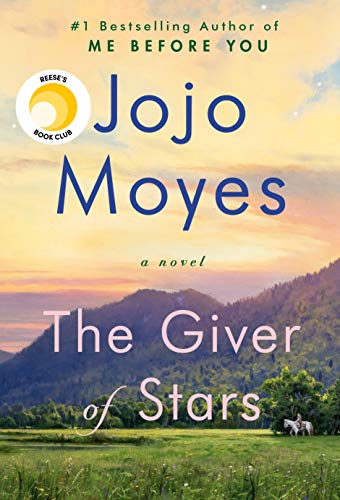
The Giver of Stars - by Jojo Moyes


People often share with me articles such as this one about the Kentucky Packhorse librarians, one of President Roosevelt's Works Progress Administration (WPA) projects. During the Great Depression these bad-ass librarians rode through rough mountain terrain in all weather in order to deliver books to rural Kentuckians. Moyes' novel tells the story of Margery O'Hare, Alice Van Cleve, Sophia Kenworth, Beth Pinker, Kathleen Bligh, and Isabelle (Izzy) Brady who took on the challenge of ensuring all in the mining town Baileyville could access reading materials.

Not everyone in town was happy about the set up. There were those who were not happy that Sophia a "colored" woman was working in the library. And some residents preferred that the librarians not bring any reading materials to their families (except perhaps the Bible), lest they "spread all kinds of crazy notions". Nevertheless even amid reports of 
wives no longer keeping house because they're too busy reading fancy magazines and cheap romances...[and] children picking up disruptive ideas from comic books 
the librarians took their charge seriously, and delivered materials to homes and schools across the mountainside. 

Newlywed Alice volunteered for the duty despite the vigorous objections of her husband and father-in-law who felt that as a proper woman she should stay home. The Van Cleve men, along with Pastor McIntosh and his sister Pamela also insisted that the horse riding was interfering with Alice's ability to have children. "It's like if you shake a jar of milk up too much, it turns sour. Curdles, if you like". Explains the clueless elder Mr. Van Cleve. Pastor McIntosh adds that he'd in fact read an article indicating as much. Although Alice is a bit naive about certain sexual matters, she is well aware of the real reason she hadn't conceived, and it had nothing to do with horseback riding. Rather than pointing out her husband's disinterest in sex she instead launches into an explanation of the importance of information literacy.
Knowledge is so important, don't you think? We all say at the library, without facts we really do have nothing. If I'm putting my health at risk by riding a horse, then I think it would only be responsible for me to read the article you're talking about. Perhaps you could bring it next Sunday, Pastor?
Alice further points out that
in England [whence she hails] nearly all well-brought up ladies ride. They go out hunting, jumping ditches, fences, all sorts. It's almost compulsory. And yet they pop out babies with extraordinary efficiency. Even the Royal Family. Pop, pop, pop!  
One of the more popular books in the library was a discretely requested manual called Married Love by one  Dr. Marie Stopes. The women who ventured to read the work found that their husbands spent less time at the honky tonks and more time at home "shorn of their usual short tempers".

It even worked for those women who preferred not to be married. Margery O'Hare read it twice and she and her beau Sven Gustavssen and made good use of the advice therein. Curious? You can read the whole thing here.

This book has something for everyone - murder, romance, intrigue, censorship, and more. My husband and I listened to the audio version. An excellent tale it is.

See also my post for That Book Woman for a children's picture book about the Packhorse librarians.


Wednesday, October 30, 2019

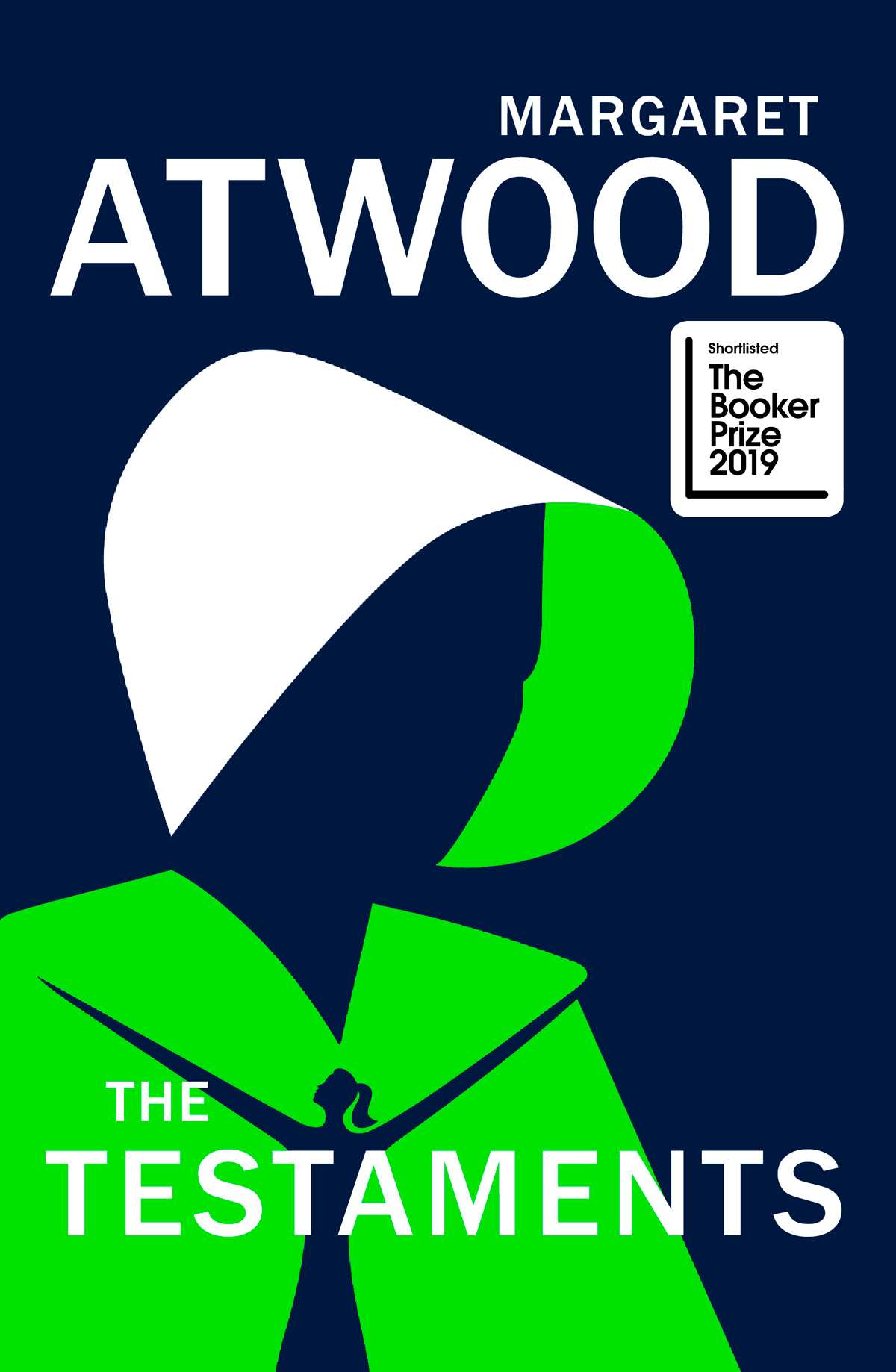
The Testaments - by Margaret Atwood


Among Harry Potter fans there is a stretch of time known as the three-year-summer - the period between July 2000 and June 2003. It references the spacing between the fourth and fifth books in the series. It was a difficult time for us to be sure, but it was nothing compared to the 35-year wait Atwood fans endured for this sequel to The Handmaid's Tale.

This was well worth the wait. While not a continuation of Offred's story we do discover what happened to her and the baby she was carrying. Instead this is a novel in three voices.

The first is Aunt Lydia by way of the Ardua Hall Holograph, a clandestine memoir, secretly written, a la Winston Smith in George Orwell's 1984. The difference here is that Aunt Lydia is less likely to be discovered by the cameras because, as she tells us "I know where they are, having placed them myself". The other two voices are those of Agnes Jemima a young woman who grew up in Gilead; and Daisy, who grew up in Canada where she learned about Gilead through her parents and her lessons at school. Both of these young women have several different aliases.

Aunt Lydia lives in Ardua Hall, along with all the other aunts in the city. Each evening she heads to her "private sanctum" in the Hildegard library "one of the few libraries remaining after the enthusiastic book-burnings that have been going on..." The Ardua Hall library has different rooms with different levels of access. Aunt Lydia has access to all - the General section where new supplicants learn to read; the Reading room "where the Bibles brood in the darkness of their locked boxes, glowing with arcane energy"; and the Bloodlines Genealogical Archives with their classified files. Aunt Lydia knows that knowledge is power, something that clearly the Commanders of Gilead are also quite aware, otherwise they would have no reason to deny the ability to read to women. Even some of the Aunts believe that reading can be too dangerous. The residents of Ardua Hall know all too well the story of poor Aunt Lily who neither wanted to marry nor stay in Ardua Hall instead "she wanted to live on her own and work on a farm. Aunt Elizabeth and Aunt Vidala said this was what came of reading too early...before her mind was strengthened enough to reject [the wrong ideas] and there were a lot of questionable books that should be destroyed".

Daisy and Aunt Lydia both describe visiting their school libraries as a children, and both tell of a specific book they remember from their respective school libraries. Contrary to the experiences of Aunt Lydia and Daisy, going to a library is privilege that Agnes Jemima never had. Her experiences in a library (a word she never even heard as a child) would come later in her life. When she does enter a library for the first time she is overwhelmed
It's hard to describe the feeling this gave me. The first time I passed through its doors, I felt as if a golden key had been given to me - a key that would unlock one secret door after another, revealing to me the riches that lay within. 
Eventually, Agnes does some work in the Hildegard library, as does her friend Becka (aka Aunt Immortell). Agnes' job is to make "fair copies of Aunt Lydia's speeches". It is through working on this task that she discovers some disturbing information about her family. Someone who knows that knowledge is power begins slipping files with classified information in between the files of speeches to be copied.

We don't know much about what Becka's job in the library is, except that she sometimes has "night duty" there. Aunt Lydia does mention that there is a "night librarian" on duty whom she greets on the way to her sanctum.

Aunt Lydia uses the library as a cover on behalf of two residents of Ardua Hall when it is discovered that they are not at lunch. Aunt Lydia knows their whereabouts but instead tells the others "I believe they are fasting...I glimpsed them in the Hildegard Library yesterday, studying their Bibles".

Reading and writing are forbidden for women and girls in Gilead, with the exception of the Aunts. Books were apparently their consolation prize for not being able to have husband or babies. As Agnes Jemima tells us "the Aunts were not married; they were not allowed to be. That was why they could have writing and books". I've thought about this passage a lot as a person who loves reading and writing and who is also a woman who has had a husband for 33 years. For me the choice of family or literacy seems a particularly grim game of  "Would you rather..." If I had never fallen in love with my husband in the first place the answer would be clear, but given the choice of leaving my husband or keeping my privilege of literacy what would I do?

Of course the Aunts don't really make this choice. They don't leave their husbands, they never had them to begin with.  They have their books and writing, and they have each other for company. Although Aunt Lydia doesn't have close friends among the other Aunts, she understands that she needs their companionship. As she discovered when placed in solitary confinement prior to facing her own Hobson's Choice of Aunt-hood or death "One person alone is not a full person: we exist in relation to others. I was one person: I risked becoming no person".

Across from Ardua Hall, the Eyes also have headquarters in what used to be a library. Aunt Lydia tells us that "It now shelters no books but their (the Eyes) own, the original contents having been burned or, if valuable, added to the private collections of various sticky-fingered Commanders."

As with The Handmaid's Tale, The Testaments ends with an epilogue in the form of an academic conference. Here we read the transcripts of The Thirteenth Symposium of Gileadean Studies, International Historical Association Convention, Passamaquoddy, Maine, June 29-30, 2197. The keynote speaker is Professor James Darcy Pieixoto who immediately, condescendingly, points out that the Chair of the Symposium, Professor Maryanne Crescent Moon, would never have had that position in Gilead, and  that in fact "women are usurping leadership positions to...a terrifying extent".

As in The Handmaid's Tale Pieixoto is the only male narrator, and similar to his comments in that novel, he begins by questioning the authenticity of the recently discovered holograph, and the two witness testimonies (discovered in the library of the Innu University in Sheshatshiu, Labrador), but ultimately, charitably suggests "why not take them at their word?" The testimonies were discovered by a graduate student, a woman - Mia Smith, who shared them with her professor, who of course first questioned their authenticity. Once a team of graduate students followed the route described in the transcripts, and validated certain details Peixioto ready to take on the work of doing the seminal research on them - talk about a usurper.