Showing posts with label public libraries. Show all posts

Thursday, April 23, 2026

The Lost Library by Rebecca Stead and Wendy Mass

Mysteries are among my least favorite genres. People love to recommend mystery novels to me though because, apparently, a lot of fictional librarians love to solve mysteries. The Lost Library is a light mystery chapter book that I did enjoy. There was no murder (although there were some friendly ghosts).

The book is told from several points of view:

  • Mortimer - a cat (also known as Goldie, Sunshine, Buffy, and Dear Cat)
  • Evan - a fifth grader who is a bit worried about going to middle school next year
  • Al - Assistant Librarian at the History House

The town of Martinville has been without a public library ever since a fire burned theirs down twenty years ago. When Al decides to install a Little Free Library on the town common Evan is intrigued by that fact that almost all of the books in it were checked in to the town library on the date of the fire. He is especially interested to discover the name of famous mystery author (H.G. Higgins) written on one of the checkout cards. He is determined to find out where the books came from, and if Higgins ever lived in Martinville.

Something I do like to see in books is a bit of metafiction. One of the first books Evan takes out of the Little Free Library is How to Write a Mystery Novel. Rather than penning his own book though, Evan uses the suggestions for writing a novel in order to solve a mystery.

Now that I have finished with the book (and my blog post) I will place this in one of the dozen Little Free Libraries in my own town for someone else to discover.


Monday, September 29, 2025

Forever, Interrupted - by Taylor Jenkins Reid

After eloping with her boyfriend, librarian Elsie Porter finds herself a young widow when her husband is struck by a car ten days into their marriage. 

The fact that Elsie was a librarian was almost not relevant to the story. It is clear that she likes her job, but isn't passionate about it. A few scenes do take place at the library, including a plot-turning episode in which she punches out a patron, but I imagine any employer would have put her on leave after such an incident. There is also an almost "between the stacks" moment, right there in the World Religions section.

I found it noteworthy that she lives in a nice apartment that she is able to afford on her own. It was refreshing to read a story that doesn't harp on low pay. Some librarians actually do make decent money.

Thursday, June 5, 2025

Mockingbird Summer - by Lynda Rutledge

 In 1964 Ms. Delacorte public librarian in High Cotton, Texas suggests newly-minted teenager Kate "Corky" Corcoran read To Kill a Mockingbird. Corky shares the book with her brother, Mack who has just completed his first year of college; and with her new friend, America who otherwise cannot use the library in the segregated town.  

Through the lenses of these characters we see how each creates their own meaning of Harper Lee's work. Corky's journey includes learning what the word "rape" means as well as a discovery that although the story took place three decades prior it really wasn't so long ago as the same battles were still being fought in the segregated south.

The Civil Rights bill forms a backdrop to the story and Corky's mother Belle is expecting to benefit herself from the legislation as it also includes rights for women. Belle is looking forward to taking a job at the public library, in defiance of her husband.

Sunday, December 29, 2024

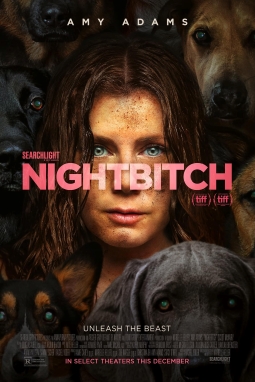
Nightbitch (the movie)

First and foremost I must say how much I hate the word "bitch". I avoid using it in just about any context, which is not to say I never say it. For instance, I might use it if it were part of the title of a movie I watched.


This film is tagged as Body Horror, Dark Comedy, Comedy, and Horror on IMDB. Yes, all of those things. Most importantly though, is that the library, and a librarian play piviotal roles in this film. Although the unnamed main character (Amy Adams) claims to hate Book Babies at the library and the other Moms she meets there, she discovers that they aren't so bad after all, and furthermore, the the librarian, Norma, (played by Jessica Harper) knows a lot more than just how to shush loud patrons. She has insights into motherhood as well as book knowledge. Our heroine not only recognizes Norma's worth, she commemorates it.

Thursday, October 3, 2024

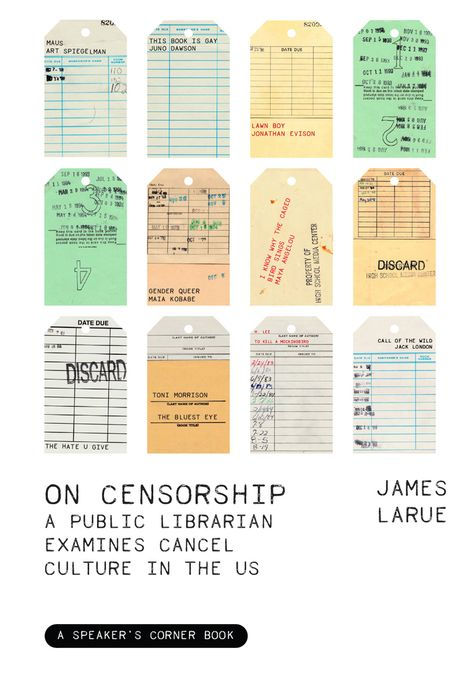
On Censorship: A Public Librarian Examines Cancel Culture - by James LaRue


I've been invited several times as a guest speaker on "The Dissidents" podcast. During the month of September, as a lead up to Banned Books Week (September 22-28) one of the hosts (Elizabeth) and I read LaRue's book and recorded four half-hour(ish) conversations about it. Last night, as a finale, we invited the author to speak with us about his work on a livecast. It was a fun (and hopeful) conversation.

Listen to all of our conversations:

Episode 1

Episode 2

Episode 3

Episode 4

Episode 5

Sunday, July 14, 2024

Do Not Bring Your Dragon to the Library - by Julie Gassman


A rhyming book that explains everything that can go wrong if you bring your dragon to the library. 

The library in the story is called the Honalee Free Library - a nice touch!

Friday, June 21, 2024

What You Are Looking For is in the Library - by Michiko Aoyama


Five people, each at a crossroads in life, find their way to the Community Library, a place none of them had given much thought to before. Tomoka, Ryo, Natsumi, Hiroya, and Masao discover that reference librarian Sayuri Komachi will not only find the books that will answer your question, she also finds books to answer the question you didn't know you had. The mysterious librarian also gives a bonus gift in the form of a felted trinket to each of the seekers. The description of Ms. Komachi provides an interesting take on the old librarian stereotype, and one that demonstrates a larger than life perspective

The librarian is huge...I mean, like, really huge. But huge as in big, not fat...she is wearing a beige apron over an off-white, loose-knit cardigan...Her hair is twisted into a small tight bun right on top of her head, and she has a cool kanzashi hairpin spiked through her bun with three white flower tassels hanging from it.

Natsumi is a parent to a young child (Futaba). She works at a publishing house and before her daughter was born she was an editor for a magazine called Mila. However, when she returned to work following a short maternity leave she was placed in the information resources department where her job was 

to retrieve data for employees upon request, and seek various permissions when required...also [writing] company profiles for the website and other PR material for external use

While she does not identify herself as a librarian, those of us who do the work know what she is. 

I was particularly intrigued by this passage regarding Natsumi's work

In my Mila days, I used to have no reservations about reading at my desk, since anything could be a potential source of ideas. But in Information Resources I hesitated to do any general reading. Just in case my colleagues might think I was slacking off.

It is not unusual for people to make comments about how great a librarian's job must be with "nothing to do all day but read". You can be sure this comment will raise some serious ire, followed by an explanation about how librarians have ABSOLUTELY NO TIME TO READ as we are much too busy answering reference questions, ordering books, unjamming printers, supervising clerks, resolving database and computer problems, and a myriad of other things. Here is my truth: sometimes I was busy, and sometimes I wasn't. As a public services academic librarian I was usually pretty busy teaching classes, and helping people with research during about eight months of the year. During the summer months though I read - a lot! Much of what I was reading was professional literature, or things relevant to my research interests, but sometimes I was just reading for fun. There seems to be way too much concern that a person might have "down time" at work. In library work, no matter what your role, I would argue that reading is the best use of such time because as Natsumi says "anything could be a potential source of ideas." Generally being a well-read person helped me to answer more than a few reference questions. 

Ms. Komachi is often found busy working on her felting. When Masao finds her doing this he "sense[s] anger in her expression and she seems unapproachable." Masao had misread the expression. In fact Ms. Komachi was quite ready to help. The question of approachability has come up a lot during my tenure in public service. As I said, down time is not unusual and it is unreasonable to think that we would sit doing nothing. I was often doing research when I wasn't directly teaching, or helping someone, but that didn't mean I wasn't available. 

Hiroya is a young man who is not sure where he fits in. He is described as a NEET (not in employment, education, or training). He enjoys manga and hopes to be an artist. Ms. Komachi mentions that he seems to know a lot about manga. He responds that his uncle used to own a manga café "a coffee shop with heaps of manga...They don't have private rooms, just tables where you can sit and order a drink, then read from the manga library in the shop."

Ms. Komachi is not the only library employee of course. All the characters also get help from Nozomi, a library assistant who aspires to be a librarian. She explains to Hiroya that "if you take a  library assistant training course...then work for three years, you can qualify for the librarian training course...you can also go to university to study". Hiroya is impressed that "becoming a librarian is harder than [he] thought." This is another thing that is not well understood among the general population. In fact most people who work in libraries are not librarians. Those who are at the desk checking out books, or who reshelve returned books, or process them to be made available, or work to keep the library clean, or run the in-house coffee shops, are not librarians. In most cases, in order to get work as a "librarian" one needs to have completed a Master's degree in Information and Library Science (MILS). Although sometimes those without the degree have the title, the MLIS is the usual and accepted credential needed for professional librarian work.

Ultimately Ms. Komachi is a binding force between the characters, each other, and their community.

A story about making meaning and finding your place. I read this one aloud to my husband. We both enjoyed it. 


Wednesday, February 14, 2024

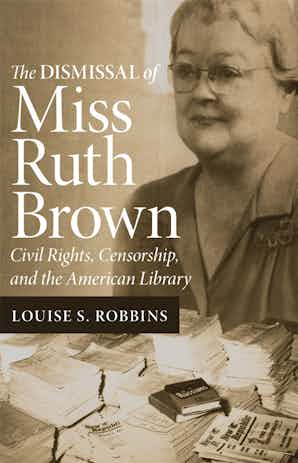
The Dismissal of Miss Ruth Brown - by Louise S. Robbins


Eight years ago I wrote about the film Storm Center. I recently learned that this film, produced at the height of McCarthyism, was loosely based on the case of Ruth Brown, who was fired from her job as librarian at the Bartlesville (Oklahoma) Public Library in 1950. Robbins' book even contains a rather thorough summary of the movie. Bette Davis (who played ousted librarian Alicia Hull) was questioned about taking the role by at least one parent, Anne Smart. 

Smart sent Davis a "report of the book controversy" she was causing in Marin County [California]...Her report depicted in "vivid detail...the type of material being given to our children in some schools. [The report]...made its way around the country for for several years [and contained] the names of authors "all extremely well listed as to their communist and/or communist front affiliations by various government investigating committees."

The more things change... 

Brown was an outspoken civil rights activist in her town. Her racial justice work during the height of McCarthyism made her an easy target. Charges that she was circulating "subversive" materials was a façade for the real reason of her dismissal.

The back cover blurb of this work (published in 2000) reads 

The fundamental issues of the Brown case make it especially pertinent today when differences - in race, gender, class, and national origin - are again feared and as challenges to materials in library collections again escalate. Ruth Brown's story helps us understand the matrix of personal, community, state, and national forces that can lead to censorship, intolerance, and the suppression of individual rights

This description is even more eerily prescient today. As are discussions in the book of neutrality, academic freedom, freedom of acquisition, freedom of access (especially to controversial materials) and the blatant sexism. 

Ruth Brown was one of the women, mostly white and middle-class, who made up 88.8 percent of the allied profession of librarianship in 1950. For a salary less than a man would receive, she organized and maintained a comfortable homelike space where people, especially young people, went for wholesome enlightenment (emphasis mine). The professional role of the librarian gave communities low-cost female employees (emphasis mine) to provide healthy recreational and informational reading while it extended the margins of the domestic sphere without exploding them. The librarian's role did not transgress boundaries as long as the homelike space and the materials and activities organized in it remained safe, comforting, and submissive to the prevailing ideology...

The more things change... 

The Library Bill of Rights was originally adopted by the American Library Association (ALA) in 1939 to ensure access to information (even what some might consider harmful or dangerous) to all. "The ALA articulated the importance of allowing citizens to decide for themselves what they should read, an idea Brown expressed in her interview with the city commission". This is a stark contrast to the description of the "stereotypical" librarian 

in Alice I. Byran's 1952 research report, The Public Librarian...[who] was "rather submissive in social situations" and lacked self confidence. "Indiscreet" was not part of the lexicon by which librarians, especially female librarians, were described. In fact female librarians have been characterized as discreet to a fault in book selection practices, "ruthless in their own censorship." Marjorie Fiske's 1959 classic , Book Selection and Censorship, depicted its mostly female subjects as anxious and fearful, avoiding challenges to library materials through self-censorship.

The more things change... 

 And on a final note, we see the same ideological concerns in libraries today as libraries in Montana and Georgia cut ties with the ALA over president Emily Drabinski's identity as a Marxist lesbian.

The more things change...

Tuesday, July 20, 2021

Miss Moore Thought Otherwise: How Anne Carroll Moore Created Libraries for Children


At the turn of the 20th century a young woman named Anne Carroll Moore enrolled in library school and got a job at the Pratt Free Library in New York City. When Moore was growing up children were restricted from using libraries. "People didn't think reading was very important for children - especially not girls." However, Miss Moore thought otherwise. After she was put in charge of all of the children's sections in New York City's thirty-six branches Moore was tasked with designing the Children's room at the new grand library that was to be built at Fifth Avenue and Forty-Second Street. The Children's room was designed especially with children in mind with special furniture, bright colors, and artwork and "new children's books in many languages". Once the room was built music programs, author talks, and other special events kept the children coming back. Her ideas have been adopted in libraries around the world.

A beautifully illustrated work.

Wednesday, June 17, 2020

La biblioteca mágica - por Valeria Cavajal Vasco


According to amazon I bought this book on April 30, so I must have purchased it for DĂ­a de los niños/DĂ­a de los libros (aka "DĂ­a" or Children's Day/Book Day). I do recall specifically looking for a library-centric, Spanish-language book to read. I usually pick a picture book to blog about for DĂ­a but this year I selected a chapter book, so it took me a bit longer to read it.  This is the story of friends Emma, Park, Paige, and Liam who want to take a summer vacation together, but first they need to earn some money. Paige and Park find work at a local store, and Liam gets a job with his uncle. Emma is worried that she will be the only one who won't be earning any money, until her mother helps her land a job at the local library el "Ăşnico lugar al que muy pocos adolescentes irĂ­an a pedir trabajo", as well as "el lugar más aburrido del pueblo" (for those who are Spanish-language challenged, that translates to 'the only place that few adolescents would ask for work'; and 'the most boring place in town').

Emma, however, discovers that the library is far from boring. In a library lover's version of Night at the Museum Emma learns that those who work the night shift have the ability to visit the characters in the books. Beginning with Caperucita roja (Little Red Riding Hood), she moves on to Peter Pan,  Harry Potter; and CrepĂşsculo (Twilight), among others. From each book she also brings back a souvenir (Red Riding Hood's Cape and Peter Pan's sword, for instance). Far from boring, Emma finds that she not only looks forward to going to work in the library she is more interested in her work than in hanging out with her friends. She is reluctant to tell them about the library's secret until she learns that the mayor wants to close the library because nobody visits it, and it isn't a money maker. With the help of her friends and the other library employees, she comes up with a plan to save the library.

I must say I was left a little wanting with the resolution they came up with which I saw as stop gap at best, and had nothing to do with magic. No one wanted to reveal the library's secret for fear of exploiting it. However, if I were writing the ending to this book the friends would have sparked interest in the library, and helped it to make money without letting anyone in on the secret by  strategically visiting books, bringing back cool relics, and selling them. In fact I thought this solution was so obvious I really was stunned that it wasn't how the book ended.


Sunday, September 1, 2019

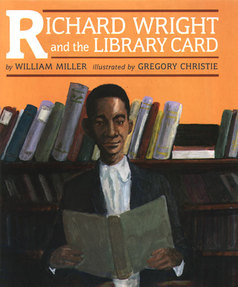
Richard Wright and the Library Card - by William Miller


In honor of Library Card Sign-up Month I chose this story based on an episode from Wright's autobiography Black Boy. 

Growing up in the segregated south young Richard Wright had limited educational opportunities. Neither was he able to use the library as it was open for whites only. As a young man he left his home in Mississippi and moved to Memphis, Tennessee. In Memphis he asked a white co-worker, Jim Falk, to help him to get books from the library. Wright took Falk's card to the library and told the librarian he was checking out books for Mr. Falk who was too busy to come himself. When further questioned by the librarian Wright insisted that he couldn't be checking out the books for himself because he couldn't even read. Once the librarian believed this lie Wright was able to check out any book he liked.

Richard Wright's love of reading ultimately inspired him to become a writer himself.

Thursday, May 2, 2019

The Library at the Edge of the World - by Felicity Hayes-McCoy


When I read a review of this work I was intrigued not only because it was about a library, but also because the author has a hyphenated name that starts with Hayes, which is also true of me. I downloaded this and my husband and I listened to it on the Kindle app during a long drive back to our New England home from Chicago. 

We listened to it almost two months ago, making it rather hard to write about now. Also, since I was listening to it, rather than reading it I didn't mark anything. And a search on the word library, or librarian would be rather like a google search resulting in so many hits as to be overwhelming. In any case I will make my attempt to create a post, giving this work its due. 

The story takes place in the fictitious town of Finfarran, Ireland. Our heroine/librarian is Hanna who has returned to Finfarran (her childhood home) following her divorce and taken a job as the director of the public library - a job that she isn't particularly excited about. Mostly she keeps things going, and tries not to rock the boat, until she discovers a dastardly plan to shut the library down. With the help of some elderly nuns she discovers the importance of keeping the library relevant and how to rally the town in support. 

A lovely listen, read by Emma Rowe in her beautiful Irish lilt.


Wednesday, February 20, 2019

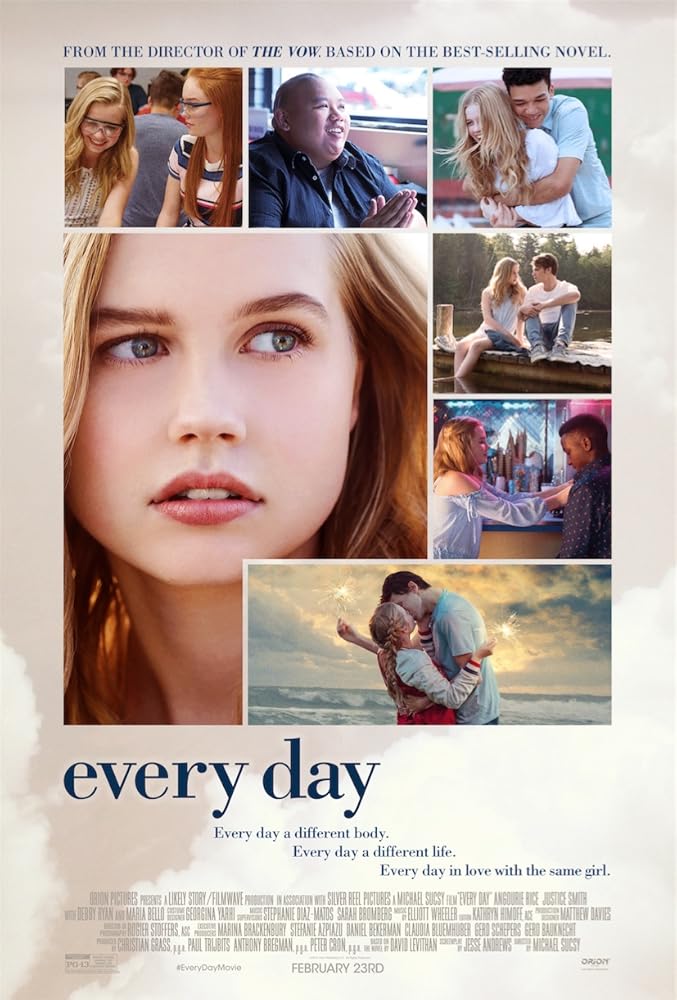
Every Day (the movie)


This is a love story between Rhiannon, a teenage girl, and A, a soul who wakes up in a new body every day. A never knows what gender, race, ethnicity, or abilities they will have from one day to the next. Neither does A have any control over whose body they will inhabit on any particular day. They only know it will not be the same one as the day before, and that it will be someone about the same age as they were the day before. 

On the day that A wakes up in the body of George they find themselves in an "old school situation". George's mother picks out his clothes, and only agrees to let him out of the house to go to the library to study. A contacts Rhiannon and tells her that they have about an hour to meet before George's mother picks him up. Rhiannon and A get "shushed" at least three times before Mom arrives and goes ballistic when she finds Rhiannon kissing her son between the stacks and chases her out of the building.

This very non-binary tale, based on the book by David Levithan, is thought provoking well executed.

Sunday, January 7, 2018

Our Bodies, Our Shelves: A Collection of Library Humor - by Roz Warren


I read a review of this book a few years ago, and wrote it down on my list of potential reading. I decided it would be a good choice for a read aloud with my husband during our Christmas break. I checked it out at my local public library and we did enjoy reading it together, and the short essays were perfect for wrapping up an evening before bed. 

Warren's essays are funny, and also highlight some of the issues that librarians struggle with such as censorship, crappy wages, and patron privacy. None of these things is black and white, and there are, of course, fifty shades of grey in between.

Tuesday, October 18, 2016

Where the Heart Is - by Billie Letts


This is the third Billie Letts book I've blogged about here. Each one was found by serendipity - the first (Made in the U.S.A.) while browsing the leisure reading shelf of the library where I work, and the other (Shoot the Moon) at Somethin's Brewing Book Cafe. This one I found at The Little Free Library which recently appeared on Washington St. in Fairhaven, Massachusetts, near where my beach house is located. I was thrilled to be able to ride my bike there and pick out a book.

Of the three Letts' books this one is the most library-centric, and includes at least three different kinds of libraries (public, academic, and prison). The libraries tend to be positive forces for the characters in the books; the librarians, however leave a bit to be desired.

When seven-months-pregnant Novalee Nation is abandoned by her boyfriend at the Wal-Mart in Sequoya, Oklahoma she meets an eclectic group of people who help her out in some unexpected ways. She camps out at the store each night, and hides from the employees as they open it each morning. During the day she explores Sequoya and finds the public library "a two-story brick building with a black wrought-iron fence, the lawn planted with joseph's coat, calendula and foxglove." The first library Novalee had ever been in that "didn't have wheels under it". Inside she discovered
a room with dark wood carved into intricate designs, tall windows of thick, frosted glass and red velvet drapes held back with silver cord, chandeliers whose crystal drops caught fragments  of light transfused into rich blues and deep greens, paintings in gold frames of nude women with heavy bellies and thick thighs. And books. Racks of books, stacks of books, walls of books.
The librarian, however, was absent, as she was informed by the only other person in the building. Forney Hull turned out to be the alcoholic librarian's brother who took care of both his sister and her patrons. Forney and his sister live in the library, which before becoming the library was their childhood home. Novalee is enchanted with the idea of  being able to live at the library "to have all those books to read..." She also gets to celebrate her birthday at the library. This is the first library birthday celebration I have come across, and I had actually been wondering if I would ever find one!

Meanwhile, Novalee's good-for-nothing ex, Willy Jack (a.k.a. Billy Shadow), winds up in prison for theft. There he meets Claire Hudson, prison librarian:
She was a big woman who had to shop for queen tall pantyhose and size eleven shoes, double E. She wore dark clothes - stiff gray gabardines, navy twills and black serges...boxy suits with high necks, long sleeves and tight collars. Claire avoided garments with lace, bows and fancy buttons and she owned no jewelry, not even a watch. She held strong disdain for anything showy, allowing herself only one extravagance: Band-Aids....She wore them constantly and in abundance...She covered her warts, moles and ingrown hairs...pimples, cuts and fever blisters...burns, abrasions, hangnails and bites...eczema, psoriasis, scratches and rashes. 
Clair Hudson changes Willy Jack's life when she helps him to get a guitar to keep in his cell and he writes a song. Ultimately, though, she betrays him. It is unclear whether it is out of simple meanness, or perhaps because of some mental illness.

One other library gets a shout out - the one at Bowdoin College in Maine. No other information about the library is provided except that is is "great".

This book had a lot of surprises, and ultimately a happy ending, without being too sappy. Libraries play an important role as places of turning points for the characters.

Friday, June 3, 2016

Part of Our Lives: A People's History of the American Public Library - by Wayne A. Wiegand


Wayne Wiegand was one of the first people I remember learning about in library school in the early 1990s. He was like the E.F. Hutton of libraryland, whatever he said was gospel. When I took a course on Scholarly Communication and we learned about how the peer-review process worked, it was also explained to us that there were certain people who would always get their works published, Wiegand being one of them.

Predictions of the demise of the public library are common in the twenty-first century. I've certainly heard them myself. After all, everyone can access whatever they want from their own home computer, right? People who work in libraries can tell you that libraries are still used, and loved, by the many people who frequent them. They are safe havens after school for students, places for those who do not have internet access at home to research and job search, and according to this New York Times article, the trendy hot spot for the under-five set (for story time). I expect libraries will be around for a while yet. They do however, evolve, and, as always, librarians will be at the forefront of the changes. Just as libraries 100 years ago sponsored cooking, sewing, and English language classes when the need became evident, libraries today have started loaning out tools, gardening supplies, cake pans, and seeds in response to demands.

In reading this book I was especially interested to find out about how librarians' own views of their profession and duties have transformed. Whereas today we librarians largely see our roles as connecting people with whatever information they want, many of our ancestors saw themselves more as gatekeepers. When the Boston Public Library opened in the mid 1800s it had rules in place to "protect ladies' delicate sensibilities...to ensure that none got questionable materials" And for a very long time librarians put a lot of pressure on themselves to make sure their patrons read "good" books, by which they meant non-fiction. It seems that there was quite a bit of hand-wringing over the fact that most people wanted to read fiction. Some libraries considered not stocking any, others required that patrons who wanted a fiction book, also had to check out a non-fiction work. Once librarians conceded to keeping fiction, they then clashed with their patrons about what was considered "trashy". The people wanted series fiction. Librarians saw this as frivolous. From Horatio Alger, to Nancy Drew, to the Sweet Valley High series the same debates have played out for over 100 years.

Questions about censorship, and what constitutes it, have been a perpetual theme in libraries. Are librarians guilty of censorship when they select certain works over others? Is it ever okay to remove a controversial work from the collection? Who gets to decide? Libraries may reflect their own community standards, but often librarians are helping to create those standards. During World War I patrons were likely to find books about Germany (or written in the German language) had "disappeared" from their local library shelves. By World War II, however, librarians were more actively fighting censorship. It was just before the United States' involvement  in the war that the Library Bill of Rights was adopted and waiting lists grew for library copies of Hitler's Mein Kampf.

One new thing I learned about in this book was the word "Inferno" used as a place that libraries designate to "sequester certain books" which must then be specially requested. Librarians are then put in the place of deciding whether or not the requester should be able to have the book. I have been aware that many libraries have such policies, I did not know that there was a special word for it.

While librarians today are sometimes characterized as "hysterical" liberals our profession has not always shown itself to be as actively politically as might now be expected. I was surprised to learn that the American Library Association took no stance on desegregation of libraries in the south during the civil rights movement of the 1960s.

Throughout the book, though, what I saw was that "the more things change, the more they stay the same". Librarians used the same excuses for refusing to purchase Valley of the Dolls in 1967 as they did in 2014 for not buying 50 Shades of Gray: it wasn't the content they objected to, but rather that the books were poorly written. This is really hogwash. No librarian reads all the books they purchase. All libraries have poorly written works in them. When reading about Madonna's 1992 book Sex ("largely a book of nude photos") I realized that binding the book with cheap spiral was probably the biggest favor the pop icon could have done for librarians. They could refuse to purchase the book based on the fact that it was poorly bound, and would not hold up to wide circulation. Just the kind of thing that was probably already part of the many libraries' collection development policies. A search of WorldCat indicates that today there are only 215 libraries in the country that own a copy. I seem to remember that when I worked at a public library in Texas one of the nearby libraries owned a copy, but it was in the "Inferno". I do recall, though, that at least we librarians got to make a lot of jokes at the time about whether or not we should have Sex in the library.

People still "cover up" Mickey's naked body in Maurice Sendak's In the Night Kitchen (I discovered shorts pasted on the otherwise bare protagonist in my own (academic) library's copy of the book. Reading about people listening around a radio at the New York Public Library to hear the news that Pearl Harbor had just been attacked in 1941was reminiscent of the bombing of the Alfred P. Murrah federal building in Oklahoma City in 1995 when the public library I worked in set up a television set in a meeting room so people could follow the news. We did the same thing when the O.J. Simpson verdict was announced.   Just as in the 1960s people of color, and LGBT individuals, struggle to find books that represent their own experiences; and libraries that serve largely African American populations find themselves with fewer resources that those that serve affluent white communities. And yet, despite all the naysayers and budget cuts, people still love their libraries and  librarians still do change lives.