Showing posts with label Virginia. Show all posts

Monday, August 18, 2025

Demon Copperhead - by Barbara Kingsolver

Over the course of about four weeks three different friends recommended three different Barbara Kingsolver books to me. First up was a recommendation by a fellow librarian - Demon Copperhead. She not only suggested I read it, but also expressed a desire to get together over Zoom so we can discuss it. I've finished by book, discussion is pending.

Based on Charles Dickens' David Copperfield (which I have not read) Kingsolver's book takes the reader into a world of poverty, foster care, hunger, and drug abuse. Nevertheless, throughout the despair libraries bring hope. Young Damon (aka Demon) longs to see the ocean. He has seen pictures and a "hypnotizing screen saver of waves rearing up and spilling over on a library computer". Fellow foster Tommy Waddles was "the type to make the best of things, mostly by reading library books and ignoring the fact of people hating him". Years later when Demon and Tommy meet up again Demon discovers that Tommy's understanding of pop culture is slim - Tommy having "squandered his youth on library books and had zero experience with cable TV."

As a recovering addict Demon recognizes that living in a city, even if you're poor, has some benefits including having a library within walking distance of his halfway house. He describes the "Halley Library branch on the north end of Knoxville" as "the other half of [his] halfway life". It was here that he met Lyra a "hot librarian" (is there any other kind?) "...with a full sleeve tattoo representing the book of Moby Dick". Lyra, however was not just another pretty face and sexy body, she taught Demon how to use the library's scanner and "rocked [his] marbles" by "turning [him] on to the adult comics and graphic novels section of library".


Friday, June 28, 2024

Gay the Pray Away - by Natalie Naudus


Valerie and her brother are homeschooled with a curriculum sanctioned by the Institute of God's Basic Principles, a conservative Christian organization headed by Ben Goddard - a not-so-subtle camouflage of the Institute of Basic Life Principles once headed by Bill Gothard. Valerie has always been taught to obey her parents and the church's teachings. The seventeen-year-old is expected to marry and begin having children when she completes her studies in God's Training Academy. She interacts mostly with others from her church, and rarely talks to people outside of her insular world. Her haven is the public library - a place she is able to visit while supervised by her mother (who once organized a protest against it for "sexualizing children"). Valerie has learned to select books with innocuous covers so that her parents don't question her reading choices. It is through library books that she first learns about bisexual and other queer folks and begins to question her own identity. When she meets Riley, a "troubled youth" who got kicked out of her private Christian school for kissing a girl, she realizes that there is much that she still needs to learn. With the help of the public library's internet she begins to explore new territory, the freedom she experiences leads her to make some difficult decisions. 

This book reminded me of Pearl Abraham's The Romance Reader (which I read when it was first published almost 30 years ago). Abraham's work tells of a girl growing up in a strict Hasidic community who sneaks to the library to read romance novels.


Thursday, May 9, 2019

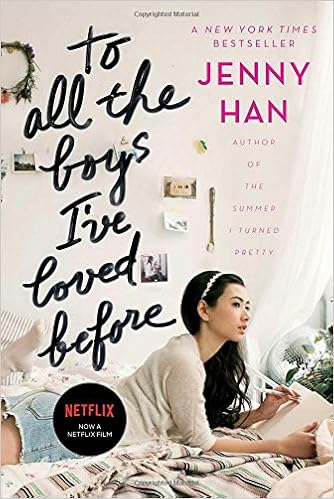
To All the Boys I've Loved Before - by Jenny Han


What could have been a trite YA comedy of errors about a teenager who wants to die of embarrassment was, in fact, a much more thoughtful story.

High School junior Lara Jean has a complicated love life, but at least she knows that the library is a good place to study with the boys she's dating/wants to date/pretends to date. She also considers the library a good place to volunteer (although as far as I can tell she never actually follows through on that plan). And the only library book she mentions is one she bought at the Friends book sale. At least it was cheap (75¢) if not free. The only appearance a librarian makes is, of course, to shush.

I picked up this book at the Little Free Library at Borderland State Park. A fun, quick read.

Thursday, March 8, 2018

Commonwealth - by Ann Patchet


This year I am participating in the Baltimore County Public Library's #BWellRead Challenge which specifies one kind of book to read each month. I grew up in Baltimore County and I got my very first library card from BCPL in the 1970s, so although I now live and work in Massachusetts I am delighted to be a part of this endeavor. So far I've read Mona's Simpson's Anywhere But Here (January) and Beloved by Toni Morrison for February (no libraries in that one). March's challenge is to read a book with a one word title. I found Patchett's book on the Leisure Reading shelf of the Maxwell Library. I assumed it would be about Massachusetts, but it turns out the commonwealth in question is Virginia (FYI Kentucky and Pennsylvania are also commonwealths). And, like Irving Wallace's The Seven Minutes, the title of this book actually refers to a fictitious book of the same name.

This bit of meta-fiction about a blended family in the 1970s with six children is hardly the stuff of the Brady Bunch. Their parents' infidelity is what brings the Cousins and Keating children together and a disdain for their progenitors is what binds them. The novel follows the siblings through five decades. One of them, Franny, lands a job in the law library at the University of Chicago. This is what she refers to as her "real job". She also has an un-real job at the Palmer House restaurant as a cocktail waitress. The waitress job is the one that pays well while the pay at the library "is appalling".

As a child Franny was a heavy library user. She loved to read, forcing her father to make a comment that "It's a good thing there're going to be two lawyers in the family...Somebody's going to have to make the money to buy you all those books." To which Franny retorts "they're free...I check them out of the library."  Her sister Caroline makes a final condescending remark "Well, thank God for libraries".

Thank God, indeed.

Franny's stepbrother Albie finds that he can make good use of the public library as a free place to spend his evenings in order to give his sister and her family some privacy while he is sleeping on their couch. He always has a good book to read while he's there thanks to his job as a messenger which often has him delivering manuscripts to publishers. It is through this job that he finds himself with a copy of a novel that is clearly a thinly disguised story of his own family.

I found this work to be a true page-turner, and a perfect vacation read for my spring break trip to Florida. It was especially good for keeping my mind off of the airplane ride. My Florida friend saw that I was reading it and said that she had also recently read it for her book club and generally liked Ann Patchett's books. I will have to look for others.

Sunday, January 15, 2017

Hidden Figures - the movie


I don't often go to the theater to see a movie. I prefer to wait until they are available streaming or on DVD so I can watch them in my living room and enjoy reasonably priced snacks from my own kitchen and bathroom breaks whenever they are needed. Yesterday I made a rare exception and went to see Hidden Figures at the local cinema. This film based on the true story of African-American women who worked for NASA during the 1960s lives up to all the hype and was well worth the price of admission. I can also only assume that the racism and sexism we see in the film has a Hollywood sugar-coating and that it was much worse than what is portrayed in the film. 

One thing we don't see is any of the trailers for the film is a pivotal library scene. Dorothy Vaughn (Octavia Spencer) is thrown out of the public library for daring to look for a book in the "white" section when she realizes what she needs is not available in the "colored" area. Once she is back on the bus with her two sons she pulls out a library book on Fortran from under her coat. When one of her sons asks if she "took" it Vaughn explains that she pays taxes like everyone else, and that you can't "take" what you already paid for. She uses the book to secretly learn to program the new room-sized IBM mainframe computer that has recently arrived at NASA that will surely put her and many of her denizens out of a job. By learning the computer language she not only changes her own destiny, but that of dozens of other women, both black and white, who work for the space program. This episode is one of many in the film that reminds us that what is legal is not necessarily right, and what is illegal is not necessarily wrong. Powerful lessons that are still relevant today.

Update July 26, 2024:
Today I discovered that this post is cited in The Reel Librarians blog!

Thursday, July 28, 2016

This is Where You Belong - by Melody Warnick


This title piqued my interest because I have steadily lost love for my current town over the past decade. When we first bought our house in 2002 I told my husband that I felt like we lived in a poem. We could both walk to work and to the center of town; had a big backyard; and could hear the train whistle, the church bells, and the chimes from the college. A few years later a loudspeaker system was put in at the sports field across the street and things became a lot less charming. Social media also had a role. I had to get off both the town groups I was on because I found the complaining and negativity to be too much of a downer. Last year we bought a weekend getaway in another town where we retreat to be away from the sports noise in the fall. It is easy to love a second home. There are no work, church, PTA, or other committee obligations there, and in our case it is also near a beach. Learning to love my primary home again, where I do spend most of my time is something I'd been wondering how to do. Warnick, who has made several interstate moves, always looking for the greener grass, sets out to learn to love Blacksburg, Virginia. There were some suggestions in this book that I wish I could do more of here - one was to buy local. For a college town Bridgewater really is lacking in funky, independent shops. Warnick mentions specifically a gift shop where she takes her daughters to buy presents. I remember when we first moved here there was an  independent educational toy shop nearby. Whenever my daughter was invited to a birthday party we would walk over an pick out a puzzle or kit. It has since closed, replaced by a Walgreen's (which I have never been in). The author also mentions an independent bookstore and explains how more dollars are put back into the local economy when one shops local, and then confesses that sometimes rather than buying books at the local bookstore she "made mental notes of titles to check out later from the library". She is a bit ashamed of this, but I see no reason why she should be. The public library is a resource to be used by the community. Getting a book there that you are only going to read once is a good way to be sustainable.

Warnick has a few other things to say about libraries. She does appreciate them and one day while performing random acts of kindness she brings donuts to the thrilled librarians at her public library. She also takes a civics education class at the public library in order to learn more about her town and how to get involved in it. And some years before she began her quest to love Blackburg she was a member of the Ames, Iowa library board. She laments about leaving that city. "As a board member I was a necessary, voting part of the organization and by extension, the city. I mattered, and feeling like you matter makes you feel like you belong. No wonder Ames was the town I left most regretfully." She also suggests reading about your town's history at the local public library, and gives a shout out to one of my favorite things: The Little Free Library

Reading this book does have me thinking about what I can do for my town, and make an effort to appreciate what is here. I will start tonight and attend a free concert at our town's new outdoor music venue: Music Alley. 

Friday, March 21, 2014

Becoming Odyssa - by Jennifer Pharr Davis


After graduating from college Jennifer Pharr Davis sets out to hike the Appalachian Trail from Georgia to Maine. Her Odyssey prompts her to take the trail name "Odyessa" as she sets out on a journey of self discovery. Davis' writing is honest and funny and demonstrates a true love affair with the trail. Like the other books I've read about the "AT" (A Walk in the Woods; The Things you Find on the Appalachian Trail) I read this as part of my town's One Book One Community program. And while all of these books were enjoyable, and inspiring each in its own way, none have prompted me to want to dust off my old backpack and set out on the hike myself.

The bar for inclusion on this blog is simply that a library be mentioned, and Davis almost didn't make the cut. However, in a break from the trail to visit with family in Connecticut she visits the Yale University library and tells the tale of seeing "two volumes of the Gutenberg Bible at the Beinecke Rare Collections Library.

I look forward to hearing Ms. Davis speak about her experiences when she visits Bridgewater in May.

The author's middle name serves as her aptronynm as the distance as the Appalachian Trail is over 2100 miles long. It is also the name of a town I once lived in.

Tuesday, August 20, 2013

The Immortal Life of Henrietta Lacks - by Rebecca Skloot


I've been intrigued by this title for several years. So, recently when two different friends of mine suggested that it be would be a good choice for Bridgewater's One Book One Community (OBOC) reading program several of us on the OBOC steering committee decided to read it. It does look like an excellent choice for a community-wide read with a lot of issues for discussion including race, class, medical ethics, legal ethics, and science vs. religion.

Author Rebecca Skloot, sets out to find out about the real person behind the HeLa cell line. In 1951 cancer cells were taken from Henrietta Lacks who was being treated at the Johns Hopkins Hospital in Baltimore, Maryland (one of the few places that offered treatment to African American patients at the time). Lacks' cells turned out to have an incredible rate of reproduction and were the first cells that were able to be kept alive in a culture. Still reproducing today they have been used in countless medical, and other scientific experiments. Lacks' family did not find out about the cells until 25 years later. And virtually none of the people doing research with Lacks' cells knew anything about the woman they came from (most thought her name was Helen Lane). In Skloot's quest to find out about the mother of five who died of cervical cancer at age 31 she consulted doctors and researchers; traveled to Lacks' family home in Clover, Virginia; and interviewed family members, much of the time accompanied Lacks' daughter Deborah, who knew almost as little about her mother as Skloot did.

Henrietta Lacks moved from her hometown of Clover to Turner Station, a suburb of Baltimore, Maryland for her husband to take a job at Bethlehem Steel. So, it is at the Turner Station Branch of the Baltimore County Public Library that Skloot meets the librarian who shows her a VHS tape of the BBC program The Way of All Flesh.

At the time of Lacks' death there were no laws or ethical codes that required doctors to ask permission from patients to take living tissue. There were laws requiring permission of the family before removal of tissue from dead bodies. Controversy remains as to when the cells were removed, and whether consent was granted.

This work is completely readable and accessible, even for those of us who have not had a science class since tenth grade biology.

More information
http://rebeccaskloot.com/
http://henriettalacksfoundation.org/
Recent article from the New York Times tells of the Lacks family finally being given a place at the table.
Remembering Henrietta Lacks
The Supreme Court ruled in June that naturally occurring genes could not be patented, although synthetic ones can be.