Showing posts with label World War II. Show all posts

Thursday, March 26, 2026

The Library of Lost Dollhouses - by Elise Hooper

Along with being unprepared for a test, and being naked in public, one of my recurring dreams is that of finding a secret room in my house. 

Hooper's book asks us to imagine finding a secret room in a library that holds secret dollhouses, each of which holds its own secrets. 

There are two timelines in this story: World War I Europe, and present day San Francisco. When Tildy Barrows, curator at Belva Curtis LeFarge Library and Museum, discovers a hidden room in the museum with two exceptionally decorated dollhouses created by artist Cora Hale it takes her on an unexpected journey that intersects with her own family history. 

The museum, along with its eccentric founder is loosely based on Boston's Isabella Stewart Gardner Museum. Just as Gardner left instructions to keep her art collection exactly as she left it, LeFarge likewise "left very strict provisions for how...the library was to be managed". Barrows is sure that this does NOT include digitizing the book collection to make room for more art. 

It turns out that Barrows was right. In fact LeFarge once insisted that raising a child in the Library was an exceptionally good idea. 

Libraries are the prefect place to grow up. Just think how smart she'll be.

Furthermore, the McCarthy-era heiress had this to say about a child being trouble in a library 

Any trouble a young person can find in a library is the best kind of trouble

And Hale, who knew LeFarge quite well, had this to say about libraries

Libraries are viewed as such solemn places-but why? Reading is magic. Think of the imagination and sense of adventure that readers employ every thine they crack open a book. There are few places filled with more magic than libraries, no about about it.

I am not sure what psychologists say about what the "secret room" dream means. I have always interpreted it to mean that I am not meeting my potential. But perhaps the dream is about revealing something I have kept hidden.  Just as every book has as many interpretations as there are readers, dreams are multi-layered and can mean different things to different dreamers. I think will need to think about my hidden room dreams a bit more.

Friday, November 17, 2023

Love in the Library - by Maggie Tokuda-Hall


In her Author's Note Tokuda-Hall tells the readers that this is the story of her maternal grandparents who met in Minidoka, a Japanese incarceration camp in Idaho. Tama (her grandmother) was the camp librarian, although "she didn't know how to be a librarian...In the camps people did the jobs that needed doing." Her grandmother had taken the job because "she liked books". George (Tokuda-Hall's grandfather) came every day to check out books. Tama questioned whether he could actually be reading all the long books he checked out. No, he wasn't reading them all. He was "only human". And the realization that she was the real reason he came every day dawned on her. Their love grew amidst their  whispers. 

George's "voice was so big it barely fit in the library..." Tama "held up her finger to remind him of the rules. They were in a library, after all."  

The Author's note also connects the story of Minidoka to current events. 

As much as I would hope this would be a story of a distant past, it is not. It's very much the story of America here and now. The racism the put my grandparents into Minidoka is the same hate that keeps children in cages on our border. It's the myth of white supremacy that brought slavery to our past and allows the police to murder Black people in our present. It's the same fear that brings Muslim bans. It's the same contempt that creates voter suppression, medical apartheid, and food deserts. The same cruelty that carved reservations out of stolen, sovereign land, that paved the Trail of Tears. Hate is not a virus; it is an American tradition.

Tokuda-Hall's author's note sparked controversy when Scholastic asked her to edit it in order to include the work in Scholastic's diversity-focused Rising Voices collection earlier this year. Tokuda-Hall refused and Scholastic ultimately issued an apology. More information about the request, Tokuda-Hall's response, and a link to the apology can be found in this article from Publisher's Weekly  

Wednesday, November 1, 2023

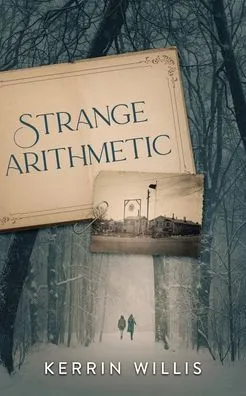
Strange Arithmetic - by Kerrin Willis


In 1945 Maggie O'Callaghan discovers she's pregnant. The father of the baby is an Italian POW being held at Camp Myles Standish in Taunton, Massachusetts. The complications of this situation are many and the resolution is bad all around.

In 2016 Niahm Reilly really wants to be pregnant. The situation is complicated and the resolution turns out to be better than expected.

My husband and I heard this author speak earlier this year at An Unlikely Story Bookstore. We purchased both of the authors' books intending to read them together after we finished Margaret Atwood's recent book of Essays Old Babes in the Wood (which we had just started). Then we learned that Willis' book was our town's One Book One Community selection for this fall, so we moved it up to the top of the pile. We had not known that there was a POW camp nearby. We learned quite a bit of local history from reading this.

Niahm has a special place in her heart for libraries-her deceased mother was a librarian who'd bring her daughter to work with her. However, I cringed at the description of Niahm curled up under her mother's desk by her her "high-heeled feet". WTF?! What self-respecting librarian wears anything other than sensible shoes.


Friday, February 3, 2023

The Librarian of Auschwitz - by Antonio Iturbe

People like to share memes with me about book collecting and book hoarding. These are meant to be humorous, but I generally don't find them especially funny. I do have quite a few books in my house, but I do not let them take over. I often read books from the library and then return them, or when I buy them I have a "one in, one out" policy. Purged books go to free book shelves, or are donated to libraries. They are shared. Books are meant to be read and shared, not simply put on display. I thought a lot about all of this as I read The Librarian of Auschwitz. This novel is based on the real story of Dita Kraus who, along with her family was sent to the family camp at Auschwitz-Birknenau during the Holocaust. Although she was only 14 years old Dita was asked to be the clandestine librarian at the clandestine school run by fellow prisoner Fredy Hirsch. She took on the task although the punishment for keeping the books would surely have been death had she been discovered. The eight tattered books entrusted to Dita's care were shared among the classes at the school, and otherwise hidden beneath a floor board. All the books had value, even the Russian grammar book, written in Cyrillic which no one in the camp read.

Early in the book the forbidden works are described as dangerous although they do not have "a sharp point, a blade or heavy end". 

Throughout history all dictators, tyrants, and oppressors, whatever their ideology - whether Aryan, black, oriental, Arab, Slav or any other racial background; whether defenders of popular revolutions, or the privileges of upper classes, or God's mandate, or martial law - have had one thing in common: the vicious persecution of books. Books are extremely dangerous; they make people think.

Even among the prisoners there was concern about what was to be found in some of the books. Fredy Hirsch tried to warn Dita off reading The Good Soldier Svejk, telling her that it was "not appropriate for children, especially girls". To which our heroine responds "Do you honestly believe that after observing on a daily basis the dozens of people entering the gas chambers...[that] what I read in a novel might shock me?". The same book is demonized by some other prisoners, and again Dita puts them in their place.

Reading this in light of the unprecedented book-banning that we are seeing in the United States today makes it especially chilling. Concerns about what someone might find in a book seem rather ridiculous in a country where children are gunned down in their classrooms and by police. 

In addition to the eight books, the school also runs a "library on legs". Similar to the human books in Ray Bradbury's Fahrenheit 451, people who have memorized stories share them verbally.

Before being sent to the Auschwitz Dita and her family were first sent to the ghetto in TerezĂ­n, a place with a library-on-wheels, a trolley pushed through the streets which was generally "warmly welcomed" although the "books were often stolen, and not always so they could be read. They were also used as toilet paper or as fuel for the stoves".

One of the books entrusted to Dita is H.G. Wells The Time Machine. Dita determines that Wells was right, time machines do exist, in the form of books. Furthermore, she realizes that books can take us "much farther than any pair of shoes".


Wednesday, September 15, 2021

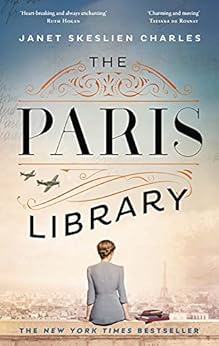
The Paris Library - by Janet Skeslien Charles


Numbers floated round my head like stars. 823. The numbers were the key to new life. 822. Constellations of hope. 841. In my bedroom late at night, in the morning on the way to get croissants, series after series - 810,840,890-formed in front of my eyes. They represented freedom, the future.
So begins the story of Odile Souchet who thinks in Dewey Decimal numbers. She is thrilled to get a job at the American Library in Paris in 1939 where she can put both her library degree and her ability to speak English to good use. She has always loved books and the library, a place she frequented with her aunt as a child.  

Her job becomes a lot more challenging when Nazi's occupy her beloved "city of readers". The subversive librarians (including the aptly named Miss Reeder) find ways to continue to provide books and services to their Jewish patrons, even after the library is closed to them. Nazi's also looted libraries as well as the private collection of "prominent Jewish families" Additionally, censors regularly blacked out news from the daily papers making the sharing of knowledge that much more difficult. "Fake news" in the form of rumors also shakes up the library as a "sanctuary of facts" as patrons share misinformation with each other. 

Shushing is of course a time-honored tradition in libraries (at least as far as popular culture is concerned). While I will admit to having shushed a few exceptionally loud library users (usually university administrators) I have also, ironically, been shushed myself by people trying to study in the library, just as librarian Odile was shushed when she "screamed with joy" after returning to the library after 10 days of being away and seeing her brother's girlfriend Bitsi (who was also the children's librarian). In one passage Bitsi is described as "holding an open book over her head, like it's a roof" as if she is telling "the children that books are a sanctuary".

The story oscillates between Paris during World War II and Froid, Montana in the 1980s. Virtually all of the passages I marked while reading this are in the sections that take place in France. The only exception comes very late in the book. Lily, Odile's young neighbor storms "Dad's wife took away Forever!...She said Judy Blume writes 'smut'.' Censorship is wrong!" To which Odile responds "So is throwing a fit instead of sitting down to have a conversation...You should ask Ellie what she fears." She goes on to explain that "Ellie's scared the book will put ideas in your head, scared you'll want to experiment with sex." Lily retorts "I read Out of Africa and disn't establish a coffee plantation in Kenya!" I of course agree that censorship is wrong. I also agree that having a conversation is better than throwing a fit.

Thursday, June 2, 2016

Code Talker - by Joseph Bruchac


In the late nineteenth and early twentieth centuries many Native American children were sent to government-run boarding schools where they were expected to assimilate into the "American way of life". They were taught English and humiliated and punished for speaking in their native languages. However, during World War II the government discovered that Navajo Marines who were fluent in both their native language and English were valuable assets against the Axis. These Marines developed an unbreakable code based on the Navajo language and were known as the Code Talkers. Their work was so secret that it was not declassified until 1969 - twenty four years after the end of the war.

Bruchac's novel tells the story of Ned Begay who arrived at one of the Indian Boarding Schools as a young child. Although he was forbidden from using his native language at school he did not forget it. He studied hard and became a top student. He makes specific mention of using the school library to "read every book I could get my hands on", as well as reading the newspapers and magazines available there to find out as much as he could about Japan. When he learned that bilingual Navajos were being recruited for a special project by the US Marines Begay dropped out of school and enlisted, lying about his age in order to join. As a Marine Begay continued his love of learning and research, especially in the field of history
I have always loved reading history. All through the war, I did research in ship libraries and borrowed books from Marine officers who were history buffs and who liked the idea of an Indian being a historian.
The town of Bridgewater (MA) has selected this book for its next One Book One Community read. We are looking forward to a visit from Mr. Bruchac sometime this fall. It is a bit ironic that we will be hosting him at a university which does not require students to learn a second language. This book makes clear the benefit of knowing more than one language.

Tuesday, January 5, 2016

All the Light We Cannot See- by Anthony Doerr


In the summer of 1984 I spent a month studying Spanish in Salamanca, Spain. My cousin Lori came at the end of the month to travel with me for a few weeks. She suggested that we take the train to Saint-Malo, France and spend some time on the beach. I was enchanted with the old buildings, and the extreme tides which could strand a person in one of the old ruins for an entire day if you weren't paying attention. I don't think I learned anything of the history of the place at the time though. Reading Doerr's book I felt like I was walking through a dreamscape-something familiar but that didn't seem quite right. It was strange trying to justify my fun vacation 32 years ago with learning about the Nazi occupation. I dreamt about Saint-Malo twice while I was reading this book. I don't remember ever having dreamt about it before.

The story is of Marie-Laure, a blind French girl who loves mollusks; and Werner, an orphaned German boy who is a whiz at learning how things work. Werner is curious and clever to the point that the Nazis recognize his abilities in technology. He is recruited for training with the regime - his supremely Aryan looks an additional asset. Marie-Laure is likewise clever and her father does not allow her to let her blindness handicap her. He insists that she learn to read Braille, teaches her how to solve puzzles and builds scale models of their neighborhood in Paris, and another one when they flee to Saint-Malo (to live with Marie-Laure's great uncle) so that she will be able to navigate the streets on her own. The chapters alternate between Werner's and Marie-Laure's two stories until near the end when Werner and his crew arrive in Saint Malo looking for illegal radio transmitters and the two lives converge.

This book was recommended by a friend, not because it was an especially library-centric book, but rather because it is just such a good book. However, it wouldn't be included here if it didn't have at least some library references. There were, in fact, about a dozen or so.

Marie-Laure's father works at the Museum of Natural History in Paris where he distributes keys to other employees "zookeepers...office staff...technicians and librarians and scientific assistants..."

Of course, the library is included in the scale model of Saint-Malo he builds as well. The library in Saint-Malo is a place where Marie-Laure also has a few meetings with others. And ultimately, we learn of the the burning of Saint-Malo (and its library) on August 8, 1944
Flames scamper up walls. Parked automobiles catch fire, as do curtains and lampshades and sofas and mattresses and most of the twenty thousand volumes in the public library. The fires pool and strut; they flow up the sides of the ramparts likes tides; the splash into alleys, over rooftops, through a carpark. Smoke chases dusk; ash chases smoke. A newsstand floats, burning.
One Nazi uses the geological library in Vienna to do some research on precious stones. He is assisted by a "mousy librarian" and "an underweight secretary wearing brown shoes, brown stockings, a brown skirt, and a brown blouse." The Nazi soldier is researching precious objects for the "fĂĽhrer" who, rumor has it, "intends to remake the Austrian town of Linz into an empyrean city, the cultural capital of the world. A vast promenade, mausoleum, acropolis, planetarium, library, opera house..."

The library as metaphor is used twice in this work. As the city of Saint-Malo empties of its inhabitants it is described, rather desolately, as a "library of books in an unknown language, the houses great shelves of illegible volumes, the lamps all extinguished."

And finally Marie-Laure, many years later, images that the air itself is a library, not only with "images of electromagnetic waves...torrents  of text conversations, tides of cell conversations, of television programs, of e-mail...commercials for Carrefour and Evian prebaked toaster pastries..." but also "that souls might also travel those paths...might harry the sky in flocks, like egrets, like terns, like starlings...a record of every life lived, every sentence spoken, every word transmitted still reverberating within it."


One final note:
This story reminded me of listening to Michel Chikwanine. His story of being a child soldier in the Democratic Republic of Congo was tragically reminiscent of Werner's story. Child soldiers are still being recruited today. Human Rights Watch has more information.


Monday, April 7, 2014

The Book Thief - by Markus Zusak


There is some irony in the fact that my library's copy of The Book Thief has been overdue since December. I strongly suspect it is not coming back - at least not any time soon. I had put myself on the waiting list for the book before Christmas, but after the book failed to be returned in any kind of a timely fashion, I got a message that my "hold" request had expired. I ended up buying a copy for my iPad, which turned out to be pretty cheap. I think it was under $5.

It is, of course, right and good to read a book before you see the movie upon which it is based. The Book Thief movie came out in theaters in November, but I did not see it, having not yet read the novel. The movie will be released on Netflix tomorrow, which I do look forward to seeing, now that I have done my due diligence.

This is the story of a girl named Liesel. Liesel lives in Germany, under the Nazi regime, with her foster parents and a Jew (Max) who lives under the basement staircase. Liesel is the eponymous "book thief". Her first theft being almost an accident, the rest were rather deliberate. Her second theft came during one of the Nazi book burnings
The Germans loved to burn things. Shops, synagogues, Reichstags, houses, personal items, slain people, and of course books. They enjoyed a good book burning, all right - which gave people who were partial to books the opportunity to get their hands on certain publications that they otherwise wouldn't have. 
Most of the rest of the thefts are from the personal library of the mayor's wife, Ilsa Hermann. But once the Frau Hermann figured out what was happening, she played along by leaving books out, and making it easy for Liesel to enter her home to browse the shelves.

The importance of books to Liesel is evident to all. Her foster father, "Papa", teaches her to read and write and then, knowing how much the printed word means to his young charge threatens to burn all her books if she tells the family secret - the one literally hidden away in the basement. Max knows how much the books means to her when he writes a book for her using pages from Mein Kampf that he paints over to make fresh writing surfaces.

The books Liesel steals become not only her salvation, but the salvation of others as well. When those in her neighborhood were sent to bomb shelters with only their most important possessions in tow, Liesel took a book, and read to everyone.
For at least twenty minutes, she handed out the story. The youngest kids were soothed by her voice, and everyone else saw visions of the whistler running from the crime scene. Liesel did not. The book thief saw only the mechanics of the words - their bodies stranded on the paper, beaten down for her to walk on. Somewhere, too, in the gaps between a period and the next capital letter, there was also Max. She remembered reading to him when he was sick. Is he in the basement? she wondered. Or is he stealing a glimpse of the sky again.
SPOILER ALERT

Ultimately, it is a book that literally saves Liesel's life. Hidden in the basement, where Max once stayed, she is reading the book he left for her when her town is leveled.

Only one person survived.
She survived because she was sitting in a basement reading through the story of her own life, checking for mistakes...The shells of wreckage cantered down, and hours later, when the strange, unkempt silence settled itself on Molching, the local LSE  could hear something. An echo. Down there, somewhere, a girl was hammering a paint can with a pencil...
She was still clutching the book.
She was holding desperately on to the words who had saved her life.
I notice upon a second reading of this passage that the author chose the word "who" rather than "which" in this last sentence, giving an anthropomorphic quality to the book. It was the book "who" saved her, as much as the soldiers who removed the rock to release her.


Tuesday, February 25, 2014

Dear Miss Breed - by Joanne Oppenheim


The internment of Japanese-American citizens during World War II is a chapter of United States history that some would prefer to pretend never happened. I remember finding out about this injustice as an adult, and wondering why it wasn't taught in any of my American History classes in school, or my class on Constitution, Citizenship and Public Issues (CCPI) - a required course for all High School Seniors in Maryland during the 1980s. It is especially baffling to me because while I was taking CCPI there were actually Congressional Hearings about the internment going on at the time. How could it not have been worthy of a class discussion?

In 1942, after the Japanese invasion of Peal Harbor San Diego Public Children's Librarian Clara Breed discovered that many of her most enthusiastic patrons, American children of Japanese descent, were going to be sent to "relocation centers" with their families. She asked them to write to her, providing them with penny postcards, asking that they let her know where they were and how they were doing. From this she began a correspondence with many of the children. She also provided them with books, toys, supplies, and material for making clothes.

Clara Breed saved the letters that the children sent her. In 1993 they were donated to the Japanese American National Museum (you can read some of the letters here), and they are the basis of this book.

The children tell stories of the substandard conditions to which they were subjected (for some their first stop after being evacuated from their comfortable middle class homes was a refurbished horse stable - still smelling of urine). Surrounded by barbed wires and armed guards the camps were poorly heated, and poorly equipped, making for an especially difficult adjustment. Even so, the children's letters are hopeful, and demonstrate strong spirits.

Also included in this work are excerpts from opinion pieces from newspapers at the time. The bigotry is clear. It is also true that some things don't change, although today we are more likely to read such comments as anonymous posts and "tweets".

This work is evidence of librarians' long-time commitment to social justice. One former correspondent explained when he was interviewed for the book that as a "neglected child" Miss Breed introduced him "to the magical world of books". Clara Breed championed the rights of an especially vulnerable population at a time when it was especially un-popular to do so. In an article written for the Horn Book magazine in 1943, Breed tells the story of her young friends. It is interesting to note the stereotypes, albeit positive ones, evident in her article, as well as the language that many will find rather politically incorrect for the 21st century.

I was especially interested to see one of the children wrote to Miss Breed about how much she enjoyed "playing library" and discovering that another one grew up to work in a library.

Interestingly, as I was finishing this book I found out about Allegiance a new musical currently being produced in New York that tells the story of the Japanese-American internment camps.


Saturday, April 20, 2013

With a High Heart - by Adele de Leeuw


In honor of National Bookmobile Day (April 17) BookRiot posted reviews of "5 Great Books about Bookmobiles". I couldn't resist this title, and the fact that I found it in the very library where I work seemed to be destiny. I've always been fond of bookmobiles, and there are still a few around even in the 21st century. I got my first library card from the Baltimore County Public Library Bookmobile in the early 1970s. I thought it was much better than my older sister's card, which came from the Catonsville Branch Library, because mine had a blue star stamped on it, whereas hers had a boring old black star. There is a certain romance about bookmobiles, and this book is a romance novel about a bookmobile.

Poor Anne McLane was so counting on being assigned to the oh-so-modern Claremont Library for her summer library work experience, after all she was the star student. How could Miss Pruitt have given that cushy assignment to mousey Sophie Whitcomb, while she (Anne) is exiled to Kenyon County Library? But it seems wise Miss Pruitt knew what she was doing. Not only did Anne learn a heck of a lot more about running a library than she bargained for, how else would she have ever met dapper Matt England, the smart young farmer, if the bookmobile she was assigned to drive had not broken down near his property? She also saves a drowning child, mollifies a bitter blind man, saves the day when she keeps an event from cancellation, and otherwise keeps the dreams of the citizens of Kenyon County alive - all this in the space of one very hot summer, whew! Likewise, Sophie's assignment brings her out of her shell.

This book was written in 1945 and certainly gives a great sense of the times. War rationing is an issue when the bookmobile is threatened with a cut in gas and tire rations, which would have prevented the satellite stations from receiving their books. Beyond this though, is a clear subtext about women's roles, even working women. There is no judgement about Rilla, who is only working in the library until her soldier fiance returns home so she can marry him. Her co-workers do seem unsympathetic to her, though, when his daily letters stop coming, which makes her pretty (understandably) grouchy. When she receives word that Dill has been killed they offer "mute and awkward sympathy", and suggest that she keep working!  Indeed, there are several passages that suggest that women should remain "cheerful" and even decorative, even in the face of adversity. The book opens with this description of the aforementioned Sophie Whitcomb, who actually has the nickname "the Mouse"
she was so mousy...[d]un-colored hair and gray tweeds and no make-up whatsoever were bad enough (emphasis mine)..she tiptoed down corridors and spoke in a subdued voice that sounded half-frightened, and she was apologetic and effacing when she should have been vigorous and prominent
The book makes evident when it is appropriate to be vigorous and prominent (for instance to save the bookmobile) but it just as evident when a woman should keep her opinions to herself. Anne's dissatisfaction with her work assignment is obvious to those around her and she is given a dressing down by Matt when when he notices that she doesn't seem thrilled with her assignment, and suggests she go about it "with a high heart". Of course Anne must eat crow in the end, when it turns out he was absolutely right.

It is also evident that anyone can learn to do the job of a librarian (which after all is women's work), as Ada Howland, former actress, tells Anne
...when they started the Library...I just jumped at the chance of being in charge. Of course I didn't know a thing about books; but I was a great reader and was terribly fond of them, and no one else seemed to have the time, and the salary was so tiny...
This short passage hits two hot buttons for me: a myth that all it takes is a love of books to be a librarian (especially interesting in a book about a library school student); and a sad truth that the salaries remain small (after all it is women's work).

I think my favorite "library lesson" though was when young Anne learns that Carrie Newton, the flighty librarian at the Gansville station has an "unorthodox" system for identifying books that would never fly in her library school classes. "Systems have to be invented by somebody, and I might as well have my own" Newton tells the whippersnapper, wanna-be librarian. Anne not only comes to realize that the system does have a certain charm, but that there are some things can't be taught in the classroom. Those instructors sure can be anal retentive, can't they?

Beyond bookmobiles, some Latin American Countries have found other innovative ways to deliver books to off-the-beaten-path villages. Find out about the Biblioburro and the Bibliolancha.


Friday, March 15, 2013

We Band of Angels - by Elizabeth M. Norman


During World War II a group of Army and Navy nurses were imprisoned in Bataan by the Japanese. The women were subjected to a starvation diet, tropical diseases, and humiliation by their captors while continuing their work as nurses. They were hailed as heroes after their rescue three years later, but found that  once the celebrations ended the military refused to give them the same honors that their male counterparts were due. Many of the women suffered long-lasting effects from the years of illness and malnutrition, which in some cases forced them to give up their military careers. This book is based on interviews, diaries and other firsthand accounts with the women who were there. The author named Helen "Cassie" Cassiani as the one she knew "best".

Growing up in Bridgewater, Massachusetts Cassie "often used [farm] work as an excuse to ignore her studies....Then one day two friends from the neighborhood sat her down in the library and showed her how to study. Soon she acquired the habit of reading-history, science stories." And from this seed grew her desire to become a nurse. Exciting to think that the library she used must be the very one for which this blogger now serves as a trustee!

Cassiani's fellow internee Eleanor Garen also found a love of the library as a child in Elkhart, Indiana. "She learned to read early and became such a bookworm that she would fill up her own library card, then take out books on her brothers' accounts."

The importance of libraries is additionally highlighted in this book by the fact that those imprisoned established their own lending libraries within the confines of the camp. The closing the library was one of the methods used by their captors to harass and demonstrate who was in charge.

This is a captivating read, especially in light of the recent decision to "allow" women in combat units. Women  serving on the front lines, in combat conditions is nothing new, as is evident in this work.

This book is the One Book One Community selection for Bridgewater in the fall of 2013.