Showing posts with label sex education. Show all posts

Friday, June 26, 2020

Teeth (the movie)


I know I watched this film about a chaste teenage girl who discovers that she has vagina dentata at least two times before, but those were obviously before I started this blog. I read something recently that indicated a library connection and so I put it back on my Netflix DVD list.

When Dawn (Jess Weixler) suspects something is different about her body she does what anyone in the 21st century would do and begins her research by conducting a web search. She types "female genital mutilations" into the search engine which lands her a screenful of results. However, unlike everyone else she doesn't just click on the top link, but rather selects the the trusty link from the public library "your source to information". It is not clear if the link is from the Austin (TX) public library where the story takes place. It seemed more to be a generic public library link. 

Definitely not a film for the squeamish. It will likely appeal to fans of Little Shop of Horrors.

Monday, August 26, 2019

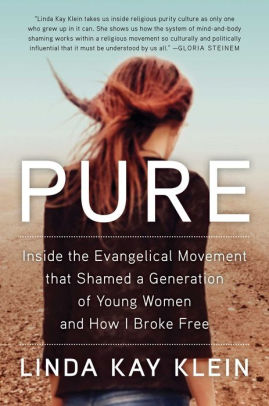
Pure: Inside the Evangelical Movement that Shamed a Generation of Young Women and How I Broke Free


Based on her own experiences, and interviews with dozens of women, Klein's scholarly memoir describes how the purity movement (or what Jessica Valenti calls "the cult of virginity") perpetuates rape culture and creates a climate of humiliation for women. Far from being healthy, many of those who grew up with abstinence-only messages not only found themselves unable to have a healthy sexual relationship, their mental and physical health often suffered as well.

Libraries are mentioned in only three places in this work, but of course that is three times as many as are needed to secure a spot on my blog. They all came near the end. One involved a young evangelical man concerned about his obsession with women's bodies. He would walk "around campus, the library, the supermarket, perpetually hoping to see another accidental glimpse of ...something [cleavage, leg, skin]". He was, laughably, advised by his pastor to attend a Sex Addicts Anonymous meeting, where, not surprisingly, he was met with "an awkward silence" after sharing his story.

Another passage recounted a gay lawyer's research in Washington, DC's theological libraries "where he continued to wrestle with the rift between theology he loved and the lived experience he couldn't refute."

The most interesting, however, was this passage of a young woman who told her story of contemplating suicide
Rosemary prepared for a trip to Europe, where she would spend her sophomore year of college. By the time she was packing her bags...she was so depressed that she was seriously planning her suicide. She would kill herself in a European library, she told herself. She had always loved books so much.
Ultimately, the trip had a healing effect when Rosemary found a brand of Christianity in Europe that focused on fellowship rather than shaming.

Tuesday, October 27, 2015

Come as You Are : The Surprising New Science that will Transform your Sex Life - by Emily Nagoski


Nagoski weaves stories of real women into the book she has written on the science of sex, and discovering pleasure. The title isn't simply a cute play on words; it is an affirmation. Over and over the author reminds us that we are all "made of the same parts, just organized in different ways." What may seem normal for some (or many) may not be right for others, and there is not necessarily a need to change in order to conform. People have sexual breaks and accelerators; these are different for everyone. These breaks and accelerators can be recognized, and explored, which may in turn increase sexual pleasure. Nogoski uses herself and her identical twin to explain how different people, even those with the same DNA and "grew up in the same house, went to the same schools, watched the same TV shows, and read many of the same books", can end up with "very different maps" in their heads. Nogoski's image of woman as an Ideal Sexual Being came from "women's magazines, porn, and romance novels. Her sister's image, however, was that of woman as "Moral" model - smart girls weren't interested in sex. Both she and her sister were surprised about what they learned about themselves when they started having sex.

Nagoski uses the term "mental library" twice to explain how she organizes the stories women tell her in her brain. She also tells one story in which a client "Laurie" frustrated and feeling pressure because she didn't want sex as often as her husband did sent her husband and her son out of the house "to the library so that she could have the luxury of the house to herself..." Her time alone to reflect allowed to to discover, almost by accident, that feeling pleasure wasn't selfish, and she could allow herself that feeling during sex.

Libraries really do change lives.


Tuesday, June 24, 2014

Read My Lips - by Debby Herbenick and Vanessa Schick


The subtitle of this is "The Complete Guide to the Vulva and Vagina." I must say it is rather complete. Readers will find chapters (among others) on arousal; sex toys; birth control; masturbation; menstruation; vaginal health; ideas for vagina and vulva arts & crafts; and information on vagina and vulva maintenance which includes my favorite topic (NOT) - pubic hair shaving. When did this become a thing? I keep seeing articles about it on my FaceBook feed always with the authors explaining their choice to shave or not, as if there is some sort of major policy debate we have to have on this issue. Shave or don't - your partner will just be happy to see you naked.

Anyway, I did learn a lot from reading this comprehensive work. One thing I learned is that viewing Playboy, and similar magazines, is where many young women will find their first images of vulvas other than their own, and these "...may misinform women and men about what's 'normal' for women in terms of their genitals. Because people want to feel normal this is important." But what about women who find images elsewhere, for instance those who "seek out anatomy textbooks in their local libraries." The authors point out that this is not the norm.
Given how private people feel about genitals (some people call them "privates"), it is less likely that people are openly seeking out these images when they have access to a plethora of vulva images on their home computer. 
 They are probably right in this regard. I should, therefore, point out that librarians are trained to use the utmost discretion when assisting people with their research, and also to respect their privacy. This is actually federal law. Unfortunately, this was the one and only mention of libraries in Herbenick and Schick's book. Sigh.

Friday, February 7, 2014

Vagina: A New Biography - by Naomi Wolf


So many puns I could make here - about a penetrating analysis, or a deep look inside - but I really don't want to make light of this serious, fascinating, and well-researched book. Wolf explores the connections between women's sex organs, their brains, and their overall well-being in this comprehensive work. She interviews women about their orgasms, and sexual trauma, talks to sexual healers, and reveals her personal reasons for embarking on this research. She also follows the history of the vagina, and demonstrates how it has been revered, dismissed, and objectified in turn. Many of the things that researchers are "discovering" about the vagina, vulva, clitoris, and uterus today were well known to those practicing the eastern religions of Tantra-ism and Taoism. Both of these religious traditions revere the vagina as life giving, and honor women, as well as their sexual health.

There were only a few times libraries were mentioned in this one, but I think it may have provided the best library laugh thus far as Wolf describes sitting in a university library when she accidentally opens the wrong file on her computer
...scores of students had been silently focused on reviewing their Swinburne or Lawrence. While trying to open a document on my laptop, I had inadvertently pressed "play" on a audio file of an interview I'd conducted with Charles Muir, The American Tantric guru...Suddently, in the silence of the library, a Queens-accented resonant voice had rung out clearly from my computer: "There are trillions of cells in one ejaculate. A typical man ejaculates with so much force that..." Rows of curious faces had swiveled toward me simultaneously. I frantically tried to press "stop," tapping the trackpad over and over, but Muir's confident cadences grew only louder. "And every time he ejaculates..." Finally I seized my computer, and red-faced, carried Charles Muir's voice at a run out of the double doors."
I was surprised at how much I learned reading this. I have always kept a copy of Our Bodies Ourselves on my bookshelf, and have studied goddess traditions. I have seen The Vagina Monologues at least 3 times, in addition to having read it, and own a copy of Joani Blank's Femalia. But as I found out when I read Flow: The Cultural History of Menstruation study of the "lady bits" has been neglected for too long. There is still a lot to learn.


Monday, January 27, 2014

Like a Virgin - by Aarathi Prasad


I had a bit of trouble concentrating while I was reading this one, not because of the sexual subject matter, but rather because it gave me an earworm. Much as I like Madonna, hearing the refrain of one song over and over in my head was pretty distracting.

This was a fascinating book though, explaining how different organisms reproduce, including those who do so asexually. Discussions of cloning mammals, and advances in fertility treatments demonstrate that a human virgin birth is probably not far outside the realm of possibility, perhaps in the very near future.

There were also two noteworthy things for the "Library Books" blog. One mention that the sequencing of human DNA "has provided a library of essential biological information". If there had been nothing else in this book to blog about here, it might not have even gotten an entry, but in addition to libraries in books, any time I find information about banned books I have to comment. Book banning is a time-honored tradition, which appears to go back as long as there have been books. I can even imagine Neanderthals chipping away someone else's cave drawings in order to put up a "more accurate" or even "less offensive" version of events. The banned book in question here is Aristotle's Masterpiece, or, The Works of Aristotle. This book was, in fact, not written by Aristotle, but includes some of his ideas, as well as others', and was banned in the UK from the 18th through the mid 20th century, when it became available in 1960.

The book includes descriptions of midwifery, female reproductive organs, and all things related to sex and embryos...In the United States...[it] was much more accepted. Until the middle of the nineteenth century, it was the most commonly read medical text-despite the arrival of new microscopes, dissection tables, and complex experimentation, which completely contradicted the book's depictions of the workings of reproduction.
Never let science get in the way of education. Such things are still taking place today as creationists make their religious viewpoints the focal points of science classes, even in public schools.

Thursday, July 14, 2011

The Abstinence Teacher - by Tom Perrotta

I first read this novel a few years ago, and I not only remembered how much I liked it, but also that there was a librarian in it. It is the story of Ruth Ramsey, a health teacher in an ambiguous New England state, who, against her better judgement, is required to teach an abstinence-only curriculum to students at Stonewood Heights Middle school. After she makes it clear to her students that the lessons are misleading, she is required to attend remedial virginity trainng with some other less-than-enthusiastic health teachers. Further complicating her life is her attraction to her daughter's married, born-again, soccer coach. Helping her negotiate all of this is her best friend Randall, the school librarian; and Randall's partner, Gregory. The stage is set for a librarian-friendly book on the first page when Randall and Ruth share their ritual morning Starbucks in the library, although there are actually not a lot more places in which the library itself is mentioned. A big library issue, censorship, is part of the story though ,and Randall speaks up to save Judy Blume's classic Are You There God? It's Me Margaret from the would-be book banners.

Look for more about Are You There God? and other banned books on this blog during Banned Books Week September September 24-October 1.

More about author Tom Perrotta at http://www.tomperrotta.net/index.php

Wednesday, June 8, 2011

Condom Nation: The U.S. Government's Sex Education Campaign from World War I to The Internet by Alexandra M. Lord

Concerns about the spread of syphilis and gonorrhea during World War I  lead the federal government to launch a sex education campaign. These campaigns were aimed primarily at young boys and men and may be seen as precursor's to today's "abstinence-only" programs. Young men were admonished through classes, pamphlets and slide shows, to avoid contact with prostitutes, lest they carry the disease, and  to "keep fit" by demonstrating "self control". Over the next nine decades the Public Health Service would carry on the battle over unwanted pregnancies, abortion, and, eventually, AIDS, delivering messages through all types of media, and in the classroom, while attempting not to offend any constituencies. There was no way to carry out this task without failure. Today, as the United States' teen pregnancy rate continues to outpace that of other developed countries, the Religious Right still manages to call the shots on sex education.

This book had some great vintage images of pamphlets with a window on social morés of the times. Even while there has always been evidence of a large portion of the population engaging in pre-marital and extra-marital sex, the messages were clear that only sex within marriage was the accepted norm. The book also provides good insight into how the government managed to get any information out to the public despite the fact that there have always been vocal minorities who wanted to quash any attempt to educate the masses about sexual health. It was especially interesting to learn that even  almost one hundred years ago the government made some attempt to create culturally sensitive materials for African-American and immigrant communities.

Although libraries are mentioned only a few times in this work, the author makes it clear that they were important to her research. Acknowledgements go to individuals at the National Archives, the National Library of Medicine, the Kautz Family YMCA Archives, and Social Welfare History Archives at the University of Minnesota. As well, several of the images in the book are credited to these libraries. She also acknowledges her parents, who introduced her "to the joys of libraries and reading", and who taught her to "look it up!"

The role of libraries as information providers in the government's quest is seen through a lens of censorship. Following World War I the government continued its attempt to eradicate venereal diseases through education campaigns. Schools, newspapers, civic organizations, and churches were involved, as were libraries, some of which defied local censors by "boldly placing the Public Health Services pamphlets on syphilis and gonorrhea on their shelves and then publicizing the fact in the local newspaper" (p. 62).

A discussion of the Religious Right during the last part of the 20th century tells us that "efforts such as purging the local library of works that [it] deemed morally questionable, along with attempts to ban the teaching of evolution and sex education dominated the movement throughout the early 1970s" (p. 143). Of course, the Religious Right, and any number of other organizations, and individuals, continue to attempt to restrict the rights of others to choose what they want to read. See my Banned Books Week page for more information.

Saturday, May 7, 2011

Flow: The Cultural History of Menstruation - by Elissa Stein and Susan Kim

An interesting and quirky book about  the marketing of feminine hygiene products, Flow was actually pretty fun to read. It also made me feel strangely nostalgic as I recognized ads and pamphets from my teens and twenties. Since the book covers almost a century of marketing, women of all ages are likely to see something familiar here. Making the point that men do not have anything like a uterus as part of their anatomy (everything else we can find some kind of similarity with) periods have really not been studied much, which is why so many myths about them persist. The authors acknowlege "the informative staff at the New York City Public Library Picture Collection", as well as Mitch Evans of Ad* Access, at Duke University Libraries. The only mention of libraries within the body of the work, though,  is really the just the idea of a library where the authors say "...what we still don't know about menstruation could fill a small library" (p. 186).This may seem not even worth a blog post, but it has always been my tradition in my previous blogs to include any mention of libraries. I also think that in this case, the way it is used illustrates a kind of importance about libraries in our culture. At a time when rumors abound that libraries are going away, this not insignificant use shows how deeply ingrained libraries are in our culture. The authors could not have used this image if they did not believe that their readers would know what they meant by it.