Showing posts with label massachusetts. Show all posts

Monday, March 10, 2025

Innocence Under the Elms - by Louise Dickinson Rich

I've known about this memoir about growing up in Bridgewater, Massachusetts (at the turn of the twentieth century) for some time. Many in my adopted hometown had told me about it and I finally got around to reading it just as I was moving out of Bridgewater after 27 and a half years. 

When I arrived in Bridgewater in 1997 one of the first things I did was to get a library card. Shortly after that I gave birth to my only child with whom I spent many hours in the library, and reading books at home together that we checked out. I also served for three terms on the Board of the Bridgewater Public Library (one as President). Therefore, I especially enjoyed reading about Rich's love of the same library. The Library, in fact, was also the place of the author's "first paid job".

The town, it seemed, had allocated a sum of money to be used for cleaning and refurbishing the Public Library. The two librarians, Miss Lucia Christian (Adults) and Miss Rachel Crocker (Children), considered it essential that in addition to the necessary painting and floor finishing, every book in the place should be taken down and dusted.

In those days the shelves were closed to the public. If you wanted a book, you told the librarian about it, and she went and got it for you, while you waited outside the carved wooden fence that separated the sheep from the goats. The shelves came very decidedly under the category of Sacred Grouind, available only to the librarians or their duly empowered agents and assistants and jealously guarded from unlawful hands and eyes. There was no random and casual browsing by goats, who if they did nothing worse, could surely be counted upon to put the books back in the wrong places. Under this system some books weren't even touched, let alone read, from one year's end to the next. It wasn't very surprising or unnatural that during that time they collected quite a coating of dust. And who better could be found to cope with the situation than the little Dickinson girls, who in addition to being Reliable, were Readers and Respecters of Books, and who, moreover, could be expected because of their tender years to work for much less than a regular cleaning woman would?

We were paid, I think, five cents an hour, which seemed like the wealth of Croesus to us.

From there the author describes the additional benefits of working in the library "turning us loose in the library was like turning an alcoholic loose in the wine cellar...those five or six weeks of dusting books contributed more to our so-called education than sixteen years...of school attendance". By stopping to read the books they were dusting Louise and Alice learned that not everyone held the same opinion about everything "you could believe anything you wanted to! You didn't have to accept what anyone, even teachers, told you!" Quite a heady lesson that we'd do well to remember a century later.

And that's not all! There was more exciting library work for Louise and her sister Alice as they got a bit older. 

The following summer, Miss Christian and Miss Crocker were obliged for personal reasons to take their two weeks' vacation at the same time. ..Faced with the the necessity of leaving their sacred trust in untested hands, they thought of the little Dickinson girls...We went into the library for a week or so to learn the ropes; and then Miss Christian and Miss Crocker took off, leaving us in charge.

Dickinson goes on to describe how she and her sister stamped out books, collected fines, and "frowning at anyone who raised his voice above the lawful whisper". They also determined on their own to "give people not what they wanted to read" but what Louise and Alice determined they should read "for their own good". And so we see why libraries should be run by actual librarians, and not school children, no matter how reliable they might be.

Monday, January 20, 2025

The Man of My Dreams - by Curtis Sittenfeld

Introvert Hannah Gavener is uncomfortable with parties in college, and with dating. In order to pay for her therapist she takes a job shelving books at the veterinary library at her university, as a bonus she finds that  she can be "almost peaceful" among the quiet stacks. The job also comes in handy as an excuse when she wants her date, Mike, to leave after a rather awkward date that lasted all night. She lies and tells him she has to go to work early at the library. 

Hannah also has good memories of reading through all the biographies of the first ladies in fourth grade as part of a summer program at the public library. ("If you were a boy you read about the presidents.") 

Hannah loved these books, their cheerful orderly recounting of lives...and by August she'd read all the way up to Nancy Reagan...For Hannah things had seemed good then, it had seemed like she was headed somewhere. 

Thursday, January 18, 2024

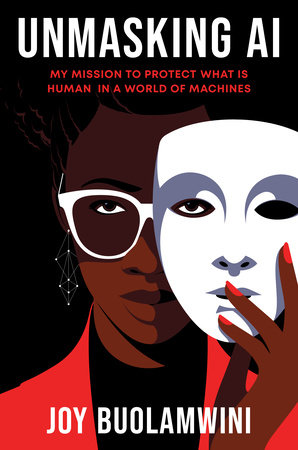
Unmasking AI - by Joy Buolamwini


Algorithms are created by humans. Humans are flawed and have biases, these flaws and biases are programmed into algorithms, perhaps not explicitly, but with consequences nonetheless.

As a graduate student at the Massachusetts Institute of Technology (MIT) Buolamwini, using an open-source face tracking library to work on a project, discovers that facial recognition programs are especially bad at recognizing black and brown faces. Her research eventually brought her to The White House, to testify before Congress, to National Television, and Netflix. And ultimately to become founder of the Algorithmic Justice League. She mentions the use of code libraries on several occasions.

She describes volunteering as an undergraduate at the Carter Center on a project to eradicate tropical diseases. Visiting the Jimmy Carter Presidential Library in Athens, Georgia she 

walked through the gardens near...the library [and] saw a piece of art that offered hope - a bronze statue of a child leading a blind elder using a stick they both held. Sightless Among Miracles had been donated to the center to underscore the effort to support the global control of onchocerciasis (river blindness).

Perhaps the most disheartening (for me) passage was this

After two years on the MIT campus I was finally making my way to the Hayden Library. With online access to almost all the resources I needed, I had yet to step foot into a campus library. After printing out results on archival paper that felt soft yet sturdy to the touch and hunting down last-minute typos, I felt ready to submit my master's thesis.

While I recognize that online resources have allowed us to put libraries into users' pockets, which is decidedly more convenient for all, it doesn't mean the physical library isn't important as a place. And since I'm required to be in my office most of the time, even though almost everyone is using the library remotely, I do wish more people would take advantage of the space.  

Wednesday, November 1, 2023

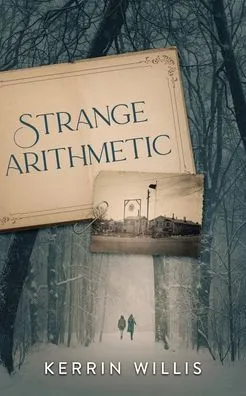
Strange Arithmetic - by Kerrin Willis


In 1945 Maggie O'Callaghan discovers she's pregnant. The father of the baby is an Italian POW being held at Camp Myles Standish in Taunton, Massachusetts. The complications of this situation are many and the resolution is bad all around.

In 2016 Niahm Reilly really wants to be pregnant. The situation is complicated and the resolution turns out to be better than expected.

My husband and I heard this author speak earlier this year at An Unlikely Story Bookstore. We purchased both of the authors' books intending to read them together after we finished Margaret Atwood's recent book of Essays Old Babes in the Wood (which we had just started). Then we learned that Willis' book was our town's One Book One Community selection for this fall, so we moved it up to the top of the pile. We had not known that there was a POW camp nearby. We learned quite a bit of local history from reading this.

Niahm has a special place in her heart for libraries-her deceased mother was a librarian who'd bring her daughter to work with her. However, I cringed at the description of Niahm curled up under her mother's desk by her her "high-heeled feet". WTF?! What self-respecting librarian wears anything other than sensible shoes.


Tuesday, August 8, 2023

Summer Reading - by Jenn McKinlay


August is Read-a-Romance month! 

Romance is a genre I don't read a lot of, although I don't dislike it. There were no big surprises in this standard boy-meets-girl tale, except perhaps the simple twist that the librarian is Ben who is trying to woo Samantha (Sam). A quick perusal of my previous "Romance" posts indicate that in all other romances with a male librarian, the love interest was also male. In hetero romances the woman is the librarian. Of course since most librarians are women, it makes some sense. Male librarians are not quite as unusual as Samantha thinks - "Those had to be rare in the female-dominated library world, mythical even, like unicorns".

What Sam probably doesn't realize is that a man in a leadership role at a library is de riguer. Interestingly there is no real social commentary in this work about the fact that a woman did the work of the former (male) director without pay while he played on his computer. Likewise, when Ben takes off suddenly Em does his work (without additional compensation). In the end Ben returns, takes back his job, and (hooray!) all is well and right in libraryland with the man in his rightful leadership role.😏

Ben is in fact the interim director of the public library. He is able to take the job because he has the summer off from his "academic research library position at MIT". Really? if I had the summer off from my academic library position I sure as hell wouldn't step into a temporary position. I would simply enjoy my time off. 

Sam's best friend Emily (Em) is also a librarian. According to Sam she looks "very much the professional librarian" in 

a cute sleeveless sage green dress with a lightweight white cardigan over it...Her wavy red hair...tied at the nape of her neck...glasses...perched on the end of her nose as she peered...over the computer monitor.

One reason I don't read a lot of standard romance (or other chick lit) is I tire of the endless descriptions of what people are wearing, what their hair looks like, and other details such as how fabulous their kitchens are, that do nothing to move the narrative along. 

A dyslexic, Samantha has never enjoyed reading. She takes special joy in telling her bookish friends that "the movie was better than the book". Ben introduces her to the joy of audiobooks in the best way possible - he begins to read aloud to her. I must take this opportunity to say reading together is one of the things with which I credit my 36-year marriage. My husband (James) and I have been reading to each other since our earliest days together. It always gives us something to talk about, and sometimes gives us something to laugh about, too.

Our story takes place on Martha's Vineyard, a lovely place for a summer romance. Sam has been asked by her father and step-mother to stay with her half-brother Tyler (14 years her junior) while they (her parents) go on a tour of Europe. I am always excited to read a book about a library I've been to. James gave a coffee lecture there in February of 2020. Probably the last trip we took together before the pandemic shut down.

The library in our story is a busy place with programming that includes robotics camp and Samantha teaching a cooking class.

All in all, this was a fun summer read - standard plot points along with a lot of librarian stuff to critique

Monday, May 22, 2023

Our Missing Hearts - by Celeste Ng

This dystopian novel, reminiscent of The Handmaid's Tale, gives us a glimpse of what happens when prejudices go unchecked. As we watch the far right cycle through villanzing every marginalized group, (landing most recently on the LGBTQ+ community) this work is prescient in more ways than one.

In Our Missing Hearts Anti-Asian sentiment is sanctioned by the government through PACT (the Preserving American Cultures and Traditions Act). PACT also encourages citizens to report their neighbors for un-American activities (broadly defined) and allows great leeway in banning books. Children are removed from their homes and permanently re-placed if their parents are deemed to be un-American. Current news from Florida and Texas regarding trans children echoes this story line. Ng's book centers on a mixed race family: Asian-American mother Margaret; Caucasian father (Ethan); and their son Bird (aka Noah).

When Margaret's little-known (and apolitical) book of poetry unwittingly becomes a symbol of a protest movement Margaret goes on the lam leaving Bird and Ethan behind in hopes of keeping father and son together even as she cannot be with them. When asked about Margaret's whereabouts Bird and Ethan always answer that they do not know, and that she is no longer a part of the family.

There is much in this book about libraries and censorship. Although libraries exist they are largely empty (of people and books). Described as a "ghost town" the public library is still a sanctuary for Bird (and his friend Sadie). The librarian helps Bird to find a book based on only a vague description. They use an old card catalog to find it but the book has been removed from the library. As was his mother’s poetry book - Our Missing Hearts. The librarian tells him “We don’t burn books here this is America…we pulp them. She says his mother’s book was probably turned into toilet paper and wiped someone’s butt a long time ago. Although they do not traffic much in books, the librarians are still connecting people and information. "The brain of a librarian is a capacious place." 

The public librarians are part of a subversive group that provides information to parents whose children have been “re-placed” - surreptitiously passing notes between the pages of interlibrary loan books. The librarians also hide Sadie away from her foster family as she tries to reunite with her parents. Train and bus schedule information is provided to Bird at the library. The librarian tells him that she is only letting him know how to find the information: what he does with it is his business. 

Likewise classrooms are described with empty bookshelves because “books are outdated the minute they're published”. However, students are informed by their teachers that books haven’t been banned, obviously, because that would contradict the first amendment. Rather, the books have been removed so as not to expose students to harmful ideas. This is eerily reminiscent of a viral video that recently made the rounds online of an empty school library in Florida.


Ethan shelves books in a Harvard University library. A PhD, he used to teach linguistics there, but lost the job over Margaret's "politics".  As a linguist, Ethan is especially interested in word derivations. He enjoys explaining where words come from (in multiple languages) to his son. The book included an explanation about the derivation of the word library coming from the word for tree bark, something I had never known before.


Thursday, April 27, 2023

The Flag, the Cross, and the Station Wagon - by Bill McKibbin


It is certainly trendy to blame everything that is wrong with the world on my generation ("Okay, Boomer") and, to be fair, there is plenty of blame to go around, but as McKibben points out we Boomers were born during a rather long span (the years 1946-1964) - a population over about 70 million people which "means you're making generalizations about populations larger than France or England". We can look at Zoomers (those born between 1997-2012 - a population which includes my own child) and find fault with their addiction to fast fashion and shake our heads at the problems of sustainability it causes. At the same time I can also see that they are leading the way in seeking racial justice, fair wages, and health care reform. 

McKibben grew up in Lexington, Massachusetts, just up the road a piece from my own home in the Bay State. He describes his childhood home as "like a child's drawing of a suburban home: a square block with a door and a window on the ground floor and two windows on the story above". I expect that the second story in the "child's drawing" was triangle shaped. This describes my own house as well. McKibben uses the house as a starting point in the book and moves from there to descriptions of his schooling, first jobs, and the history of the area to explore some bigger questions on race and the common good.

McKibben is clearly a fan of libraries and indicates that he has made good use of them throughout his life. Early in the work he describes a lecture given in 1970 by Ralph Nader at the town library in which he [Nader]

blast[ed] both air pollution and hot dogs, which he called "innovations to relieve food companies of all their crud". 

I've always been a fan of Nader and voted for him in the epic presidential election of 2000.

Further McKibben describes walking past the town library in 1971 (where he was "already a regular in the downstairs children's room") as part of a protest of the Vietnam War, led by another later presidential hopeful John Kerry, leader of the Vietnam Veterans Against the War.

As a high school student McKibben got a job giving tours of the Lexington Battle Green. Donning a tricorn hat he regaled tourists with tales of the Battles of Lexington and Concord. In order to get such a job 

you needed to pass a test...administered by the venerable rector of the local Episcopal church...He handed you a reading list, and you repaired to the town library's local history room for long days of study.

In one passage he demonstrates the importance of libraries through their absence. Eighteenth century Lexingtonians, according to Richard Kollen "the most determined chronicler of the town's religious history", would have 

attended an average of seven thousand sermons in a lifetime, that meant they heard fifteen thousand hours of preaching from their pastor. (And of course that was pretty much all heard, in an era with no theater, no library, no radio, no internet).

It would seem that today's far right politicians and Christian Nationalists would prefer that we return to this as they remove books from libraries and attempt to censor legislators who speak out for an end to gun violence, and basic rights for transgender people. 

Meanwhile, McKibben tells us that people's interest in libraries, theater going, and even sports has been waning in recent years.

Everything that the affluent possess in private has swelled in size... and what we share in common has been allowed to decay.

 This is evident in California's passage of Proposition 13 in 1978

which sharply limited the ability of cities and towns to assess taxes. Local property tax revenues dropped 60 percent overnight, and though the state filled some of the gap, services like education suffered immediate hits from which they never recovered...They cut maintenance, assistant principals, librarians...in south LA, or the north-eastern San Fernando Valley the library opens rarely...

City and town libraries suffered as well with summer and after-school programs cut. Some branches were closed, or hours had their hours shortened.

Finally, McKibben gives props to "Lexington's superb Cary Memorial Library" in providing access to back copies of the Lexington Minuteman which allowed him to do the research for this book.

Post Script:

To answer the question posed by the subtitle of this work ("What the hell happened?") I submit that we really should have listened to Bill McKibben back in 1989 when he wrote The End of Nature. But we didn't. 

Thursday, December 8, 2022

Cape Cod - by Henry David Thoreau

Thoreau spent a year on Walden Pond; however, he spent only a week visiting Cape Cod in October 1849 before writing this book (although he does mention three visits in total). He traveled from shoulder to fist, back before there was a canal that cut the town of Onset off from the rest of the Cape and before the Cape was such the destination that it is today. He talks to many locals during his travels.

In Pond Village he talks to some blackfish fishermen.  

the Social Whale, Globicephalus Melas of De Kay; called also Black Whale-fish, Howling Whale, Bottlehead, etc.

he learns that these whales are valuable for their oil and that whole schools of them have been caught and then sold for thousands of dollars.

In the Naturalists' Library, it is said that, in the winter of 1809-10, one thousand one hundred and ten "approached the shore of Hralfiord, Iceland, and were captured". 

When Thoreau got to Provincetown he took a"little steamer" back to Boston and describes the scene at the wharf

I see a great many barrels and fig-drums, - piles of wood for unbrella-sticks, - blocks of granite and ice, - great heaps of goods, and the means of packing and conveying them, - much wrapping-paper and twine, - many crakes and hogsheads and truck, - and that is Boston. The more barrels, the more Boston. The museums and scientific societies and libraries are accidental.  
I found this book on one of the many bookshelves in my house, although I believe my husband had read it before, it was previously unread by me. It is available for free through Project Gutenberg.

Monday, March 29, 2021

Beyond the Bright Sea - by Lauren Wolk

In the early twentieth century twelve-year-old Crow lives on an isolated island off of Cape Cod with Osh, who found her as a newborn in a boat. Their neighbor Miss Maggie is one of her few other companions. Curious about where she came from Crow asks questions and wonders why others decline to shake her hand, why she is refused admittance to the local school on Cuttyhunk, and why the librarian told Miss Maggie that if books were meant for Crow's hands then she could keep them rather than returning. Crow ultimately unravels the mystery of her origins and discovers her legacy when she learns about the patients in a hospital that was once located on a nearby island. 

The public library does have some information in its archives that Miss Maggie uses to help Crow do some research. They also find an address for a doctor who used to work in the hospital. Crow posts a letter for the first time when she writes to the doctor to see if she can find out more about where she came from.

While this is not a book I would normally pick up, it is the current selection for our One Book One Community program and I am looking forward to hearing the author speak next month.


Friday, July 3, 2020

Monumental Mobility: The Memory Work of Massasoit - by Lisa Blee & Jean M. O'Brien


I read this for a faculty book discussion at the university where I work. It has local interest as the original statue of Massasoit (8sâmeeqan) is located on Coles Hill in Plymouth, Massachusetts about 20 miles from the university. Created by artist Cyrus Dallin in 1921 to commemorate the 300th anniversary of the landing of the Pilgrims, replicas of the statue can now be be found in Dayton, Ohio; Kansas City, Missouri; Provo Utah; Springville, Utah and on the lawn of the Howard B. Lee Library at Brigham Young University (BYU), where students refer to the monument as "the naked Indian" and are scandalized over that fact that 8sâmeeqan doesn't adhere to BYU's dress code. One student with whom the authors spoke suggested that the statue be moved near the gym "to align with student-athletes in their sometimes-skimpy BYU-issued gym shorts". However, the student also pointed out that such a location "could be interpreted as the rival university's 'Ute' mascot and serve as target practice...".  

The original statue was commissioned by the Improved Order of Red Men, a fraternal organization still in existence and "limited to physically, mentally, and morally sound" white men. Its headquarters are located in Waco, Texas, and the authors made good use of its research library there. The Red Men Museum and Library also owns some 11-inch replicas of the statue commissioned as a fund-raising effort just before the statue's unveiling.

It was certainly an interesting time to read and discuss this book, not only because we are now recognizing the 400th anniversary of the Pilgrims' landing, an anniversary celebration that has been in the works for many years, and will now take place virtually, but also because we are witnessing the destruction of monuments to colonizers, and taking part in a larger discussion of the meaning of monuments to those who build them, those who visit them, and those who remove them.

The final chapter of the book "Marketing" explores how the statue has been exploited, along with other memorials, to make Plymouth a tourist destination - America's Hometown (and I know some Washingtonians who would dispute that moniker). The authors describe several tours available to tourists, some that provide a Pilgrim-centric view, and others that "challenge...expectations for a celebratory settler origin story." The traveling exhibit Captured! 1614 opened in 2014 in the Plymouth Public Library. 
Created under the guidance of Mashpee Wampanoag Paula Peters with a team of Wampanoag designers, researchers, and historical interpreters...the exhibit panels and series of short films...Captured! 1614 presents the Patuxet Wampanoag perspective on the slaving expedition of Thomas Hunt, who seized twenty men and boys from Patuxet, including Tisquantum...for sale in Spain...According to Peters, the reception of the exhibit has been overwhelmingly positive among Wampanoag communities and non-Indian viewers.
Excellent scholarship written for everyone.

Monday, December 16, 2019

Little Women (2018) - the movie


 This modern retelling of Louisa May Alcott's classic work features many of the iconic scenes from the beloved novel, including (spoiler altert!) Beth dies. I mention this because my husband, who has seen the Winona Ryder version of this movie at least twice, seemed blindsided by this turn of events. "You didn't tell me it was going to be a tear-jerker" he sobbed at the end of the film.

Anyway, its inclusion on this blog is made possible by Jo (Sarah Davenport) who, while railing against her editor's demands for further revisions of her novel suggests that she has "other talents" and because she loves books perhaps she could just become "a spinster librarian". Oh, Jo, don't you realize that a simple love of books does not a librarian make? And spinster, really?

Despite this flaw I enjoyed the film.      

Monday, December 2, 2019

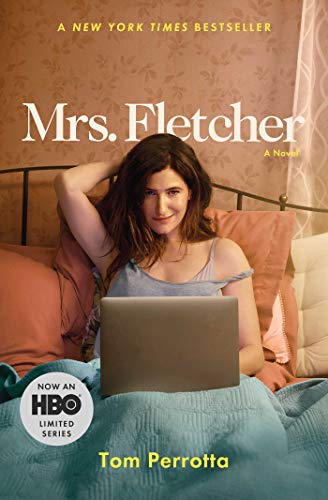
Mrs. Fletcher - by Tom Perrotta


Divorced Eve Fletcher is getting ready to send her only son, Brendan, to college. In this case the college is the fictitious Berkshire State University in Massachusetts (aka BSU - the shortened version of  the non-fictitious Bridgewater State University in Massachusetts, where I work). This novel alternates between a third-person narration of Eve's life and a first-person narration of Brendan's.

Brendan meets Amber while trying to study at the University library. She comes to the library along with a group of students who are protesting the Michael Brown shooting (Ferguson, Missouri). For Amber Brendan is a "bouquet of red flags" but the two do share the fact that they each have an autistic sibling in common. This, however, is not enough to sustain a relationship. And despite the fact that he occasionally goes to the library to study, Brendan doesn't do well in college, and drops out by Thanksgiving.

Eve, meanwhile has been attending classes at the local community college. She enjoys her class in gender studies and interacting with her classmates, but in the spring when Brendan decides to enroll in classes there she gives this up so as to "spare him the embarrassment of attending the same college as his mother, of possibly bumping into her at the library..."

Something else Eve explores when she becomes an empty-nester is her own sexuality. One way she does is through a three way involving one of her much younger classmates (Julian) and one of her employees (Amanda). Not surprisingly Amanda leaves her job at the Senior Center shortly thereafter in order to take a job at the Public Library as Director of Children's Events "in charge of story time, arts and crafts, author visits, holiday celebrations...Kind of like here (the senior center) just with kids instead of old people." It is at the library that Amanda finds her soul mate "an excommunicated Mormon research librarian named Betsy".

This is good satire. Looking forward to watching the HBO series.

Monday, May 14, 2018

How to Be a Muslim: An American Story - by Haroon Moghul


Baltimore County Public Library's April 2018 #BWellRead Challenge category was to "a memoir/biography about a person who doesn't look like you". Of course, as my husband pointed out, this could mean anyone who is not my sister, but I took it in the spirit of the challenge and selected Moghul's story. A Pakistani Muslim who grew up in New England, Moghul was born with a myriad of health problems, which relegated him to being one of the "geeky" kids growing up. And where there are geeks there are libraries.

Early in the work Moghul describes the very well-educated family into which he was born - one that
appreciated, encouraged, and rewarded bookishness - which made life easier, since [he] was the kid who made a beeline for the library when the last bell rang.
It is a good thing he was so comfortable in the library as it is a place with which he would became quite familiar. As the only kid whose parents wouldn't sign his permission slip to take sex ed the  "doofy twelve-year-old" was dispatched to the school library while the rest of the kids in his class received their illicit lessons. He became so well-known in his library he described it as a place where "everyone fist-bumped him". As an adult he also made good use of a "well funded public library systen" while waiting for his bookish mother to give lessons on Islam to "housewives".

As an about-to-graduate student of New York University (shortly post 9/11) Moghul proposes that the University hire a Muslim chaplin (himself) to "a senior university official, a woman whose stunning workspace occupied the rarefied top floor of NYU's library". It is here that he learns that "there were levels of power and influence that [he] hadn't the slightest idea of." It has always seemed more than a bit ironic to me that University officials are so quick to recognize the value of library space only when they want to claim it for other-than-library needs.

I learned quite a bit about Islam from this work. I have enjoyed reading several religious memoirs of late. You can see my other posts here, here, here, and here.

Tuesday, October 24, 2017

What's New About Fake News

Last fall I was on sabbatical. My intention during my time of reflection and scholarship was to research how to teach students to evaluate web resources. However, as the 2016 election season heated up I became concerned, as did many, with the proliferation of fake news and falsehoods being reported (both intentionally and unintentionally) in news sources and social media. And so my research was refocused. Ultimately what I concluded was that people need to read more, and read deeply if they are to become informed, critical thinkers, especially where the news in concerned.

I was excited to learn that the MassHumanities Fall Forum this year would bring together a panel of top-notch journalists to discuss the very topic I have been studying and presenting about during the past year. The panel included documentary filmmaker Charles Ferguson; Managing Editor of The Onion Marne Shure; and Claire Wardle, Strategy and Research Director of First Draft. Moderating this impressive group was Pulitzer Prizer winner Sacha Pfeiffer.

Ms. Wardle opened the discussion by admonishing all (panelists and audience members alike) to abolish the use of the term "fake news". She instead identified three different types of information that have been given this moniker:

Misinformation has no bad intent - perhaps something that is mistakenly reported by news media. Once the news source recognizes the mistake they rectify or clarify with the correct information.

Disinformation is deliberate, intentional spreading of news that is not true.

Malinformation is news that while true, or based in fact should not be disseminated. Examples are leaks, and hate speech.

Ms. Shure followed with commentary about satire, which is assuredly not the same as "fake news". Satire intends to train, not trick. Satire is used to help us see a larger truth through the use of humor. She specifically stated that when one of the stories from The Onion starts going viral as a "true" story it means that the writers have failed at their job. I especially liked what she said about Facebook's labeling of "satire" for stories such as those from The Onion. Labeling removes the burden of the "mental labor" required on the part of readers to identify satire themselves. This is not a good thing. Labeling essentially takes away the reader's agency.

I learned some new terms from the panel that helped me to think more deeply about how news is consumed and disseminated:

  • Frankenbiting - splicing together of sound bites to make it appear that a person said something they didn't, even though all the words are theirs.
  • Strategic Silence - a move on the part of the news media not to mention a fake news story, even with the intention of debunking it. Even when they report it as false, it helps the story to spread.
  • Emotional Skepticism - Something that we should all employ before hitting the "share" button (or posting a comment). That which tells us to actually read a news story, and then wait a few minutes before sharing it, rather than simply reading the headline and allowing ourselves to become indignant.
  • Arms race on technology - as new technologies are applied to programs in order to fight malicious information, we can be sure something else will be created in order to combat those. When we allow technology to make decisions for us how long is it before the technology is hijaked? Again, this conclusion mirrors one that I came to myself when I did some research for a presentation I gave at the Tafila Technical University in Jordon this summer. Technology is a tool, but it is not the end answer, (there is never just one answer)! Fresh concerns over consumers' agency arise. Most of us (myself included) do not understand the algorithms being used to tell us what to read. When we let other people, and machines, decide what we see we give up control. 

Once upon a time we all consumed the same news. Everyone in the neighborhood got the same paper, and watched the news from the same three networks on television. Now, each person can choose what they see, and what they don't see. This makes for a challenging way to run a democracy.

A special thanks to David Leonard, President of the Boston Public Library for the "shout out" to librarians at the end of the program!

More information about the forum and the panelists can be found here My husband's insights on the program can be found on his Environmental Geography blog.

Tuesday, September 26, 2017

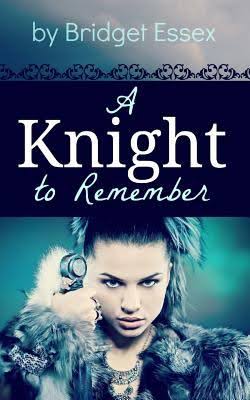
A Knight to Remember - by Bridget Essex


I don't always read romances, but when I do they are about librarians.

One of the tasks in the Book Riot Read Harder 2017 Challenge is to read an LBGTQ+ romance novel. Since I have previously read, and blogged about, a same sex romance featuring men (see my post on Adrian's Librarian), I decided that this year's read-a-romance-month book should be about women.

Librarian Holly doesn't have much in common with her girlfriend Nicole. Nicole isn't crazy about Renaissance Festivals, or Holly's dog, or even (gasp) reading! So when sexy Virago appears in all her knightly-ness to save the world from a supernatural beast it isn't a hard sell for Holly to give up Nicole to follow her fantasy woman.

The book didn't have a whole lot of the straight dope on Holly's library work, except for one section in which Holly takes Virago to work with her. When Holly explains that she works in a library that's "full of books" Virago explains that she has libraries in her world, too. And she loves them.

Holly goes about her day doing library things such as helping her friend Alice with story time. Alice has the sexy librarian thing going with "her long blonde hair...piled on top of her head in a sweeping curve, and her cat glasses twinkl[ing] from a beaded chain around her neck...wearing skinny jeans and a vanilla blouse". Virago meanwhile settles into reading in the castle-like library (with "three brick towers and turrets...and stained glass windows colorfully marching along the side of the building"). The description of Virago sitting on the floor reading is quite sensual (I found it even more enticing than the rather gosh-darn explicit sex scene). After being admonished to be quiet ("with the universal gesture of 'sh'") by fellow librarian Alice, Holly finds her knight
seated on the floor, her back against a shelf of books, her legs folded in front of her gracefully, a book propped up on her lap, and her elbows propped on her knees as she carefully curves her body over the book, utterly intent on devouring it. Her brows are furrowed in concentration, and she traces a few lines from the page with a long finger, entranced by what she's reading.
My heart skips a beat as I watch her read that book. She's so obviously engrossed and delighted by what she's finding between the covers...She seems to be devouring information...
It's no wonder that Holly's best friend Carly reminds her that "librarians are super desirable - they're hot! I mean, they make porn about librarians".

As a librarian herself, Holly understands the importance of super-hero librarians in the lives of others, and remembers the one who inspired her as a geeky gay kid in high school - the one who introduced her to her favorite book The Knight and the Rose. Miss T knew that "everyone need[ed] a heroine like them" and suggests a book about a girl named Miranda who becomes a knight, and falls in love with a princess. 

The book is a "comfort read" for Holly - the one she turns to when she's had a bad day. And so, when Holly's lover leaves her at the Renaissance Faire, Holly eschews her "to be read" pile and instead her "fingers grasp a familiar and well-worn volume" as she remembers the first time she read it, after a good cry in her high school bathroom.

A good librarian book with two different kinds of libraries A fun read overall.

Wednesday, August 9, 2017

On Pluto: Inside the Mind of Alzheimer's - by Greg O'Brien


O'Brien's book is Bridgewater's One Book One Community Read for fall 2017. The author - a father, journalist, and Alzheimer's patient - tells his story of living with the disease and the pain of watching himself lose control of basic skills. Diagnosed at age 59 with early-onset Alzheimer's his frustrations were compounded by the fact that he was still caring for his aging parents, his mother, likewise, suffering from dementia.

One one occasion, while O'Brien's father was recovering from surgery in a rehabilitation facility, his mother, who could not safely stay home alone, was also cared for there
the devoted staff took her by the hand to the library filled with four walls of books, they asked her what she wanted to read...she scanned the shelves for 15 minutes and then pulled out two books.
'I think I'll read these,' she finally said, not grasping title or author.
The books she chose were Secrets in the Sand and Nature on Cape Cod and the Islands - two books of mine...
'They just felt comfortable in her hands', the nurse told me later.
A true testimony to the power of books.


Friday, April 7, 2017

Quabbin: The Accidental Wilderness - by Thomas Conuel


In 1946 the Massachusetts towns of Dana, Enfield, Greenwich, and Prescott, along with six villages were flooded to create the Quabbin Resevoir in order to provide fresh water to Boston. The inhabitants of the towns were relocated, as were cemeteries and some buildings. 

Conuel's book tells some of the history of the towns and how the reservoir was created, and also tells of the beautiful wilderness that stands today with wildlife including bobcats and bald eagles. This slim work is rife with historic photographs providing a glimpse into the life of central Massachusetts at the turn of the 20th century as well as pictures of flora and fauna found at the Quabbin Resevoir. The book was first published in 1981, and I imagine that even since the 1990 revision I read climate change has brought about some additional transformations to the area.

One cannot write a book such as this without some assistance from archivists, historical societies, and librarians. Conuel found a gold-mine of information in Warren "Bud" Doubleday, a former resident of one of the flooded towns. He was referred to Doubleday by a librarian in New Salem. He also acknowledges Audrey Druckert, the official librarian of the historical society, an expert in wild plants and conservator of "a collection of tapes...as close to a complete oral history of the valley before the reservoir was built as exists anywhere."

This book has been sitting on my shelf for a long time. I finally read it as part of Book Riot's 2017 Read Harder Challenge  which includes a call to "Read a book that is set within 100 miles of your location" (among 23 others).

Tuesday, November 29, 2016

She's Come Undone - by Wally Lamb


This is the second book I've selected from the Little Free Library on Washington Street in Fairhaven, Massachusetts. It turns out both were choices from Oprah's Book Club. I never participated in Oprah's book club, but back in my public library days I was always aware of what her picks were because people would start calling the library as soon as they were announced to find out if we had them. Anyway, I enjoyed both books I chose (the other was Where the Heart Is by Billie Letts).

In this coming-of-age novel young Delores Price faces a tragedy that eventually tears her family apart. After her parents divorce she is sent to live with her grandmother while her mother recuperates from a mental breakdown, and Delores' life begins a downward spiral. She is obese, and essentially friendless when she leaves for college where more torment awaits her. After several years in a psychiatric ward she tries to strike out on her own, but her pain has not been fully explored or healed.

The copyright on this book is 1992, and the story follows Delores from her childhood in the 1950s through adulthood. All the action takes place before the time of Google, indeed, personal computers were virtually unknown to the characters in this work. Of course that means that they had to go to the library to find things out. Delores is a prolific library user. This is especially evident when she mentions that her school guidance counselor, Mr. Pucci, saw her though "$230 worth of unreturned library books". She doesn't get much better at returning books as an adult.When she takes the feminist classic Our Bodies Ourselves out of the Montpelier (VT) public library she apparently ignores the overdue notices that "begin to appear" along with her bills in the mail.

She takes advantage of the Providence (RI) Public Library's vast collection of telephone books from around the country ("thousands and thousands of pounds of tissue paper pages") to find the address of someone she's been stalking. I guess this is one library service that is no longer needed. Who uses phone books anymore? And it is so much easier to stalk people online as well.

And finally, a first. This is the first book I've blogged about a book that mentioned a hospital library.

The writing is first-rate, and despite Delores' deep cynicism she is someone the reader wants to cheer for. The book really isn't as depressing as my post might make it sound. It has some truly sweet spots.

Wednesday, October 26, 2016

The Paper Chase - the movie


There's nothing like a good library caper! In this classic film, first-year Harvard Law student James Hart (Timothy Bottoms) sneaks into Langdell Library, not once, but twice! The first time it appears he merely wants to get a book when the library is closed, but this sets the stage for the second more daring breach. After he is told by an appropriately dowdy librarian (Irma Hurley) sporting a brown jumper and white collared blouse, that the "red set" (the first drafts of all the law-school professor's writings) is off limits to him Hart and his accomplice, Ford, sneak in to the gated area to read the notes written by their hard-nosed contracts professor Kingsfield (John Houseman) from when he was a student at Harvard. Although I certainly can't condone the behavior of Hart and Ford, I must admit that the librarian wasn't very helpful, and the students do seem to give proper respect and awe to the archives.

Monday, September 19, 2016

Between the Lines - by Jodi Picoult & Samantha van Leer


About ten years ago our town selected Picoult's My Sister's Keeper for its One Book One Community (OBOC) read. As a member of the OBOC steering committee I read it, and championed it, as I do with all our selections.Honestly, though, I wasn't crazy about it, although I could see why it appealed to so many others. And It did turn out to be a popular choice for the OBOC program. I've not been interested in reading any more of Picoult's books since then though. However, I noticed this one on display at my local public library while I was looking for another book. Picoult co-wrote this one with her teenage daughter Samantha van Leer. Since "Leer" is the Spanish word for "read" I picked it up and read the inside cover description, which specifically mentions an obsession with a library book, at which point I knew I had no choice but to read it myself.

In this fantasy tale The Purple Rose of Cairo meets Toy Story when fifteen-year-old Delilah falls for the handsome prince in an illustrated library book. She discovered the book in her school library placed "upside down and backwards", and on the wrong shelf to boot. The book also, literally, shocked her hand when she touched it. When Prince Oliver starts talking to her, and telling her all about the life he has outside of the story at first Delilah (along with her mother) thinks she must be going crazy, but it doesn't take long before Delilah and Oliver start concocting a way for him to escape the confines of his pages so they can live happily ever after. The two come up with some ingenious ideas, but discover that whatever they do causes the story to "reset" itself as soon as the book is closed, and everything goes back to the way it was. There are so many other things to consider as well. For instance, if Oliver does manage to escape from the story will still he be four inches high and two dimensional? How will he function in this other world that has computers and other electronics unknown to his people?

In one early attempt to be together Delilah and Oliver discover that the pages of the book act as a barrier between them. Oliver suggests tearing the page to see it he can get out through the rip. Delilah, however, is horrified at the idea of ripping a library book. (Somethings are more important than true love, after all). But his smile "the one that makes [her] feel like [she's] the only person in the world" convinces her to make the tiniest, most minute, infinitesimal tear"so they can test their theory on a spider Oliver found. It takes a lot of patience to make love work. Is there any way these two star-crossed lovers can be together?

Some good metafiction, and problem solving going on with this one. I liked it better than I thought I would.