Showing posts with label France. Show all posts

Wednesday, September 15, 2021

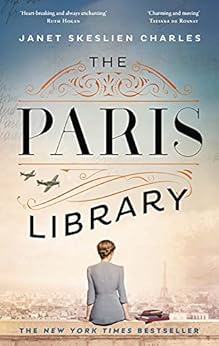
The Paris Library - by Janet Skeslien Charles


Numbers floated round my head like stars. 823. The numbers were the key to new life. 822. Constellations of hope. 841. In my bedroom late at night, in the morning on the way to get croissants, series after series - 810,840,890-formed in front of my eyes. They represented freedom, the future.
So begins the story of Odile Souchet who thinks in Dewey Decimal numbers. She is thrilled to get a job at the American Library in Paris in 1939 where she can put both her library degree and her ability to speak English to good use. She has always loved books and the library, a place she frequented with her aunt as a child.  

Her job becomes a lot more challenging when Nazi's occupy her beloved "city of readers". The subversive librarians (including the aptly named Miss Reeder) find ways to continue to provide books and services to their Jewish patrons, even after the library is closed to them. Nazi's also looted libraries as well as the private collection of "prominent Jewish families" Additionally, censors regularly blacked out news from the daily papers making the sharing of knowledge that much more difficult. "Fake news" in the form of rumors also shakes up the library as a "sanctuary of facts" as patrons share misinformation with each other. 

Shushing is of course a time-honored tradition in libraries (at least as far as popular culture is concerned). While I will admit to having shushed a few exceptionally loud library users (usually university administrators) I have also, ironically, been shushed myself by people trying to study in the library, just as librarian Odile was shushed when she "screamed with joy" after returning to the library after 10 days of being away and seeing her brother's girlfriend Bitsi (who was also the children's librarian). In one passage Bitsi is described as "holding an open book over her head, like it's a roof" as if she is telling "the children that books are a sanctuary".

The story oscillates between Paris during World War II and Froid, Montana in the 1980s. Virtually all of the passages I marked while reading this are in the sections that take place in France. The only exception comes very late in the book. Lily, Odile's young neighbor storms "Dad's wife took away Forever!...She said Judy Blume writes 'smut'.' Censorship is wrong!" To which Odile responds "So is throwing a fit instead of sitting down to have a conversation...You should ask Ellie what she fears." She goes on to explain that "Ellie's scared the book will put ideas in your head, scared you'll want to experiment with sex." Lily retorts "I read Out of Africa and disn't establish a coffee plantation in Kenya!" I of course agree that censorship is wrong. I also agree that having a conversation is better than throwing a fit.

Tuesday, December 29, 2020

The Great Believers - by Rebekah Makkai

This is the third book by Makkai I've blogged about. The first (The Borrower) was the most librarian-centric, but also the most librarian-disparaging. While the present work, and The Hundred-Year House each only mention libraries a few times they are as places where research and scholarship is done. 

The storyline in The Great Believers alternates between two time periods the mid 1980s to early 1990s (during the AIDS crisis) and the year 2015. It follows the story of Fiona (whose brother Nico died of AIDS). It also tells of Nico's friends, all of whom were touched by the pandemic. One of the characters we learn the most about is Yale, whose job as a schmoozer at Northwestern University takes him to Door County, Wisconsin to meet with Mrs. Nora Lerner the widow of a Northwestern alum (and great-aunt to Nora and Nico). Nora Lerner wants to donate some original art pieces to the University gallery. Yale spends quite bit of time with her finding out about the works, which she obtained directly from the artists in Paris in the early twentieth century. As she describes what life was like in 1919 Paris Yale begins to empathize with her as she tells of all her friends dying either in the war, or from the Spanish flu and he recognizes how this parallels his own life.

Yale and his intern (Roman) use the Door County public library to make photocopies of some of Mrs. Lerner's documents. Most of the artists are well known in the art community except for one, Ranko Novak. Lerner stipulates that all the artwork must be displayed, or none of it can. In doing research about the artists Roman discovers a library book containing a "literal footnote" about Novak. 

This was published in 2018, before our current pandemic. It almost seemed surreal to read it in 2020.


Wednesday, January 15, 2020

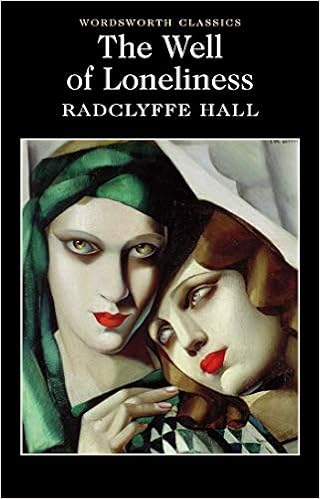
The Well of Loneliness - by Radclyffe Hall


Originally published in 1928, and promptly banned in England, this fictionalized account of the author's own life was cutting-edge lesbian writing in its day.

Born into wealth and privilege Stephen (her parents wanted a son) nevertheless has a difficult time growing up realizing that she is somehow different from her peers. As an adult she recognizes her desires, and is asked to leave the family estate (Morton) by her un-understanding mother. She had shared a love of books with her father, Sir Philip, who "had one of the finest libraries in England". Before his early death the two had read and discussed literature together. She also discovered after he died that he had divined his daughter's inclinations from having read the works of Richard Freiherr von Krafft-Ebing whose work, with her late father's marginalia, was kept on a special bookcase in his study.

Eventually Stephen settles in Paris with her partner Mary who is very much interested in Stephen's earlier life, although she would never welcomed in Morton
Mary would want to be told about Morton...she would make Stephen get out the photographs of her father, of her mother whom Mary thought lovely...Then Stephen must tell her of the life in London, and afterwards of the new house in Paris; must talk of her own career and ambitions, though Mary had not read either of her (Stephen's) novels-there had never been a library subscription.
 There was no "subscription" necessary for me to read Hall's book. I checked it out with my library card at the free public library in my town.

Wednesday, October 25, 2017

Theft by Finding: Diaries 1977-2002 - by David Sedaris


I went to my fourth David Sedaris event last Thursday in New Bedford (MA). The very next day James and I wrapped up our reading his latest book together. In the introduction to this work of diary entries he makes clear that this is only a "small fraction" of all that actually appears in the 156 volumes of his diaries. And that a different edit "from the same source material could make [him] appear nothing but evil, selfish, generous, or even...sensitive". What I saw, as a fan who has been following him since I first heard him on NPR in the early 1990s, was a person who was all these things, as well as a person who is a regular, if not frequent, user of libraries.

His introduction points out that the "early years, 1977-1983, were the bleakest" and "fueled by meth". I think it is also significant, then, that he mentions going to the library only infrequently during this time period. The word "library" appears three times during the first five years of entries, and only two of those were to discuss his own visits to the library, the other was as part of an overheard conversation at the IHOP - a place Sedaris appears to have frequented more often than the library - between two blind men one of whom talked about "the library for the blind and some good books he'd listened to lately." There is a definite change in the tone of the entries in 1984 when he moves to Chicago, and, I would add, a slight uptick in his frequency of discussing his use of the library, or reading of a library book.

In one of his first entries after moving to New York in 1990 he rambles about working out his "coffee situation". He is not crazy about either the IHOP which while they serve awful coffee (no surprise), they do give customers a whole pot, nor the Bagel Buffet which serves coffee in paper cups (blech) for .60 each. He wraps all this up with this truth: "Now I need a library card." There is no mention at all of the library in any of his 1991 entries, but he makes up for it by making two references (pun intended) in 1992 - one to lament that the library is closed on Lincoln's birthday. After this there is a concerning drop in the number of times the author uses the word library. I can only hope that this was simply an editing oversight, and that a different edit of this diaries would be in fact teeming discussions of all the great library books the author read, and how helpful and friendly the librarians were, but this edit has only mentions the word library twice after 1994 - one in 1998 (Paris) which was only to relate a story told to him about a friend of a friend, who, when he starting flipping through a magazine at a newsstand was told by the proprietor that they were not a "lending library".

I found the final mention of the word "library" in the last entry for 2001. It was poignant in its wistfulness. While contemplating what to wish for as he blew out the candles on his birthday cake Sedaris laments
When told to make a wish, I settled back in my chair, realizing I should have given it some prior thought. One option was an apartment in London, but in the end I wished for the opposite: the absence of things. Over the past few years I've fallen deeper into the luxury pit. I used to get pleasure from sitting at the pancake house with a new library book, but now I mainly buy things and work crossword puzzles.
Here's hoping that we see a resurgence of library use in the second volume.

If you haven't yet discovered David Sedaris, you really are missing some great humor. Find out more at http://www.davidsedarisbooks.com/

Wednesday, June 14, 2017

A Year of Living Prayerfully - by Jared Brock


Our One Book One Community (OBOC) steering committee is looking for a light-hearted book with a spiritual theme to read next spring. We had a suggestion of Religious Literacy: What Every American Needs to Know - And Doesn't by Stephen Prothero which I started to read, and do like, but I am not sure it is a good choice for a community read. Our community likes to read stories, and Prothero's book is not only not a "story" it is also rather didactic (as the title would suggest). These are two things that make the book a less-than-ideal choice for OBOC. With this in mind I started to look for other books - specifically something with a plot. Then I remembered that during my "Year of Reading 'Year of' Books" I read two religiously-themed humorous books that were about spiritual quests: The Year of Living Biblically by A.J. Jacobs; and My Jesus Year by Benyamin Cohen. I correctly surmised that more such books must have been written the last few years and selected Brock's book as one that had potential for OBOC. Brock's story features a genuine inquiry into what prayer means. He travels across the globe, often with this wife, to talk to religious leaders about their own spiritual journeys and ultimately finds more questions than answers.

As a Unitarian Universalist I respect and support each person's search for truth and meaning (see our fourth principle). I was intrigued with Brock's quest, and especially appreciated his final comments regarding having more to learn
After an intense year of learning about prayer from some of the best sources on earth, I don't feel like I'm further along. If anything, I feel like a first-year university student-I now know all the things I don't know-all the things I haven't yet learned, understood, or experienced. I am not, in any way, a prayer expert. I'm a failing student who's playing catch up, at best. Rather than coming to the end of a journey, I've only just begun.
As he continues his inquiry I hope he branches out beyond Judeo-Christian traditions. His interactions with Muslims were limited and I don't recall him meeting with any imams. Nor did he talk to any Buddhists (he did meet with one who had converted to Christianity) or Hindus. Likewise, his dealings with women religious leaders were rather narrow. I think the woman with whom he had the longest conversation was Rachel Phelps-Hockenbarger, daughter of Fred Phelps of the infamous Westboro Baptist Church. I have to give him credit for his perseverance in getting the interview, though.

Brock's travels took him to, Israel, several parts of Europe, his native Canada, the United States, and also to North and South Korea. I was impressed with his courage in voyaging to North Korea, and his refusal to bow down to the body of Kim Il-Sung. There were no visits to any African or Latin American countries, however, and I suspect that if he had spoken to someone in Central or South America about liberation theology, or talked to anyone in Africa about colonialism, or attended a religious ceremony on an Indian reservation in the United States, he might not have simply and naively accepted the comments he found in Christianity Today that
Missionaries brought about reforms, fought colonialism, taught people to read, and rallied support for struggling peoples around the world. The conclusion the article makes is striking: "Want a blossoming democracy today? The solution is simple-if you have a time machine: Send a 19th-century missionary."
I was, of course, glad to see that he began his globe-trotting voyages at his local library. On page one Brock tells us
Michelle and I decided to live prayerfully for an entire year. It was a nice, shiny idea. But where should we start? 
With For Dummies, obviously. I borrowed a copy of Christian Prayer for Dummies from the library.
After reading a bit of the work though, he found himself unimpressed and
called it quits, returning the book to the library, where [he] assumed it would remain until next year's Friends of the library book sale. 
He also visited the library at the Monastery of Vatopedi (and even borrowed a book there) and while on Mount Athos talked to Father Philotheos who, when asked to define prayer, responded
Prayer isn't one thing...You can read a whole university library full of books that have been written just on the Jesus Prayer.
Brock made at least one other attempt to visit a library while on his journeys. Sadly, however he found the library (and the museum) at Monte Cassino closed (this after he paid his entrance fee). The gift shop, however, was open.

Ultimately, I think I will keep up my own search for a One Book One Community read and look for something that explores religion beyond what one will find in the Judeo-Christian traditions.

Thursday, January 7, 2016

Toute la mémoire du monde - the movie (Alain Resnais)


When I was an undergradute in the 1980s I took a film course on Three Directors of the French New Wave (the three directors were Jean-Luc Godard, François Truffaut, and Alain Renais). The first night of the class we watched a short film by each. Our instructor told us that the short documentaries we watched represented the kind of work that the directors were trying to move away from. The film we saw by Resnais was Night and Fog" (Nuit et brouillard) - a graphic film with actual footage from the Nazi concentration camps. I think I managed to watch the whole film, although I know I walked out of it the first time I saw it when I was in high school. I only just learned about Resnais' work Toute la mémoire du monde when I read about it in the recent publication The Meaning of the Library edited by Alice Crawford (watch this space for a review coming soon!). I requested the film through interlibrary loan and after I watched it discovered the entire film is available on YouTube (embedded above). A documentary about the Bibliothèque Nacionale de France this should be required viewing for all library school students. It is the library as poetry. I must admit to getting a little emotional about it. I love that the last word in the film is "bonheur" (happiness). I also love that it is in French. Although regular readers of my blog know that I am a Spanish instructor in addition to being a librarian, it is a lesser known fact that my husband and I hold a special place in our hearts for the French language (the language of love) - we met in French class. 

Tuesday, January 5, 2016

All the Light We Cannot See- by Anthony Doerr


In the summer of 1984 I spent a month studying Spanish in Salamanca, Spain. My cousin Lori came at the end of the month to travel with me for a few weeks. She suggested that we take the train to Saint-Malo, France and spend some time on the beach. I was enchanted with the old buildings, and the extreme tides which could strand a person in one of the old ruins for an entire day if you weren't paying attention. I don't think I learned anything of the history of the place at the time though. Reading Doerr's book I felt like I was walking through a dreamscape-something familiar but that didn't seem quite right. It was strange trying to justify my fun vacation 32 years ago with learning about the Nazi occupation. I dreamt about Saint-Malo twice while I was reading this book. I don't remember ever having dreamt about it before.

The story is of Marie-Laure, a blind French girl who loves mollusks; and Werner, an orphaned German boy who is a whiz at learning how things work. Werner is curious and clever to the point that the Nazis recognize his abilities in technology. He is recruited for training with the regime - his supremely Aryan looks an additional asset. Marie-Laure is likewise clever and her father does not allow her to let her blindness handicap her. He insists that she learn to read Braille, teaches her how to solve puzzles and builds scale models of their neighborhood in Paris, and another one when they flee to Saint-Malo (to live with Marie-Laure's great uncle) so that she will be able to navigate the streets on her own. The chapters alternate between Werner's and Marie-Laure's two stories until near the end when Werner and his crew arrive in Saint Malo looking for illegal radio transmitters and the two lives converge.

This book was recommended by a friend, not because it was an especially library-centric book, but rather because it is just such a good book. However, it wouldn't be included here if it didn't have at least some library references. There were, in fact, about a dozen or so.

Marie-Laure's father works at the Museum of Natural History in Paris where he distributes keys to other employees "zookeepers...office staff...technicians and librarians and scientific assistants..."

Of course, the library is included in the scale model of Saint-Malo he builds as well. The library in Saint-Malo is a place where Marie-Laure also has a few meetings with others. And ultimately, we learn of the the burning of Saint-Malo (and its library) on August 8, 1944
Flames scamper up walls. Parked automobiles catch fire, as do curtains and lampshades and sofas and mattresses and most of the twenty thousand volumes in the public library. The fires pool and strut; they flow up the sides of the ramparts likes tides; the splash into alleys, over rooftops, through a carpark. Smoke chases dusk; ash chases smoke. A newsstand floats, burning.
One Nazi uses the geological library in Vienna to do some research on precious stones. He is assisted by a "mousy librarian" and "an underweight secretary wearing brown shoes, brown stockings, a brown skirt, and a brown blouse." The Nazi soldier is researching precious objects for the "führer" who, rumor has it, "intends to remake the Austrian town of Linz into an empyrean city, the cultural capital of the world. A vast promenade, mausoleum, acropolis, planetarium, library, opera house..."

The library as metaphor is used twice in this work. As the city of Saint-Malo empties of its inhabitants it is described, rather desolately, as a "library of books in an unknown language, the houses great shelves of illegible volumes, the lamps all extinguished."

And finally Marie-Laure, many years later, images that the air itself is a library, not only with "images of electromagnetic waves...torrents  of text conversations, tides of cell conversations, of television programs, of e-mail...commercials for Carrefour and Evian prebaked toaster pastries..." but also "that souls might also travel those paths...might harry the sky in flocks, like egrets, like terns, like starlings...a record of every life lived, every sentence spoken, every word transmitted still reverberating within it."


One final note:
This story reminded me of listening to Michel Chikwanine. His story of being a child soldier in the Democratic Republic of Congo was tragically reminiscent of Werner's story. Child soldiers are still being recruited today. Human Rights Watch has more information.


Monday, November 14, 2011

52 Loaves - by William Alexander

As a foodie, and a librarian, I have kept several blogs. My first foray into blogging was a year-long project called My Year of Reading "Year Of" books  in which I commented on books that came from projects such as Alexander's: a one year memoir, or "stunt lit". In this work Alexander documents his efforts in baking one loaf of bread a week for one year. Since my own year-of stunt, er, project  is over, though, (having taken place in 2009) I could not write about this work on that blog. I think when I requested this book from interlibrary loan, I intended to review it on my food blog: "Una Nueva Receta Cada Semana (One New Recipe a Week)" but it lost its spot there as soon as I saw the word "library" used for the first time, which was in the Prologue, on page 2! Alexander describes explaining to a TSA official why he is bringing a sourdough starter, which looks suspiciously like a plastic explosive, onto a plane to Paris. "A thirteen-hundred-year-old monastery in France is expecting this...[t]hey managed to keep science, religion, and the arts alive during the Dark Ages, even risking their lives to protect their library (emphasis mine) from the barbarians who burned everything else in sight. After thirteen centuries, though, they've forgotten how to make bread." Well, there we have it. Libraries are more important than bread. I always knew as much, as clearly the monks did as well. This of course made any other mention of libraries in the work anti-climactic, but in the interest of being complete I include them all here.

It was a good 130 pages later that libraries were mentioned for the second time (to be honest I was beginning to despair that I'd see them again in this work). I was pleased though to see that the author thoughtfully brought a loaf of bread to the librarian at his research institute along with "a long list of interlibrary loan requests" - a nice gesture to someone who is, undoubtedly, underpaid. I did not have to wait nearly as long to find the next mention of libraries: a mere 12 pages later Alexander explains that although he really tried to like one of my favorite books, Zen and the Art of Motorcycle Maintenance, which he was listening to on CD, he found it "stilted, pedantic, and preachy" and "with genunie horror" realized that his writing was becoming too much like Persig's (at which point he "slammed the lid on the CD case and returned it to the library"). It is a bit ironic, then, that one of the pull quotes on the back of the edition I read says "[w]hat Zen and the Art of Motorcycle  Maintenance did for, well, motorcycles, William Alexander's 52 Loaves will do for bread...." The monastery's library makes a reprise when Alexander finds himself there, and again, explains the importance of preservation of knowledge, and once more when one of the monks informs Alexander that the monastery's library has a signed copy of Patrick Leigh Fermor's memoir A Time to Keep Silence.

These few, though thoughtfully chosen, references to libraries demonstrate yet again the importance of these hallowed institutions in our lives.

I cannot close this post without writing about one other very important thing: coffee. I almost gagged when I read that the monastery used instant coffee, and worse, that our hero was prepared to drink it except that the hot water dispenser "hadn't yet been switched on." Please folks, don't try this at home. See my husband's "Caring for Coffee" page if you want a cup of joe. Perhaps what Alexander did for the monks with bread, James can do with coffee. I don't think I'd mind a trip to Normandy.
  

Saturday, October 1, 2011

The Seven Minutes - by Irving Wallace - October 1


For the final day of Banned Books Week I chose the book that inspired me to become a librarian. I first read this sexy, subversive novel about 25 years ago. I liked it as much this time as I did then. It is a novel about a novel called The Seven Minutes - a "meta" novel - the story of "the most widely and completely banned book of all time" which tells one woman's thoughts during seven minutes of sexual intercourse. Wallace's book is the story of the obsenity trial that takes place soon after the book is published by a mainstream U.S. publisher - some 30 years after its initial publication by an underground press in Paris.What starts out as a "nuisance" case soon attracts international attention, and a major trial, when a college student from a "respectable family" implicates the book as what drove him to rape a young woman. Attorney Michael Barrett is determined to save the book from the censors.

There are two librarians in this book. One is a young man, Virgil Crawford, who runs the Special Collections Department at the fictitious Parktown College in Massachusetts. Described as "lively, boyish...slight, trim bouncy, enthusiastic, and eager to please" he does bust some librarian stereotypes, but not like Barrett's "favorite librarian" Rachel Hoyt. A public librarian for in the town of Oakwood, California, not only is she pretty and "as colorful as a psychedelic poster" she is also funny and thoughtful. When asked if she has read The Seven Minutes she replies "Three times...The first time a half-dozen years ago....Then when I learned...that Sanford House was publishing the book here....Then when Ben Fremont was arrested, I knew I had to make a decision as a responsible librarian. So I read it a third time with a careful, objective librarian's eye." Hoyt goes on to explain how political the job of a librarian is and makes it all seem so exciting. Who wouldn't want to be a librarian after reading this? I was disappointed when I watched the movie version to see the Rachel Hoyt character with such a small role, doing the one thing I didn't like about her character - discussing an individual library patron without a court order.

I stopped counting all the times libraries were used in this story. Business meetings took place in personal libraries, lawyers jetted around to do hands-on research, back at a time before information could be found online, sent by e-mail, or even faxed. One especially meaningful passage I marked described Barrett's reaction at visiting an autograph dealer "an experience new and thrilling. He had known that manuscripts, documents, letters written or signed by renowned men and women...had been collected and preserved in the remote recesses of awesome libraries and museums..." (emphasis mine)I must point out that this book was first published in 1969, back when "awesome" actually meant something. People reserved its use to describe things that were actually "awe" inspiring.

The book clearly illustrates the politics of book banning, and the paternalistic way in which the would-be censors discuss it - they (the censors) can handle the reading the book, but others may not. Those "others" must be protected. In this work we also see the phenomenon Herminone speaks of in Harry Potter and the Order of the Phoenix, when the arrest of an independent bookseller for selling the book makes it a most sought-after commodity. See my Harry Potter post.

It was very hard to research the banning of this book. Every time I tried I would simply get a plot summary. It turns out that this work attracted only minor attention from the censors. I found this passage in Irving Wallace: A Writer's Profile by John Leverence:

"The novel had its own censorship problems. Nine newspapers banned advertising because of the jacket, which featured a diffused, gauzy drawing of a nude woman, but other than that, and a few minor flaps, the book escaped the censors." p. 148.

This book was just as good the second time around. I hope it continues to inspire new would-be librarians.