Showing posts with label Indiana. Show all posts

Wednesday, February 7, 2024

The Music Man (the movie)


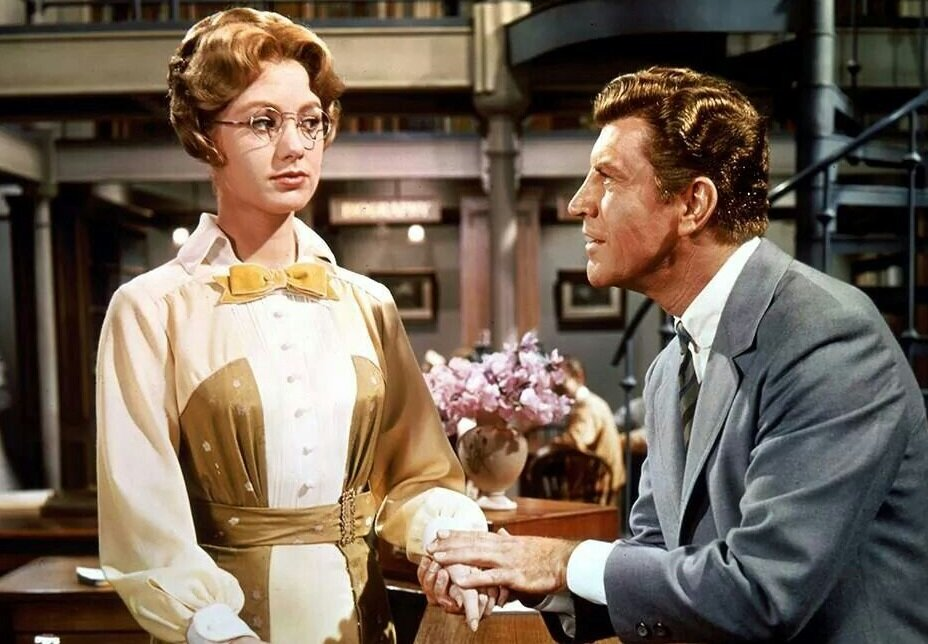
Prof. Harold Hill sexually harasses Librarian Marian Paroo in The Music Man 

I was the guest speaker in my husband's class earlier this week. The lesson for the day was how to find information to do research on Coffee. The day before the class he said he liked to start his classes with some music and asked me to suggest something. "How about Marian Librarian" said I. 


We used a video we found on YouTube. I realized while we were showing it to the class that it had been a long while since I'd seen it (certainly not since before the Me Too movement) and so I felt compelled, after watching it with the class, to mention that this display of sexual harassment was completely inappropriate.

Nevertheless James and I decided to watch the entire two-and-a-half-hour movie together that evening (it actually took two nights because the movie is so very long). I can't deny that it is a fun movie with some catchy tunes, even though the cringe-worthy sexual harassment is all too familiar to those of us who work in public services.

There is almost too much to say about this, so I will stick with the highlights.

First of all Shirley Jones as Marian is, without a doubt, the most iconic of all fictional librarians - a "sadder but wiser"... "stuck up"..."maiden lady librarian who gives piano". Lucky for swindler "Professor" Harold Hill (Robert Preston) that type of woman is exactly his "speciality".

What I remembered about Marian was that she curated a fine collection of materials for use by the citizens of River City, Iowa and was a defender against the would-be censors. Important to note, however, is that Eulalie Shinn, the Mayor's wife (Hermione Gingold), complained about what her daughter was reading, but was unconcerned that others might read the same book. Parents always have the right to dictate what their own children can read. Something Mrs. Shinn understood. 

What I didn't remember was Marian's own heinous crime of ripping a page out of one of the library's books! This is simply not acceptable - even if the librarian does believe that she is going to save the City from itself by doing so. 

There were some interesting things to note about the library hours. For instance, when Marian returns from work in the evening her mother asks "Library open later than usual?" "It always is" is Marian's un-ironic reply. The library was also open on the Fourth of July.

There is some serious "shush-ing" going on at the River City Public Library. Even Marian herself gets shushed by some of her patrons.

And Professor Harold Hill? As my late Grandmother used to say about my Uncle Dave "he can fall in a pile of shit and come out smelling like a rose"

Wednesday, July 27, 2022

Stranger Things 4, Episode 3 "The Monster and the Superhero"


In a library research scene reminiscent of Margot Kidder's in The Amityville Horror our heroines Nancy Wheeler (Natalia Dyer) and Robin (Maya Hawke) review some old tabloid newspapers on microfilm surrounding the Creel murders. The possibility of a house possessed by demons further analogizes the classic horror film. See also Stranger Things 2 Episode 3 "The Pollywog".

Tuesday, October 8, 2019

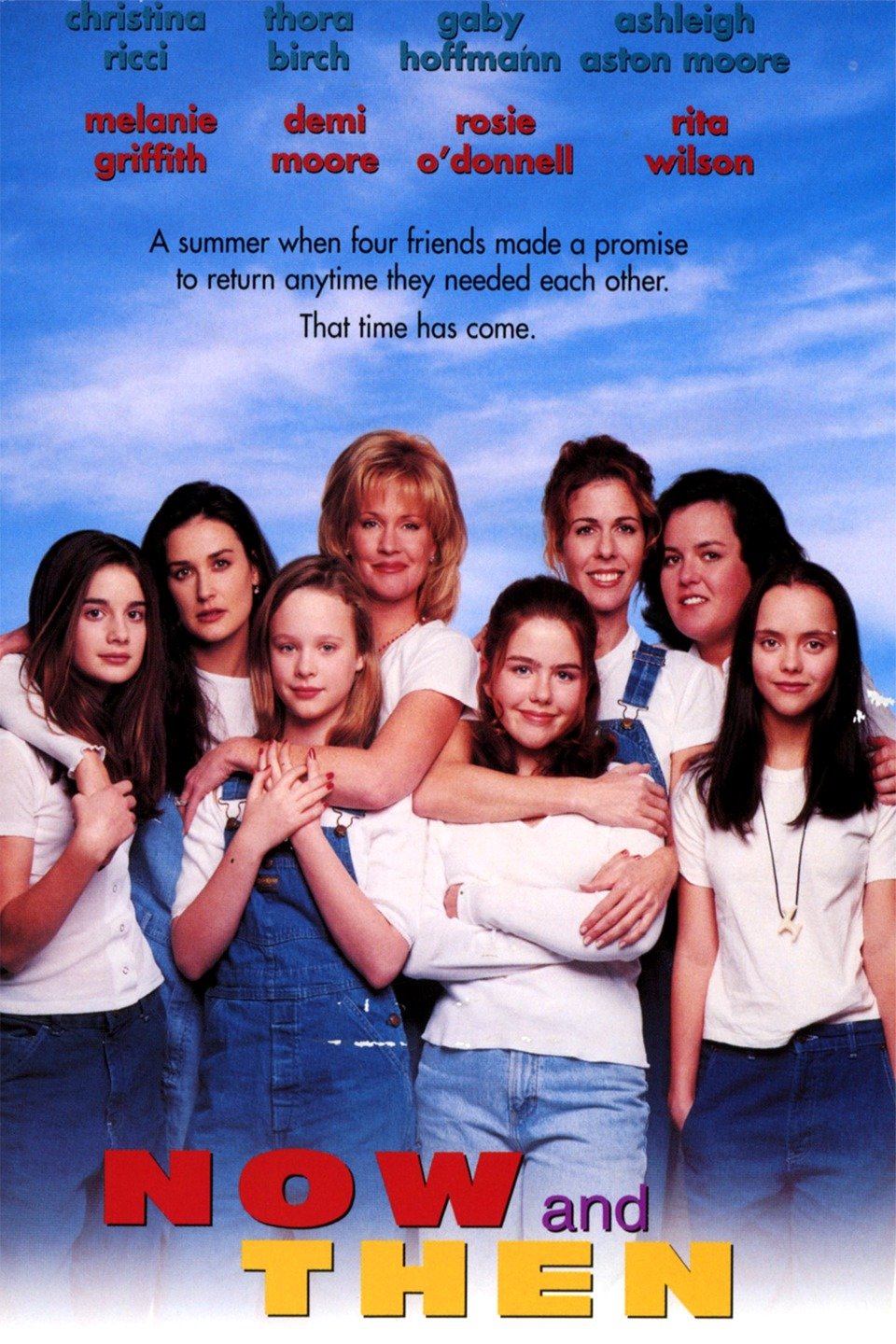
Now and Then - the movie


How can it be that even the "now" part of this movie is nostalgia? I first saw this movie, in which a bunch of 30-something women reminisce about the summer of 1970, on VHS tape over two decades ago. I had forgotten that library research was an important part of the plot.

Four old friends get together as one of their crew is set to give birth to her first child. They remember a summer when, as preteens, they worked to earn enough money to buy a tree-house from Sears. Exactly what kind of work they were doing is unclear. They only thing we know for sure is that they got $10 for painting a garage door. Everything else is a mystery. Perhaps they were babysitting, but in 1970 they were getting $1 per hour - at best.

Anyway, in addition to earning money for the tree-house the friends also spend some time trying to discover how Johnny Simms (aka "Dear Johnny") died. Intrigued by a headstone located in the local cemetery of a boy who perished in 1945 at the age of twelve, they set out to find how a child of their age could have passed at such a young age. Logically, they go to the public library to see if they can find newspaper articles, but they are informed that the newspapers from the period they need were destroyed in a fire. However, they are informed, the Greenfield library did have all the copies. "We can't ride our bikes all the way to Greenfield, can we?" asks one of the girls? Well, perhaps back in 1970 when parents just assumed their kids were all right unless they heard otherwise four young girls could ride 180 miles to go to the library but I can't imagine that the library would still be open when they arrived, and they'd never be able to return on the same day. We'll chalk this one up to "art doesn't have to imitate life".
Google maps screenshot indicating that it is a 14-hour bike ride from Shelby to Greenfield

When they do arrive at their destination they are disappointed to discover that someone has torn some of the pages out of the bound newspapers, just the pages they need to find out the truth of what happened to Dear Johnny. A true hazard of the pre-digital age. I must say I was impressed that they managed to use a photocopier without going to a librarian and explaining that they'd never used one before and therefore needed help. Apparently they did what I did the first time I used a library photocopier and simply read the directions. I really wish more people would do that.

Lagniappe:
As a little meta-bonus surprise this film had a clip from Love Story which itself is a library movie!

Wednesday, November 15, 2017

Stranger Things 2 - Episode 3 (The Pollywog)


Back in 1984 you couldn't just Google how to take care of a pollywog, or for that matter, shine your iphone's supernatural creature identification app at unknown beings to find out more about them. You had to go to the library. And look things up in books.

"Mr. Henderson, you know the rules. Five at a time." says the unnamed librarian when young Dustin attempts to check out five books, although Miss Librarian Lady knows he already has five books out. Dustin strategically tries to appeal to her sense of discovery, but she will have none of that. Five. At. A. Time. She emphasizes. The whole stereotypical exchange is so hokey we can almost forgive the cliche solution Dustin comes up with when he points to something behind Miss Librarian Lady and gasps "what the hell...", and then runs out with the five books. Does he ever return the stolen books? We may never know.

Thursday, March 17, 2016

Carsick - by John Waters


Baltimore, Maryland holds a special place in my heart. It is not only the land of my birth, it is also where I met, fell in love with, and married my husband. If all this weren't enough to make me feel good about the place it also is the home of movie director John Waters. My husband James and I are long-time fans of Waters and enjoyed reading his book about hitchhiking from his home in Baltimore to his home in San Francisco together. The book is divided into three sections. The first is a fantasy  trip called "The Best that Could Happen"; the second a fantasy trip entitled "The Worst the Could Happen"; and the third called "The Real Thing". Fantasy chapters included rides with celebrities, alien abductions, magic farts, and some rather poopy pants. None of this will surprise those who are familiar with Waters' work. The third section was actually the most surprising. It is where Waters cynicism is least evident. He was genuinely grateful for all who picked him up, even if only going a few blocks. He was also touched by the number of straight men he met who spoke lovingly, and affectionately of their wives, and enjoyed the company of all who rode with him.

Of course as much as I enjoy any book, it does not find a place on this blog without at least touching on some aspect of libraries. Waters' book makes the cut for his fantasy chapter "Bernice" in which a renegade librarian who runs her own bookmobile-type service delivers paperback porn (without cover art) to niche collectors. They visit one of her clients, Cash, who lives in a house made entirely out of cover-less paperback smut. (I don't know if such a house actually exists anywhere, but I do know there is a house in Rockport, Massachusetts made entirely out of newspapers).

What I especially liked about this chapter was that Waters says he knows "how wild librarians can be" having been a keynote speaker at "several of their conferences." Since I was a librarian at a conference in which Waters was the keynote speaker (the Association of College and Research Libraries 2007 conference in Baltimore) it was almost like reading about myself - wild librarian that I am.

I marked one other passage in this book for blogging, even though it had nothing to do with libraries. It did, however, have to do with Baltimore nostalgia. Those who have seen John Waters know about his iconic mustache. During his "real" trip, he frets that it is starting to get a little bushy, and compares himself to "Baltimore's longest-running TV weatherman", Bob Turk. It is not just that I remember Bob Turk, in 1975 an eleven-year old me was invited to read a story on-the-air that I wrote for his local Christmas special program. It is one of my best childhood memories.

Bob Turk
John Waters

This was a fun and quick read. Fans of John Waters will not be disappointed.

Tuesday, March 24, 2015

Shakespeare Saved My Life: Ten Years in Solitary with the Bard - by Laura Bates


Last week my Facebook feed included a post from a fellow librarian about the Big Library Read - a global book club. Through the Big Library Read e-books are made available for two weeks, with no limit on the number of people who could check them out. I downloaded my copy and joined in.

Dr. Bates' memoir of her time teaching Shakespeare in the SHU (Secured Housing Unit), of the Wabash Valley Correctional Facility in Indiana details her relationship with inmate Larry Newman, who was sent to prison for life as a teenager. Mr. Newman not only excels as a student providing unique insights into Shakespeare's plays, he writes workbooks for other college students to use in order to help them understand the works better themselves.

It is interesting to note that a book that is essentially about reading hardly mentions libraries at all, although I expect the prisoners Bates worked with had no access to one. And the professor only includes one childhood memory of using the library herself
Our final reading assignment was The Tragedy of Macbeth. It's been a special piece of literature for me ever since I first read it at the age of ten. Well, I can't really say that I "read" it at that age, but I did check it out of my elementary school library. And I can still recall the thrill of poring over its archaic words that I knew meant something significant, that I hoped would someday mean something to me. By the time I reached high school, I was able to begin to make meaning out of the language. But it wasn't until I started teaching these plays, in prison, that their meaning would come through: beautifully crafted works of literature written hundreds of years ago that can connect with us here and now. 
I've always felt strongly that children should be able to select their own reading material from libraries. While they may pick something out that is beyond their reading or comprehension abilities, it probably won't matter. They will likely decide to put it aside, but that too is their own empowered choice. The book may serve, as young Laura Bates discovered, as a challenge, that she returned to again, and again. She could never have imagined how it would change her life.
----------------------------------------------------------------------------------------------------------------------
A few days after I posted this, I discovered this blog post on the importance of prison libraries. It is well worth the read.

Sunday, January 25, 2015

The Brass Teapot - the movie


In this fantasy film, struggling newlyweds John and Alice (Michael Angarano and Juno Temple) discover a magic teapot that sends them cash whenever they feel pain. As they get richer, they must discover new ways to hurt themselves in order for the teapot to keep up. They spend one afternoon at the public library researching the ancient teapot, where Alice rips a page out of a book (tsk, tsk) and a librarian "shushes" them. Alice also asks John if he's ever had sex in a library (the audience never finds out if they follow up on this idea). This really could have been a much better film with more self-exploration by the two main characters as to what price they were willing to pay for wealth, especially as they begin to exploit others' pain for their gain, but it fell short.

Monday, December 29, 2014

2030 - by Albert Brooks


After a rather dry spell of reading four books in a row without libraries, I was beginning to think that I would not be blogging about this one either, but about 50 pages before the end of this 374 page work I came upon the one and only mention of a library. And really it was just the idea of a library. As first-lady Betsy Bernstein  prepares to make her husband the first president to become divorced while in office, advisor John Van Dyke talks to her about her decision to leave. Will she stay through this term? "...eighteen months even living separately, is going to be difficult. I offer no guarantees" she answers. Van Dyke realizes she is pretty serious but can do "nothing more than make a joke. 'So fund-raising for his library is out of the question?'"

So, not much of a library book, but I do believe it is the first time I've blogged about a presidential library.

The story itself was pretty good. It takes place in the summer of the year 2030, a world in which cancer and obesity have been virtually eradicated, allowing people to live longer than ever. The "olds" (as the younger generation refers to those over 70) have become the new scapegoats, with the young people believing they are sucking all of the resources from them. It is also the year when "the big one" finally hits Los Angeles. The destruction and devastation of the 9.1 earthquake are so severe that not only are there not enough government resources to rebuild, the United States is unable to borrow the trillions of dollars needed from other countries. This isn't so much of a dystopian novel, though. More of a satire.

Monday, October 20, 2014

Eat Brains Love - by Jeff Hart


Slacker Jake is so embarassed when he turns into a zombie in the school cafeteria and then goes on a rampage and gobbles up his friends, but it turns out not to be so bad when he discovers that Amanda Blake, one of the most popular girls in school, has also turned and they get to go on the lam together. He is also baffled by the romantic attention he receives from Cass, a psychic teenage zombie hunter. Cass is equally confused by her attraction to Jake. A truly goofy teenage zombie love triangle.

The only play librarians get in this one is as a stereotype/metaphor. Remembering his life pre-zombie Jake recounts going to a club with his friend Adam.

The place was more crowded than we'd been expecting, and some dumb-ass band was playing, and there were all these chicks with tattoos and little black glasses hopping up and down and rocking out like it was GWAR...Adam was in heaven; he loves those alternative librarian types. Give him a girl with bangs, glasses and a tight little cardigan and he goes nuts. I lost him within minutes of stepping into the place.

Thursday, September 27, 2012

Help! I'm a Prisoner in a Library - by Eth Clifford


Sisters Mary Rose and Jo-Beth become trapped in the Finton Memorial Library for Children during a snow storm. The telephone lines are dead, and the electricity has gone out. The library seems creepier still when they hear a myna bird asking their names, and the stuffed dolls on the "kid hack" seem to be staring at them. Eventually the two discover that there is another person in the building with them. At first scared of Miss Finton, the librarian who lives on the second floor in the converted mansion, the girls eventually decide it is safer to follow Miss Finton through the spooky building and discover what, exactly, is screaming like a banshee. And they get to send up a distress signal through an open window in the form of colorful fireworks they find in the basement - a bit more dramatic than the hand-made sign Jo-Beth creates to post in the front window : "Help! I'm a Prisoner in the liberry". The misspelling gave me a nice chuckle, since it is the same one I ended up using when creating the url for this blog (http://liberrybooks.blogspot.com/), after I discovered most other variations of "library books" were taken.

Although there are some tried and true stereotypes used to create Miss Finton's character, ultimately she is an endearing player in this fun adventure tale.