Showing posts with label One Book One Community. Show all posts

Wednesday, November 1, 2023

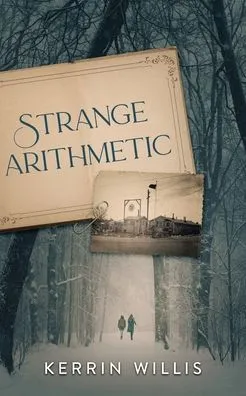
Strange Arithmetic - by Kerrin Willis


In 1945 Maggie O'Callaghan discovers she's pregnant. The father of the baby is an Italian POW being held at Camp Myles Standish in Taunton, Massachusetts. The complications of this situation are many and the resolution is bad all around.

In 2016 Niahm Reilly really wants to be pregnant. The situation is complicated and the resolution turns out to be better than expected.

My husband and I heard this author speak earlier this year at An Unlikely Story Bookstore. We purchased both of the authors' books intending to read them together after we finished Margaret Atwood's recent book of Essays Old Babes in the Wood (which we had just started). Then we learned that Willis' book was our town's One Book One Community selection for this fall, so we moved it up to the top of the pile. We had not known that there was a POW camp nearby. We learned quite a bit of local history from reading this.

Niahm has a special place in her heart for libraries-her deceased mother was a librarian who'd bring her daughter to work with her. However, I cringed at the description of Niahm curled up under her mother's desk by her her "high-heeled feet". WTF?! What self-respecting librarian wears anything other than sensible shoes.


Monday, May 15, 2023

You'll Never Believe What Happened to Lacey : Crazy Stories about Racism - by Amber Ruffin and Lacey Lamar


Sisters Ruffin and Lamar grew up in Omaha, Nebraska. Their cringeworthy anecdotes about race and racism focus mainly on Lamar's experiences working there, but also about growing up in Omaha in the '80s and '90s. The audiobook is read by the authors and it is well worth a listen. The sisters laugh together and enjoy some easy banter as they tell their tales.

Of course any library tale will pique my interest. There was only one in this book, but it caused me to do a lot of thinking. It centered on Ruffin's elementary school library. A lover of arts and crafts, Ruffin borrowed a craft book that included instructions for making a Gollywog doll. She was unaware of the racist nature of the craft and innocently asked her mother about making one. Her mother's swift response included not only a call to the school librarian to complain, but also an admonishment to her daughter to use only the books they had at home from then on.

As I said, I had to think about this episode quite a bit to determine what to say about it, especially in light of the wave of book banning happening across the country. I will begin by saying that Ruffin's mother was perfectly within her rights to contact the school and complain about the book. Furthermore, schools should have processes in place for book reconsideration, and they in fact count on parents to bring books to their attention that may not belong in the collection. Not all book removal constitutes book banning. Books are discarded from libraries for a myriad of reasons. Perhaps they are out of date, worn out, or otherwise no longer appropriate for a particular audience or collection. "Weeding" is part of the process of keeping a library relevant.  

However, removal of individual titles, with cause, is not what we are witnessing in schools today. Instead hundreds of books that the censors have not read are being summarily removed from classrooms and school libraries (and indeed public libraries). Those who would remove books from libraries under the guise of "parental rights" are full of shit. They already have the right to request that their child not have access to certain books. Meanwhile, they are preventing other parents who would like their children to have access from doing so. 

I was surprised that Ruffin's mother told her daughter not to use the library any more over this one incident. Of course any parent can contact their child's school and request that they not be allowed to check out specific books (or any books for that matter), and they are also within their rights to tell their own child not to use the library any more. I would argue, however, that students should be given (relatively) unrestricted access to their school and public libraries. Young people need to be able to explore difficult topics at their own pace. Librarians, teachers, and parents can be guides but ultimately everyone should be able to access the information they need when they need it - without judgement.  See my post Why I Let my Daughter Read Twilight Books for additional thoughts on this. (Note that the post is 10 years old and my "daughter" now identifies as non-binary and uses he/him pronouns).

You'll Never Believe What Happened to Lacey is the One Book One Community selection for the Bridgewaters for summer 2023.


Monday, March 13, 2023

Project Hail Mary - by Andy Weir

Dr. Ryland Grace wakes up from a coma not remembering who or where he is. He is able to surmise that he is on a space ship, but does not know why. As his memory gradually returns he realizes that his job is to save Earth, and all the Earthlings on it. As he continues his journey he meets an alien space ship and befriends Rocky, a spider-like alien, whose planet is likewise doomed unless he and Grace can figure out how to communicate and cooperate in vanquishing the dreaded Astrophage that threatens both of their planets.

In order to save the world the astronauts had a wealth of information at their disposal, namely the entirety of the Library of Congress in digital format! Rather than trying to guess what might be needed the powers that be determined that everything would be available to the heroes, copyright be damned! Good thing, too, because Grace made good use of it.

Science fiction as a genre is not something I typically seek out, although a perusal through my blog indicates that I have, in fact, read a fair amount of it. I would probably not have read Project Hail Mary had it not been the One Book One Community pick for Bridgewater this spring. James and I listened to the audio version, narrated by Ray Porter who was one of the best voice actors I've heard in the myriad books I've listened to. 

Monday, August 16, 2021

The Book of Joy - by His Holiness the Dalai Lama, Archbishop Desmond Tutu, and Douglas Abrams


The One Book One Community selection for the fall 2021 is The Book of Joy. After so much time on lockdown (with only virtual connections) the time seemed right for a book that explores what is joyful in life. Co-author Abrams follows these two religious leaders during a week-long meeting in which they discuss how they remain positive despite their experiences living under apartheid (in the case of the Archbishop) and the extreme difficulties of living in exile (in the case of the Dalai Lama). The Dalai Lama left Tibet for India in 1959 at the age of 24. He describes how during the Cultural Revolution China pledged to wipe out the Tibetan language 
so they burned books, such as the three-hundred-volume Tibetan canon of scriptures translated from India, as well as several thousand volumes written by Tibetans themselves
On a more joyful note however, the week wraps up with a party in honor of the Dalai Lama's eightieth birthday. And what better place to have a joyful birthday celebration than in a library! The party takes place in the Tibetan Children's Village school

As our motorcade approached, we heard the children's soaring voices, their welcome song high-pitched and plaintive, yet indomitable and joyful. It was a song they had composed...The choir and school staff lined the road. All around them sat waves of students in their school uniforms...The car finally arrived at the library and the children were still singing at the top of their lungs.

This was, ironically, a rather challenging book for me. As I read news of building collapses, an earthquake, the Taliban, raging wildfires, all while facing a pandemic that won't slow down because of deliberate manipulation of truth, perhaps remaining hopeful is the best I can do for now. Joy will have to wait.

Monday, March 29, 2021

Beyond the Bright Sea - by Lauren Wolk

In the early twentieth century twelve-year-old Crow lives on an isolated island off of Cape Cod with Osh, who found her as a newborn in a boat. Their neighbor Miss Maggie is one of her few other companions. Curious about where she came from Crow asks questions and wonders why others decline to shake her hand, why she is refused admittance to the local school on Cuttyhunk, and why the librarian told Miss Maggie that if books were meant for Crow's hands then she could keep them rather than returning. Crow ultimately unravels the mystery of her origins and discovers her legacy when she learns about the patients in a hospital that was once located on a nearby island. 

The public library does have some information in its archives that Miss Maggie uses to help Crow do some research. They also find an address for a doctor who used to work in the hospital. Crow posts a letter for the first time when she writes to the doctor to see if she can find out more about where she came from.

While this is not a book I would normally pick up, it is the current selection for our One Book One Community program and I am looking forward to hearing the author speak next month.


Monday, September 28, 2020

George - by Alex Gino


Yesterday was the start of  banned books week, so I read a book that I've been meaning to read for a while. George is really the story of Melissa, a transgender girl. It ranks number five on the list of Top 100 Banned and Challenged books of the decade 2010-2019. According to the American Library Association reasons for challenges of this work include: a transgender character; because schools and libraries should not "put books in a child's hand that require discussion"; for sexual references; and for conflicting with a religious viewpoint and "traditional family structure". 

The narrator of the story uses George's birth name with feminine pronouns (she/her/hers) to tell her story. Only George's best friend Kelly knows that George is really a girl. Everyone else thinks she's a boy. A fourth grader, George really wants to the part of Charlotte in her class production of Charlotte's Web (a project in conjunction with the school-wide common read). Her teacher (Ms. Udell) thinks George is joking when she reads the spider's lines during her audition. "You know I can't very well cast you as Charlotte. I have too many girls who want the part. Besides, imagine how confused people would be" Ms. Udell tells a disappointed George (who absolutely does not want the part of Wilbur, or Templeton, either).

George keeps a collection of "girl" magazines hidden in a denim bag at the bottom of her closet, the way some might hide a pornography collection. She found her first magazine in the recycling bin of the library. The library is a space that George clearly knows well as it is described as a place that is close enough to her house that she passes by it on her bike on her way to Kelly's house. How lucky for her that she can so easily access this neighborhood treasure.

I'm looking forward to hearing the author speak during a Facebook live event on Wednesday. Gino has been outspoken in their defense of their book.

Lagniappe: This book not only mentioned libraries twice, it also had my favorite word: sesquipedalian - a word that describes itself.

Other books on the Top 100 list that treat the issue of gender identity include:
I am Jazz by Jazz Jennings and Jessical Herthel
Beyond Magenta: Transgender Teens Speak Out by Susan Kuklin
Jacob's New Dress by Sarah Hoffman
My Princess Boy by Cheryl Kilodavis

Wednesday, December 6, 2017

George & Lizzie - by Nancy Pearl


Even if there had been no libraries in this book, it would still get a post here for being written by the librarian's librarian Nancy Pearl. However, there are, unsurprisingly, dozens of times libraries are mentioned in this work.

James and I took the train into Boston in September to hear Pearl read from her new novel at the Boston Public Library, and bought a signed copy. She was happy to pose with me for this un-selfie (James took it) and specifically inquired "Are you a librarian?" (with a smile) when I asked her if she minded taking her picture with me. 

Blogger with author Nancy Pearl

George & Lizzie is not your typical love story. While tales of opposites attracting (in this case an optimist and a pessimist - George and Lizzie respectively) are not unusual, George and Lizzie have a lot more going on. Lizzie has two big secrets that she's keeping from George, as well as a host of other issues that stem from her unusual childhood - having been raised by her aloof Behavioral Psychologist parents Lydia and Mendel. Lizzie is bemused by George's desire to help her see the world through a lens of hope, but pushes back at every turn.

George's optimism ultimately makes him famous on the public-speaking circuit. 
in George's world there were no tragedies; rained-out picnics, famine in China, lost library books, monsoons in Bali, divorce, children drinking at ten, mainlining heroin at twelve, and dead at fifteen...In his world there were no irretrievable bad choices or wrong turns. Each one was, instead, an Opportunity for Growth...
The next time I hear a student complain about having to pay I fine I will remind them that it is simply an opportunity for growth...

Lizzie is a library user from a young age. She liked the little library at her kindergarten where "Lizzie's whole class went for an hour two mornings every week". Lizzie's parents insisted that Shelia, her babysitter, take her on outings to "ballets, museums, libraries, operas, theaters, and planetariums" rather than places like the Bowlarama. I would suggest that there should be room in a child's life for the Bowlarama and its ilk along with the the more culturally entertaining places. Libraries, of course, are fun, and Shelia helped make them so by checking out books "that she loved when she was Lizzie's age". Shelia also took Lizzie on four-leaf clover hunts. "Lizzie never met anyone who could find four-leaf clovers like Shelia could". This is probably only because she has never met me! My prowess for finding the rare vegetation has led me to deem myself "The World's Greatest Four-Leaf Clover Finder".

Something Lizzie and I have in common is that we were both born on a Wednesday. Lizzie found the poem "Monday's child" in a library book and after reading it understood was why she was "full of woe". I remember reading that poem for the first time, and my father showing my brother, sister and I how to use the perpetual calendar in the phone book to find out what day of the week we were born on. Like Lizzie I was rather displeased with my lot. As Lizzie realizes it would have been better to have been born on a Tuesday or Friday. 

One of Lizzie's favorite library books was Bonny's Boy about a cocker spaniel and "after searching for years, she finally found herself a copy at a book sale run by the Ann Arbor Public Library".

As a high schooler she goes to the library to read up on football in preparation for something she refers to as "The Great Game" - a game which ultimately becomes one of her big secrets. She also read a lot of teen romance novels from the library where she learned about dating, but was also left with a lot of questions about sex.

In college Lizzie uses the UGLI (Undergraduate Library at the University of Michigan Ann Arbor) to study with her boyfriend Jack (who becomes her other secret) and then takes a job there there "shelving books, all of which looked frightfully uninteresting" in an attempt to take her mind off the fact that Jack left for the summer and seemed to have forgotten about her. In fact, he never returns to school. Jack's "ghosting" of Lizzie is what makes her use of the library as an adult so pathetically sad. Although Lizzie tells George she does "nothing much" with her days, the truth is she spends them at the library "trying to find Jack using the public library's collection of telephone books". Traveling with George provides her with opportunities to visit other libraries and look at their phone book collections as well. Of course today Lizzie could probably reconnect with her old flame within seconds by searching for him on Facebook, or Googling him, but George and Lizzie's story takes place in a magical time called the nineties, a time when a public library's phone book collection was well used. I know because I worked in a public library in the 1990s. We would field calls from people all over the country asking if we had a phone book for a certain city, and if so they'd ask us to look up a phone number for them.

James and I read this out loud together. It was a good read aloud for us as we reminisced about the nineties, and laughed out loud. It also had regular breaking points so we were always able to find a stopping point.

A must-read for all librarians. 
Wednesday, August 9, 2017

On Pluto: Inside the Mind of Alzheimer's - by Greg O'Brien


O'Brien's book is Bridgewater's One Book One Community Read for fall 2017. The author - a father, journalist, and Alzheimer's patient - tells his story of living with the disease and the pain of watching himself lose control of basic skills. Diagnosed at age 59 with early-onset Alzheimer's his frustrations were compounded by the fact that he was still caring for his aging parents, his mother, likewise, suffering from dementia.

One one occasion, while O'Brien's father was recovering from surgery in a rehabilitation facility, his mother, who could not safely stay home alone, was also cared for there
the devoted staff took her by the hand to the library filled with four walls of books, they asked her what she wanted to read...she scanned the shelves for 15 minutes and then pulled out two books.
'I think I'll read these,' she finally said, not grasping title or author.
The books she chose were Secrets in the Sand and Nature on Cape Cod and the Islands - two books of mine...
'They just felt comfortable in her hands', the nurse told me later.
A true testimony to the power of books.


Tuesday, April 4, 2017

The Elephant Whisperer -by Lawrence Anthony


It was looking mightily like I would not be blogging here about Bridgewater's current One Book One Community read. This story of the author's affinity with a rogue herd of elephants who find their home in Anthony's South African game reserve in the early 2000s didn't have any libraries in it. However, just as the book was winding down (on page 366 of 368) Anthony explains how elephants' reputations for long memories is well deserved as older elephants teach young bulls
masculine etiquette as well as more practical matters of survival in the wild, such as where the best watering holes and the most succulent branches and berries are....An ageing elephant male is not something surplus to be dispatched by some meagre trophy-gatherer. He is a breathing reference library [emphasis mine]; he's there for the health and well-being of future elephants. He teaches the youngster who they really are and imparts priceless bush skills to succeeding generations.
And there you have it.

This was a popular choice for One Book One Community (OBOC) - a favorite of many committee members, and OBOC's fans have shown great enthusiasm for it. I wasn't crazy about it myself though. As much as the author loved animals, and was able to commune with them, he seemed unable to transfer that respect to his interactions with other humans, which I found rather off-putting.

Wednesday, March 2, 2016

Life, Animated: A Story of Sidekicks, Heroes, and Autism - by Ron Suskind


This is the book Bridgewater's One Book One Community steering committee chose for our spring 2016 read. We considered several different books about autism, but ultimately chose Suskind's memoir about his autistic son's love for Disney animated films. I wasn't completely thrilled about the choice, as I get weary of the ubiquitousness of all things Disney, however, once we choose a book I get behind it, and so I read this one, and I have to say I am glad we picked it.

This is the story of Owen, and his family, and how they were initially able to connect with each other watching, and acting out scenes from Disney films together. Ultimately the family discovered that Owen related deeply to the stories and the characters, which allowed him to also start relating to other people. Suskind contextualizes the Disney stuff well, and he is a brilliant storyteller. This is also simply a remarkable story.

Libraries play a rather small role in this work. Twice they are mentioned in passing as part of a longer list of things one expects to find in a school building, along with classrooms, gymnasiums, and the principal's office. However, the DC Public Library is the site of an "incident" complete with a "sotto voce..., bespectacled" librarian who isn't sure what to make of the young boy acting out a scene from the 1994 film The Pagemaster by parting the books and wedging "nearly his whole body in the dark space between the bookcases". Even if I hadn't otherwise enjoyed the book, that scene was worth reading it for. I've added The Pagemaster to my Netflix list. Watch for a review of it soon.

I don't think anyone on our committee knew that a documentary of Owen's story was being made when we selected the book, but I found out it recently opened at the Sundance Film Festival. Another movie I'm looking forward to watching.


Friday, November 21, 2014

Cold Case to Case Closed : Lizbeth Borden: My Story - by Rich Little and Beverly Folstad


Living in Massachusetts has piqued my interests in several things. One is the Salem witch trials, another is the Lizzie Borden ax murder case. Of course the jump rope rhyme about Lizzie Borden is well known, and I have seen at least two movies about the crime. I watched The Legend of Lizzie Borden starring Elizabeth Montgomery when it first aired on television in 1975, and more recently Lizzie Borden Took an Ax with Christina Ricci in the title role. We have also toured the Borden home in Fall River, which is now run as a (creepy) B & B. This is the first book I have read about her though. Our town's One Book One Community Committee is considering this self-published work for the spring 2015 read. Although it is subtitled "My Story" only some of the sections of this work are from Lizzie Borden's point of view. Much of it is a factual retelling of what was known, police reports, and how the trial played out. These parts of the work read like any other "true crime" book. I was, personally, much more entertained by the sections of the book that comprised the imagined words of Miss Borden. And I was especially interested in learning how important her library card was to her while she was imprisoned
In my ten months at Taunton (prison), there was seldom another woman incarcerated; the result was a very quiet environment. I spent my time reading, one of my favorite pastimes. When Emma came in on the train to visit every week, she always brought fresh reading materials. The Taunton Free library was only two blocks away; they issued me a library card which I still cherish. While shopping for jail supplies and provisions, Mrs. Wright would pick up several newly published books from the library each week.
I can only imagine that without the solace Miss Borden found in reading that her time in prison would have been akin to solitary confinement - alone with only her thoughts day after day. Books are our friends.

Friday, March 21, 2014

Becoming Odyssa - by Jennifer Pharr Davis


After graduating from college Jennifer Pharr Davis sets out to hike the Appalachian Trail from Georgia to Maine. Her Odyssey prompts her to take the trail name "Odyessa" as she sets out on a journey of self discovery. Davis' writing is honest and funny and demonstrates a true love affair with the trail. Like the other books I've read about the "AT" (A Walk in the Woods; The Things you Find on the Appalachian Trail) I read this as part of my town's One Book One Community program. And while all of these books were enjoyable, and inspiring each in its own way, none have prompted me to want to dust off my old backpack and set out on the hike myself.

The bar for inclusion on this blog is simply that a library be mentioned, and Davis almost didn't make the cut. However, in a break from the trail to visit with family in Connecticut she visits the Yale University library and tells the tale of seeing "two volumes of the Gutenberg Bible at the Beinecke Rare Collections Library.

I look forward to hearing Ms. Davis speak about her experiences when she visits Bridgewater in May.

The author's middle name serves as her aptronynm as the distance as the Appalachian Trail is over 2100 miles long. It is also the name of a town I once lived in.

Wednesday, December 18, 2013

The Things You Find on the Appalachian Trail: A Memoir of Discovery, Endurance and a Lazy Dog - by Kevin Runolfson


Bridgewater, Massachusetts' One Book One Community selection for spring 2014 is Bill Bryson's memoir of an ill-fated attempt to hike the entire Appalachian Trial.  A Walk in the Woods is a book which I found hysterically funny. There was some discussion on the One Book Steering Committee, though, about whether some might not enjoy Bryson's particular brand of humor the way that I do, and that perhaps we should suggest some alternative selections. Runolfson's book looks like it is clearly in the running. I think it will have wide appeal with a variety of populations, especially since the author's faithful dog, Rufus plays such an endearing role in the work.

Hiking the entire trail from Georgia to Maine between March and October 2001 in an effort to recover from a bad divorce Runolfson learns much about himself, and the kindness of strangers, as he also finds love on the trail.

Of course, I was thrilled to read that he stopped at several libraries during his six-month quest. He specifically mentions this for the first time as he walks through the Virginia portion of the trail. He first mentions one small library in Glasgow, which I am not sure he actually stopped in, but he is clearly happy to find a "huge library two blocks from the campsite" in Waynesboro where he can access e-mail. He also uses the public library near the end of the New York portion of the trail to use a pay phone (I wonder if those are still functional along the AT?) and to "waste the rest of the day reading". Although normally I would take issue with the using the verb "waste" in conjunction with reading and spending time in a library, I'm going to let this one slide, he did after all, have a long journey with a bit of a deadline. He also mentions visiting the library in Rutland, Vermont.

Public libraries are important institutions that serve many constituencies. It is good to know that a visitor to a town can use the public library to read, check e-mail, use the rest room, refill their water bottle, use a pay phone, or simply take a break. Supporting the library in your own town is the ultimate act of kindness to strangers. When you use the library in another town you are the beneficiary of the kindness of others. This is how a civil society functions.

Friday, March 15, 2013

We Band of Angels - by Elizabeth M. Norman


During World War II a group of Army and Navy nurses were imprisoned in Bataan by the Japanese. The women were subjected to a starvation diet, tropical diseases, and humiliation by their captors while continuing their work as nurses. They were hailed as heroes after their rescue three years later, but found that  once the celebrations ended the military refused to give them the same honors that their male counterparts were due. Many of the women suffered long-lasting effects from the years of illness and malnutrition, which in some cases forced them to give up their military careers. This book is based on interviews, diaries and other firsthand accounts with the women who were there. The author named Helen "Cassie" Cassiani as the one she knew "best".

Growing up in Bridgewater, Massachusetts Cassie "often used [farm] work as an excuse to ignore her studies....Then one day two friends from the neighborhood sat her down in the library and showed her how to study. Soon she acquired the habit of reading-history, science stories." And from this seed grew her desire to become a nurse. Exciting to think that the library she used must be the very one for which this blogger now serves as a trustee!

Cassiani's fellow internee Eleanor Garen also found a love of the library as a child in Elkhart, Indiana. "She learned to read early and became such a bookworm that she would fill up her own library card, then take out books on her brothers' accounts."

The importance of libraries is additionally highlighted in this book by the fact that those imprisoned established their own lending libraries within the confines of the camp. The closing the library was one of the methods used by their captors to harass and demonstrate who was in charge.

This is a captivating read, especially in light of the recent decision to "allow" women in combat units. Women  serving on the front lines, in combat conditions is nothing new, as is evident in this work.

This book is the One Book One Community selection for Bridgewater in the fall of 2013.

Wednesday, February 20, 2013

A Walk in the Woods - by Bill Bryson


After selecting a string of rather didactic books (interesting though some of them were) our town's One Book One Community Committee decided to look for something fun for next year's read. To that end, we (the Committee) are considering Bryson's work about hiking the Appalachian Trail. I checked it out from the very library where I work, and took it home over the President's day weekend. I finished reading it in two days, and laughed out loud on so many occasions I lost count. Bryson and his friend Katz both out of shape, decide to hike the Appalachian Trail. Everything about his trip is funny, from going to the camping store to get outfitted for the trip, to finding his traveling companion, and the descriptions of other hikers, and helpers, he meets along the way. The book also has great geology, geography, and history lessons (but without being too didactic of course). And, to put icing on the cake, Bryson sings the praises of Laurie Potteiger an "Information Specialist...a mine of information" who works at the Appalachian Trail Conference headquarters in Harper's Ferry, West Virginia. Plus, he mentions libraries two times! In one case he explains that the walk to the public library in his own town of Hanover, New Hampshire is part of why it is a nearly perfect little town. In the other, he describes going to the Mt. Carmel, Pennsylvania Library and asking about the nearby town of Centralia, a town that was almost completely swallowed by an underground coal fire (a fire which apparently still burns today). At the Mt. Carmel Library he is provided with "three fat files bulging with newspaper and magazine clippings". Ahh, the good old days of vertical files. Do any libraries still maintain these?

It is very likely that the entire town of Bridgewater will be enjoying this book next spring.

Friday, March 2, 2012

Little Changes: Tales of a Reluctant Home Eco-Momics Pioneer - by Kristi Marsh


Little ChangesIn conjunction with Bridgewater's One Book One Community Read program, Marsh came to speak at the Bridgewater Public Library to talk about "Goin' Organic with a Budget Friendly Attitude". After a diagnosis of breast cancer, Marsh set out to discover how the chemicals we "smother" on, and "devour" into our bodies, by way of health and beauty products and food, might be playing a part in rising cancer rates.


Marsh began her presentation by saying it was appropriate for her to be speaking at Bridgewater Public Library because some of the research she did for her (very recently published) book was conducted there. While she does not specifically mention Bridgewater Public Library in the book, she does describe "constant trips to the library...[seeking] to fill [her] brain with information." And she does specifically mention Bridgewater State College (now University) as the place where she was first awakened to the reality that the abundance of chemicals in our "health" and beauty products, and our food, could be contributing to the the high rate of breast cancer in the United States. Library as gathering place and community center is made clear in this book when Marsh describes giving her first presentation to a group of other mothers at a local elementary school library. She uses a library methaphor to describe the quietness of the conference room at the Massachusetts Department of Health, where she gave testimony against the use of BPAs in food in beverage containers, and again to illustrate how her her mind worked upon hearing about the President's Panel on Cancer "my mind raced like fingers running through an old library card system." Well, Krisit, you certainly date yourself, here!

Although the message is similar to the one in Michale Pollan's The Omnivore's Dilemma, this was a much easier and quicker read. If I have any qualms about the book, it is this: I don't think Marsh tried to reach a big enough audience. It is clear that her target is other "Moms", which not only excludes fathers, but also anyone who is not a parent. My husband and I attended the presentation together, and based on what we heard have already begun making changes to our food purchases. And although he has not yet read the book, he did look through it to find out what it had to say about chemicals in hair dye, after our teenage daughter left a mess made of the most unnatural pink color on our bathroom walls, floor and countertop, some of which will never come out!

Marsh's message is clear, upbeat, and encouraging. She is realistic about what kind of changes can be made, without being discouraged by setbacks. I was particularly interested in what she said about school fundraisers, and how so often the rely on selling junk food, or cheap products, belying what we otherwise try to teach children about healthy eating and sustainability. I think about annoucements in my church where it would not be unusual to hear about a book discussion of Rachel Carson's Silent Spring, followed immediately by an annoucement that one of the kids is selling (preservative laden) cookie dough.
For more information see Kristi Marsh's Choose Wiser website.

Friday, February 3, 2012

The Town that Food Saved - by Ben Hewitt

is Bridgewater's One Book One Community Read for the Spring 2012. It is the story of Harwick, Vermont and the "agrepreneurs" (Hewitt's term) who lead the town's successful local food movement.

The author does not live in Harwick, but lives near it, in Cabot - a mere seven miles away as the crow flies, according to How Far is It? He demonstrates his understaning of the value of a public library by mentioning the Cabot Public Library twice on the same page. He explains that his town has "a fantastic hardware store, a wonderful library, a garage, a post office, a diner, and a well-stocked village grocery, but not much more" so he and his family venture into Hardwick for things such as sporting goods, tractor supplies, and medicine, "and every so often, [to] buy a book at the Galaxy Bookshop, thought mostly...visit the Cabot library for...literary excursions."

Hewitt will be speaking at Bridgewater State University on April 24 at 7:30 in the Horace Mann Auditorium. For more information, and to find out about other "One Book" programs visit the One Book One Community webpage.


The Town that Food Saved: How One Community Found Vitality in Local Food

Tuesday, November 8, 2011

One Book One Community

Since 2006 I have been on Bridgewater's One Book One Community steering committee, a partnership with members from the University, public schools, public library, and other town organizations. We select books for community-wide reading programs and plan events in conjunction with the themes of the books. The Journal of Library Innovation just published an article I wrote about my experiences doing this rewarding work.

Friday, September 30, 2011

Fahrenheit 451 - by Ray Bradbury - September 30

No celebration of Banned Books Week would be complete without some mention of Ray Bradbury's dystopian novel about a world in which all books are burned. This was Bridgewater, Massachusetts' One Book One Community selection for fall Fall 2008. We planned all of our events to coincide with Banned Books Week, including a reading, and discussion of information loss from author Junot Diaz; as well as a Banned Books Bonfire. We, of course, did not burn any books, but rather read banned books by the light of the flames.

There are no librarians in this book, and all the libraries in it are private, and illegal. Those who love books enough to hoard them in their homes are bound and removed when discovered, and then the firemen are brought in to destroy all their reading material. Bradbury says this work is often misinterpreted, and is not really about censorship, but rather about "how television destroys interest in reading literature". Read more here.

According to the author's introduction in this "Special Edition" created for the "Long Beach Reads One Book" program, the book was written in a library on a typewriter Bradbury rented for .10 a half hour in the early 1950s. It started out as a short story called "The Fireman". The title of the novel comes from the temperature at which paper burns. Bradbury first called the Physics department at UCLA to find out this bit of trivia, when they could not provide the answer he contacted the USC chemistry department, still no luck, finally he called the LA fire department who provided the information. Of course, had he asked a reference librarian in the first place one call would have been all he needed!

Ironic, of course, is that this book is among one of the most censored. Reasons for challenging this work include references to drunkeness, smoking cigarettes, "dirty talk" and the use of "damn" and "hell". In 1992 some students at Venado Middle School in California received copies of this book with some of these "offensive" words blacked out.