Showing posts with label e-books. Show all posts

Tuesday, January 21, 2025

Lula Dean's Little Library of Banned Books - by Kirsten Miller


Lula Dean didn't intend for the Little Library she put in her front yard to be filled with books she had requested be removed from the school and public libraries, but some stealthy young folks replaced her "clean" books with the forbidden ones, hiding them with the covers of the books she originally had in her collection. Suddenly kids know about periods, and women know about witchcraft, and some people even want to remove the statue of a slave owner from the town square. 

Burning books is offered as a solution for those works that some don't want others to read. This is the case for people on the left and the right. Lula Dean and the Concerned Parents Committee (CPC) suggest this for the books they want "reconsidered". Likewise Delvin Crump decides to burn Our Confederate Heroes when he finds it in Lula Dean's library. 

Not once in his life had Delvin Crump ever contemplated burning a book. When he'd joined the army, he had taken an oath to defend the Constitution which gave all Americans the right to free speech, including the backward-ass bastard who'd written Our Confederate Heroes. But it was time to take this piece of shit out of circulation. 

Delvin has his grill fired up when he discovers that Toni Morrison's Beloved is really inside the book cover.

Don't burn books you don't like. You cannot determine for other people what they can read. People have the right to read what books they want, and have their own reasons for reading them. 

This book has 35 chapters, each named for a book. Additionally, a number of books are mentioned in the work but do not have chapters named for them. In her author's note Miller tells the readers that some of the book titles she uses are real, and others are fictitious. I did recognize many of the book titles. Some, such as: Are You There God, It's Me, Margaret; The Handmaid's Tale; and Fifty Shades of Grey have their own posts on this blog. I was particularly interested to find How the Word is Passed among those titles used. It is a book I am currently listening to on Audible.

The town librarian Mara Ocumma is a true defender of privacy and of free speech. When Melody Sykes, one of the members of the CPC shows up at the library looking a book of poison mushrooms, Ocumma knows exactly why. Melody's nasty husband Randy is certainly worthy of a murder fantasy. However unlikeable Melody is, though, she still is entitled to good information and privacy, and Ocumma ensures she gets both.

A fun satire. 
 

Tuesday, December 10, 2024

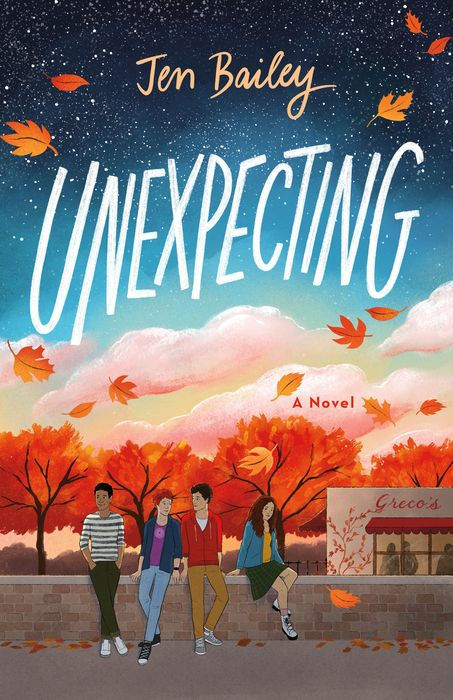
Unexpecting - by Jen Bailey


When teenagers Ben and Maxie decide to have sex (almost on a dare) they are dismayed to discover that the act resulted in a pregnancy. The fact Ben is gay adds an additional level of bewilderment to those who know him. Maxie (whose mother works at the public library) is ambivalent about the pregnancy and is under pressure from her parents to give the baby up for adoption. Ben, however, wants to raise the baby with the help of his mother and step-father. His mother provides some level of support for this idea, with the stipulation that Ben attend parenting and childbirth classes. Ben also checks out books on these topics from the public library. 

A twenty-first century take on the 1977 classic He's My Baby Now by Jeannette Eyerly. Eyerly's book was adapted into the 1980 ABC After School Special "Schoolboy Father" starring a very young Rob Lowe.

Monday, December 2, 2024

The Ogress and the Orphans - by Kelly Barnhill


My reading goal for 2024 has been to read 60 books about dragons (because it is the year of the dragon, and I turned 60). So far I have read fify-eight and a half dragon books. I have every reason to expect that I will reach my goal. I did not necessarily seek out dragon books that were also library books, although serendipitously, many did fill the bill - a list is provided at the end of the post. 

As part of the project, earlier this year I read The Girl Who Drank the Moon by Kelly Barnhill which told of a locked library. Evil doers were guarding knowledge from the riff-raff. The Ogress and the Orphans has similar themes. 

A shape shifting dragon arrives in the village of Stone-in-the-Glen in the form of a hero who vanquishes dragons and becomes the mayor. As a dragon he first burned down the library, the school and other buildings and then as mayor convinced the villagers that he saved them. Without access to books and knowledge the villagers are convinced that the mayor alone can save them. After all "books are dangerous". The village orphanage, however, still has a library and the orphans are well read, and well equipped to truly save the town from the mayor (and itself).

For another library-positive dragon book by Kelly Barnhill read When Women were Dragons. I listened to this one on audio while in the car, so I don't have specific notes about the wonderful librarians in this work, but I will say it was probably my favorite of all the dragon books I've read so far.

As promised, other dragon/library books include:

Raising Dragons by Jerdine Nolan 
Dealing with Dragons by Patricia Wrede
Fourth Wing by Rebecca Yarros
There's a Dragon in the Library by Dianne De Las Casas
The Neverending Story by Michael Ende
The Dragon in the Library by Louie Stowell
The Hero and the Crown by Robin McKinley
Daydreamer by Rob Cameron


Friday, June 28, 2024

Gay the Pray Away - by Natalie Naudus


Valerie and her brother are homeschooled with a curriculum sanctioned by the Institute of God's Basic Principles, a conservative Christian organization headed by Ben Goddard - a not-so-subtle camouflage of the Institute of Basic Life Principles once headed by Bill Gothard. Valerie has always been taught to obey her parents and the church's teachings. The seventeen-year-old is expected to marry and begin having children when she completes her studies in God's Training Academy. She interacts mostly with others from her church, and rarely talks to people outside of her insular world. Her haven is the public library - a place she is able to visit while supervised by her mother (who once organized a protest against it for "sexualizing children"). Valerie has learned to select books with innocuous covers so that her parents don't question her reading choices. It is through library books that she first learns about bisexual and other queer folks and begins to question her own identity. When she meets Riley, a "troubled youth" who got kicked out of her private Christian school for kissing a girl, she realizes that there is much that she still needs to learn. With the help of the public library's internet she begins to explore new territory, the freedom she experiences leads her to make some difficult decisions. 

This book reminded me of Pearl Abraham's The Romance Reader (which I read when it was first published almost 30 years ago). Abraham's work tells of a girl growing up in a strict Hasidic community who sneaks to the library to read romance novels.


Wednesday, June 12, 2024

My Librarian is a Beautiful Lesbian Ice Cream Cone and She Tastes Amazing - by Chuck Tingle


My sister sent me an Amazon link to this super-short story. I really had no choice but to purchase the ebook and download it to my Kindle app. In a world where sentient ice cream cones are a thing that don't give anyone pause, we can also easily accept the wonderful metafiction that allows us to believe that the ice cream librarian is reading a book about herself as it is being written.

Certainly not a book for everyone's taste, but definitely a fun read. It also came with a bonus story "Nice Guy Dinosaur Doesn't Pound Me in the Butt Because I'm not Interested and He's Not Actually Nice He's Just Annoying and Creepy and Doesn't Respect My Boundaries When I Tell Him We're Not on a Date".

I have no additional comments about the bonus story. The title pretty much tells all, plus which there are no librarians.

Thursday, April 13, 2023

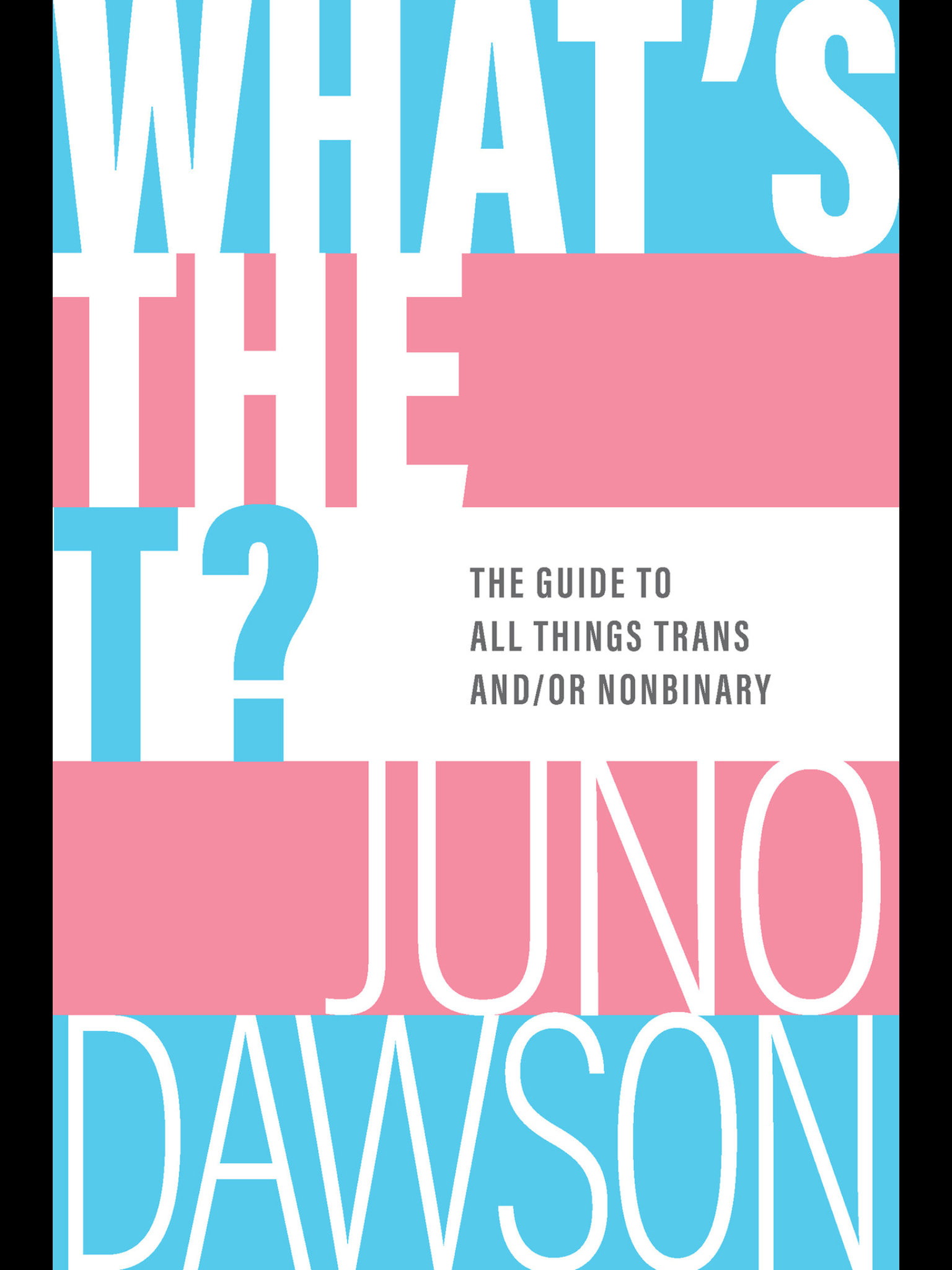
What's the T? The Guide to All Things Trans and/or NonBinary - by Juno Dawson

Juno Dawson's book This Book is Gay is often in the news as it is frequently challenged and appears on lists of banned books. I imagine we will be hearing more about this work as well in the coming months. Dawson, a trans woman, speaks frankly of her own experience while offering support and advice to other trans and nonbinary folx.

While her intended audience is other trans, gender queer, or questioning people she also speaks to cisgender people, and has a specific chapter for people like me "Advice for Parents and Caregivers". She offers that each reader has their own purpose for reading her book and provides a list of possible reasons why one might have picked it up including (among others) that "Maybe it's in your school library and it has a nice cover". 


In her chapter "Doctor! Doctor! I Think I'm Transgender!" she offers some advice to young trans and nonbinary people seeking treatment

For people under eighteen, I always think the first port of call is an adult you trust. This could be a teacher, librarian, school counselor or family doctor.

I hope that everyone knows that librarians will provide information on any topic without judgement, and that every young person knows a librarian whom they trust. However, in today's political climate that includes a rash of anti-trans legislation, book challenges that seek to remove all LGBTQ literature from school and libraries  ("nice covers" not withstanding), and the targeting of educators (including school librarians) who provide such information, I am afraid that finding such trusted adults and reliable information will be more difficult than ever. 

Dawson reminds readers that trans people have always been part of our history and suggests that we learn their stories. "When transphobic people accuse you of being 'trendy' or act like being trans is something new, be ready to open the library. Reading is what? Fundamental".

Tuesday, August 2, 2022

Deceived by the Gargoyles - by Lillian Lark


August is Read-a-Romance month. As a genre, I rarely read romances, but when I do they feature a librarian. Lucky for me this list of 10 Romances about Magical Librarian Love from Book Riot appeared on my Facebook feed in late June. I selected Deceived by the Gargoyles because the description indicated it was a polyamory romance, and not having read any such before, I was intrigued.

Grace is a witch who works in a library archive for both magical and non-magical artifacts. Grace's special magic allows her to "read" feelings and emotions via paper (especially books). She is also looking for love.

After some unsatisfactory dates she heads to a matchmaker (Rose) who suggests that Grace consider dating a "non-witch". Grace is open to this and answers that "the type of paranormal shouldn't matter." She is sent on a date to meet Elliott, who appears human (wearing a "glamour") when they meet, but who is actually a gargoyle. Elliott, is gracious and offers to get his car so Grace doesn't have to walk to the nearby restaurant in her "sexy" high-heeled shoes. As sensible-shoe-wearer myself I immediately questioned Grace's choice of footwear. What kind of librarian is she, anyway? In any case, however gracious, Elliott hadn't been completely honest with Rose when asking for a match. While Grace was expecting to be matched with someone single, Elliott, in fact, already had two (2!) other mates (Broderick and Alasdair), both male, and both gargoyles. They all lived together with the rest of their clan in Bramblewick Manor.

After a bit of getting to know each other, some confessions, a lot of sex, and a lot more sex, and the gifting of an entire library in their home to Grace - a la Beauty and the Beast(s) - they all fall in love and live happily ever after.

Broderick appeals to Grace's intellectual curiosity in order to entice her to try some new things with him
You're a librarian who has knowledge sitting before you. I'd think you'd...jump on the opportunity to explore.
Among the gargoyles Grace has the hardest time connecting with Alasdair, who had never been with a woman before. They initially find kinship through reading together. Alasdair suggests that Grace select a book that she would like for him to read to her on her Kindle. Together they discover a special intimacy through this otherwise chaste act. 

Reading together is one of the things that my husband and I have been doing consistently since we started dating 37 years ago. Sometimes we read books, other times magazine or newspaper articles (or Dear Abby). Deliberately making and spending this time together gives us a chance to slow down, and take a break from whatever else is happening. We often laugh together, or chance upon a new topic of conversation.

The crazy four-way sex in this work was more than I'd expected, even knowing that it was a polyamorous romance. Much as I'm all for life-long learning, I won't be reading the rest of the series.

Monday, August 1, 2022

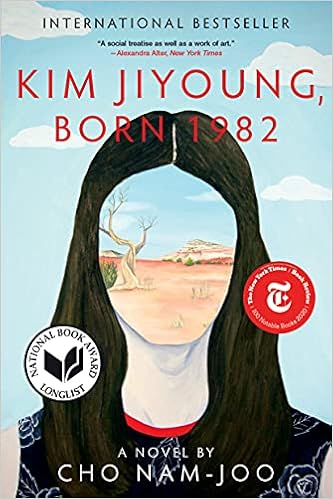
Kim Jiyoung: Born 1982 - by Cho Nam-Joo


This short novel explores the universal expectation that women sidestep their own desires in favor of men's wishes. Girls may be denied educational opportunities in favor of their brothers getting better opportunities. Men are praised for the work women do (both at home and in the office). Women are expected to do errands at their workplace that men are not asked to do.  Husbands continue with careers while wives quit or go to part-time work when children arrive. Sexual harassment is also a theme of this work.

Libraries get two nods in this book. Jiyoung studies with her boyfriend at the university library, and at a client dinner for Jiyoung's division (where she was plied with beer) her division head, after drunkenly making inappropriate comments to her 
hired himself a chauffer over the phone..."My daughter attends university right here. She was studying late at the library and wants me to come pick her up because she's scared to go home by herself".
A worthwhile read for Women in Translation Month, or any month.

Wednesday, May 11, 2022

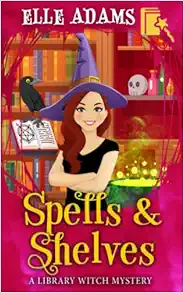
Spells & Shelves - by Elle Adams


May is Mystery Month, and I don't really like mysteries. Often people tell that they think I will like a certain mystery book, or mystery series mostly because they take place in a library, or have a librarian in them. They are almost always wrong, because really I just don't like mysteries. Each May I read one to blog about just so I can include the genre, but (and I can't say this enough) I really don't like mysteries.

I chose this one because it had a witch librarian in it, and I do like witches. For those who like books about orphans who don't know they're magical this one also fills that bill.

When Aurora (Rory) discovers that her late father was a magical person, and that she is being pursued by vampires, she moves in with her three aunts and two cousins who live and work in the library for paranormals. The women are biblio-witches they "weave spell from words". 

One thing Rory learns from her Aunt Adelaide is that the library is "semi-sentient" and I was reminded of Ranganathan's Five Laws of Library Science the fifth one of which is "A library is a growing organism". Ranganathan knew that all libraries are semi-sentient?

Of course libraries are also magical, regardless of whether they are for "normals" or "paranormals".


Friday, April 29, 2022

The Reading List - by Sara Nisha Adams


Libraries change lives. The books we read, the people we meet, the physical space, the programs all create the magic, and community of the library. 

When indifferent library worker Aleisha finds a reading list inside of a returned book she not only changes her own life by reading the eight books, she begins to make a difference in the lives of some of the other library patrons as well. Most notable among these is recently widowed Mukesh Patel, who has yet to return the long-overdue book his wife last read The Time Traveler's Wife. Although Mukesh was never much of a reader, his late wife Naina was an avid reader and library user. Through the magic of books (and the library) Mukesh finds a new connection with his beloved granddaughter Priya. It turns out they both love Louisa May Alcott's Little Women and Mukesh begins to think about everyone who is connected by the books they read.

One of the first things I learned in Library School were Ranganathan's Five Laws of Library Science. Although the rules were written almost a century ago, they remain quite relevant:
  • Books are for use
  • Every reader their book
  • Every book its reader
  • Save the time of the reader
  • A library is a growing organism 
Each of these laws is evident in this work about people connecting through books and libraries.

Friday, May 14, 2021

The Midnight Library - by Matt Haig

Full of regrets, recently unemployed, and grieving the death of her cat Volts,  Nora Seed decides to take her own life. In the twilight world between the life and death Nora is surprised to find herself in a library and face-to-face with Mrs Elm, her school librarian from many years before, the person who had told her that her father had died when she was fourteen years old.

The Midnight Library is filled with green books, each one represents a life Nora didn't live in the multiverse. She can pick out any book and find out what her life would have been like if she had made different choices at each of her turning points. There are many possible lives that Nora is given the opportunity to visit. Would she like to be a rock star? a pub owner? a glaciologist? a vintner? What if she had married Dan rather than canceling at the last minute? What if she had just gone on that coffee date with Ash, where would she be now? Is there any world in which Volts is still alive?

Nora also meets other "sliders" - those like her who are moving between lives not lived. Each "slider" has their own guide and space in which to explore their lives. Not all sliders travel via library books - Hugo travels through old VHS tapes in a video store, with his deceased uncle as a guide, for instance. 

In the aptly titled chapter "God and other Librarians" the omniscience of Mrs Elm as Nora's guide is made abundantly clear, as is her role as a librarian. She explains to Nora that "The library has strict rules. Books are precious. You have to treat them carefully." 

The librarian stereotype is on display as well when Mrs Elm admonishes Nora to "Please be quiet...This is a library".

Ultimately Nora wishes to escape the Midnight Library, especially when she realizes that it is about to self destruct, but how does one do that when there are no doors? Mrs Elm to the rescue: "Who needs a door when you have a book?" she asks.

A new spin on an old theme. Anyone who grew up watching The Wizard of Oz won't be surprised by the ending.


Tuesday, March 30, 2021

Steeped in the Blood of Racism: Black Power, Law and Order, and the 1970 Shootings at Jackson State College - by Nancy Bristow

Just after midnight on May 15, 1970 two young black men, James Green and Phillip Gibbs, were killed by police fire on the Jackson State College campus in Mississippi. Several other students were wounded and a women's dorm at the historically black college was left riddled with bullet holes. 

While often likened to the killings at Kent State University (see my post on When Truth Mattered by Robert Giles) on May 4 of the same year, the shootings at Jackson State were not the result of a Vietnam War protest, 

but rather another chapter in the long history of state violence against African Americans, a story inseparable from their identities as students attending a black college in the capital city of the nation's most racially repressive state.

 Roy Wilkins the national director of the NAACP stated in 1963 that 

There is no state with a record which approaches that of Mississippi in inhumanity, murder, brutality, and racial hatred. [It was] absolutely at the bottom of the list.

Despite the passage of the Civil Rights Act six years before the shootings little had changed in Mississippi. And at Jackson State where "the administration, controlled by the state's all-white Board of Trustees of Institutions of Higher Learning, worked hard to keep the campus quiescent" even as a growing number of students and faculty were starting to protest. 

While there was local and national coverage of the event at the time, including reports in the New York Times, the Los Angeles Times, and even an article in Playboy magazine the tragedy has largely been forgotten since, even as the shootings at Kent State University which happened less than two weeks earlier are remembered each year on its anniversary. There are other parallels with the Kent State shooting, including false reports of rock throwing and sniper fire before police opened fire.

Bristow's book places the shootings within the historical context of a state founded on enslavement, racism, segregation, and white supremacy.

Of particular interest to this blogger was that in 1961 students from another historically black institution, Tougaloo College "attempted to desegregate the downtown's white library with a 'study-in'" as part of a protest of the city's Civil War Centennial celebration.

The students began by visiting the local black library to request volumes they knew the branch did not hold before entering the white library to request those same books. The police were quick to arrive, arresting nine students...They spent the night in the city jail before being released on bail...On the evening following the "study-in" youth from around the city protested the arrest of the group they dubbed the "Tougaloo Nine". At Jackson State College perhaps as many as 800 students gathered outside the campus library...President Reddix attempted to disperse the students and was undone when they resisted. Eventually he was seen just "snatching students at random and shoving them toward a [campus] policeman or deal with orders to expel them".

Documents about the shootings can be found at the College archives, and on display at the library, but "they do not captivate attention as they once did". Even annual memorial events draw low attendance. Although largely forgotten by society at large, the victims still remember. They remember the loss of friends and family, and they live with their own wounds both physical and psychological. There was no justice for the victims of the Jackson State shootings. There were no indictments against any member of law enforcement present that night, and a civil case brought by five of the victims and their families found for the defendants. Although the decision was appealed and a three judge panel found that "the barrage of gunfire far exceeded the response that was appropriate" it was further determined that "despite their guilt, the state and local governments, their officials, and their law enforcement personnel were insulated by 'sovereign immunity', the doctrine protecting the state and its representatives from suits or any penalties that could result". This same doctrine is still in place today and what still allows law enforcement to murder people of color with impunity.


Monday, January 11, 2021

Everything All at Once - by Katrina Leno

About to graduate from high school Lottie is mourning the death of her favorite aunt (Helen) a famous children's book author. Aunt Helen's books are about a pair of immortal siblings (Alvin and Margo Hatter) and are wildly popular among people of all ages. There are of course those who do not like her books "the Anti-Hatters [who] burn the books on YouTube...They say the idea of immortality is a sin against God".

Aunt Helen donated half of her estate to "various charities and libraries of her choosing". She clearly understands the importance of libraries to authors. Some authors seem to think that libraries are somehow stealing royalites from them.

Aunt Helen also had owned the "most expansive private library" of anyone Lottie knew. Helen was even "featured on the front page of Libraries International twelve separate times". Lottie is emphatic in her instance that "Libraries International was an actual magazine". I, however, could find no evidence that such a magazine exists.

We don't actually see much of Lottie using the library although she does meet her friend Sam at one. Sam travels a lot and tells her that he gets a library card wherever he goes "that's important" he tells her.


Wednesday, January 6, 2021

Close Enough to Touch - by Colleen Oakley

Jubilee Jenkins' allergy to people has kept her a recluse for nine years. Following the death of her mother (who had been supporting her) Jubilee takes her first tentative steps outside of her house. Rather remarkably she almost immediately lands a job in the local public library. She also falls in love and begins a long journey towards living a more regular life.

Jubilee comes to like her job at the library and even comes up with a plan to get more people to use it when budget cuts threaten her job. 

It is sometimes harder for me to write about library-centric books than it is to write about books in which the library or librarian is only a minor part of the story. Where do I start? What do I leave out? In this case the passages I marked mostly seem to indicate things that are especially un-librarian like behaviors.

On her first day she is asked to reshelve some books "according to the numbers on their spines". I think we can safely assume these are Dewey Decimal Numbers. The Dewey Decimal Classification system isn't especially difficult to learn, but I cannot imagine that anyone would be expected on their first day of work to understand it so thoroughly as to need no training whatsoever before being asked to reshelve books. I have seen people with plenty of experience make mistakes in shelving, especially when the decimal place gets past a few digits.

There are some other very obvious places that indicate that the author perhaps doesn't fully understand library work. For instance when Jubilee is asked to fill in for the children's librarian during story time she panics a bit but her co-worker Louise assures her that "it's easy. Roger left the three books on his desk and I think you give out candy and sing a song or something. Over in thirty minutes." Jubilee does manage to get through the program and she "silently thank[s] Roger for at least picking out the right books." I can assure you that Roger didn't simply "pick out" some books. He planned a program.

Besides having Jubilee do the more difficult task of leading the story time while she staffs the Circulation desk, Louise also manages to have Jubilee do her "dirty work" for her when she decides that a patron needs to be told that she can't have "private parts up on computers" because "what if a child walks by". The fact that the website didn't appear to be porn, but rather was likely a medical site made no difference. The patron needed to be told it was "against the rules". I thoroughly disagree with this. Everyone has a right to find the information they need in the library. If there are concerns that others might see something then the library needs to figure out a way to ensure privacy. It is the bedrock of our profession.

Jubilee's love interest, Eric, discovers that the library is the perfect place not only to see Jubilee, but also to check out YA books that interest his estranged teenage daughter in the hopes that if he reads them he can get her to at least get her to return his texts. He checks out The Bell Jar, Twilight (he's Team Jacob), The Virgin Suicides, and The Notebook. He also enlists Jubilee to help him understand the works so that he can better discuss them with his daughter. The library (and Jubilee) also help him with his 10-year old son when he realizes that he cannot leave him home alone after school, and no babysitter wants to stay with the disturbed child. The provision of after-school care is a real issue for public libraries. Many families have no other options except to send their children to the library until they can be picked up when their workdays are done.

Despite its shortcomings in describing the library work, I very much enjoyed this book. It was a good, easy read during the holiday break.

Thursday, November 19, 2020

Calling Bullshit - by Carl T. Bergstrom and Jevin D. West


At a recent meeting on information literacy on our campus a colleague from the Biology department called my attention to this work, which is based on a course the authors teach at the University of Washington. More than just how to spot fake news, the authors remind us that bullshit is everywhere. It is in local and national news, in our social media feeds, and yes, even in PR from University Administration. 

We cannot blame the messenger for any of this. Early in the work the authors describe the lament of fifteenth century priest and scribe Filippo de Strata who "railed against the damage wrought by the invention of the printing press". He worried that the low cost of printing materials would place written materials in the hands of the masses thereby lowering their value and authority. 

Five hundred years later in 1969 sociologist Neil Postman's comments on the pablum of mass media expresses concern that "infotainment" will distract the masses from real issues. Neither de Strata nor Postman could have imagined the level of bullshit brought on by the internet.
Publicly, Filippo de Strata fretted that the 'brothel of the printing press' would lead readers to cheap salacious entertainment...Privately, he may have been more concerned about his own job security.
I sometimes wonder about scholars, and some librarians who wish to guard certain information (under the guise of academic freedom). Is it the scholarship they are really attracted to, or simply the idea that they want others to believe that they are the ultimate authority?

A few years ago I read this article that discussed the issue of "abstract spin", the idea that authors of academic papers made their abstracts (sometimes the only part of a paper another person reads) focus on the juicy parts of the study. In this way they are more likely to get press coverage. Of course no one reporting on the story actually read the article, and may not have even read the abstract directly for that matter. The authors of Calling Bullshit likewise discussed the question of what gets covered in the popular press and what doesn't. Most notably that "negative results simply aren't exciting". Furthermore
The research studies that are reported in the popular press are not a random sample of those conducted or even of those published. The most surprising studies are the ones that mate the most exciting articles... When science writers cast scientific studies in popular language, they sometimes omit important caveats, offer stronger advice than is justified, present correlations as causal relationships, or extrapolate from findings in lab animals to suggest immediate application in humans
I attend a fair number of presentations on fake news and misinformation, and have occasionally given them myself. One thing that can be counted on at any of these kinds of workshops is a question about how to convince someone that they are spreading false information. I don't really have a good answer for them, and typically I've noticed other presenters don't either. Bergstrom and West provide some good advice including understanding that a person's identity may be tied to their world view so "decoupling" issues of identity from the story you want to debunk is important. To wit:

Keep it simple - "falsehoods can be crafted to be simple" (consider how often we see meme's reduced to two pictures demonstrating someone  - or something - as bad and the other as good). When offering a counterargument keep you story simple as well.

Take it offline - don't publicly humiliate another person - you will not convince them and you will surely piss them off.

Find common ground - recognize that the other person has concerns (just as you do).

Do not repeat the myth before debunking, this increases the likelihood that the myth will be perpetuated. A good piece of advice I got regarding debunking things on social media is not to simply put a comment with a link to the source. For one thing most people won't see it, and for another it is a bit embarrassing for the original poster who may have shared in good faith. I also learned not to share the post with my own commentary as that will likely perpetuate the myth as well. Instead I download the post, change it and repost so that is is clear that I am breaking the chain of sharing. Here is an example


And finally the authors provide these tips for detecting bullshit:

1. Questioning the Source of the Information
  • Who is telling me this?
  • How [do they] know it?
  • What is this person trying to sell me? - Hint they are always trying to sell you something - you may not necessarily have to part with your money in order to "buy it"

2. Beware of Unfair Comparisons
Find out how comparisons are being made between x and y. Comparisons may be between two different kinds of things (apples to oranges)  or there may be some arbitrary condition thrown in that skew the results

3.  If it's too good to be true - it is.
Statistics have been cherry picked so that readers will generalize, or an incomplete picture is drawn with only partial data reported. Go to the original source to get the real story. I actually practiced what I preached here with the story about abstract spin (above). Once I read the article in the in Inside Higer Ed I found the original study and read it, too. 


And remember "When you are using social media, remember the mantra 'think more, share less'".
Tuesday, October 20, 2020

Midnight Sun - by Stephenie Meyer


The newest book in the Meyer's "Twilight" series is a retelling of the first book from Edward Cullen's point of view. I remember liking the Twilight series when I first read them over a decade ago. I especially liked the first book in the series, but I found this one tedious. It took me a while to get through it. I probably would have just put it down and forgotten about it, if I hadn't come across this little gem of a conversation between Edward and Bella before I got to the halfway point. (Edward is asking Bella a series questions about herself in order to get to know her better.)
"What's your favorite place to spend time?"
"The library." She grinned. "If I hadn't already outed myself as a huge nerd, I guess that makes it obvious. I feel like I've read every fiction book in the little branch near me. The first place I went when I got my license was the central library downtown. I would live there."
I expect Twihards will find this work more interesting than I did. One of the reviews I read said that it tied up some loose ends, but as a casual fan I didn't really notice anything new.


Tuesday, August 18, 2020

The SEAL's Rebel Librarian - by Anne Calhoun


August is Read-A-Romance Month, and while I don't read many romances, I do find them to be good escape. I also like to be thematic, so each August I do a bit of summer reading in the genre. Earlier this month I read some LGBTQ YA lit, What If It's Us by Becky Albertalli and Adam Silvera, which was a sweet story but, sadly, had no librarian. Therefore, I had no choice but find another romance novel to read, one worthy of this blog. And a funny thing happened when I started to Google "romance novels featuring librarians". The autofill completed my search string with "navy seals" before I could type the word "librarian". I laughed wondering why the algorithm would make such a suggestion for me while also thinking that there really is a reading fetish for everyone (and far be it for me to question someone else's choices). But then a really strange thing happened when I finished my search the way I intended. The list of recommendations included a novel featuring both a librarian and a navy SEAL. It seemed the bibliosphere was trying to tell me something, so I downloaded the book and started reading. 

This is a quick read (a novella) which wastes no time getting to the sex. Librarian Erin recognizes that her affair with student/veteran Jack Powell is not sanctioned by the university. "She was in a leadership role at the college, bound by the same rules governing relationships as a professor or administrator." Nevertheless, after initially rejecting his offer of a drink, she throws caution to the wind and invites him to her place (ostensibly for coffee), and then to one of the group study rooms in the library where Jack actually "shushes" Erin and is sure to tell her that they're "gonna have to be quiet". As if she didn't know.

The sex in this one comes early and often, as such just about every possible word choice is used to describe body parts, and articles of clothing. This was unfortunate for me as I really don't find the words "slacks" or "panties" sexy at all, and each was used quite a few times. Final tally: Panties-9; Slacks-6. 

A little better editing would have been in order, especially since the audience was sure to include some anal-retentive librarians. It was unfortunate for me that I noticed the following inconsistency: prior to Jack and Erin's first sexual encounter, when they met by happenstance at the motorcycle dealer where Erin is about to put down a deposit, she is described as wearing a green turtleneck. However, somehow when they got back to her place and undress he's fumbling with the buttons on her blouse. So which is she wearing a turtleneck or a button-down blouse? So distracting.

The most off-putting thing for me though was the use of the word "pussies" to describe those who ride certain models of motorcycles that are not perceived to be as macho as other models. I frankly almost stopped reading when I got to that part. Anyone who is so uncomfortable in his own masculinity that he would resort to this kind of name calling will never find himself between the stacks with this librarian.

Wednesday, May 13, 2020

The Book of M - by Peng Shepherd


May is Mystery Month and I don't really like mysteries. I especially don't like the serial mysteries that involve some amateur sleuth in a small town with a disproportionate number of murders. It seems like a lot of library mysteries are of this type. People keep recommending them to me, and I keep not liking them. However, I do like to have a variety of genres on this blog, so I googled library mysteries and found this title. The description appealed to me because it looked supernatural, surreal, and, most decidedly, not part of a murder series. If you are a person who likes this genre I do have some posts which you can find here and here.

It turned out that much of what takes place in this dystopian novel is rather prescient. A mysterious disease causes people to lose their shadows, and eventually their memories. Quarantines, food shortages, suspicion and fear abound. Shadowless people not only lose their own memories, but memories of virtually everything. Some don't remember how to eat, to read, or to talk. Women don't understand what their periods are (and as a bonus have no idea that they'd been taught to be ashamed of them). Shadowless also eventually forget that there are laws of physics, and once they forget that, they can simply ignore those laws. People can mutate themselves and others; prison cells become their own means of escape.

I read quite a bit of this without seeing anything about a library, so I naturally grew concerned that I'd been duped. Fortunately, I was reading an e-version of the book which allowed me to search easily for the word library to find out if indeed this were a library-centric book. Although the first instance of the word doesn't show up until about 40% in, it then becomes quite important. The Martin Luther King, Jr. Memorial Library in Washington, DC is the location of a battle for books between the shadowed and the shadowless. Of no surprise to this librarian the books ultimately prove to be the salvation of all. 


Monday, February 10, 2020

Go With the Flow - Lily Williams & Karen Schneemann


Three best friends Christine, Brit, and Abby befriend new girl Sasha when she gets her first ever period during the first week of classes at her new school. The three girls sashay Sasha into the bathroom when they notice blood on the back of her pants. Like so very many people before them they discover the vending machine for tampons and pads is "always empty" and they rightly point out that even if they are stocked, a person might not have the right change to purchase the needed item. Artist Abby uses the incident, and the injustices it highlights, to create a piece for the library art exhibit on "feminist voices and activism" she also starts a blog about menstrual equality. The school has plenty of money for new football equipment and uniforms, but won't provide basic essential hygiene products for those who menstruate. Abby just keeps getting madder and madder at the thought of it all and decides that the library exhibit just wasn't big enough to make a statement. Her "go big or go home" exploit involves graffiti and property destruction, and causes major embarrassment to Sasha who is still trying to live down her "Bloody Mary" nickname.

I have to say that as fed up as I am with the fact that the tampon vending machines at Bridgewater State University were all removed from the restrooms, it is more honest than having machines that are always empty. I do still wonder though how it is that the University can afford branded soap dispensers, but cries poor when I suggest that free menstrual hygiene products be made available.
Where the tampon vending machine used to be. Also visible is the basket I placed in the restroom two years ago where I put free tampons and pads I buy with my own money. Many anonymous others have also contributed products to this endeavor.


Branding is apparently very important for contributing to our Bears' sense of pride!


Monday, December 2, 2019

Mrs. Fletcher - by Tom Perrotta


Divorced Eve Fletcher is getting ready to send her only son, Brendan, to college. In this case the college is the fictitious Berkshire State University in Massachusetts (aka BSU - the shortened version of  the non-fictitious Bridgewater State University in Massachusetts, where I work). This novel alternates between a third-person narration of Eve's life and a first-person narration of Brendan's.

Brendan meets Amber while trying to study at the University library. She comes to the library along with a group of students who are protesting the Michael Brown shooting (Ferguson, Missouri). For Amber Brendan is a "bouquet of red flags" but the two do share the fact that they each have an autistic sibling in common. This, however, is not enough to sustain a relationship. And despite the fact that he occasionally goes to the library to study, Brendan doesn't do well in college, and drops out by Thanksgiving.

Eve, meanwhile has been attending classes at the local community college. She enjoys her class in gender studies and interacting with her classmates, but in the spring when Brendan decides to enroll in classes there she gives this up so as to "spare him the embarrassment of attending the same college as his mother, of possibly bumping into her at the library..."

Something else Eve explores when she becomes an empty-nester is her own sexuality. One way she does is through a three way involving one of her much younger classmates (Julian) and one of her employees (Amanda). Not surprisingly Amanda leaves her job at the Senior Center shortly thereafter in order to take a job at the Public Library as Director of Children's Events "in charge of story time, arts and crafts, author visits, holiday celebrations...Kind of like here (the senior center) just with kids instead of old people." It is at the library that Amanda finds her soul mate "an excommunicated Mormon research librarian named Betsy".

This is good satire. Looking forward to watching the HBO series.