Showing posts with label science fiction. Show all posts

Monday, March 13, 2023

Project Hail Mary - by Andy Weir

Dr. Ryland Grace wakes up from a coma not remembering who or where he is. He is able to surmise that he is on a space ship, but does not know why. As his memory gradually returns he realizes that his job is to save Earth, and all the Earthlings on it. As he continues his journey he meets an alien space ship and befriends Rocky, a spider-like alien, whose planet is likewise doomed unless he and Grace can figure out how to communicate and cooperate in vanquishing the dreaded Astrophage that threatens both of their planets.

In order to save the world the astronauts had a wealth of information at their disposal, namely the entirety of the Library of Congress in digital format! Rather than trying to guess what might be needed the powers that be determined that everything would be available to the heroes, copyright be damned! Good thing, too, because Grace made good use of it.

Science fiction as a genre is not something I typically seek out, although a perusal through my blog indicates that I have, in fact, read a fair amount of it. I would probably not have read Project Hail Mary had it not been the One Book One Community pick for Bridgewater this spring. James and I listened to the audio version, narrated by Ray Porter who was one of the best voice actors I've heard in the myriad books I've listened to. 

Friday, January 13, 2023

Back to the Future Part III (the movie)

Well, it seems that it has been over seven years since I last watched a Back to the Future movie (when I watched Part II in honor of Back to the Future day). While my adult child was visiting recently the whole family enjoyed watching the whole trilogy. Like Part II, Part III features a trip to the library archive to look up some history of Hill Valley. The library itself appears to be closed, so I'm not sure how Marty and Doc Brown got in. 

Many people (my own child for instance) find the third part to be the best of the bunch. I disagree and say the original is still the best (which is not to say that all three are a lot of fun). After watching we came up with a myriad of questions about inconsistencies, and the logistics of time travel. It really is best not to wonder too hard about all of this. Better to just enjoy the ride.

One thing that Part II has over parts I and III is that it passes the Bechdel test. Marty's mother (Lorraine) talks to his daughter (Marlene) about pizza. Part three does not pass, although there is a strong female character in Clara (Mary Steenburgen).

Monday, April 4, 2022

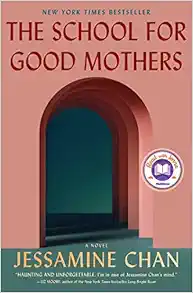
The School for Good Mothers - by Jessamine Chan


Bringing together ideas from The Stepford Wives, The Handmaid's Tale, and the movie A.I. Jessamine Chan finds a new way to scare the bejesus out of all of us.

Frida Liu is a single mother trying to co-parent her toddler (Harriet) as best she can with her ex-husband (Gust) and his live-in girlfriend (Susanna). During the Labor Day weekend Frida is unable to console the eighteen-month-old who is suffering from an ear infection. Neither is able to get much sleep over the three days. Frida, at her wit's end, leaves the house, and her daughter unattended, for two hours. The police are called when the neighbors hear the baby's incessant crying. After several months of invasive monitoring, and limited supervised visits with her daughter, Frida is sent to a facility where she can be rehabilitated as a mother. The year-long stay involves learning to parent with a creepy robot surrogate for her daughter, on a defunct university campus.

Mentions of libraries are infrequent and tend to be nefarious in nature. Frida is told not to do research at the library prior to her court hearing, lest she be monitored; the former music and dance library on the prison campus is empty; one mother is being rehabilitated for having allowed her eight-year-old to walk home from the  local library alone (a four-block distance). Frida gets one 10-minute video visit with Harriet a week which take place in the former campus library. Even these become depressing events. On the rare occasions when Frida's phone privileges aren't rescinded and she is able to connect with Harriet, Gust and Susanna, the calls are fraught.

A truly chilling tale for the twenty-first century.

Monday, December 20, 2021

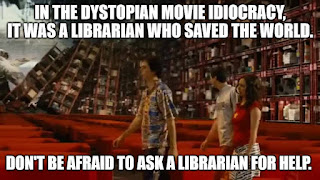
Idiocracy - the movie


I learned about this film through the Librarian Memes Facebook Group. I also learned that it was available to watch for free on YouTube - albeit with ads, which I very much try to avoid. I bit the bullet though and my husband and I watched (with the occasional short interruptions). This film stars Luke Wilson as Joe Bauers (the librarian) and Maya Rudolph as Rita (a sex worker). Joe and Rita agree to be part of a top secret military experiment on suspended animation. Scheduled to be awakened after one year, instead they wake up 500 years later, to a world where these two rather average people are the smartest in the country. 

A few comments about this work:

  • It miserably fails the Bechdel Test.

  • Joe's title as a librarian is questionable - he works in a library which means he may or may not be a librarian. According to his supervisor he doesn't do anything but sit on his ass. Library stereotypes will live forever.

  • While Joe is given the title as the smartest person on earth when he wakes up, I expect it was actually Rita. Joe takes an IQ test which Rita is never given the chance to do. But, anyway, he must be smarter, right? Because he's a man, right? 


Monday, January 11, 2021

Everything All at Once - by Katrina Leno

About to graduate from high school Lottie is mourning the death of her favorite aunt (Helen) a famous children's book author. Aunt Helen's books are about a pair of immortal siblings (Alvin and Margo Hatter) and are wildly popular among people of all ages. There are of course those who do not like her books "the Anti-Hatters [who] burn the books on YouTube...They say the idea of immortality is a sin against God".

Aunt Helen donated half of her estate to "various charities and libraries of her choosing". She clearly understands the importance of libraries to authors. Some authors seem to think that libraries are somehow stealing royalites from them.

Aunt Helen also had owned the "most expansive private library" of anyone Lottie knew. Helen was even "featured on the front page of Libraries International twelve separate times". Lottie is emphatic in her instance that "Libraries International was an actual magazine". I, however, could find no evidence that such a magazine exists.

We don't actually see much of Lottie using the library although she does meet her friend Sam at one. Sam travels a lot and tells her that he gets a library card wherever he goes "that's important" he tells her.


The Ballad of Songbirds and Snakes - by Susanne Collins

 I read the first three Hunger Games books some years ago. I don't remember if I read them before or after I started this blog, but I somehow doubt any of them would have made the cut to be included here. So I was surprised when this one did. This prequel tells the story of Cornelius Snow and is set decades before the original series - during the 10th Hunger Games.

My husband and I listened to the audio version of this and I didn't download the text so I only have my faulty memory to aid me in writing this post. I recall students being sent to the school library to work on a group project. Disdain for group work appears to be a universal truth.


Friday, June 26, 2020

Teeth (the movie)


I know I watched this film about a chaste teenage girl who discovers that she has vagina dentata at least two times before, but those were obviously before I started this blog. I read something recently that indicated a library connection and so I put it back on my Netflix DVD list.

When Dawn (Jess Weixler) suspects something is different about her body she does what anyone in the 21st century would do and begins her research by conducting a web search. She types "female genital mutilations" into the search engine which lands her a screenful of results. However, unlike everyone else she doesn't just click on the top link, but rather selects the the trusty link from the public library "your source to information". It is not clear if the link is from the Austin (TX) public library where the story takes place. It seemed more to be a generic public library link. 

Definitely not a film for the squeamish. It will likely appeal to fans of Little Shop of Horrors.

Wednesday, June 17, 2020

La biblioteca mágica - por Valeria Cavajal Vasco


According to amazon I bought this book on April 30, so I must have purchased it for Día de los niños/Día de los libros (aka "Día" or Children's Day/Book Day). I do recall specifically looking for a library-centric, Spanish-language book to read. I usually pick a picture book to blog about for Día but this year I selected a chapter book, so it took me a bit longer to read it.  This is the story of friends Emma, Park, Paige, and Liam who want to take a summer vacation together, but first they need to earn some money. Paige and Park find work at a local store, and Liam gets a job with his uncle. Emma is worried that she will be the only one who won't be earning any money, until her mother helps her land a job at the local library el "único lugar al que muy pocos adolescentes irían a pedir trabajo", as well as "el lugar más aburrido del pueblo" (for those who are Spanish-language challenged, that translates to 'the only place that few adolescents would ask for work'; and 'the most boring place in town').

Emma, however, discovers that the library is far from boring. In a library lover's version of Night at the Museum Emma learns that those who work the night shift have the ability to visit the characters in the books. Beginning with Caperucita roja (Little Red Riding Hood), she moves on to Peter Pan,  Harry Potter; and Crepúsculo (Twilight), among others. From each book she also brings back a souvenir (Red Riding Hood's Cape and Peter Pan's sword, for instance). Far from boring, Emma finds that she not only looks forward to going to work in the library she is more interested in her work than in hanging out with her friends. She is reluctant to tell them about the library's secret until she learns that the mayor wants to close the library because nobody visits it, and it isn't a money maker. With the help of her friends and the other library employees, she comes up with a plan to save the library.

I must say I was left a little wanting with the resolution they came up with which I saw as stop gap at best, and had nothing to do with magic. No one wanted to reveal the library's secret for fear of exploiting it. However, if I were writing the ending to this book the friends would have sparked interest in the library, and helped it to make money without letting anyone in on the secret by  strategically visiting books, bringing back cool relics, and selling them. In fact I thought this solution was so obvious I really was stunned that it wasn't how the book ended.


Monday, June 1, 2020

Nothing to See Here - by Kevin Wilson


When her frenemy Madison Roberts contacts Lillian Breaker and asks her to come to Tennessee from her home in Pennsylvania, offering her a mysterious job, Lillian accepts. She takes the bus to Nashville where she is met by the enigmatic Carl who works for Madison and her senator husband, Jasper.  Upon arrival at the estate where Madison lives with her toddler son (Timothy) and husband Lillian learns that the senator has two children (twins) from a previous marriage, whose mother had recently killed herself. The twins (Bessie and Roland) have an unusual affliction wherein they burst into flames when upset. The fire does not hurt them, but can be dangerous to people, animals and things near them. They are coming to live with Madison, Timothy, and Jasper. Madison wants Lillian to be their governess. Fortunately for Lillian the twins like to read. In fact, as Roland points out to Lillian when he first saw the well stocked bookcase Madison provided for the twins "all we do is read".  And although Bessie informs Lillian that she'd already read many of the books on the shelf some of them looked "pretty good". Lillian wastes no time in telling them that they can get more books at the library.

And good on her promises, Lillian asks Carl to drive them all on an outing to the library so they can research famous Tennesseans. Bessie chooses Dolly Parton and Roland  decides on World War II hero Sargeant Alvin York. They find the books they want when they get to the library, but soon realize that none of them has a library card. Carl points out that that they need proof of address "like a piece of mail" to get one, and none of them have a piece of mail with them. It seems to me that Carl must have had a driver's license but he never suggests that. He does tell them that Madison is on the Board of Trustees and that they can come back later with her card. Instead they just decide to steal the books. I expect that if they had simply asked to call the senator's wife, who was also a library board member, they could have gotten permission to check the books out, but no one thought of this solution.

It is always best to ask about policies for checking out books. Librarians really do want you to get the information you need.

Wednesday, May 13, 2020

The Book of M - by Peng Shepherd


May is Mystery Month and I don't really like mysteries. I especially don't like the serial mysteries that involve some amateur sleuth in a small town with a disproportionate number of murders. It seems like a lot of library mysteries are of this type. People keep recommending them to me, and I keep not liking them. However, I do like to have a variety of genres on this blog, so I googled library mysteries and found this title. The description appealed to me because it looked supernatural, surreal, and, most decidedly, not part of a murder series. If you are a person who likes this genre I do have some posts which you can find here and here.

It turned out that much of what takes place in this dystopian novel is rather prescient. A mysterious disease causes people to lose their shadows, and eventually their memories. Quarantines, food shortages, suspicion and fear abound. Shadowless people not only lose their own memories, but memories of virtually everything. Some don't remember how to eat, to read, or to talk. Women don't understand what their periods are (and as a bonus have no idea that they'd been taught to be ashamed of them). Shadowless also eventually forget that there are laws of physics, and once they forget that, they can simply ignore those laws. People can mutate themselves and others; prison cells become their own means of escape.

I read quite a bit of this without seeing anything about a library, so I naturally grew concerned that I'd been duped. Fortunately, I was reading an e-version of the book which allowed me to search easily for the word library to find out if indeed this were a library-centric book. Although the first instance of the word doesn't show up until about 40% in, it then becomes quite important. The Martin Luther King, Jr. Memorial Library in Washington, DC is the location of a battle for books between the shadowed and the shadowless. Of no surprise to this librarian the books ultimately prove to be the salvation of all. 


Tuesday, March 3, 2020

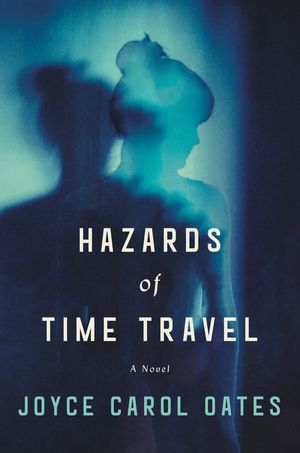
Hazards of Time Travel - by Joyce Carol Oates


In a dystopian future, class valedictorian Adriane Strohl  is arrested for treason and "questioning authority" on the eve of her high school graduation. She is sentenced to live in Zone Nine - 1959 Wainscotia, Wisconsin - as university student Mary Ellen Enright at Wainscotia State University for four years.

Adriane's brother Roddy works in the Media Dissemination Bureau "an old brownstone building formerly the Pennsboro Public Library, in the days when 'books' existed to be held in the hand-and read!" Not only have old libraries been repurposed, the information they held has been destroyed.
The old, "outdated" (that is "unpatriotic") history books had all been destroyed, my father said. Hunted down in the most remote outposts-obscure rural libraries in the Dakotas, below-ground stacks in great university libraries, microfilm in what had been the Library of Congress. "Outdated"/"unpatriotic" information was deleted from all computers and from all accessible memory-only reconstituted history and information were allowed...  
There are some contradictory passages in the book as to whether public libraries in the Reconstituted North American States exist. Adriane specifically says that "there were no longer 'libraries' in NAS-23" but also indicates in a previous passage that she was able to take out books from the public library marked "YA" (for young adults). YA books "had to be approved by the Youth Entertainment Board, and were really suitable for grade school." She was unable to take out books labeled "A" for adults. The books were actually eBooks and all had to be approved by the Homeland Security Information Bureau.

Adriane, ironically, however, finds herself working in a real library once she is sent back in time. As a "thrifty" scholarship girl "Mary Ellen" has a job at the university's geology library. And she is awestruck at the main university library
a vast brownstone building of numerous floors descending even into the earth, filled with row upon row of "stacks" containing "books" to be touched, and opened, by hand. And in reading rooms, high ceilings, myriad lights, and polished floors - and students!
"Mary Ellen" does some research on her professor (and fellow exile) Ira Wolfman in the college library by searching the "long clumsy drawers, under the heading PSYCHOLOGY, 20TH Century".

She spends much time in the university library and wondered at all the information that was not restricted by the government. She remarks on this "freedom" while also recognizing the irony that Zone Nine "did not feel like freedom".

With shades of Marge Piercy's Woman on the Edge of Time and Thornton Wilder's Our Town this thriller leaves the reader with a lot of questions about what is real, what we know, and what we believe.

Wednesday, October 30, 2019

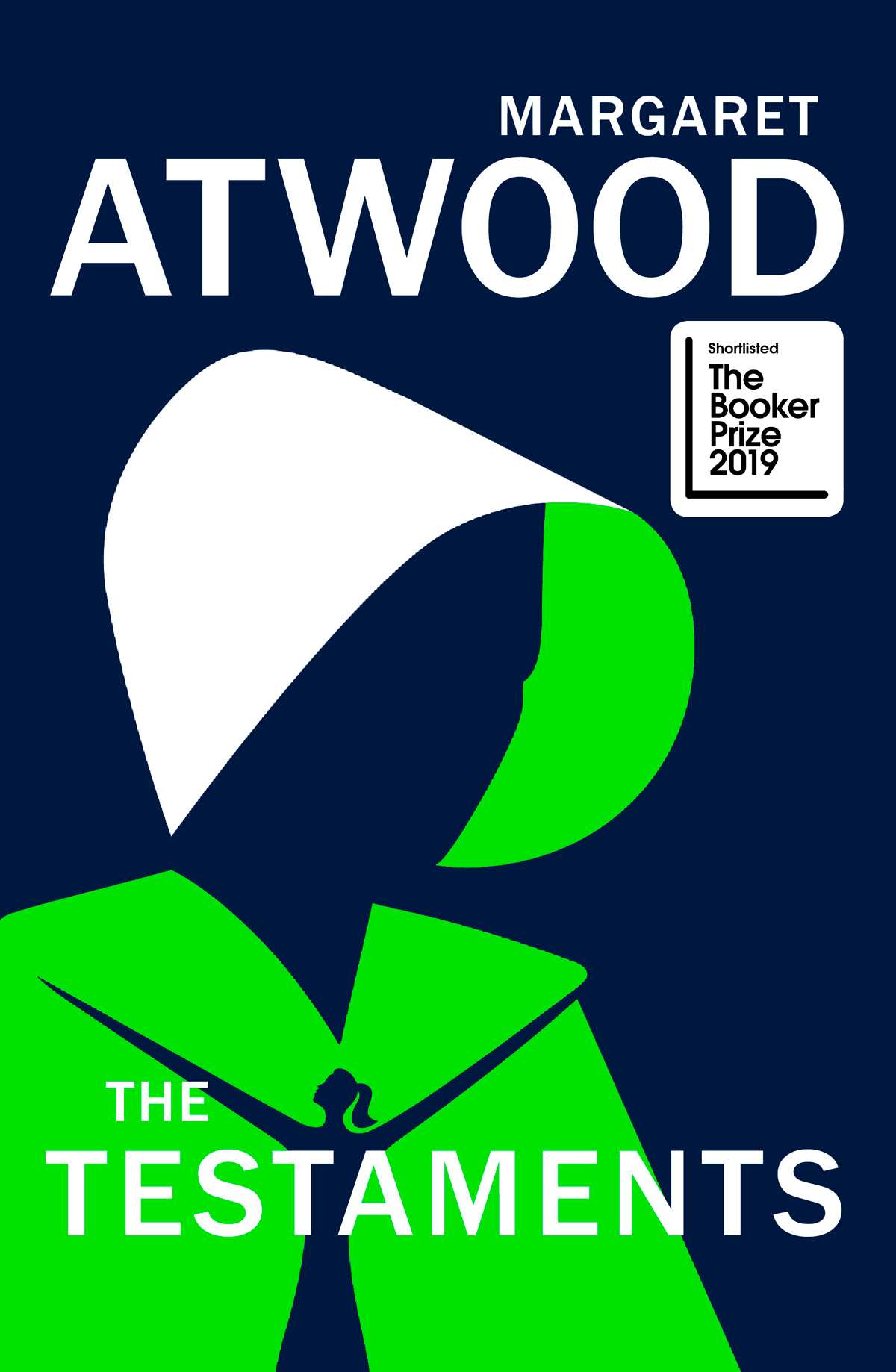
The Testaments - by Margaret Atwood


Among Harry Potter fans there is a stretch of time known as the three-year-summer - the period between July 2000 and June 2003. It references the spacing between the fourth and fifth books in the series. It was a difficult time for us to be sure, but it was nothing compared to the 35-year wait Atwood fans endured for this sequel to The Handmaid's Tale.

This was well worth the wait. While not a continuation of Offred's story we do discover what happened to her and the baby she was carrying. Instead this is a novel in three voices.

The first is Aunt Lydia by way of the Ardua Hall Holograph, a clandestine memoir, secretly written, a la Winston Smith in George Orwell's 1984. The difference here is that Aunt Lydia is less likely to be discovered by the cameras because, as she tells us "I know where they are, having placed them myself". The other two voices are those of Agnes Jemima a young woman who grew up in Gilead; and Daisy, who grew up in Canada where she learned about Gilead through her parents and her lessons at school. Both of these young women have several different aliases.

Aunt Lydia lives in Ardua Hall, along with all the other aunts in the city. Each evening she heads to her "private sanctum" in the Hildegard library "one of the few libraries remaining after the enthusiastic book-burnings that have been going on..." The Ardua Hall library has different rooms with different levels of access. Aunt Lydia has access to all - the General section where new supplicants learn to read; the Reading room "where the Bibles brood in the darkness of their locked boxes, glowing with arcane energy"; and the Bloodlines Genealogical Archives with their classified files. Aunt Lydia knows that knowledge is power, something that clearly the Commanders of Gilead are also quite aware, otherwise they would have no reason to deny the ability to read to women. Even some of the Aunts believe that reading can be too dangerous. The residents of Ardua Hall know all too well the story of poor Aunt Lily who neither wanted to marry nor stay in Ardua Hall instead "she wanted to live on her own and work on a farm. Aunt Elizabeth and Aunt Vidala said this was what came of reading too early...before her mind was strengthened enough to reject [the wrong ideas] and there were a lot of questionable books that should be destroyed".

Daisy and Aunt Lydia both describe visiting their school libraries as a children, and both tell of a specific book they remember from their respective school libraries. Contrary to the experiences of Aunt Lydia and Daisy, going to a library is privilege that Agnes Jemima never had. Her experiences in a library (a word she never even heard as a child) would come later in her life. When she does enter a library for the first time she is overwhelmed
It's hard to describe the feeling this gave me. The first time I passed through its doors, I felt as if a golden key had been given to me - a key that would unlock one secret door after another, revealing to me the riches that lay within. 
Eventually, Agnes does some work in the Hildegard library, as does her friend Becka (aka Aunt Immortell). Agnes' job is to make "fair copies of Aunt Lydia's speeches". It is through working on this task that she discovers some disturbing information about her family. Someone who knows that knowledge is power begins slipping files with classified information in between the files of speeches to be copied.

We don't know much about what Becka's job in the library is, except that she sometimes has "night duty" there. Aunt Lydia does mention that there is a "night librarian" on duty whom she greets on the way to her sanctum.

Aunt Lydia uses the library as a cover on behalf of two residents of Ardua Hall when it is discovered that they are not at lunch. Aunt Lydia knows their whereabouts but instead tells the others "I believe they are fasting...I glimpsed them in the Hildegard Library yesterday, studying their Bibles".

Reading and writing are forbidden for women and girls in Gilead, with the exception of the Aunts. Books were apparently their consolation prize for not being able to have husband or babies. As Agnes Jemima tells us "the Aunts were not married; they were not allowed to be. That was why they could have writing and books". I've thought about this passage a lot as a person who loves reading and writing and who is also a woman who has had a husband for 33 years. For me the choice of family or literacy seems a particularly grim game of  "Would you rather..." If I had never fallen in love with my husband in the first place the answer would be clear, but given the choice of leaving my husband or keeping my privilege of literacy what would I do?

Of course the Aunts don't really make this choice. They don't leave their husbands, they never had them to begin with.  They have their books and writing, and they have each other for company. Although Aunt Lydia doesn't have close friends among the other Aunts, she understands that she needs their companionship. As she discovered when placed in solitary confinement prior to facing her own Hobson's Choice of Aunt-hood or death "One person alone is not a full person: we exist in relation to others. I was one person: I risked becoming no person".

Across from Ardua Hall, the Eyes also have headquarters in what used to be a library. Aunt Lydia tells us that "It now shelters no books but their (the Eyes) own, the original contents having been burned or, if valuable, added to the private collections of various sticky-fingered Commanders."

As with The Handmaid's Tale, The Testaments ends with an epilogue in the form of an academic conference. Here we read the transcripts of The Thirteenth Symposium of Gileadean Studies, International Historical Association Convention, Passamaquoddy, Maine, June 29-30, 2197. The keynote speaker is Professor James Darcy Pieixoto who immediately, condescendingly, points out that the Chair of the Symposium, Professor Maryanne Crescent Moon, would never have had that position in Gilead, and  that in fact "women are usurping leadership positions to...a terrifying extent".

As in The Handmaid's Tale Pieixoto is the only male narrator, and similar to his comments in that novel, he begins by questioning the authenticity of the recently discovered holograph, and the two witness testimonies (discovered in the library of the Innu University in Sheshatshiu, Labrador), but ultimately, charitably suggests "why not take them at their word?" The testimonies were discovered by a graduate student, a woman - Mia Smith, who shared them with her professor, who of course first questioned their authenticity. Once a team of graduate students followed the route described in the transcripts, and validated certain details Peixioto ready to take on the work of doing the seminal research on them - talk about a usurper.


Monday, July 15, 2019

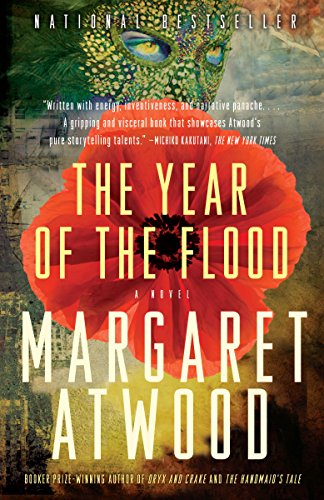
The Year of the Flood - by Margaret Atwood


My husband and I anxiously await Atwood's Testimony (a sequel to the Handmaid's Tale) in September. In the meantime, we are taking some time to read some of her other works - some that we've read before and others that we haven't. This was our first go-round for The Year of the Flood - the second of the Maddaddam Trilogy.

This story centers on the lives of the Gardeners who, in a age of everything biotech, are still trying to live organic lives by growing their own food and eschewing technology.

There is only one passing mention of a school library in this book, however, another passage was so reminiscent of things I've read in my research on book banning that it warranted some space on this blog.

Upon entering the inner circle of the Gardeners, Toby (aka Eve Six) is surprised to discover that
the Adams and Eves had a laptop...wasn't such a device a direct contravention of Gardener Principles? - but Adam One had asured her: they never went online with it except with extreme precaution, they used it mostly for the storage of crucial data pertaining to the Exfernal World, and they took care to conceal such a dangerous objects from the Gardener membership at large - especially the children. Nevertheless they had one. "It's like the Vatican's porn collection," Zeb told her. "Safe in our hands."
Ah, the eternal cry of the paternalistic censor. 'Only we can handle the information. All others must be protected from it'.

Friday, May 3, 2019

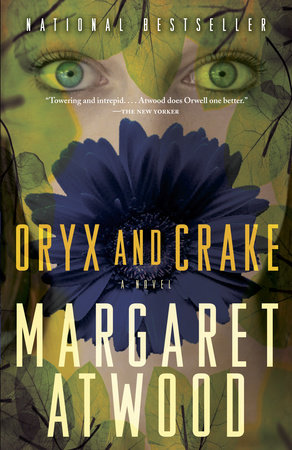
Oryx and Crake - by Margaret Atwood


I first read this work when it was published in 2003. It is the first book of a trilogy, and I've been planning on reading the other two (The Year of the Flood and Maddaddam) but it had been so long since I read this one that I wanted to re-read it before delving in to the other two. My husband and I took the opportunity for a read aloud and will finish the trilogy together.

This is the story of Snowman (aka Jimmy), his best friend Crake, and their shared lover, Oryx. The novel alternates between a time in the near future where the bio-tech industry is running just about everything, including schools; and a bit more distant future, after just about everything has been destroyed. In the former time Jimmy goes to school, schools that even have libraries. Each mention of his school library is about technology. He uses computers and CD ROMs, but never mentions a hard-copy book. When Jimmy graduates he goes to a third-rate college - The Martha Graham Academy - which focuses on the humanities rather than STEM. Martha Graham's library is full of mildewing books, unlike the
better libraries, at institutions with more money, [which] had long ago burned their actual books and kept everything on CD-ROM, but Martha Graham was behind the times in that, as in everything.  
  After graduation Jimmy
snared a job at the Martha Graham library, going through old books and earmarking them for destruction while deciding which should remain on earth in digital form...he lost his post halfway through because he couldn't bear to throw anything out.
Ah, Jimmy, every librarian feels your pain. Just as gardens need weeding to keep them healthy, we know we need to "weed" our collections, too. But throwing out books just seems sacrilegious. What to do?

Tuesday, March 14, 2017

Brave New World - by Aldous Huxley


A few weeks ago I read an article by Margaret Atwood explaining why we should all read Brave New World at which point I realized I had no choice but to look it up in the catalog of the library where I worked, find the call number, walk up the two flights of stairs to retrieve it, and check it out.

The brave new world described in the book is painted as a "utopia", but readers easily see it for the dystopia that it is. Humans are created, rather than born, each to a specific caste (Alpha, Beta, Gamma, Delta, or Epsilon) for which they are programmed to believe is better than the others. Everyone is happy with their lot, and regularly provided drugs and sex to keep them happy. Everyone also knows that "everyone belongs to everyone else". Worst of all books are censored.

 We learn early on that Deltas are conditioned to hate books. (Presumably this is true of Epsilons, and perhaps Gammas as well). This was because "you couldn't have lower-caste people wasting the Community's time over books, and that there was always the risk of their reading something which might undesirably decondition one of their reflexes". While not verboten for the upper-castes, books are still considered a waste because "you can't consume much if you sit still and read books." And even at Eton (where you can find the Alpha Double Pluses) the library "contains only books of reference. If...young people need distraction, they can get it at the feelies."

Ultimately we learn what is almost always true about those who would keep certain books from others - that those in charge have access to all of them. The censors believe that they alone can handle the information within. The masses simply cannot understand them, and those who might understand may be attracted to them, and then might not like the new things the controllers want them to like.

In the end the propaganda of the Brave New World isn't so new. The same rhetoric has been around for centuries, and still continues today.


Wednesday, January 20, 2016

The Heart Goes Last - by Margaret Atwood


Like Atwood's The Handmaid's Tale this is a brilliant piece of dystopian literature. The Heart Goes Last, however, is a bit lighter and more satirical. It tells the story of Stan and Charmaine who are living in their car until they find out about the Positron Project - an experimental community in which residents spend every other month living in prison, while their "alternates" live in their houses. There is no unemployment, and the "prisoners" are treated well and provided with good food. Stan and Charmaine start out adjusting to the life, and are glad to have a nice home for six months out of the year, but when Stan discovers that Charmaine is having an affair it sets off a chain of events that neither of them could have ever expected involving a plethora of Elvis impersonators, a knitted-blue-bear fetish, and chilling Stepford-esque experimentation.

Even dystopias have libraries. Positron has one but apparently it's picking are slim. During one of her trysts Charmaine and her paramour, Max, are so swept up in the passion we learn that
he couldn't wait, and because he couldn't neither could she. It was like the copy on the back of the most lurid novel in the limited-titles library at Positron. Swept away. Drugged with desire. Like a cyclone. Helpless moaning. All of that. She'd never known about such a force, such an energy inside herself. She'd thought it was only in books and TV, or else for other people.
Of course this one reference to the library had me questioning what kinds of books were being withheld from the good citizens of Positron. Clearly bodice-ripping sex was in, so what was out? We are left to ponder, as this was the only instance in which the library was mentioned.

Thursday, October 22, 2015

Back to the Future Part II - the movie


Like so many others yesterday I watched Back to the Future Part II - it was Back to the Future Day, after all. In BttF2 our heroes Doc Brown and Marty McFly travel across six decades. Beginning on October 26, 1985, then on to October 21, 2015, and back to 1985, and finally backwards in time to November 12, 1955. The most important thing that happens in any of this is that Doc Brown uses the Public Library (in 1985) and uses the newspaper archive there to discover that Marty's father had been murdered 12 years prior, and that he (Brown) had been committed to a psychiatric hospital (questions still remain about why that was front page news). Sadly, I must also say that it appears that Brown stole the bound periodicals in order to show them to Marty (perhaps he checked them out, but generally libraries don't circulate archival newspaper), and it is clear that Marty tore the page with his father's story out of the book! Whatever good reason the Doc and Marty think they had for stealing and defacing public property, this behavior cannot be condoned.

Thursday, July 2, 2015

Inkheart - by Cornelia Funke


In the spirit of Libriomancer and The Neverending Story the characters in this work blur the lines between fantasy and reality. And like The Seven Minutes  this is a novel about a fictitious novel with the same title.

Young Meggie, and her father Mo both have the ability to read people (and other creatures) out of books. This is hardly a gift, as it is difficult for them to control, and results in the introduction of some unsavory characters into their own world. Additionally, each being who is read into their world necessitates an exchange of one of their own (the reason Meggie does not remember her mother, who disappeared when she was young). When Dustfinger, a character who appeared on the scene at the time that Meggie's mother vanished, shows up at Mo and Meggie's house after many years Mo realizes they are in danger and attempts to hide out with a relative (Elinor, the aunt of his missing wife). Mo, Meggie, Elinor, Dustfinger and his marten (Gwin) are ultimately captured by the evil Capricorn (a.k.a. "Inkheart") and must use their cunning and exceptional reading abilities to escape.

Mo is a book mender which makes for a fair number of references to libraries as he talks about his work. Elinor is a bibliophile, and there are countless mentions of her personal library throughout. Libraries and bookstores are also the places that Capricorn sought out all remaining copies of Inkheart so that he could be assured that he had the only copy in existence, thus preventing himself from having to return to his own world.

Truly escape reading. I found this on a list of 19 Books to Read if You Loved the Harry Potter Series.

Wednesday, February 25, 2015

The Strange Library - by Haruki Murakami


I had read a few reviews of this, and was quite looking forward to reading it, expecting to perhaps read a paranormal version of something like Escape from Mr. Lemoncello's Library. There was a library escape, and it definitely was other worldly, but this was not the fun-ride that Lemoncello's Library was. Rather it is a dark story about a boy who goes to his public library and finds himself imprisoned by a brain-eating librarian, and a "sheep man".

I actually got a little excited when the boy first entered the library and said he was looking for some books, and was sent to room 107 because, in fact, room 107 is also the number of my own office in the library. And, like the librarian in the book if someone came to my office needing help finding books, and then backed off saying that they'd come back another time because they thought maybe I was too busy to help them  I would likewise answer "This is my profession - I am never too busy! Tell me the the manner of books that you seek and I will strive to locate their whereabouts." (I'd say something like that, anyway). The similarities stop there, however, as I would most certainly not lead them through a maze and up a dark staircase and lock them away while their mother waited at home.

While this book is library-centric, it is hardly library positive. It definitely did not have the resolution I was looking for. It is a quick read with a lot of good illustrations.

Wednesday, February 18, 2015

Buffy the Vampire Slayer (the Television Series) - Seasons 1-7


Thanks to Netflix I was able to watch all seven seasons of Buffy the Vampire Slayer in a period of about 3 months. I had heard of the show before, but had not seen it. I had watched the movie of the same name when it first came out in 1992, and frankly didn't like it. Since it has been my experience that television shows based on movies are far worse than the films, I could only guess that I wouldn't like this program much. Its television premier in 1997 also coincided with an 1100-mile interstate move, and my becoming a parent, so adding a television show to my life would have just been too much change. I had been told that I might like the show for its feminist message, and because it had a kick-ass librarian in it, but still, I never got involved. I'm not sure what made me decide late last year to give it a try, but once I started I was completely hooked. Of course, for me Rupert Giles (Anthony Steward Head) Buffy's "Watcher" (undercover as a mild-mannered librarian) was the best part of the show. Giles didn't just pretend to be a librarian, he cultivated good research skills in Buffy and her band of "Scoobies" so that they could most effectively fight their demons. And although Giles was the high school librarian only for seasons 1-3 his determination for instilling good research skills and a love of life-long learning are evident throughout all seven seasons. 

I talked to my sister, a long-time fan of the show,  just as I was starting to watch season 5 and told her that my favorite episode up to that point was "Band Candy" from season 3 and I asked her if anything was coming up that might trump it. She told me to just wait until I got to season six, which was full of surprises. While I concur that that season certainly had a stellar line up of plot lines, plus fun musical numbers, it was seriously lacking in Giles time. And now, after watching all episodes I remain steadfast in my favorite pick. The thing about "Band Candy" is that we see Giles as he was as a teenager - a James Dean-esque bad boy who smoked, and looted, and had sex on the hood of a car. It turned the usual librarian stereotype on its head. So often in pop-culture we see a stuck-up librarian as someone who simply needs to lighten up and let their hair down, but when we are shown Giles as a young person we see the "hair down" persona who then became a straight-laced librarian, and can see that it's okay, good even. And, in this case, the bad boy still comes out when needed to kick vampire butt. Giles is smart, strong, and sexy.