Showing posts with label metafiction. Show all posts

Wednesday, August 12, 2026

The Adjunct - by Maria Adelmann

This dark satire about the Academy's gig economy tells the story of Samantha, a PhD living in Baltimore, Maryland (my home town) trying to teach enough classes at two different colleges to keep the wolves at bay. Sam's plight, and that of her fellow adjuncts, is becoming more common as colleges and universities eschew hiring tenure track faculty and rely more on part-time contract faculty. As my husband (James) and I listened to the audiobook we reflected on our own times working as adjunct faculty. While we would never suggest that we were paid well for the work, for us it was never about survival. My contract teaching work was done at a time when a part-time job was exactly what I needed while I was the primary caregiver for our young child. James' part-time teaching was done while he was finishing his PhD and he had a full-time job in IT. He took evening teaching jobs so as to have recent teaching experience when he started looking for a tenure track job. We were lucky. Many of our colleagues had no health insurance, no spouse's salary to fall back on, and no guarantee that they would even have jobs at the end of any given semester.

As a "campus novel" libraries are sprinkled throughout the work providing insight into their myriad uses, including as a student job, a meeting place, and a space for study. Sam also borrows a Chromebook from the Baltimore Public Library because although her department expects her to have one, they do not provide her with one. 

There is a lot of "meta" in this work, including a meta librarian. Sam is an aspiring writer and describes a romance she wrote in which a librarian (who doesn't like romance novels) befriends her stalker, unaware that he is stalking her. Once they develop a relationship he loses interest, and she begins to take an interest in romances.

Of course I always like reading about a library in any book, but it is especially fun when one I've actually been to is mentioned. In this book the Enoch Pratt Free Library was given a shout out.

Thursday, April 23, 2026

The Lost Library by Rebecca Stead and Wendy Mass

Mysteries are among my least favorite genres. People love to recommend mystery novels to me though because, apparently, a lot of fictional librarians love to solve mysteries. The Lost Library is a light mystery chapter book that I did enjoy. There was no murder (although there were some friendly ghosts).

The book is told from several points of view:

  • Mortimer - a cat (also known as Goldie, Sunshine, Buffy, and Dear Cat)
  • Evan - a fifth grader who is a bit worried about going to middle school next year
  • Al - Assistant Librarian at the History House

The town of Martinville has been without a public library ever since a fire burned theirs down twenty years ago. When Al decides to install a Little Free Library on the town common Evan is intrigued by that fact that almost all of the books in it were checked in to the town library on the date of the fire. He is especially interested to discover the name of famous mystery author (H.G. Higgins) written on one of the checkout cards. He is determined to find out where the books came from, and if Higgins ever lived in Martinville.

Something I do like to see in books is a bit of metafiction. One of the first books Evan takes out of the Little Free Library is How to Write a Mystery Novel. Rather than penning his own book though, Evan uses the suggestions for writing a novel in order to solve a mystery.

Now that I have finished with the book (and my blog post) I will place this in one of the dozen Little Free Libraries in my own town for someone else to discover.


Monday, June 24, 2024

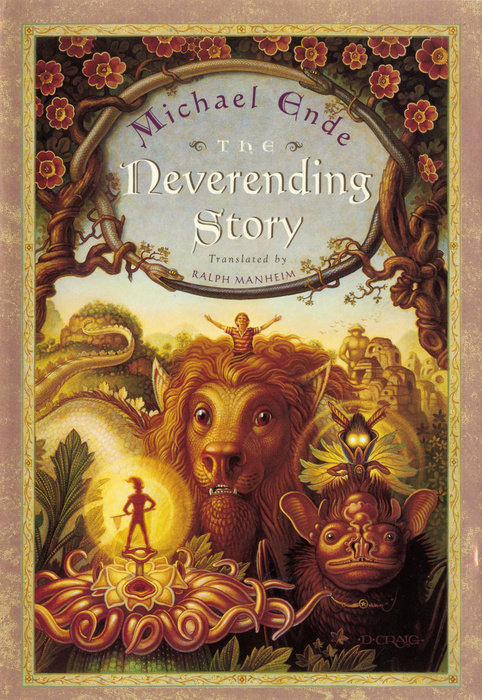
The Neverending Story - by Michael Ende


I revisted this classic work after 40 years as part of my project to read sixty books about dragons during this year of the dragon in which I turned sixty years old. I remembered very little of the story (other than the fact that it had a dragon). 

The story begins in a bookshop, where our hero, young Bastian Balthazar Bux, steals a work called The Neverending Story. He is literally drawn into the story when he realizes that he is, in fact, part of it. In fact he is essential to it as only he can save the magical world of Fantastica.

Bastian creates Fantastica's past through the stories he tells and creates a library of them by telling The Story of the Library of Amarganth (aka The Bastian Balthazar Bux Library), a
large circular room...[where] "walls of books were divided into sections, bearing signs such as "Funny Stories," "Serious Stories," "Exciting Stories," and so on.

Like another book about which I recently blogged this book is about someone who is reading a book about himself as it is being written. See My Librarian is a Beautiful Lesbian Ice Cream Cone and She Tastes Amazing


Wednesday, June 12, 2024

My Librarian is a Beautiful Lesbian Ice Cream Cone and She Tastes Amazing - by Chuck Tingle


My sister sent me an Amazon link to this super-short story. I really had no choice but to purchase the ebook and download it to my Kindle app. In a world where sentient ice cream cones are a thing that don't give anyone pause, we can also easily accept the wonderful metafiction that allows us to believe that the ice cream librarian is reading a book about herself as it is being written.

Certainly not a book for everyone's taste, but definitely a fun read. It also came with a bonus story "Nice Guy Dinosaur Doesn't Pound Me in the Butt Because I'm not Interested and He's Not Actually Nice He's Just Annoying and Creepy and Doesn't Respect My Boundaries When I Tell Him We're Not on a Date".

I have no additional comments about the bonus story. The title pretty much tells all, plus which there are no librarians.

Wednesday, January 10, 2024

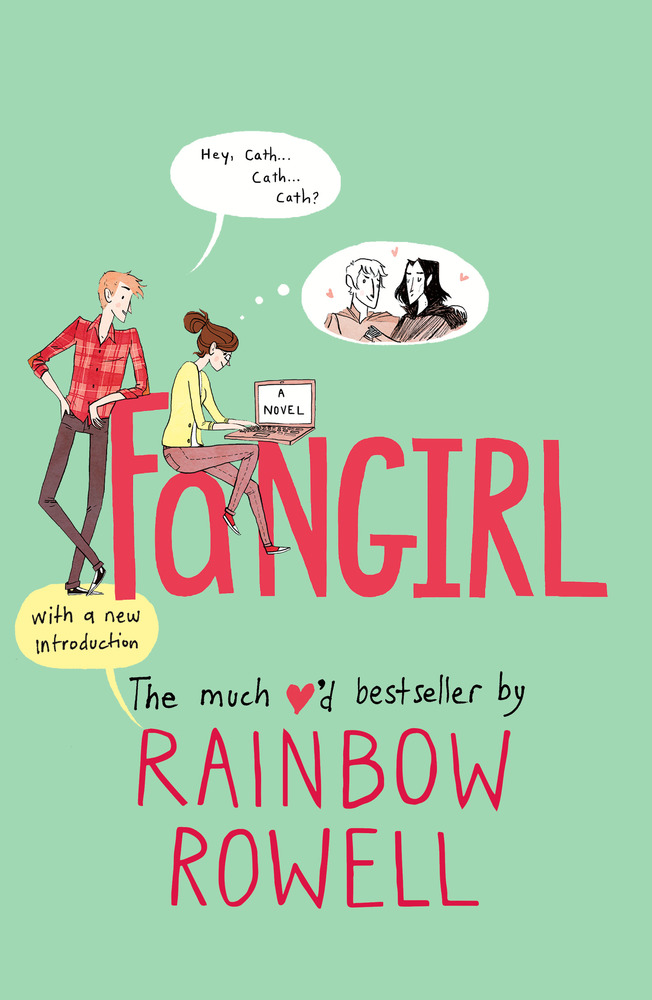
Fangirl - by Rainbow Rowell


Cath and her twin sister Wren are starting college at the University of Nebraska - Lincoln, but in different dorms. Cath is less than thrilled about this arrangement and is more than a bit intimidated by her roommate Reagan. At least she still has her fanfiction to disappear into. Cath and Wren used to write Simon Snow fanfiction together, but Wren lost interest and Cath now writes on her own. 

After getting special permission to take a 300-level fiction writing class Cath meets Nick and the two become writing partners. Nick works at Love Library "(That was the actual name; thank you for your donation, Mayor Don Lathrop Love)" shelving books, although he clearly doesn't take the job seriously enough. He left a cart full of books at the end of his shift because he was doing his homework instead of shelving. When Cath points this out he assures her that "the morning girl can do it. It'll remind her that she's alive". This turns out to be a bit of foreshadowing as we discover that Nick is all to happy to take credit for work that women do.

Cath mostly holds her own in the upper-level writing class, but is taken aback by an accusation of plagiarism when she uses some of her fan fiction as a basis for one of the writing assignments. Her professor is understanding, but will not change the failing grade, or allow Cath to rewrite the assignment. I disagree that what Cath turned in was plagiarized. If she had turned in the same story and used different character names her professor would probably never have realized. Also, I turned in a similar assignment myself as a graduate student (re-wrote a scene from a novel from a different character's point of view). My professor loved it. I got an A.

Cath spends a lot of time in the library, and her full nerd-dom is clear when we discover that she has a bit of a fantasy about "being trapped in a library overnight." She even writes a Simon Snow scene that takes place between the stacks.

Cath finds love (or something like it) with Levi. One of their early bonding experiences involves Cath reading The Outsiders aloud to Levi who has trouble with reading to himself. And really who doesn't love The Outsiders? I've said it before and I'll say it again: reading aloud with another person is never a bad idea. You will always have something to talk about.

Wednesday, November 1, 2023

The Wishing Game - by Meg Shaffer


The description I read of this book before I listened to it was that it was like Willy Wonka and the Chocolate Factory, but with books. That was pretty accurate. 

A gay hermit (Jack Masterson) who writes the wildly popular Clock Island series of children's books announces that he is writing another book after a very long hiatus. Furthermore, he announces that he is running a contest in which the contestants will be invited to his house on the real Clock Island and the winner will receive the only copy of the new book in existence to do with what they will. Lucy Hart is one of the lucky few invited to compete for the book. Her fervent wish is that she will be able to sell the book so she will have enough money to adopt Christopher, a boy in foster care. She gains more than she could have ever expected by the time the game is over.

My husband and I listened to this on audio. It was a good story, and of course featured some libraries. The story also alludes to the current wave of book banning, with Jack Masterson explaining why he has stayed in the closet. He doesn't want his identity as a gay man to prevent people from purchasing his books (or worse, removing them from library shelves).

This book is for everyone who is still waiting for their Hogwart's letter, or searching in the back of their closet for an opening to another world. 

Tuesday, September 19, 2023

I Have Some Questions for You - by Rebecca Makkai


I was intrigued by the description of this book because it reminded me of Adnan's Story which I recently read. The story of Adnan Syed's arrest, trial, and life sentence for the murder of a classmate was made famous on the Serial podcast. Because of the publicity brought on by the podcast, Syed's case was re-opened and he was subsequently found innocent. 

Makkai's book is a novel with a very similar plot. A young girl is found dead in her boarding school swimming pool and suspicions are on Omar Evans, an athletic trainer at the school. Omar is found guilty and a former student, Bodie Kane (a podcaster) brings new light to the crime many years later. Bodie questions whether the wrong person has been jailed. 

Bodie has returned to Granby School to teach a winter intersession on podcasting, when some of her students decide to do a podcast on Thalia Keith's murder, they start exploring new suspects, and ask new questions.

The school library is mentioned a few times. For instance: as a place to look up the word "lusty" in a dictionary, before one could simply go to dictionary.com to discover that it meant "healthy and strong; full of vigor"; as a place to do research back in a time when students didn't all have their own computers; a place where old yearbooks can be found; or where a schoolgirl in 1995 could borrow a map of Connecticut to find the location of the street in New Canaan where her crush lived.

The library held a special place in the history of the Granby school. Started in 1814 a young woman Arsareth Gage founded the school with twelve boys as students in a small schoolhouse. Samuel Granby built the library and chapel six years later. Ultimately Samuel Granby became a sugar daddy to the entire town.

For those on the lookout for Easter Eggs regarding the Syed case, Makkai includes a reference to "the girl whose boyfriend was definitely not working at LensCrafters that day".

Wednesday, June 28, 2023

Attack of the Black Rectangles - by A.S. King

When Mac and his friends are assigned to read Jane Yolen's The Devil's Arithmetic in their sixth-grade lit circle they are interested in the story about a young girl who time travels to a World War II concentration camp. They are taken aback when they discover that two pages of the copies they've been given by their teacher have redacted passages. Several words have been blacked out with ink. They set out to find out who defaced their books, and what they were trying to hide. Finding out the original text was accomplished by locating a copy at the local bookstore. They had first tried the local public library but all copies were checked out. 

Mac and his comrades discover that their own teacher was responsible for the censorship. They are rightly insulted when they find out that some adults were concerned that they would be made uncomfortable by the references to the main character's breasts and chest. They point out that the book makes clear the horrors of the Holocaust and if they are able to handle this information they can most certainly handle reading words describing body parts.

There is a lot to this rather short novel. It is a story not only of censorship, but also of empowerment, and child agency. Mac and his classmates stage a protest, and show up at the school board meeting with prepared speeches in order to make their case. When I became a parent I was often surprised when I read information describing what my toddler, or preschooler, or school aged child, or middle schooler wasn't able to understand and think that my child didn't seem confused by those things. I would often think back to my own childhood remembering what I did understand at those ages. Kids really are smarter (and more determined) then society gives them credit for.

A final lesson Mac learns is that people are multi-dimensional. While he disagrees with his teacher on many issues he also recognizes that she does have his interests at heart. He has the same realization about his classmate Aaron with whom he generally does not get along, but finds is an ally in the fight against censorship.

Although fiction, the book is based on a true event, and references the book banning cases from York, Pennsylvania in 2021.

My husband and I listened to this as an audiobook. Our next listen will be The Devil's Arithmetic!

Tuesday, June 20, 2023

Wicked: The Life and Times of the Wicked Witch of the West - by Gregory Maguire

I first tried to read this book twenty or so years ago, but the demands of taking care of a preschooler kept me from keeping up with this rather lengthy novel, so I abandoned it. I also reasoned (at the time) that it might make more sense once I read the entire "Oz" series. I came across a copy last summer at a used bookstore for $1 and decided to give it another try. It took about a month, but I made it through this time (although I didn't remember enough about the original Oz books for it to have made any difference in my understanding).

Maguire's adaptation is the story of Elphaba (aka The Wicked Witch of the West) - a misunderstood woman (and college roommate of Glinda). Much of the story surrounds a debate around the rights of Animals (who can talk), and animals (who cannot). It seemed rather prescient for a book written in 1995.

Several characters work in libraries. Elphaba works with Doctor Dillamond (a Goat) in a "lab and library". She also helps Doctor Dillamond with research at the Crage Hall Library, looking for evidence that Animals should have any restrictions placed upon them removed.

Another character (Boq) takes a job in the Three Queens Library "under the watchful eye of a titanic Rhinocerus, the head archival librarian". 

Ozma is identified in a number of ways, including "Librarian" who "did nothing but read genealogies for her whole life long". Other identities include

  • Ozma the Mendacious
  • Ozma the Warrior
  • Ozma the Scarcely Beloved  
  • Ozma the Bilious

There are other mentions of libraries throughout, making it clear that they were an inherent part of the Oz landscape.

Tuesday, January 24, 2023

Carry On - by Rainbow Rowell

I've read a lot of reviews of books by Rainbow Rowell, but until now I had not read any of her books, so when I saw this one at a Little Free Library at a neighbor's house I picked it up. 

As I started to read it, I thought it was simply a Harry Potter clone (a story about an orphan who doesn't know he's a wizard, who goes to a school for magical folks) but I figured there was probably more to it than that and did a bit of research. I learned that this is in fact some metafiction on Rowell's part. She explains how she came to write the book in an author's note at the end of the book. She begins her note with the following information

If you've read my book Fangirl, you know Simon Snow began as a fictional character in that novel.

A fictional-fictional character. Kind of an amalgam and descendant of a hundred other fictional Chosen Ones.

In Fangirl, Simon is the hero of a series of children's adventure novels written by Gemma T. Leslie - and the subject of much fanfiction written by the main character, Cath.

Rowell goes on to say that while she was able to let go of Cath and her world, she could not let go of Simon Snow, so she wrote her own story about him. 

And so I read the story on its own terms.

When Simon Snow returns to Watford for his final year of school he discovers that his nemesis (and roommate) Baz is missing. Baz's mother was once the headmistress of Watford, but was killed when Baz was very young. The ghost of Baz's mother comes looking for him in his dorm room, but finds only Simon and so she leaves a message with him asking that Baz avenge her death. When Baz does return he and Simon make a truce in order to work together to find the killer (and the expected love story ensues). Meanwhile the entire magic world is fighting an enigmatic monster called the Humdrum who is creating "dead zones" across Great Britain where magic does not work. The Mage (current headmaster at Watford) is spearheading the fight by conducting warrant-less searches of wizard homes, raiding their personal libraries looking for information to find out who is working with the Humdrum. (Books are referred to as "treasures".) The Mage insists that those who have "nothing to hide" have nothing to worry about. Baz is worried because he knows that his family keeps "banned books and dark objects". The Mage banned some books (and words!) after Baz's mother died. Simon's friend Penny is likewise concerned about what the Mage and his goons might find at her family's house. Simon insists that her family wouldn't have anything, but Penny isn't sure.

You know my mum. 'Information wants to be free.' 'There's no such thing as a bad thought.' Our library is practically as big as Watford's and better stocked. If you wanted to find something dangerous there, I'm sure you could. 

Baz notices that the books in his mother's library are out of order. This is concerning because his mother always had them sorted by subject. Baz "was always allowed to touch her books...to read any book, as long as [he] put it back in its place and promised to ask in something confused or frightened him". Well, imagine that. Rather than censoring what he could read, Baz's mother "parented" him instead.  

In addition to their home libraries Simon and his classmates use the school library regularly. This despite that fact that "most of the magickal books have been removed from the Watford library. It is not okay, however, that Simon "snuck a few bound volumes  [of The Magickal Record - "the closest thing magicians have to a newspaper...out of the library", even if he does believe his reasons are valid. 

Monday, October 24, 2022

The Book of Form and Emptiness - by Ruth Ozeki

Please note: Because I listened to this book, there may be misspellings in character names, and quotes may not be exactly as written in the print version.

There are too many levels of meta in this one for me to follow them all. The book, in addition to narrating the lives of the characters, is also narrating itself.  

A host of rich characters populates this book: these include Corey, a children's librarian; Annabelle, a would-be librarian who had to leave library school when she became pregnant; Benny, Annabelle's son - a truant who hears voices and uses the local public library to hide out; Aikon a decluttering guru and bestselling author; and a band of colorful library patrons. 

After Annabelle's husband, Kenji, dies in a freak accident she has a hard time coping with raising her son, doing her job clipping news stories for clients, and running her home. As she begins to hoard, Benny struggles with his own mental illness and he begins to have auditory hallucinations. He and his mother share a love for libraries and both find refuge in their local public library. 

I listened to this book on audio, and there was so much in it, I will limit myself here to commenting only on the notes I made while listening.

I start with my favorite quote from the book. Librarian Corey shows up to help Annabelle clear out her house wearing a shirt that reads: "Librarian - because bad-ass motherfucker isn't an official job title".

As she attempts to console Annabelle, who is feeling completely overwhelmed and begins to sob, Corey "shushes" her. As a librarian she, of course, knows from shushing.

The books in the library calmed the voices in Benny's head. Books are described as sacred, and the libraries as temples. Stopping at the library on the way back from a psychiatrist appointment was a treat.

In an attempt to "liberate" the voices from his body, Benny injures himself with a thumbtack. Thumbtacks are described as dangerous, but not as dangerous as books. This was especially striking to me as I consider the new age of book banning that we are currently experiencing. Although I cannot recall the exact context of this description of dangerous books in Ozeki's work, it is appropriate to say that some believe that the ideas found in books are more dangerous than any of the myriad real life-threatening dangers we face daily.

Although Annabelle didn't finish library school, she clearly has a librarian's keen sense for finding elusive information. When Benny disappears she is aware that he may be with his friend who calls herself The Aleph. Searching Aleph alone wasn't enough to find her. Annabelle knew to search for "The Aleph". 

The Aleph is an artist who specializes in snow globes. The best one she makes is one for Benny that features a library scene with books and letters floating in the water.

The question "What is real?" is at the center of this work. It is a question Benny explores at the behest of The B-Man one of the eccentric patrons of the public library. It is what makes this work so meta. Is the book narrating itself, or is it Benny's head? 

Wednesday, June 29, 2022

Hell of a Book - by Jason Mott


Add this book to the likes of The Seven Minutes, Inkheart, Commonwealth, and The Blind Assassin - books about fictitious books with the same name.

This work begins with a typical comedic scenario involving an author, and one of his fans in flagrante delicto being discovered by the woman's husband. The cuckold then chases the naked author into an elevator and the author then winds up  in bed with the front desk clerk. The book takes a turn, however, and themes of race, and mental illness come to the fore.

Over the course of  a book tour the unnamed author (the narrator) is confronted by the demons of his past, as well as the ghost of a young black boy who was killed by a police officer. The author is never quite sure what is real and what he is imagining, leaving the reader to consider all possibilities. 


Friday, April 29, 2022

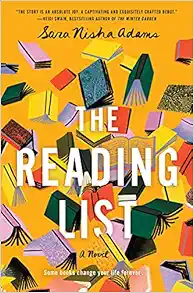
The Reading List - by Sara Nisha Adams


Libraries change lives. The books we read, the people we meet, the physical space, the programs all create the magic, and community of the library. 

When indifferent library worker Aleisha finds a reading list inside of a returned book she not only changes her own life by reading the eight books, she begins to make a difference in the lives of some of the other library patrons as well. Most notable among these is recently widowed Mukesh Patel, who has yet to return the long-overdue book his wife last read The Time Traveler's Wife. Although Mukesh was never much of a reader, his late wife Naina was an avid reader and library user. Through the magic of books (and the library) Mukesh finds a new connection with his beloved granddaughter Priya. It turns out they both love Louisa May Alcott's Little Women and Mukesh begins to think about everyone who is connected by the books they read.

One of the first things I learned in Library School were Ranganathan's Five Laws of Library Science. Although the rules were written almost a century ago, they remain quite relevant:
  • Books are for use
  • Every reader their book
  • Every book its reader
  • Save the time of the reader
  • A library is a growing organism 
Each of these laws is evident in this work about people connecting through books and libraries.

Friday, March 25, 2022

The Blind Assassin - by Margaret Atwood

I do enjoy a good bit of metafiction. In the tradition of Irving Wallace's The Seven Minutes; Ann Patchett's Commonwealth; and Cornelia Funke's Inkheart Atwood's The Blind Assassin tells the story of a fictitious novel of the same name.

Laura Chase's posthumously published book (following a questionable suicide at the age of 25) has a kind of cult following. Although some love it and it was "well received in critical circles in New York and London",  others thought it 

would best be forgotten. Although it isn't...even after fifty years it retains its aura of brimstone and taboo. Hard to fathom...as carnality goes it's old hat, the foul language nothing you can't hear any day on the street corners, the sex as decorous as fan dancers...

However, even the "whimsical" sex was enough for the book banners to come out against it

What people remember isn't so much the book itself, as much as the furor: ministers in church denounced it as obscene, not only here; the public library was forced to remove from the shelves, the one bookstore in town refused to stock it. There was word of censoring it. People snuck off  to Stratford or London or Toronto even, and obtained their copies on the sly, as was the custom with condoms. Back at home they drew the curtains and read, with disapproval, with relish, with avidity and glee - even the ones who'd never thought of opening a novel before. There's nothing like a shovelful of dirt to encourage literacy. 

There are more than a few mentions of private libraries. Other libraries get a bit of ink as well. The Chase sisters, Laura and Iris (the narrator) take their lessons in their home library from a succession of governesses and other instructors following the death of their mother. The curiously named Miss Violence gave the girls the run of the library and "let us do what we liked" while she (Miss Violence) "sat by the window and read romantic novels from the lending library".

An aging Iris also considers what do with a trunk full of "notebooks...typescript...letters to publishers ... corrected proofs...[and] hate mail". Leaving this archive to a university or library where it "would be at least be appreciated...in a ghoulish way" seemed reasonable. 

There were more than a few scholars who'd like to get their claws into all this waste paper. Material [emphasis in original] they'd call it - their name for loot.

There is a somewhat surprising ending, although as Iris points out to her audience "you must have known for some time".

It took me a while to get into this book. In fact the first time I tried reading it was about twenty years ago. However, I not only finished it this time, I was sorry when it ended.

Thursday, December 9, 2021

The Time of Green Magic - by Hilary McKay

When Abi's father remarries and they move, along with her new step-mother and step-brothers, to a tall, narrow, ivy-covered house with colored glass in the windows, and an arched front door with a lantern "straight out of Narnia" her grandmother in Jamaica tells her "So much ivy, so much news! What a time of green magic". Abi and her new siblings soon discover that there is magic in the house as they begin to experience things they are reading in books. Abi gets wet reading about a raft, and animals from the stories begin to appear. 

Abi seeks the help of her father, Theo, a nurse to find out if books can be magic.

'At the hospital', said Abi, 'do people ever come in because of books?'

'They'd be disappointed if they did,' said Theo. 'We're a bloodbath-and-counseling service, not a library. We've got a few kids' picture books and Willy-the-mop keeps a stack of newspapers for emergency puddles, but that's about it.'

'Yes, but do people ever come in because they've had accidents with books?'

'Ah...Right, got you! Yes. Yes they do. Books are dangerous things'.

And Theo goes on to explain how people hurt themselves by reading while walking, or dropping books on their toes, or getting locked into libraries after they close and "get injured breaking their way out". Frustrated, Abi tries harder to explain that she is more interested in magic. Theo then describes how children have hurt themselves by "trying to get through the backs of wardrobes...or "running trolleys into brick walls..."Sitting on broomsticks and launching themselves out of bedroom windows! Bothering dragons!"

Of course books are magic. But are they dangerous? Current events would tell us that they are. Right now, all over the country organized groups are attempting to have whole categories of books removed from school libraries. Books with LGBTQ themes or race or racism are being especially targeted. It is important to note, however, that these attacks are coming from the left and the right. It seems that the word "harmful" has become a catch-all term for any book that someone doesn't like, and is afraid that someone else might.

Although this was about the magic of books there was only one  other place, near the very end of the story, where a library was mentioned. Abi's stepbrother Max goes to the library to find a book that he hopes will help recreate some of the magic he had experienced with their French nanny. 

I found this one in a Little Free Library. It was a quick fun read.  

Friday, April 16, 2021

Episodes (the television series) Seasons 1-5


I do love me some metafiction. 

Mircea Monroe isn't a librarian, but she plays an actress (Morning Randolph) who plays one on TV. 

This smart, witty, irreverent comedy stars Matt LeBlanc playing a fictional version of himself who stars in a comedy about a hockey coach at a boys' boarding school. The show (Pucks!) was imported from the UK where it was a hit, but is a bomb in the US due partially to LeBlanc's involvement.

This series has some clever twists (along with a few clichés which I think we can overlook). 

There is some interesting character development in this. Each of the characters (even the minor ones) has some depth. Monroe's character who on the surface appears to be just another plastic Hollywood type is also warm, funny, and likable. We don't see a lot of her as the librarian, other than getting made up in her stereotypical "sexy librarian" costume. 

This is a fun series. Highly recommended.


Thursday, July 9, 2020

Mobile Library - by David Whitehouse


Mistreated by his father, and missing his only friend Sunny, Bobby takes off on a road trip with Val Reed and her daughter Rosa in a recently de-commissioned bookmobile. Val had been charged with the weekly cleaning of the Mobile Library and allowed Bobby and Rosa to come with her while she worked so they could read books (and take some home, as long as they brought them back). As she works, Val explains to the children that not all mobile libraries are trucks; in some parts of the world they use animals. In Kenya they use camels and in Zimbabwe they have a library cart pulled by a donkey and in Thailand they use elephants. Val also explains that in Norway they have a library boat that "can take the books to all of the old people who live on little islands" (see my post on Swamplandia! for a fun library boat read) and more about book mobiles can be found here. 

Val makes clear to Bobby that she is not the librarian, although she wishes she were. She does tell a gas station clerk that she is the librarian when he questions her about driving the big truck "I wouldn't make much of a truck driver with these little, feminine arms, now would I?" she offers by way of explanation. Neither is she afraid to shush like a pro those who say inappropriate things.

When Val learns that the mobile library service has been stopped "because it costs too much money" the she decides to take the children off on an adventure, disguising the truck with some stolen paint. Val's biggest concern with the closing of the mobile library was the loss of  "the stories...[and] discoveries they had made in them...they had cheered a victorious hero and willed a villain's comeuppance...Parts of themselves they'd never noticed absent, concealed in the ink on the page". Bobby likewise had pangs of missing the library even before it closed.
Despite the many ways his imagination had been opened up by the mobile library, he could not imagine wanting to be anywhere else, with anyone else. The mere thought of it filled his bones with the inexorable ache of yearning.
In addition to missing his friend Sunny Bobby is also missing his mother, who left the family some time before. Bobby had been collecting pieces of his mother's clothing, hair, and other relics so that when she returned they would be able recreate everything just as it had been. Bobby considered himself his mother's archivist, and kept his files hidden under his bed. They are the only thing he takes with him from home when he starts on his grand adventure.

There are a lot of references to other works (mostly children's books) both subtle and overt in this one.

Wednesday, June 17, 2020

La biblioteca mágica - por Valeria Cavajal Vasco


According to amazon I bought this book on April 30, so I must have purchased it for Día de los niños/Día de los libros (aka "Día" or Children's Day/Book Day). I do recall specifically looking for a library-centric, Spanish-language book to read. I usually pick a picture book to blog about for Día but this year I selected a chapter book, so it took me a bit longer to read it.  This is the story of friends Emma, Park, Paige, and Liam who want to take a summer vacation together, but first they need to earn some money. Paige and Park find work at a local store, and Liam gets a job with his uncle. Emma is worried that she will be the only one who won't be earning any money, until her mother helps her land a job at the local library el "único lugar al que muy pocos adolescentes irían a pedir trabajo", as well as "el lugar más aburrido del pueblo" (for those who are Spanish-language challenged, that translates to 'the only place that few adolescents would ask for work'; and 'the most boring place in town').

Emma, however, discovers that the library is far from boring. In a library lover's version of Night at the Museum Emma learns that those who work the night shift have the ability to visit the characters in the books. Beginning with Caperucita roja (Little Red Riding Hood), she moves on to Peter Pan,  Harry Potter; and Crepúsculo (Twilight), among others. From each book she also brings back a souvenir (Red Riding Hood's Cape and Peter Pan's sword, for instance). Far from boring, Emma finds that she not only looks forward to going to work in the library she is more interested in her work than in hanging out with her friends. She is reluctant to tell them about the library's secret until she learns that the mayor wants to close the library because nobody visits it, and it isn't a money maker. With the help of her friends and the other library employees, she comes up with a plan to save the library.

I must say I was left a little wanting with the resolution they came up with which I saw as stop gap at best, and had nothing to do with magic. No one wanted to reveal the library's secret for fear of exploiting it. However, if I were writing the ending to this book the friends would have sparked interest in the library, and helped it to make money without letting anyone in on the secret by  strategically visiting books, bringing back cool relics, and selling them. In fact I thought this solution was so obvious I really was stunned that it wasn't how the book ended.


Tuesday, May 21, 2019

Who Killed the Fonz? - by James Boice


Mystery Month May continues with the gang from Happy Days. Unwilling to believe that the motorcycle crash that killed their super cool friend was an accident Richie, Potsie, and Ralph take on the Milwaukee political machine.

Set in the 1980s the paunchy, middle-aged friends start their own investigation into the accident and discover something much more sinister than they could have imagined.

There is a lot of re-hashing of individual plot lines from the old television show including the infamous jumping of the shark. For this blogger, however, the most important reminder was that Richie and Lori Beth met at their college library. So important was this detail, in fact, that it is mentioned twice in this rather short novel.

Fans of the show will likely enjoy this nostalgia trip. And you can be sure that, dead or alive, Fonzie will always save the day.

Thursday, March 8, 2018

Commonwealth - by Ann Patchet


This year I am participating in the Baltimore County Public Library's #BWellRead Challenge which specifies one kind of book to read each month. I grew up in Baltimore County and I got my very first library card from BCPL in the 1970s, so although I now live and work in Massachusetts I am delighted to be a part of this endeavor. So far I've read Mona's Simpson's Anywhere But Here (January) and Beloved by Toni Morrison for February (no libraries in that one). March's challenge is to read a book with a one word title. I found Patchett's book on the Leisure Reading shelf of the Maxwell Library. I assumed it would be about Massachusetts, but it turns out the commonwealth in question is Virginia (FYI Kentucky and Pennsylvania are also commonwealths). And, like Irving Wallace's The Seven Minutes, the title of this book actually refers to a fictitious book of the same name.

This bit of meta-fiction about a blended family in the 1970s with six children is hardly the stuff of the Brady Bunch. Their parents' infidelity is what brings the Cousins and Keating children together and a disdain for their progenitors is what binds them. The novel follows the siblings through five decades. One of them, Franny, lands a job in the law library at the University of Chicago. This is what she refers to as her "real job". She also has an un-real job at the Palmer House restaurant as a cocktail waitress. The waitress job is the one that pays well while the pay at the library "is appalling".

As a child Franny was a heavy library user. She loved to read, forcing her father to make a comment that "It's a good thing there're going to be two lawyers in the family...Somebody's going to have to make the money to buy you all those books." To which Franny retorts "they're free...I check them out of the library."  Her sister Caroline makes a final condescending remark "Well, thank God for libraries".

Thank God, indeed.

Franny's stepbrother Albie finds that he can make good use of the public library as a free place to spend his evenings in order to give his sister and her family some privacy while he is sleeping on their couch. He always has a good book to read while he's there thanks to his job as a messenger which often has him delivering manuscripts to publishers. It is through this job that he finds himself with a copy of a novel that is clearly a thinly disguised story of his own family.

I found this work to be a true page-turner, and a perfect vacation read for my spring break trip to Florida. It was especially good for keeping my mind off of the airplane ride. My Florida friend saw that I was reading it and said that she had also recently read it for her book club and generally liked Ann Patchett's books. I will have to look for others.