Showing posts with label new york public library. Show all posts

Friday, August 14, 2026

The Cartographers - by Peng Shepherd

This supernatural story about the Map Division at the New York Public Library was a natural choice for this librarian to read aloud to her geographer husband. The book was recommended to us by one of our friends.

While we are hardly experts, we do know a bit more than your average Joe about maps and mapmaking, so we were familiar with the concept of a phantom settlement - a place on a map that doesn't exist in real life. Mapmakers of yore sometimes included these "paper towns" in order to catch copyright infringers. 

But what if the phantom settlements were real, if only a person had the right map that could lead them there? Some spunky graduate students (aka "The Cartographers)" discover just such a place on a decades-old gas station highway map. Nell Young discovers a rare copy of the map after her father dies in his office at the New York Public Library. Her investigation into his death leads her to some impossible places!

While the Map Division of the NYPL is at the center of this mystery, there are other libraries in this work as well: 

  • Nell reads her mother's obituary using old library microfilm machines.
  • A robbery at a high school in Scranton, Pennsylvania left an employee with a broken leg and the geography section in shambles. 
  • The Cartographers, doing some research through newspapers stories in the Rockland (NY) Public Library, learn of a string of robberies nationwide in libraries, schools, gas stations, museums, and even private homes. They suspect that someone is hunting down copies of what they call the "Agloe map".
A fun summer read.

Wednesday, November 1, 2023

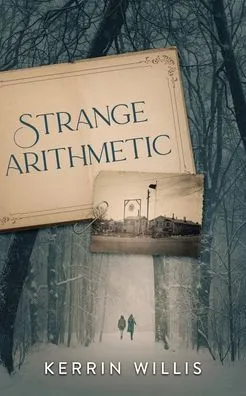
Strange Arithmetic - by Kerrin Willis


In 1945 Maggie O'Callaghan discovers she's pregnant. The father of the baby is an Italian POW being held at Camp Myles Standish in Taunton, Massachusetts. The complications of this situation are many and the resolution is bad all around.

In 2016 Niahm Reilly really wants to be pregnant. The situation is complicated and the resolution turns out to be better than expected.

My husband and I heard this author speak earlier this year at An Unlikely Story Bookstore. We purchased both of the authors' books intending to read them together after we finished Margaret Atwood's recent book of Essays Old Babes in the Wood (which we had just started). Then we learned that Willis' book was our town's One Book One Community selection for this fall, so we moved it up to the top of the pile. We had not known that there was a POW camp nearby. We learned quite a bit of local history from reading this.

Niahm has a special place in her heart for libraries-her deceased mother was a librarian who'd bring her daughter to work with her. However, I cringed at the description of Niahm curled up under her mother's desk by her her "high-heeled feet". WTF?! What self-respecting librarian wears anything other than sensible shoes.


Monday, May 22, 2023

Our Missing Hearts - by Celeste Ng

This dystopian novel, reminiscent of The Handmaid's Tale, gives us a glimpse of what happens when prejudices go unchecked. As we watch the far right cycle through villanzing every marginalized group, (landing most recently on the LGBTQ+ community) this work is prescient in more ways than one.

In Our Missing Hearts Anti-Asian sentiment is sanctioned by the government through PACT (the Preserving American Cultures and Traditions Act). PACT also encourages citizens to report their neighbors for un-American activities (broadly defined) and allows great leeway in banning books. Children are removed from their homes and permanently re-placed if their parents are deemed to be un-American. Current news from Florida and Texas regarding trans children echoes this story line. Ng's book centers on a mixed race family: Asian-American mother Margaret; Caucasian father (Ethan); and their son Bird (aka Noah).

When Margaret's little-known (and apolitical) book of poetry unwittingly becomes a symbol of a protest movement Margaret goes on the lam leaving Bird and Ethan behind in hopes of keeping father and son together even as she cannot be with them. When asked about Margaret's whereabouts Bird and Ethan always answer that they do not know, and that she is no longer a part of the family.

There is much in this book about libraries and censorship. Although libraries exist they are largely empty (of people and books). Described as a "ghost town" the public library is still a sanctuary for Bird (and his friend Sadie). The librarian helps Bird to find a book based on only a vague description. They use an old card catalog to find it but the book has been removed from the library. As was his mother’s poetry book - Our Missing Hearts. The librarian tells him “We don’t burn books here this is America…we pulp them. She says his mother’s book was probably turned into toilet paper and wiped someone’s butt a long time ago. Although they do not traffic much in books, the librarians are still connecting people and information. "The brain of a librarian is a capacious place." 

The public librarians are part of a subversive group that provides information to parents whose children have been “re-placed” - surreptitiously passing notes between the pages of interlibrary loan books. The librarians also hide Sadie away from her foster family as she tries to reunite with her parents. Train and bus schedule information is provided to Bird at the library. The librarian tells him that she is only letting him know how to find the information: what he does with it is his business. 

Likewise classrooms are described with empty bookshelves because “books are outdated the minute they're published”. However, students are informed by their teachers that books haven’t been banned, obviously, because that would contradict the first amendment. Rather, the books have been removed so as not to expose students to harmful ideas. This is eerily reminiscent of a viral video that recently made the rounds online of an empty school library in Florida.


Ethan shelves books in a Harvard University library. A PhD, he used to teach linguistics there, but lost the job over Margaret's "politics".  As a linguist, Ethan is especially interested in word derivations. He enjoys explaining where words come from (in multiple languages) to his son. The book included an explanation about the derivation of the word library coming from the word for tree bark, something I had never known before.


Friday, April 29, 2022

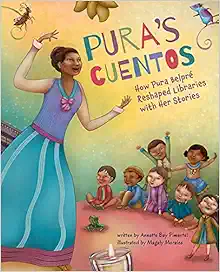
Pura's Cuentos: How Pura Belpré Resphaped Libraries with her Stories


In honor of Día of los libros/Día de los niños I read yet another book about Pura Belpré, New York City's first bilingual librarian. Bright illustrations of coquí frogs, mangos, mice and cockroaches show how the stories about Puerto Rico are just as vibrant as the stories of New York City with its fabulous music and dance scene.

Pura knows, too, that stories that are not written down can be just as exciting as stories in books, and that stories in all languages should be told. Everyone has stories to tell and hearing other peoples' stories will make us all richer. 

Written primarily in English there is Spanish vocabulary sprinkled throughout. A story for all about stories for all.

See also Sembrando historias and The Storyteller's Candle/La velita de los cuentos.

Tuesday, March 8, 2022

The Yellow House - by Sarah M. Broom


My husband and I attended Broom's virtual session last year at Boston University's Anti-Racist Book Festival. We had not heard of her before, but she piqued our interest, and we ordered the book on Audible and listened to it together. The Yellow House is a memoir not only about the specific house in New Orleans where the author grew up, it is a book about our relationships with the places that form us. 

The youngest of twelve children, Sarah was born into the Yellow House where she lived with many of her siblings, although some of the oldest never lived there. The Yellow House was located in New Orleans Eastpart of the city's Ninth Ward. Hurricane Katrina was the second Hurricane the author, and the Yellow House experienced. As a baby Broom and her family were evacuated when Hurricane Betsy rampaged their home in 1965.

Although her school libraries get barely a passing mention, as a college student at the University of North Texas (where the "cost of [her] ignorance about college was high") she was
ravenous about learning, nearly living at the Willis Library where [she] spent seven or eight hours at a time hunched in a cubicle reading books about subjects fellow students seemed already to know.
After graduation, and a Master's degree from the University of California, Berkeley, Broom moved to New York to take a job with O Magazine. There she met Samantha Power, author of A Problem from Hell at an author event at the New York Public Library. Power convinces Broom to go to Burundi (a small African country mostly known as a neighbor to Rwanda). 

Bloom eventually makes her way back to New Orleans where she researches the history of the (now destroyed) yellow house at the New Orleans Public Library. 
To find the history of the Yellow House, I had to search original deeds, chains of titles, successions. I stalked the Conveyance Office, the Office of Vital Records, the Real Estate and Records Office in city hall, the Notarial Archives, and libraries. The search was full of cross-referencing and confusion.

I arrived many mornings at the main branch of the New Orleans Public Library in the business district, just across from city hall, and waited in line for the doors to open. If you didn't know better, you'd think the city was full of people eager to read, but actually the line was full of homeless people who had slept outdoors and were trying to get to the bathrooms. 
Broom goes on to describe posted rules of using the library that include the following "disallowed" behaviors: stalking patrons; using or exchanging drugs; bathing; shaving, washing up, or washing clothes in bathroom sinks; bad smells; oblivious  transmission of germs or excessive coughing; preaching or forcing your ideas on others. Also disallowed: weapons and shopping carts. "Most of these things still happened anyway...The library staff spent much of the time policing, which made it hard to get research assistance". 

Any library worker in public service can relate to this. Too much of our time is devoted to policing behavior. Many administrators, as well as library users, are unable to understand our work as anything beyond study hall monitors. We actually would prefer to help people with research rather than spending our time explaining how to use a photocopier, refilling printer paper, or (most recently) incessantly reminding people to wear their masks above their nose.

Find out more about Sarah Broom at https://www.sarahmbroom.com/

Tuesday, July 20, 2021

Miss Moore Thought Otherwise: How Anne Carroll Moore Created Libraries for Children


At the turn of the 20th century a young woman named Anne Carroll Moore enrolled in library school and got a job at the Pratt Free Library in New York City. When Moore was growing up children were restricted from using libraries. "People didn't think reading was very important for children - especially not girls." However, Miss Moore thought otherwise. After she was put in charge of all of the children's sections in New York City's thirty-six branches Moore was tasked with designing the Children's room at the new grand library that was to be built at Fifth Avenue and Forty-Second Street. The Children's room was designed especially with children in mind with special furniture, bright colors, and artwork and "new children's books in many languages". Once the room was built music programs, author talks, and other special events kept the children coming back. Her ideas have been adopted in libraries around the world.

A beautifully illustrated work.

Wednesday, December 18, 2019

Two Naomi's - by Olugbemisola Rhuday-Perkovich & Audrey Vernick


I found this novel on the free book exchange shelf at my library. The back blurb indicated that "Naomi Marie starts clubs at the library..." so I took it home to read. It turned out that there was actually quite a bit about libraries in this story of two ten-year olds named Naomi whose parents are dating.

The first page of the story opens with Naomi Marie at her local branch of the New York Public Library talking to librarian Ms. Starr about her new club (Bored? Bored Games!) which appears not to be as popular as Naomi Marie had hoped. Naomi Marie uses the verb "sparkle" when describing how Ms. Starr speaks to her "which must be something they teach in library school" Naomi Marie thinks because her mother, a school librarian, "is like that too, especially ...when she talks about Tom."

Naomi Marie thinks about the library a lot. Even while she's at the beach she's thinking about what books she needs to check out next. And she imagines herself there "accidentally in purpose" pulling up the computer game she and Naomi Edith are creating in order to impress the kids in the Teen Gamez Crew. The adventure game requires the player to use different skills to navigate through different worlds, including naming three Coretta Scott King Book Award Winners and a Newberry. The two Naomis' parents had enrolled both of them in the in the the Girls Gaming the System workshop at the Y, without telling them, in the hopes that it would help them become friends. Their plan turned out to have mixed results. Ultimately everyone learns that just because parents may make unpopular decisions, and are a bit dorky, it doesn't make them bad people.

Naomi Marie really makes good use of the library including placing books on hold. She is excited to be able to walk there with Naomi Edith to pick up the book on "making your old clothes into new ones" that is waiting for her. It is a bit ironic that Naomi Marie's best friend Xiomara (aka Xio) is so uninterested in the library that she needs to be bribed by her parents into going there with a sleepover at Naomi Marie's house.

This is a sweet tale with believably-flawed characters. I read it in an day and allowed myself to bask in some nostalgia about how proud I used to feel as a child when I finished a chapter book.

Visit the authors' websites at
https://www.olugbemisolabooks.com/
http://www.audreyvernick.com/

Monday, June 3, 2019

The Night Library - by David Zeltser


I'm always on the lookout books about libraries that also intersect with holidays and special events. Zeltser's picture book tells the story of a boy who learns about the magic of libraries on the eve of his eighth birthday (aka his "attainment day"). 

The unnamed narrator is somewhat less than impressed when his parents give him a book for his birthday. But with the help of New York Public Library's lions (Patience and Fortitude) and a fantastic night in the library when books come alive, he remembers the thrill of learning to read on his grandfather's lap. Now one book seems hardly enough! Thank goodness for library cards!

I bought this as a birthday present to myself. My husband and I read it together on my 55th birthday.

Wednesday, May 1, 2019

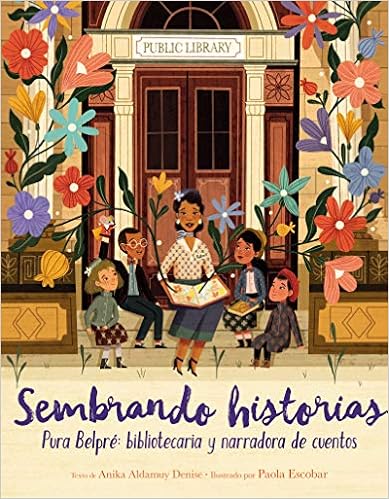
Sembrando historias: Pura Belpre: bibliotecaria y narradora de cuentos - por Anika Aldamuy Denise


In honor of Children's Book Week (this week) and Día de los libros/ Día de los niños (yesterday) a Spanish-language book about Pura Belpré - the first Spanish-speaking librarian in New York City. This beautifully illustrated work tells of Belpré's arrival in Manhattan from her native Puerto Rico. After she got a job at the New York Public Library she lamented that there were no books with the stories she grew up with on the shelves, so she wrote her own collection and created puppets to illustrate the stories during story time.

This book is available in English as Planting Stories: The Life of Librarian and Storyteller Pura Belpré. 

See also The Storyteller's Candle/La velita de los cuentos.

Wednesday, October 10, 2018

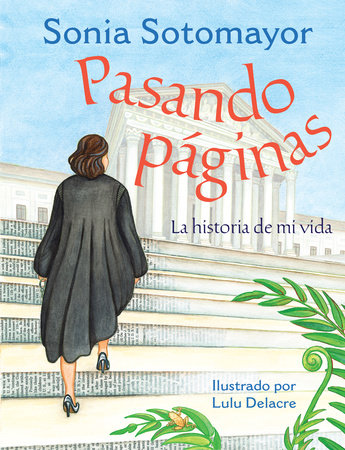
Pasando páginas: La historia de mi vida - por Sonia Sotomayor


This is my second blog post this year about Supreme Court Justice Sonia Sotomayor. In June I posted about Jonah Winter's bilingual book Sonia Sotomayor: A Judge Grows in the Bronx=La juez  que creció en el Bronx in honor of Sotomayor's birthday. This one I read in honor of the convening of the Supreme Court on the First Monday in October.

Even more "book centric" than Winter's work this book starts out with the line "Mi historia es una historia sobre libros..." (My story is a story of books...). Sotomayor goes on to describe how books, of all genres, influenced her and aided her in learning English, as well as how books helped her to grow, imagine, and learn.

Sotomayor's father died when she was only nine years old. She describes how her local library (Parkchester Library) became a refuge for her, a place where she could feel "consuelo y tranquilidad" (comfort and tranquility). As well she felt "dischosa" (fortunate) that the library was so close to her home that she could walk there. Similarly, as a college student at Princeton University she finds her way to the Firestone Library where
los libros se convirtieron en el salvavidas que me ayudaba a mantener la cabeza fuera del agua.
(the books became a lifesaver that helped me to keep my head above water).
On one of the final pages of the book Sotomayor eloquently reminds us that
Los libros son llaves que desvelan las sabiduría del ayer y abren la puerta del mañana.
(Books are the keys that uncover yesterday's knowledge and open tomorrow's door).
This book is written in Spanish, although an English version (Turning Pages) is available.

Monday, December 11, 2017

Uncommon Type: Some Stories - by Tom Hanks


Tom Hanks' collection of short stories contains seventeen tales, each featuring a typewriter, but only one ("Who's Who") that features a library. 

In the fall of 1978 Sue Gliebe shows up at the New York apartment of an acquaintance (Rebecca) from the Arizona Civic Light Opera (ACLO) looking for a place to stay as she (Sue) makes her way to the Great White Way. Seven weeks later Sue is wearing her welcome thin, which Rebecca's roommate Shelly has made abundantly clear. Sue knows she needs to update her resume but does not have a typewriter. When she asks Shelly about borrowing one Shelly informs her that "they rent them at the library". A rainy trek to the New York Public Library ("the famous building at Forty-Second and Fifth, the landmark building with the stone lions in front") with a busted umbrella ends with the sad discovery that the Main Library was closed on Mondays. 
Just as a roll of thunder outblared the honking horns of traffic, she lost the battle against tears, the collective disappointments simply too much: New York City roommates were not friendly soul sisters; Central Park was a place of naked trees, unusable benches, and spent rubbers; windows had security gates that locked rapists out and victims in; no cute sailors were waiting to meet a girl and get a kiss...and the Public Library was closed on Mondays 
Sue's sobbing is interrupted by the voice of Bob Roy, the gay general business manager of the ACLO who just happens to live in New York City. Just as if in a fairy tale Bob Roy takes her back to his cozy apartment, feeds her, and fixes up her resume himself. The rest, as they say, is history. 

Which just goes to show you that libraries really do change lives, even when they're closed. 

Lagniappe

While "Who's Who" is the only story with a library I would be remiss if I failed to give an honorable mention to the story "Welcome to Mars" in which a young surfer, Kirk, remembers his school librarian Mrs. Takimashi (along with some English teachers, and his first crush) as someone who had recognized that he was special. 

My husband and I listened to the audio version of this work, which is read by Hanks. The last story ("Stay With Us"), however, was performed as a radio play along with actors Peter Gerety, Peter Scolari, Cecily Stong, Holland Taylor, and Wilmer Valderrama.

Sunday, April 30, 2017

The Storyteller's Candle/La velita de los cuentos - by/por Lucia González


¡Feliz Día de los niños / Día de los libros! Children's Day/Book Day (or more simply Día) is celebrated every year on April 30 to celebrate multicultural books for children and to encourage literacy. The celebration was started in 1996 by children's author Pat Mora whose work I have written about before (see my previous posts about Pat Mora and Día here and here). 

This year in honor of Día I read a bilingual book about a bilingual librarian, Pura Belpré, the first Latina librarian in New York City. The Storyteller's Candle/La velita de los cuentos tells the story of how those who migrated to Manhattan's Barrio from Puerto Rico during the Great Depression found a welcoming library when they discovered that a Spanish-speaking librarian had been hired. Belpré made clear the message that libraries were for everyone by not only ensuring that reading materials in English and Spanish were available to the new arrivals, she also planned story hours, and celebrations that honored their language and traditions.The beautiful illustrations enhance this story about the joy and warmth of family and community. 

Belpré's memory is honored each year with the awarding of the Pura Belpré Award to a Latinx author and illustrator "whose book best portrays, affirms, and celebrates the Latino cultural experience in an outstanding work of literature for children and youth."

Tuesday, March 22, 2016

This Book is Overdue! How Librarians and Cybrarians Can Save us All- by Marilyn Johnson


Johnson is not a librarian, but according to her jacket-cover biography she "owns multiple library cards and uses them often." She certainly does a wonderful job of singing the praises of librarians as she travels to where the librarians are to find out what they do and what makes them tick. The copyright on this work is 2010, which doesn't seem that long ago, but reading this made me realize how fast things are changing. Johnson has an entire chapter on Second Life which was all the rage not so long ago, but now has only about a million users. She also has a chapter on librarian bloggers, (which I feel a bit meta blogging about) even as I also realize that blogs aren't exactly cutting edge any more either. But while our heads spin about the speed at which information moves and technology changes, the book also illustrates some things that never change. Johnson asks us to consider this
Did you ever? I mean, did you ever think that being a librarian meant dealing with poop? Talking about it finding little piles of it in the stacks, writing about it on the Web. I certainly never thought that I would have to write about it. In fact, one of the things that appealed to me about this book was the intellectual, cerebral, almost disembodied nature of the subject of librarians in the digital age...I imagined the wired world of information and literature, full of brilliant, helpful, visionary librarians...I didn't want to be sitting in a sticky chair thinking about poop.
I don't think poop was one of the topics we discussed in any of my classes in library school, but I certainly had to deal with it as a librarian at a public library. How someone could mistake the elevator for a restroom I'm not sure, but there you have it.

I am always interested when I find a connection between books. In the case of This Book is Overdue! the connection is with The Library Book. In her chapter entitled "Gotham City" Johnson provides a bit of the history of the planning and construction of the New York Public Library, referring to several of the people mentioned in Fiske's book.

It was lovely to read such a librarian-positive book by someone who is a not a librarian herself.

Monday, February 22, 2016

Last Night's Reading: Illustrated Encounters with Extraordinary Authors - by Kate Gavino


I follow author Junot Diaz on Facebook. A recent post of his featured a drawing of himself by Gavino along with a quote "Every time someone gives you a formula for what you should be, know that it's basically a pair of handcuffs". From this post I learned about the passion I share with Gavino: book readings. Some years ago I wrote an essay called "Rubbing Elbows with the Authors" for the Internet Review of Books. The essay tells of how much I enjoy going to book readings by authors (both the famous, and not-so-famous). The essay has since been removed from the IRB but it can be found here. Gavino's work is a quick read based on her tumblr account featuring drawings of authors she has heard reading their own works. When she attends a reading she doodles a picture of the author and adds a favorite quote. She and I both know that readings are generally free entertainment, and a cool way to meet famous people without the huge crowds. This was especially fun for me to read. I felt like I was playing a game finding drawings of authors I've read (Lois Lowry, Marjane Satrapi, Carl Hiaasen, Margaret AtwoodIsabelle Allende, Laurie Halse Anderson, Edwidge Danticat, Maya Angelou, Chuck Palahniuk, Jeffrey Eugenides, George R.R. Martin. John Green, Elizabeth Gilbert  and (bonus!) even some that I've met myself Tiphanie Yanique, David Sedaris, Janet Mock).

I got a bit emotional reading this book. Listening to books being read aloud tends to make me cry a little bit. Apparently so does reading about readings.

So, here's hoping that  I will be able to meet Gavino someday. Hearing her do her own reading would make this truly a meta experience. I've never tried my hand at drawing author's portraits, but if I  meet her I will give it my best shot.


Monday, January 25, 2016

The Map Thief - by Michael Blanding


My husband, James and I read this book aloud together. It was recommended by a friend as it brings together James' passion of geography and mine of books and libraries. We finished this a few weeks ago, but I held off blogging about it because I found out that we would have the opportunity to hear the author speak at the Massachusetts State Library in Boston shortly after we finished it. It was not our first visit to the State House - James goes there about once a year with his EarthView globe-, but it was the first time visiting the State Library. Blanding was witty and seemed to thoroughly enjoy speaking in the stately room. He smiled the entire time as he showed slides with maps and photographs and discussed how he did the research for his book. The Map Thief  is the true story of E. Smiley Forbes III who stole maps from the Boston Public Library, the New York Public Library, the Beinecke  and Sterling Libraries at Yale, Harvard Library, as well as the British Library. In order to pay the phenomenal debts he racked up for his home on Martha's Vineyard, as well as for his planned community Sebec, Maine, Forbes, a well-respected map dealer, began stealing rare maps in order to sell them to collectors. It was a Yale librarian, Margit Kaye, who first suspected Smiley, when she noticed a smudge mark on a map that Smiley had posted on his website - a smudge she was sure she had made! However, when she brought her suspicions to the attention of her supervisor his response was a dismissive "what do you want me to do...arrest the guy?" Ultimately it was another Yale librarian, Naomi Saito, who set in motion the events that lead to Smiley's arrest in 2005.

Blanding talked to a number of librarians and map dealers in the course of researching this book. He also explores the history of maps and mapmaking, and discusses my favorite Librarian/Geographer, Eratosthenes, head librarian of the famous Library of Alexandria in Egypt in 240 B.C.

Blanding's book also tells of how maps were recovered and then how forensics were used to determine which maps belonged to which library. I was especially interested in the clever librarians who used wormholes to identify their map of Gerard de Jode's Speculum Orbis Terrarum
For centuries libraries had been plagued with wood-boring insects that laid their eggs in the stacks. When the larvae hatched, they used the digestive enzymes in their alimentary canals the chew through wood and paper, leaving behind a tiny trail. Somewhere in its 427-year history, the Beineke's copy of the Speculum had contracted its own case of pests. In the front of the book, a dozen pages sported a small constellation of three pin-sized holes near the bottom and another hole three inches up. Now, as the librarians laid the map carefully back into the volume, those holes matched identical holes in the edge of the map where it had been held in place.
Well researched, well written, and full of real-life clever librarians, this is a title truly worthy of its place on this blog.

A post script: While the book is finished, the story is not. As recently as November of last year  the Boston Public Library  recovered a stolen map thanks to an "eagle-eyed" librarian who identified a the map based on flaws in the document.

My favorite quote from the day: "It was a battle, but it was a quiet battle because they were librarians."

Author Michael Blanding signs copies of his book, surrounded by maps, at the State Library.

Wednesday, May 20, 2015

Breakfast at Tiffany's - by Truman Capote


My husband, James, shares a birthday with Audrey Hepburn, and so we watched the movie based on this book earlier this month, about which James then wrote his own blog post. It was probably the third time we'd seen the film, but I had never read the book. The movie has a great library scene in which writer Paul Varjak (played by George Peppard) takes an uninitiated Holly Golightly (Hepburn) into the New York Public Library and shows her how to request a book. He requests a book from the closed stacks that he, himself authored, and then proceeds to inscribe it, much to the horror of the very stereotypical librarian on duty. What's more important though, is that after this first foray into the library Miss Golightly makes her way back there in order to do some research on South America. In the book Varjak is not so much an accomplished writer, and so has no published book to autograph at the NYPL. Furthermore, Golightly needs no initial guidance in the use of the library in order to find out what she needs. Varjak does, however, allow as how he did not immediately recognize the "girl who ran up the steps of the Forth-second Street public library...for Holly and libraries were not an easy association."

Saturday, May 10, 2014

Goodbye, Columbus - the movie


In this 1969 "mood piece" Richard Benjamin plays Neil Klugman, a New York City Public Librarian. Ali McGraw (who played the librarian role in Love Story) is his love interest, Brenda Patimkin. Neil and Brenda spend a week together at her parents house, sneaking around at night having sex. When Neil discovers that Brenda isn't on the pill he goes ballistic. When she explains that she tried the pill and didn't like the side effects he insists she go back on it anyway. She finally relents and agrees to get a diaphragm. Of course everyone knows it is the woman's responsibility (and hers alone) to take care of birth control. Condoms were never mentioned. Apparently the two did not even discuss birth control until there was a very real possibility that a pregnancy may have happened. The romance is a bust once Brenda's parents find out about the tryst. But it was probably best this way, who wants to wind up with a librarian, anyway?

It was not until I started this post that I noticed the tag line for this film is "Every father's daughter is a virgin." If you want to see a really creepy film along these lines watch Virgin Tales - a documentary about the family that started  "Purity Balls".

Wednesday, June 29, 2011

The Library Book - by John Fiske

Well, I really had no choice but to read this one when I saw an article about it on American Libraries Direct.A historical novel about the building of the New York Public Library, The Library Book tells the story of John Carrère and Thomas Hastings, the architects who designed the marble monument. It is also the story of author Fiske's alter-ego Henry Peabody, an architect who is designing a library, and writing a book about the New York Public Library. As is always the case with historical fiction it is hard to tell what is true and what is not, and in the case of The Library Book there is the added layer of wonder about what is true and what is fiction for the Henry Peabody character. And because the stories of Peabody and John Carrère were parallel, I sometimes lost track of which one I was reading about. Fiske does point out in his Author's Note that it is a work of fiction, and offers examples only two "vignettes" that are actual events. Readers are left to wonder about the rest. Was Miss Bough Carrère's lover? Was she even a real person? Did his wife know? How about Horace Avery, the mad artist? Was he real, or simply an artistic device? I did look up the facts around the book's tragic ending, and almost cried when I found them to be true.

There are, of course, library references throughout the book. I highlight some of my favorites here:

In discussing the design of the building early on Hastings has this to say: "It has to be for the people, a democratic place....Not a royal place. It's a public library." Carrère responds "It has to usable for librarians, too. (p. 30). See my May 23rd post to see my feelings about how democratic I think the Library is. I was interested to read that the architects thought of the librarians, too. My own library underwent a major renovation in recent years, and although the planners and architects consulted with us, our ideas were largely ignored, which has made for some rather weird spaces and book arrangements in the building. I did not see any evidence in The Library Book that the architect's spoke to librarians, except to point out that librarians were not consulted in the designing of the Boston Public Library. I did note that the architects themselves determine that "the catalog room is the most important room in the library". Again, I can't tell for sure whether that determination is made with any input from librarians. (For those readers born after about 1985, the catalog room would have housed a card catalog, a drawer filing system that patrons used to locate books, used before catalog records went online.)

Library card catalog

Fiske plays a lot with the ideas of "positive space" and "negative space" and the layers of meaning in each in art and architecture. It was good to see that libraries were ultimately defined as positive space "because those spaces are so wonderful and useful and new with a purpose." (p. 162). And finally I smiled when I saw this passage about children playing with building blocks: "They built an entire town, even the library....It looked like a nice town, and the library was unmistakably the largest building." (p. 236).

This work would have benefited from some better editing. There are stray letters, and other typos in several places. As well, there was one rather glaring inconsistency.  On page 49 there is specific mention of Margaret, Horace Avery's sister, however, on page 61, we learn Avery's funeral was sparsely attended due to the fact that "He had few friends, his parents were gone, and there were no siblings." (emphasis mine.) Perhaps I misunderstood something, but I went back and reread both passages, and I could not see any other meaning in them.

Monday, May 23, 2011

On this day in library history

One hundred years ago today President William Howard Taft dedicated the New York Public Library, along with Governor John Alden Dix, and Mayor William Jay Gaynor.

I attempted to visit this library a few years ago while visiting NYC and was impressed with the sidewalk leading up to it, which had all kinds of pro-library messages, and was also duly impressed by the big lions that are the icons of this institution. I was completely disappointed upon entering. I had hoped to talk to a reference librarian but found the security guards, metal detectors and general aura so indimidating (the place didn't even look like a library) that I walked right out. Where were the books? Where are the people pursuing knowledge? It was the total antithesis of what I had been taught libraries should be.