Showing posts with label I was at the library. Show all posts

Monday, January 20, 2025

The Man of My Dreams - by Curtis Sittenfeld

Introvert Hannah Gavener is uncomfortable with parties in college, and with dating. In order to pay for her therapist she takes a job shelving books at the veterinary library at her university, as a bonus she finds that  she can be "almost peaceful" among the quiet stacks. The job also comes in handy as an excuse when she wants her date, Mike, to leave after a rather awkward date that lasted all night. She lies and tells him she has to go to work early at the library. 

Hannah also has good memories of reading through all the biographies of the first ladies in fourth grade as part of a summer program at the public library. ("If you were a boy you read about the presidents.") 

Hannah loved these books, their cheerful orderly recounting of lives...and by August she'd read all the way up to Nancy Reagan...For Hannah things had seemed good then, it had seemed like she was headed somewhere. 

Friday, January 10, 2025

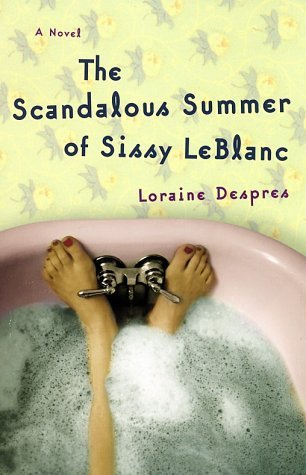
The Scandalous Summer of Sissy LeBlanc - by Loraine Despres


Set in the summer of 1956 (with a bit of backtracking to fall 1941) Sissy LeBlanc (neĆ© Thompson) is surprised when her high school sweetheart returns to Gentry, Louisiana and thus begins her scandalous summer. 

As a  high school student Sissy uses the library as an excuse to get out of the house in order to "take care" of an unwanted pregnancy.

As an adult Sissy helps her mixed-race cousin, Clara, to use the public library which was "open to all" but only allowed "white folks" to check out books. A sympathetic librarian "who believed it was her Christian duty to eradicate ignorance wherever she found it...liked Clara, a smart, sensible teenager and a credit to her race...[and] took it upon herself to break the rules and allow her checkout privileges".

Monday, January 11, 2021

I am Not Your Perfect Mexican Daughter - by Erika L. Sanchez

Living in the shadow of her dead older sister (Olga) Julia Reyes navigates high school, family, first love, and friendships. Although she is indeed not perfect (but it turns out neither was Olga) she does at least understand the importance of libraries. 

She uses the old standby lie of "I'm going to the library" so she can instead interrogate Olga's best friend Angie about a hotel key and sexy underwear she found among Olga's things.

Julia gets into trouble quite often and by her own account "between the ages of thirteen to fifteen [she'd] spent about forty-five percent of [her] life grounded". She further explains that sometimes when she punished she isn't even allowed to go to the library "the cruelest kind of torture". She also claims she "can't get pregnant at the library" but she obviously has never worked in one and discovered the kinds of things that library workers all to often find indicating that perhaps someone did get pregnant.

Julia really does love books and dreams of becoming so rich someday that she has "a library so big that [she'll] need a ladder to reach all [her] books".

Thursday, April 2, 2020

Banned Books Week - Beautiful Creatures - the book


Back in February I blogged about the movie Beautiful Creatures. My post ended with "A fabulous library movie. I guess I will have to read the book now." I followed through shortly after I wrote the original post, but have been saving my post about the book for Banned Books Week. Although I have not read any official news reports of this work being challenged, based on its "witchcraft" and "anti-Christian" themes, I am sure it has been. As a bonus, banned books are a part of the story. Specifically, Harry Potter books are challenged at the Gaitlin County Library for promoting, you guessed it, witchcraft! A little meta-banning. Plus, there are two libraries that play roles in this work: the fantastic "Caster Library" and the Gatlin (South Carolina)  Public Library. Both are headed by a wonderful librarian character called - what else - Marian! Marian is able to run both libraries, because the Caster library is open only on holidays that the Gatlin Public Library is closed. As Lena points out this "hardly seems fair...the Mortals get so much more time, and they don't even read around here."

The novel's hero, Ethan, loves to read, and dreams of leaving Gatlin. We see this brought together when he tells us "Books were the one thing that got me out of Gatlin, even if it was only for a little while. I had a map on my wall, and every time I read about a place I wanted to go, I marked it on the map." He also tells his new girlfriend, the lovely Caster Lena, that he keeps books (actual novels!) under his bed, and reads them because he "wants to." What a devil!

The town library, "still had a card catalog" which seemed somehow fitting in what is described as beautiful, historic building, one of the two oldest in town - "a two-story venerable Victorian, old and weathered with peeling paint and decades worth of vines sleeping along the doors and windows [that] smelled like aging wood and creosote, plastic book covers, and old paper." It was a sacred place where Ethan's late mother, a serious Civil War historian, unlike the bigoted DAR members, "spent most of her time holed up...looking at microfiche". She told her son that the library was her "church", and that "any book was a 'Good Book', wherever they keep the 'Good Book' safe is also a House of the Lord." The Library was one place where Ethan could still feel his mother's presence. Ethan also knew that "Marian the librarian" was "the smartest Mortal in Gatlin"...and "she looked more like a model than a librarian...pretty and exotic-looking, a mix of so many bloodlines it was like looking at the history of the South itself, people from the West Indies, the Sugar Island, England, Scotland, even America, all intermingling until it would take a whole forest of family trees to chart the course." Ironically, he does describe his best friend's mother, Mrs. Lincoln (the book banner) as dressing "like some kind of punishing librarian out of a movie, which cheap drugstore glasses and angry-looking hair that couldn't decide if it was brown or gray."

Ethan points on several occasions that the library doesn't get much use and goes so far as to use the metaphor of "ghost town" to describe what it is like going in there. Even so, "studying at the library" was still offered up as a convenient lie to adults who wanted to know where he and his friends were going. And in Gatlin which Ethan declares "[not] a big library town" the library was also the place for Alcoholics Anonymous to meet "when the Baptists kicked them out".

The Caster Library or Lunae Libri is described as a crypt below the DAR building and is "thousands of times bigger" than any other library. On Ethan and Lena's maiden voyage into the tomb Marian warns them to trace their steps backward if they get lost "that's why the stacks radiate out from ...one chamber". The Library is so big some parts are still "uncharted".

Marian has some important observations about libraries:
"I'm just the librarian. I can only give you the books. I can't give you the answers."
"'Without libraries what have we? We have no past and no future'. Just ask Ray Bradbury"


http://www.thedailybeast.com/articles/2013/02/15/beautiful-creatures-14-notable-differences-from-the-book-to-the-screen.html

Wednesday, October 30, 2019

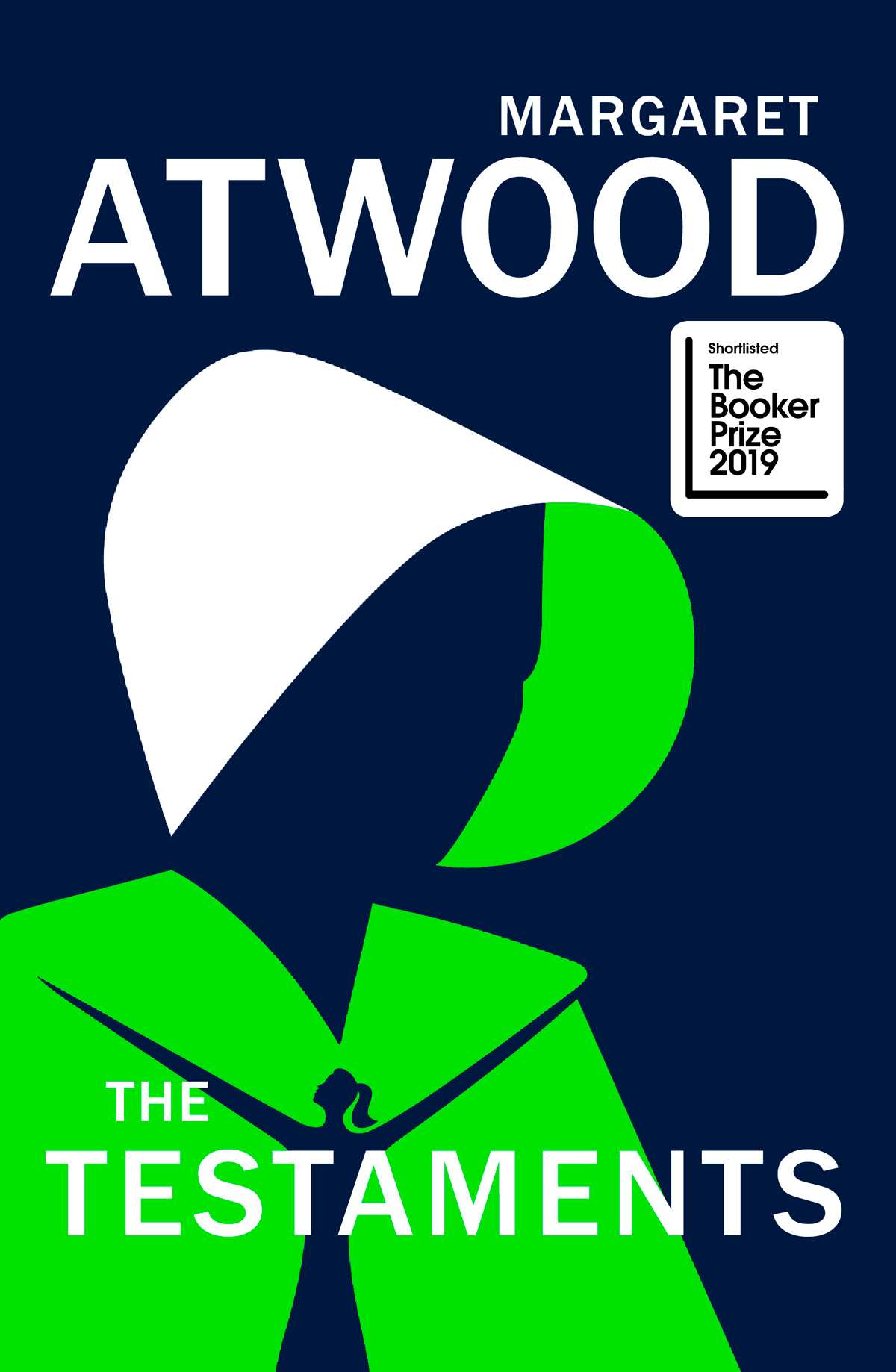
The Testaments - by Margaret Atwood


Among Harry Potter fans there is a stretch of time known as the three-year-summer - the period between July 2000 and June 2003. It references the spacing between the fourth and fifth books in the series. It was a difficult time for us to be sure, but it was nothing compared to the 35-year wait Atwood fans endured for this sequel to The Handmaid's Tale.

This was well worth the wait. While not a continuation of Offred's story we do discover what happened to her and the baby she was carrying. Instead this is a novel in three voices.

The first is Aunt Lydia by way of the Ardua Hall Holograph, a clandestine memoir, secretly written, a la Winston Smith in George Orwell's 1984. The difference here is that Aunt Lydia is less likely to be discovered by the cameras because, as she tells us "I know where they are, having placed them myself". The other two voices are those of Agnes Jemima a young woman who grew up in Gilead; and Daisy, who grew up in Canada where she learned about Gilead through her parents and her lessons at school. Both of these young women have several different aliases.

Aunt Lydia lives in Ardua Hall, along with all the other aunts in the city. Each evening she heads to her "private sanctum" in the Hildegard library "one of the few libraries remaining after the enthusiastic book-burnings that have been going on..." The Ardua Hall library has different rooms with different levels of access. Aunt Lydia has access to all - the General section where new supplicants learn to read; the Reading room "where the Bibles brood in the darkness of their locked boxes, glowing with arcane energy"; and the Bloodlines Genealogical Archives with their classified files. Aunt Lydia knows that knowledge is power, something that clearly the Commanders of Gilead are also quite aware, otherwise they would have no reason to deny the ability to read to women. Even some of the Aunts believe that reading can be too dangerous. The residents of Ardua Hall know all too well the story of poor Aunt Lily who neither wanted to marry nor stay in Ardua Hall instead "she wanted to live on her own and work on a farm. Aunt Elizabeth and Aunt Vidala said this was what came of reading too early...before her mind was strengthened enough to reject [the wrong ideas] and there were a lot of questionable books that should be destroyed".

Daisy and Aunt Lydia both describe visiting their school libraries as a children, and both tell of a specific book they remember from their respective school libraries. Contrary to the experiences of Aunt Lydia and Daisy, going to a library is privilege that Agnes Jemima never had. Her experiences in a library (a word she never even heard as a child) would come later in her life. When she does enter a library for the first time she is overwhelmed
It's hard to describe the feeling this gave me. The first time I passed through its doors, I felt as if a golden key had been given to me - a key that would unlock one secret door after another, revealing to me the riches that lay within. 
Eventually, Agnes does some work in the Hildegard library, as does her friend Becka (aka Aunt Immortell). Agnes' job is to make "fair copies of Aunt Lydia's speeches". It is through working on this task that she discovers some disturbing information about her family. Someone who knows that knowledge is power begins slipping files with classified information in between the files of speeches to be copied.

We don't know much about what Becka's job in the library is, except that she sometimes has "night duty" there. Aunt Lydia does mention that there is a "night librarian" on duty whom she greets on the way to her sanctum.

Aunt Lydia uses the library as a cover on behalf of two residents of Ardua Hall when it is discovered that they are not at lunch. Aunt Lydia knows their whereabouts but instead tells the others "I believe they are fasting...I glimpsed them in the Hildegard Library yesterday, studying their Bibles".

Reading and writing are forbidden for women and girls in Gilead, with the exception of the Aunts. Books were apparently their consolation prize for not being able to have husband or babies. As Agnes Jemima tells us "the Aunts were not married; they were not allowed to be. That was why they could have writing and books". I've thought about this passage a lot as a person who loves reading and writing and who is also a woman who has had a husband for 33 years. For me the choice of family or literacy seems a particularly grim game of  "Would you rather..." If I had never fallen in love with my husband in the first place the answer would be clear, but given the choice of leaving my husband or keeping my privilege of literacy what would I do?

Of course the Aunts don't really make this choice. They don't leave their husbands, they never had them to begin with.  They have their books and writing, and they have each other for company. Although Aunt Lydia doesn't have close friends among the other Aunts, she understands that she needs their companionship. As she discovered when placed in solitary confinement prior to facing her own Hobson's Choice of Aunt-hood or death "One person alone is not a full person: we exist in relation to others. I was one person: I risked becoming no person".

Across from Ardua Hall, the Eyes also have headquarters in what used to be a library. Aunt Lydia tells us that "It now shelters no books but their (the Eyes) own, the original contents having been burned or, if valuable, added to the private collections of various sticky-fingered Commanders."

As with The Handmaid's Tale, The Testaments ends with an epilogue in the form of an academic conference. Here we read the transcripts of The Thirteenth Symposium of Gileadean Studies, International Historical Association Convention, Passamaquoddy, Maine, June 29-30, 2197. The keynote speaker is Professor James Darcy Pieixoto who immediately, condescendingly, points out that the Chair of the Symposium, Professor Maryanne Crescent Moon, would never have had that position in Gilead, and  that in fact "women are usurping leadership positions to...a terrifying extent".

As in The Handmaid's Tale Pieixoto is the only male narrator, and similar to his comments in that novel, he begins by questioning the authenticity of the recently discovered holograph, and the two witness testimonies (discovered in the library of the Innu University in Sheshatshiu, Labrador), but ultimately, charitably suggests "why not take them at their word?" The testimonies were discovered by a graduate student, a woman - Mia Smith, who shared them with her professor, who of course first questioned their authenticity. Once a team of graduate students followed the route described in the transcripts, and validated certain details Peixioto ready to take on the work of doing the seminal research on them - talk about a usurper.


Friday, February 15, 2019

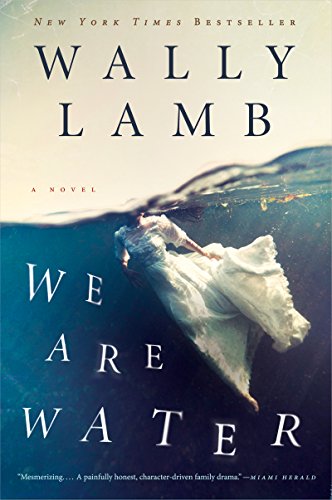
We Are Water - by Wally Lamb


In this work Lamb re-imagines the town of Norfolk, Connecticut and artist Ellis Ruley as the fictitious Three Rivers, Connecticut and Josephus Jones respectively. It tells the story of the Oh family: Annie, an artist who is about to marry her same-sex partner; Orion, her psychologist ex-husband; and her children Ariane, Andrew, and Marissa. Each chapter focuses on a different character.

Annie's early life is shaped by a flood that killed her mother and baby sister. The disaster is something she rarely discusses, so her children must research it at the public library, reading the old newspaper accounts on microfiche. 

Annie is also the subject of an internet search on a public library computer, many years later. A search performed by someone who, as a condition of his parole, was to stay off the internet. Nevertheless, the parolee (Annie's long lost cousin Kent) "walked from the halfway house to the library downtown [and found] an open computer station, far enough from the front desk for anyone to see..."

As a young woman Annie searched for a job using the Want Ads found in the local paper at the public library. She had been primed from a young age to use the library, as her mother had taken her to story hour as a child. Belinda, whose father was buried the same day as Annie's mother and sister, remembered Annie from her days working at the library. Belinda once even used her job there as a cover to her parents when she goes to meet a boy at the movie theater - telling them she was called in to work to fill in for someone who was sick. 

Although not an especially library-centric book, this one does demonstrate a myriad of different ways that libraries are used. 

Tuesday, June 19, 2018

Love Sugar Magic: A Dash of Trouble - by Anna Meriano


I found out about this brand new book from "A Mighty Girl" on my Facebook feed.When I read that it was about DĆ­a de los Muertos (Day of the Dead), and celebrated Mexican, Texan, and American cultures, and had a lesson in the importance of being bilingual I knew I had to read it. What luck that it was sitting on a shelf waiting for me in the Children's Fiction section of the very library where I work.

Leonora LogroƱo (Leo) is the youngest of five sisters. Her family owns a bakery and as everyone is busy preparing for Leo's favorite holiday, Dƭa de los Muertos, it seems that they are hiding something from her. Maybe she should learn some more Spanish so they wouldn't be able to talk without her understanding. Beyond language abilities, though, Leo is sure that there is something else that everyone in her family knows, and she doesn't. When she discovers that she comes from a family of brujas (witches) Leo decides help her friend Caroline by deciphering a spell using her rudimentary Spanish-language skills and her decidedly untested magic only to find herself getting deeper and deeper into magical trouble as she attempts to undo her botched sorcery.

Of course it wouldn't have a place on my blog if it didn't include at least a mention of those most magical of places - libraries. The first place we find them is with the famous "going to the library" excuse in order to sneak out to do something else. There is also a classroom library, used as a decoy destination so that a note could be passed. Leo and Caroline do like to read though, and Leo wonders, while looking at Caroline's bookshelf, if Caroline might "reopen her lending library" now that she has moved back to Rose Hill.

The novel does also give a bit of a shout out to information literacy when Brent (the unfortunate object of Leo's failed hocus pocus) asks Leo if her "methods" had been "tested and "peer reviewed". Although I had to wonder how many sixth graders would know about the peer review process I had to smile at the passage.

In addition to being an avid reader, my other passion is cooking, so I was especially happy to see that I would be able to make use of this book on my other blog "Una Nueva Receta Cada Semana". I am looking forward to making "Leo's Lucky Pigs" (aka "Piggies", or "Puerquitos"); and "Pan de Muerto Mensajero" (Bread of the Dead) and documenting my experiences later this year.

A book for lovers of Harry Potter, the Spanish language, and baking. Looks like I hit the jackpot!

Thursday, November 30, 2017

Little Fires Everywhere - by Celeste Ng


The first time I heard of Shaker Heights, Ohio was in 1987. I was temping in an office in downtown Baltimore, sending surveys to the company's clients. I remember typing "Shaker Heights, Ohio" onto an envelope and wondering where it was in relation to Oxford, Ohio - the college town to which I was about to move (216 miles, BTW). After I moved to Ohio I heard a lot more about Shaker Heights, a wealthy suburb of Cleveland from whence a fair number of students who attended Miami University of Ohio (one of the so-called "public ivies") hailed.

Developed as a planned community, Shaker Heights has some rather strict zoning laws, and for resident Elena Richardson the orderly layout of the city mirrors the careful planning of her own life: education, marriage, job, children. She didn't count on her youngest child, Izzy, to be a black sheep, and likewise never dreamed of the disruption that her new neighbor, Mia and Mia's daughter Pearl, would bring into her life.

As I wrote in my Stepford Wives post some years ago "you can't have a perfect town, if it doesn't have a library". Shaker Heights of course has a public library - a safe place to which teenager can ride a bike alone, or that offers a convenient lie as to his whereabouts; where an artist can find a biography of Eleanor Roosevelt; where an adoptive mother can take her infant to story hour; or a social worker can arrange a visit for the birth mother of that same baby to have a court-ordered visitation. The public library in Ng's books functions as all of these.

Shaker Heights' excellent schools also have libraries, of course, and attorney Ed Lim knew that there were very few books with Asian characters to be found in them, one exception being The Five Chinese Brothers which Lim's daughter checked out in second grade and had caused her to return "home deeply troubled". Ng's story takes place in the late 1990s, a time when emphasis on diversity in schools was just emerging, before people "would talk about books as mirrors and windows".

Teenager Pearl has spent her whole life traveling with her artist mother from place to place, sometimes moving twice a year and "had spent most of her childhood in libraries, taking refuge among the shelves as a new girl bouncing from school to school, absorbing books as if they were air".

The fact that libraries are often places of stability and comfort can belie the fact that they can also be places of controversy. Is the library really a good place to have a supervised visit? What books are appropriate for young people to read, and what should be the fate of those that are troubling?

There is definitely a shake up in Shaker Heights.

Sunday, July 31, 2016

Harry Potter and the Half-Blood Prince - by J.K. Rowling


It's that time of year again - Harry Potter's birthday! This was my third go round for the sixth book in the series. I still love the stories as much as I ever did, and I still hold steadfast in my opinion that the first book is the best one.  I find the later books, like The Half-Blood Prince, are more scary than magical. Which is not to say I did not enjoy reading this one again. This was my first time reading it looking specifically for library references. The first of which appears almost halfway through the book: Harry and Hermione speak in whispers about Ron and Lavender Brown, love potions, Harry's marked-up copy of Advanced Potion-Making, and how anyone could have snuck Weasleys' Wizard Wheezes into Hogwarts. Meanwhile librarian Madam Pince "prowled the shelves behind them". She apparently prowls until closing time when she "appeared around the corner, her sunken cheeks, her skin like parchment, and her long hooked nose illuminated unflatteringly by the lamp she was carrying." At which point she notices Harry's copy of Advanced Potion-Making and deems him a "depraved boy." And, as it turned out Madam Pince was not the only one lurking. We discover near the end of the book that Draco Malfoy also overheard the conversation about sneaking in potions, providing him with an idea about how to get a bottle of poisoned Mead into the Hogwarts castle.

Even in the wizarding world the library is a good excuse when one needs a get-away plan. Harry gets tired of telling everyone how it feels to Apparate and is "forced to lie and say that he needed to return a book to the library." Likewise Harry lies to Snape when asked where he found out about the Sectumsempra curse. He says it was in a library book, when of course, it was really found in his annotated edition of Advanced Potion-Making.

Super-smart Hermione has always made tracks to the library when she needed information but in this devastating volume "the Hogwarts library...failed Hermione for the first time in living memory. She was so shocked, she even forgot that she was annoyed at Harry for his trick with the bezoar." The library does come through for her, though when she finds a "whole collection of old Prophets up there" one of which contains information about one Eileen Prince. Could the Half-Blood Prince have been a girl?

Librarian Madam Pince makes a final appearance at the end of the book during Dumbledore's funeral "standing beside Filch, she in a black veil that fell to her knees, he in an ancient black suit and tie reeking of mothballs." Well, this certainly gives one pause, doesn't it. Could Pince and Filch be an item? We know Filch is a squib, which may be to blame for his sour personality. I'm beginning to think that Madam Pince is a squib as well, and perhaps that is to what we owe her nastiness. But really, there is no reason for any librarian to feel that way. One doesn't need to work at Hogwarts to know that all libraries are magical places, after all.

Tuesday, August 4, 2015

In the Unlikely Event - by Judy Blume


Judy Blume did a lot a research in order to write this novel about real life events that took place in 1951-1952 when three planes crashed in Elizabeth, New Jersey over a two month period. The story is of lost lives, and dashed dreams. It is also about hope and community and moving on. Fans of Judy Blume know well that she has never forgotten what it was like to be a child, or a teenager. This book demonstrates that she also has not forgotten the thrill of first love, the rush of first sexual excitement, or the devastation of first heartbreak, or what it feels like to lose a friend.

Ms. Blume thanks five librarians by name, and three different libraries in her acknowledgements. In this work she also created characters who were book lovers, and library users. Smart Daisy Dupree loves to read and to give books as gifts. She uses the library a lot, but "the bookshop is for books [she] just has to own." Former first-grade teacher Jo Foster always has a stack of library books ready to read to her two daughters at bedtime. Their babysitter Miri Ammerman, fantasizes an alternate reality in which Jo took the girls "someplace, to the library maybe..." after a plane crashes into their house and kills one of the young girls. Miri also uses the convenient "I'm going to the library" excuse when she decides to get her hair styled and cut like Elizabeth Taylor's so as not to have her mother Rusty ask a lot of questions, or forbid her from doing it. And when Miri runs into her boyfriend with an older woman on her way home from school she wishes for a "do-over" in which she would take a different route, or maybe go to the library. Writing this I realize that it seems that Miri thinks about using the library a lot, but it is unclear whether she actually ever went. She mentions a lecture her stepsister gave at the library on "channeling your past lives" during one of her book tours, but even there we are not sure if Miri attended. We do know Miri's mother used a "penny library" (presumably a subscription library?) to check out From Here to Eternity.

Blume has created sympathetic, strong characters who also have regrets and flaws. This well- researched work was hard to put down.

Saturday, September 28, 2013

Banned Books Week - Why I "let" my daughter read Twilight books

...or maybe not...

Stephenie Meyer's series of books about a teenage vampire falling in love with a human are immensely popular, and also rank among the most banned or challenged books in the country. Why are these books that are sometimes referred to as "mind candy" and that really do have so much not to like about them, still so popular? Even among feminists like me.

 I took my first women's studies course (Women and the Media)  in the early 1980s at the University of Maryland Baltimore County. One of my classmates talked about her 13-year old daughter reading Young Miss and Seventeen magazines and said these magazines made clear the messages about body image and gender stereotypes that we'd been discussing in class. "I can't believe you let your daughter read that stuff" retorted another (childless) classmate, immediately putting the first woman on the defensive (way to go, Sisters!). That was the first time I heard the "why would you let your daughter read that crap?" question, but it certainly wasn't the last. I have heard it many times in the 30 years since the incident took place, and thought about it quite a bit, especially in the last 16 years, since I became the parent of a daughter myself. I have never been asked the question directly, but I have heard it asked about the Twilight books. So without getting too defensive, here is my response.

When my daughter was first learning to read, she noticed a sign in our local public library that said that all library records were private regardless of the patron's age (I'm paraphrasing). My first grader could read the words, but did not understand their meaning and asked me about it. I explained to her it meant that she could check out whatever book she wanted whenever she wanted, and neither I, nor her father, nor anyone else could find out.  The sign, of course, was there for me, not for her. It was there to let me know that if I wanted to know what my child was reading I should accompany her to the library. Of course, my six-year old wasn't likely to be going to the library by herself anyway. But, as a pre-teen she did start going by herself, and I was happy we lived in a place that had a library my daughter could walk or bike to on her own. She is a voracious reader, and I have always told her that she could read whatever she wanted, whenever she felt ready to read it. Because here's the thing I knew: children want to read things that interest them. She didn't read novels about teenagers having sex, or sucking blood, or taking drugs, or skipping school when she was in elementary school because those things were not part of her reality at the time, and books with those themes generally aren't written for young children anyway. She wanted books about animals, and babies, and friends playing together and sharing. When she was old enough to read Young Adult novels I was glad for her to be able to explore difficult or disturbing subjects through the safe venue of books. I sometimes asked her about books she was reading, but I didn't pry. Sometimes I suggested books she might like, which she sometimes actually read. One of my suggestions, in fact, was the Twilight series. Our whole family has traveled to Transylvania and we are fascinated with vampire lore. My daughter and I both read the entire series, and the whole family has seen all the movies (the books are way better, btw). Here's my dirty little secret: I like them. No, I didn't find them to be exceptionally well written, or to have especially deep or complex story lines. I do like the way Meyers built up the sexual tension (and was completely let down when Mr. and Mrs. Edward Cullen finally consummated their relationship). And I like the fact that the Twilight books are a mindless read in an otherwise complicated world; I like that I had something I could talk to my daughter and her friends about. My daughter does not share much about her life with me, much to my chagrin, so when I find something we can bond over, I take it, even a sucky (pun intended) novel. It turns out something we have in common is we both read and enjoyed the Twilight series when it was all the rage to do so. We got caught up in a movement, and it was fun. Here's an even nastier little secret about me: I'm on "Team Edward" and I think people on "Team Jacob" should have their heads examined.

Earlier this year, I told my daughter she might like to read Beautiful Creatures (see yesterday's blog post), as it would probably be of interest to those who also like stories about sparkly vampires. "I think I'm done with sparkly vampires" she answered. Later that week I found her Twilight poster in the garbage. She is maturing. There are other things she wants to read. Things that are more sophisticated, and more interesting to a sixteen-year old.

So just what kind of a feminist do I think I am, anyway, extolling the virtues of a trashy novel that is rather dis-empowering to women, and "letting" my daughter read them, to boot. I am a feminist who knows that young women are smart enough to make their own decisions about what to read, and then to distinguish fantasy from reality. A feminist who knows that girls are completely competent to read something and then contextualize it, and critique it, and discuss issues such as stalking; and whether girls need a boyfriend to protect them, or make them complete. A feminist who is not afraid to discuss dating and sex with my daughter, much to her chagrin! I did not "let" my daughter read Twilight. She is an incredibly intelligent young woman who can make choices for herself. I also know that if I tried to tell her she wasn't allowed to read it, that she would have found a way to read it. Parents who think they can forbid their teenagers from reading something are completely fooling themselves.

I've talked to her about fantasized aspects of this book, especially regarding sex. For instance a girl who asks a boy for sex is not going to receive this response: "after we're married" (snort - don't watch this scene while drinking milk!)  Another, unlikely scenario: two virgins having sex together for the first time - a magical experience in which the young woman can surely expect to climax - not bloody likely! (again, pun intended). I must admit that it was a nice touch for Edward to make Bella an omelet the next morning, though.

Of real concern, though, is the way libraries are dissed, at least in the first book (which I re-read in order to write this post-I don't like the series enough to have re-read them all, though). The lovely Bella mentions the Forks public library three times. Twice to say how woefully inadequate it is, and once uses as a convenient lie to her hapless father so she can sneak out with her vampire boyfriend.

I wrote this post months ago, and waited until Banned Books Week to publish it. In the meantime I happened upon this other feminist perspective of the book written by a young adult librarian who likewise points out that we don't give young women enough credit to think for themselves.

Wednesday, July 31, 2013

Harry Potter and the Prisoner of Azkaban - by J.K. Rowling


Last year I started a tradition of posting about Harry Potter on his birthday. Until 2017 I will re-read one of the books in the series each year, after that I will either have to start a new tradition, or re-blog, or figure out something else Potter related to blog about on July 31. But, anyway, as for this year I can write about book three.

While our friends appear to use the library less often in this work than in books one and two, and that nasty old stereotype Madam Pince doesn't show up at all, we do know that Harry and Herminone occasionally studied there. The library often offered a convenient excuse as a place to go for refuge, or as an easy lie. We also know that Hermione, Ron and Harry did use it to research legal information as to how they might save the poor old hippogriff Buckbeak from execution in his case against the Committee for the Disposal of Dangerous Creatures.

Well, here's hoping book four is more library-centric.