Showing posts with label fiction. Show all posts

Tuesday, October 27, 2026

Lords of Serendipity - by Randy Boyagoda

University satire just gets darker and darker, even as it shines a brighter light on the inner workings of the Academy.

Boyagoda's work has readers traveling from Sri Lanka, to Italy, to the United States exploring how the Ivory Tower covers up things it doesn't like and maintains the privilege of the white, male hierarchy, all while presenting a face that wears a DEI mask. My professor husband and I listened to this on Audible and enjoyed some true belly laughs together.

There were a lot of characters in this novel, of course my favorite was Patricia, the information literacy librarian at the fictitious Haven College. Always fighting the good fight, she was a true educator, but without the protection of tenure. She is forced into early retirement by "Puck" an AI assistant she is required to "train". 

I must admit that I am happy to have decided for myself to retire early. The Administration at my University would like nothing more than to have AI do all the librarians' jobs, and shrink the physical space of the library as well. Currently the number of professional librarians is smaller by three than when I first started, and the building space is smaller by one entire floor. Plans are to make it smaller still within the next few years. Encroachment was an issue for the entire 27 years I worked there. Who needs a library anyway? No one reads books anymore. 

Friday, October 9, 2026

The Banned Books Club - by Brenda Novak

When Gia Rossi returns to her hometown to help her dying mother she expected to have to confront the hostile neighbors who think she ruined the life of Mr. Hart, the teacher who molested her seventeen years prior. She did not expect her sister to disappear with Gia's two young nephews and to navigate her brother-in-law's hostility.

Of course I could hardly resist reading this one for Banned Books Week, although it wasn’t really what I expected.

There was in fact only a little of the story that involved book banning. While some action takes place around a reunion of a high school banned books club (a club that was started as a rebellion against the PTA who insisted on removing The Catcher in the Rye, The Outsiders, and The Handmaid's Tale from Honors English) with a bit of editing the same story could have been written about an ecology club, a drama troupe, the Gay Straight Alliance, the Student Government Organization, or any other high school group. Likewise, there aren't any heroes who vanquished book banning villains.

The Banned Books Club is still meeting after seventeen years and are reading Stephen King's Cujo. One member suggests that she understands why some people would want to ban it, as it was "upsetting" and furthermore had no "message". Gia points out that horror novels are simply meant to entertain, and don't necessarily need a message. This might have been my favorite line in the book. I think that too often book publishers, especially for children's and Young Adult books, seem bent on everything having a moral. We also need silly stories that simply entertain, and make reading fun. Reading fun books is how people learn to love reading.

I ordered a signed copy of this book from the author’s website. It came with a little puzzle in a test-tube shaped container 

.


Thursday, October 8, 2026

Suggested Reading - by Dave Connis

Clara Evans is without a doubt a rather bookish person. She not only runs a book club and several Tiny Little Libraries, she also volunteers at the Lupton Academy school library. And when she learns that over fifty books have been banned from her private high school she creates a secret "locker library" (a la Ban This Book) to ensure that her classmates still have access to the "prohibited media", although they (the students) haven't even been notified that the books have been removed. As a private school Lupton Academy can do what it likes without input from the community.

One of Clara's new favorite books, Don't Tread on Me, is among the prohibited media. DTOM is about a clandestine library which makes this whole story somewhat meta. 

Clara's character is well developed. We find her questioning her own motives for creating the locker library, as well she begins to wonder whether perhaps some books should be banned. She notes that Catcher in the Rye may have incited Mark David Chapman to murder John Lennon, and driven one of her friends to consider suicide. Her self-questioning ultimately allows her to think more deeply about the book bans, and hone her arguments against the censorship. That's how critical thinking works. When we get exposed to new ideas we may struggle with the new information and, whether we change our minds or not, we have a better understanding of the issues and can make our own well-reasoned arguments.

Although Don't Tread on Me is a fictitious book there are quite a few real books named in Suggested Reading. All have been banned or challenged somewhere, sometime. Links in the following list are to my reviews on this blog. This list is more or less in the order the books are named in Suggested Reading.

Fahrenheit 451 by Ray Bradbury

Hunger Games by Suzanne Collins

Where the Wild Things Are by Maurice Sendak

The Very Hungry Caterpillar by Eric Carle

Their Eyes Were Watching God by Zora Neale Hurston

A Wrinkle in Time by Madeleine L'Engle

I Know Why the Caged Bird Sings by Maya Angelou

Speak by Laurie Halse Anderson

The Perks of Being a Wallflower by Stephen Chbosky

Animal Farm by George Orwell

The Anarchist Cookbook by William Powell

The Chocolate War by Robert Cormier

Two Boys Kissing by David Levithan

Catcher in the Rye by J.D. Salinger

Neverwhere by Neil Gaiman

Bridge to Terabithia by Katherine Paterson

The Grapes of Wrath by John Steinbeck

The Adventures of Captain Underpants by Dav Pilkey

One Flew Over the Cuckoo's Nest by Ken Kesey

Roll of Thunder, Hear My Cry by Mildred D. Taylor

To Kill a Mockingbird by Harper Lee


Two Book Series were referenced without actually being named:

Harry Potter by J.K. Rowling

A Series of Unfortunate Events by Lemony Snicker

Wednesday, August 12, 2026

The Adjunct - by Maria Adelmann

This dark satire about the Academy's gig economy tells the story of Samantha, a PhD living in Baltimore, Maryland (my home town) trying to teach enough classes at two different colleges to keep the wolves at bay. Sam's plight, and that of her fellow adjuncts, is becoming more common as colleges and universities eschew hiring tenure track faculty and rely more on part-time contract faculty. As my husband (James) and I listened to the audiobook we reflected on our own times working as adjunct faculty. While we would never suggest that we were paid well for the work, for us it was never about survival. My contract teaching work was done at a time when a part-time job was exactly what I needed while I was the primary caregiver for our young child. James' part-time teaching was done while he was finishing his PhD and he had a full-time job in IT. He took evening teaching jobs so as to have recent teaching experience when he started looking for a tenure track job. We were lucky. Many of our colleagues had no health insurance, no spouse's salary to fall back on, and no guarantee that they would even have jobs at the end of any given semester.

As a "campus novel" libraries are sprinkled throughout the work providing insight into their myriad uses, including as a student job, a meeting place, and a space for study. Sam also borrows a Chromebook from the Baltimore Public Library because although her department expects her to have one, they do not provide her with one. 

There is a lot of "meta" in this work, including a meta librarian. Sam is an aspiring writer and describes a romance she wrote in which a librarian (who doesn't like romance novels) befriends her stalker, unaware that he is stalking her. Once they develop a relationship he loses interest, and she begins to take an interest in romances.

Of course I always like reading about a library in any book, but it is especially fun when one I've actually been to is mentioned. In this book the Enoch Pratt Free Library was given a shout out.

Monday, September 29, 2025

Forever, Interrupted - by Taylor Jenkins Reid

After eloping with her boyfriend, librarian Elsie Porter finds herself a young widow when her husband is struck by a car ten days into their marriage. 

The fact that Elsie was a librarian was almost not relevant to the story. It is clear that she likes her job, but isn't passionate about it. A few scenes do take place at the library, including a plot-turning episode in which she punches out a patron, but I imagine any employer would have put her on leave after such an incident. There is also an almost "between the stacks" moment, right there in the World Religions section.

I found it noteworthy that she lives in a nice apartment that she is able to afford on her own. It was refreshing to read a story that doesn't harp on low pay. Some librarians actually do make decent money.

Monday, August 18, 2025

Demon Copperhead - by Barbara Kingsolver

Over the course of about four weeks three different friends recommended three different Barbara Kingsolver books to me. First up was a recommendation by a fellow librarian - Demon Copperhead. She not only suggested I read it, but also expressed a desire to get together over Zoom so we can discuss it. I've finished by book, discussion is pending.

Based on Charles Dickens' David Copperfield (which I have not read) Kingsolver's book takes the reader into a world of poverty, foster care, hunger, and drug abuse. Nevertheless, throughout the despair libraries bring hope. Young Damon (aka Demon) longs to see the ocean. He has seen pictures and a "hypnotizing screen saver of waves rearing up and spilling over on a library computer". Fellow foster Tommy Waddles was "the type to make the best of things, mostly by reading library books and ignoring the fact of people hating him". Years later when Demon and Tommy meet up again Demon discovers that Tommy's understanding of pop culture is slim - Tommy having "squandered his youth on library books and had zero experience with cable TV."

As a recovering addict Demon recognizes that living in a city, even if you're poor, has some benefits including having a library within walking distance of his halfway house. He describes the "Halley Library branch on the north end of Knoxville" as "the other half of [his] halfway life". It was here that he met Lyra a "hot librarian" (is there any other kind?) "...with a full sleeve tattoo representing the book of Moby Dick". Lyra, however was not just another pretty face and sexy body, she taught Demon how to use the library's scanner and "rocked [his] marbles" by "turning [him] on to the adult comics and graphic novels section of library".


Monday, July 21, 2025

Calm - by S.J. Baker

I picked up this YA Dystopian novel from a local Little Free Library. In this fool's paradise the government has drugged the water supply to keep everyone lulled into a sense of complacecny and from having any feelings (good or bad). Of course books in this world are also hard to come by. And as with any dystopia there are resistors. Tiegan, a young dyed-in-the-wool Resistor who is running from the Servants remembers that her own home had a "little store [of books]...hidden in the cupboard...even though their very presence in the house meant danger."

Something else worth mentioning about this book it that it recognizes that when on the lam menstruating people may have trouble managing their periods. It was frankly refreshing to read a book that appreciated this problem.


Wednesday, July 2, 2025

Apex Hides the Hurt - by Colson Whitehead

A nomenclature consultant is paid to name things, mainly products, but in this satire the unnamed hero is hired to pick a new name for the town of Winthrop. Winthrop has a hotel, a bar, and of course a library. In fact one of the town's former librarians wrote a history of the town. This is provided to the consultant who supposes that "writing your town's local history was the librarian version of climbing Everest". Maybe so, as long as it doesn't get too badly edited for not being "ass-kissy" enough. 

While the consultant does meet one of the librarians (Beverly) and has some between-the-stacks type fantasies about her, he doesn't really get to use the library as it is being moved from one building to another during his visit.  Descriptions of the nearly empty space have a definite dystopian air

The place was a husk. The books were gone. Where he would usually be intimidated by an army of daunting spines, there were only dust-ball rinds and Dewey decimal grave markers. As if by consensus, all the educational posters and maps had cast out their top right-hand corner tacks so that their undersides bowed over like blades of grass. Nothing would be referenced this afternoon, save indomitable market forces.

Even the globe was gone. Over there on a table in the corner he saw the stand, the bronze pincers that once held the world in place, but the world was gone.

One would be forgiven for thinking that this was a description of a contemporary library once Moms for Liberty had their way with it. 

Beverly "a young white chick with dyed black hair [and] twenty or forty bracelets on her wrists...made an unlikely librarian, stereotype-wise". Nevertheless the consultant decides that she must be wearing "one bracelet for every shush".

A quick fun read that I picked up at my local library.

Thursday, June 5, 2025

96 Miles - by J.L. Esplin

A mysterious power outage leaves brothers John and Stew to survive in the Nevada desert without their father. With the help of neighbors they are able to attend a community meeting at their school library. 

Although I understand the importance of libraries as meeting places, I almost skipped posting about this book, as it was the only time a library appeared in the work. However, later in the novel, when I read that their small school housed grades K-12 and had 47 students total I realized the magnitude of the fact that the school even had a library, and in fact had a librarian. In a time when school librarians are being considered superfluous, and school libraries are closing due to lack of staff, we see a world in which libraries are clearly understood to be the essential spaces that we know them to be.

Friday, January 10, 2025

The Scandalous Summer of Sissy LeBlanc - by Loraine Despres


Set in the summer of 1956 (with a bit of backtracking to fall 1941) Sissy LeBlanc (neé Thompson) is surprised when her high school sweetheart returns to Gentry, Louisiana and thus begins her scandalous summer. 

As a  high school student Sissy uses the library as an excuse to get out of the house in order to "take care" of an unwanted pregnancy.

As an adult Sissy helps her mixed-race cousin, Clara, to use the public library which was "open to all" but only allowed "white folks" to check out books. A sympathetic librarian "who believed it was her Christian duty to eradicate ignorance wherever she found it...liked Clara, a smart, sensible teenager and a credit to her race...[and] took it upon herself to break the rules and allow her checkout privileges".

Tuesday, September 3, 2024

The Librarianist - by Patrick deWitt


Bob Comet is a retired librarian who lives in a mint house. I also am a retired librarian who lives in a mint house (or at least I will once the renovations are done). Beyond this the character in this novel and I don't have much in common. 

deWitt's book reminds me a bit of Anne Tyler's books. There is a lot of description of what happens in the life of the characters, but we don't get a lot of insight into how they processed their experiences. There isn't even much about Bob's library work, although we do learn why he became interested in it. The only passage I marked was this unfortunate description of Bob's boss

Never has there been a librarian less inclined, less suitable to represent the limitless glory of the language arts than Miss Ogilvie. She cared not at all for literacy or the perpetuation of any one school or author, and Bob never one saw her take up a book for pleasure. Her function, as she saw it, was to maintain the sacred nonnoise of the library environment. "What these people do with the silence is beyond my purview," Miss Ogilivie told Bob. "But silence they shall have." The human voice, when presented above the level of a whisper, invigorated her with what could be named a plain hate...

I picked this book up at Thunder Road Books in New Jersey during a recent road trip to Maryland. This bookstore is profiled in The Secret Life of Booksellers and Librarians (which I will be blogging about soon, once my husband and I have finished reading it together).


Thursday, March 21, 2024

Tales from the Cafe - by Toshikazu Kawaguchi


During the early days of the pandemic James and I read Kawaguchi's book Before the Coffee Gets Cold which told of a coffee shop (Funiculi Funicula) that allowed customers to time travel, as long as they returned to the present "before the coffee gets cold". There were other quirky rules to follow as well, including where a would-be time traveler could sit - only in a seat otherwise occupied by a ghost. The ghost (aka the woman in the white dress) sits all day and reads, except for one daily trip to the toilet (why a ghost needs to use the bathroom is a question asked, but not answered). It is during this brief window each day that someone else might get a chance to time travel. I did not blog about this thoroughly enjoyable book when we read it because, alas, it had no libraries.

Tales from the Cafe has more stories from café Funiculi Funicula with this important change to the set up 

Until a couple of years ago, the woman in the dress read a novel entitled Lovers over and over again. One day, Miki remarked, "Doesn't she get bored reading the same novel?" and presented her own picture book to the woman in the dress.

This led coffee shop employee Kazu to the idea that she could provide new reading material to the woman in the dress with regular visits to the library. The woman in the dress accepted the fresh books, but without ever any acknowledgement of gratitude. Nevertheless Kazu continues to go the library once a week.

Both this book and Before the Coffee Gets Cold are episodic, with a unifying storyline.

A book about finding happiness. 

Wednesday, January 10, 2024

Fangirl - by Rainbow Rowell


Cath and her twin sister Wren are starting college at the University of Nebraska - Lincoln, but in different dorms. Cath is less than thrilled about this arrangement and is more than a bit intimidated by her roommate Reagan. At least she still has her fanfiction to disappear into. Cath and Wren used to write Simon Snow fanfiction together, but Wren lost interest and Cath now writes on her own. 

After getting special permission to take a 300-level fiction writing class Cath meets Nick and the two become writing partners. Nick works at Love Library "(That was the actual name; thank you for your donation, Mayor Don Lathrop Love)" shelving books, although he clearly doesn't take the job seriously enough. He left a cart full of books at the end of his shift because he was doing his homework instead of shelving. When Cath points this out he assures her that "the morning girl can do it. It'll remind her that she's alive". This turns out to be a bit of foreshadowing as we discover that Nick is all to happy to take credit for work that women do.

Cath mostly holds her own in the upper-level writing class, but is taken aback by an accusation of plagiarism when she uses some of her fan fiction as a basis for one of the writing assignments. Her professor is understanding, but will not change the failing grade, or allow Cath to rewrite the assignment. I disagree that what Cath turned in was plagiarized. If she had turned in the same story and used different character names her professor would probably never have realized. Also, I turned in a similar assignment myself as a graduate student (re-wrote a scene from a novel from a different character's point of view). My professor loved it. I got an A.

Cath spends a lot of time in the library, and her full nerd-dom is clear when we discover that she has a bit of a fantasy about "being trapped in a library overnight." She even writes a Simon Snow scene that takes place between the stacks.

Cath finds love (or something like it) with Levi. One of their early bonding experiences involves Cath reading The Outsiders aloud to Levi who has trouble with reading to himself. And really who doesn't love The Outsiders? I've said it before and I'll say it again: reading aloud with another person is never a bad idea. You will always have something to talk about.

Wednesday, November 1, 2023

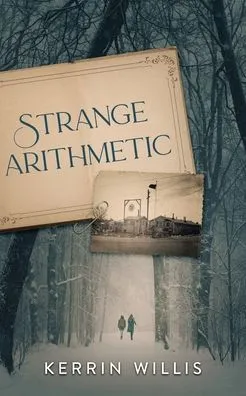
Strange Arithmetic - by Kerrin Willis


In 1945 Maggie O'Callaghan discovers she's pregnant. The father of the baby is an Italian POW being held at Camp Myles Standish in Taunton, Massachusetts. The complications of this situation are many and the resolution is bad all around.

In 2016 Niahm Reilly really wants to be pregnant. The situation is complicated and the resolution turns out to be better than expected.

My husband and I heard this author speak earlier this year at An Unlikely Story Bookstore. We purchased both of the authors' books intending to read them together after we finished Margaret Atwood's recent book of Essays Old Babes in the Wood (which we had just started). Then we learned that Willis' book was our town's One Book One Community selection for this fall, so we moved it up to the top of the pile. We had not known that there was a POW camp nearby. We learned quite a bit of local history from reading this.

Niahm has a special place in her heart for libraries-her deceased mother was a librarian who'd bring her daughter to work with her. However, I cringed at the description of Niahm curled up under her mother's desk by her her "high-heeled feet". WTF?! What self-respecting librarian wears anything other than sensible shoes.


Tuesday, September 19, 2023

I Have Some Questions for You - by Rebecca Makkai


I was intrigued by the description of this book because it reminded me of Adnan's Story which I recently read. The story of Adnan Syed's arrest, trial, and life sentence for the murder of a classmate was made famous on the Serial podcast. Because of the publicity brought on by the podcast, Syed's case was re-opened and he was subsequently found innocent. 

Makkai's book is a novel with a very similar plot. A young girl is found dead in her boarding school swimming pool and suspicions are on Omar Evans, an athletic trainer at the school. Omar is found guilty and a former student, Bodie Kane (a podcaster) brings new light to the crime many years later. Bodie questions whether the wrong person has been jailed. 

Bodie has returned to Granby School to teach a winter intersession on podcasting, when some of her students decide to do a podcast on Thalia Keith's murder, they start exploring new suspects, and ask new questions.

The school library is mentioned a few times. For instance: as a place to look up the word "lusty" in a dictionary, before one could simply go to dictionary.com to discover that it meant "healthy and strong; full of vigor"; as a place to do research back in a time when students didn't all have their own computers; a place where old yearbooks can be found; or where a schoolgirl in 1995 could borrow a map of Connecticut to find the location of the street in New Canaan where her crush lived.

The library held a special place in the history of the Granby school. Started in 1814 a young woman Arsareth Gage founded the school with twelve boys as students in a small schoolhouse. Samuel Granby built the library and chapel six years later. Ultimately Samuel Granby became a sugar daddy to the entire town.

For those on the lookout for Easter Eggs regarding the Syed case, Makkai includes a reference to "the girl whose boyfriend was definitely not working at LensCrafters that day".

Wednesday, July 12, 2023

Saha - by Cho Nam-Joo


In a fictional dystopian place called Town people live in a caste system based on class and privilege. Those who are fortunate enough to be born into the L category are full citizens and live a Brahman-like life. Sahas are the Untouchables. In between are the L2s who can only stay on renewable work visas. Sahas are named for the building they live in. A place where community matters and odd jobs are the only way to earn money. The economic system depends on the three classes, even as Sahas are not officially recognized citizens. Town is run by a nebulous Council of Ministers that manipulates the Sahas and uses them for nefarious research. When Woomi, a girl who is a test subject for this research (aka "the Master Key because she survived a Covid-like pandemic in utero) starts looking for answers she discovers that her data is being stored in a library but is not quite sure how to access it. Breaking into the library she finds a Fahrenheit 451 - esque data storage system wherein people are trained to memorize the data. Woomi talks to her "data storage unit" who tells her that it is "painful to know so much and have to retain it all." Furthermore, "accuracy plummeted" when "the data storage unit realized the information was not being accessed fairly or used in productive ways".

The book is a bit frustrating in that it simply stops, rather than ends. There is no resolution.

The reviews I read all indicated that this work was not as good as the author's other work Kim Jiyoung: Born 1982, but I liked it better.

Tuesday, July 11, 2023

Forever - by Judy Blume


Prior to the release of the much-awaited film version of Are You There God It's Me Margaret I watched the Judy Blume Forever documentary which featured interviews with the beloved author as well as many who grew up reading her books. In discussing the controversial Forever (who could forget Ralph?) one of the featured interviewees indicated that she realized re-reading the book as an adult that Michael really was a "dick". Gauntlet thrown. I had to read it again myself. I expect it has been over 40 years since I read it, but I know I read it several times as a teenager. My single Mom was cool about it and I didn't have to hide under the covers to read it. 

Reading it as an almost-sixty-year old it is clear that Michael is rather controlling, and the awkward sex scenes were definitely more cringe-worthy than I remembered. I laughed when I read the description of Katherine's mother as five foot six inches and 109 pounds and how concerned she was that her thighs were getting flabby. I also am five foot six, but I weigh twice that. Thankfully, I gave up worrying about flab ages ago. One thing I'd not remembered is that Katherine's mother is also a librarian. So there's that.

Tuesday, June 20, 2023

Wicked: The Life and Times of the Wicked Witch of the West - by Gregory Maguire

I first tried to read this book twenty or so years ago, but the demands of taking care of a preschooler kept me from keeping up with this rather lengthy novel, so I abandoned it. I also reasoned (at the time) that it might make more sense once I read the entire "Oz" series. I came across a copy last summer at a used bookstore for $1 and decided to give it another try. It took about a month, but I made it through this time (although I didn't remember enough about the original Oz books for it to have made any difference in my understanding).

Maguire's adaptation is the story of Elphaba (aka The Wicked Witch of the West) - a misunderstood woman (and college roommate of Glinda). Much of the story surrounds a debate around the rights of Animals (who can talk), and animals (who cannot). It seemed rather prescient for a book written in 1995.

Several characters work in libraries. Elphaba works with Doctor Dillamond (a Goat) in a "lab and library". She also helps Doctor Dillamond with research at the Crage Hall Library, looking for evidence that Animals should have any restrictions placed upon them removed.

Another character (Boq) takes a job in the Three Queens Library "under the watchful eye of a titanic Rhinocerus, the head archival librarian". 

Ozma is identified in a number of ways, including "Librarian" who "did nothing but read genealogies for her whole life long". Other identities include

  • Ozma the Mendacious
  • Ozma the Warrior
  • Ozma the Scarcely Beloved  
  • Ozma the Bilious

There are other mentions of libraries throughout, making it clear that they were an inherent part of the Oz landscape.

Wednesday, November 30, 2022

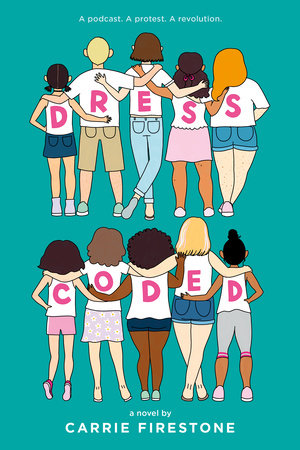
Dress Coded - by Carrie Firestone


I do love Little Free Libraries, of which there are about half a dozen near our weekend home in Fairhaven, Massachusetts. I found this book in the LFL located closest to our house. This novel tells of Molly Frost and her comrades at Fisher Middle School who are sick of having their clothing monitored. Shorts and skirts that aren't longer than the end of one's fingertips, bare shoulders, and other "distracting" attire is cause for being "coded". When Molly's friend Olivia is humiliated by the principal for exposing her shoulders because she removed her sweatshirt to tie around her waist to hide the period blood on her white pants Molly starts a podcast to protest. The protest gains serious momentum which ends with an Occupation in the schoolyard.

The school library, the public library, and a "fantasy library" where Molly imagines a decent older brother who protects her from the bullies who pelt her with ice balls are all part of this story.

Molly's mother attends a lecture at the local public library on "how guinea fowl and possums are better than chemicals for managing ticks."

The school library is a place where parents meet to discuss an upcoming end-of-year trip; where (girl) students are sent to have their clothing scrutinized; and where Molly and her friend Navya meet to write their speech for the School Board meeting. While writing their notes they find an ally in Mr. Beam, the school librarian, who "drops a blue folder on the table, winks, adjusts his tie, and walks away...It's stacked with articles about dress code protests and how, by law, student dress codes cannot be evenly enforced". You can always count on a librarian for assistance with subversive activity.


Friday, April 29, 2022

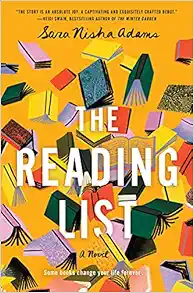
The Reading List - by Sara Nisha Adams


Libraries change lives. The books we read, the people we meet, the physical space, the programs all create the magic, and community of the library. 

When indifferent library worker Aleisha finds a reading list inside of a returned book she not only changes her own life by reading the eight books, she begins to make a difference in the lives of some of the other library patrons as well. Most notable among these is recently widowed Mukesh Patel, who has yet to return the long-overdue book his wife last read The Time Traveler's Wife. Although Mukesh was never much of a reader, his late wife Naina was an avid reader and library user. Through the magic of books (and the library) Mukesh finds a new connection with his beloved granddaughter Priya. It turns out they both love Louisa May Alcott's Little Women and Mukesh begins to think about everyone who is connected by the books they read.

One of the first things I learned in Library School were Ranganathan's Five Laws of Library Science. Although the rules were written almost a century ago, they remain quite relevant:
  • Books are for use
  • Every reader their book
  • Every book its reader
  • Save the time of the reader
  • A library is a growing organism 
Each of these laws is evident in this work about people connecting through books and libraries.