Showing posts with label shush. Show all posts

Wednesday, July 2, 2025

Apex Hides the Hurt - by Colson Whitehead

A nomenclature consultant is paid to name things, mainly products, but in this satire the unnamed hero is hired to pick a new name for the town of Winthrop. Winthrop has a hotel, a bar, and of course a library. In fact one of the town's former librarians wrote a history of the town. This is provided to the consultant who supposes that "writing your town's local history was the librarian version of climbing Everest". Maybe so, as long as it doesn't get too badly edited for not being "ass-kissy" enough. 

While the consultant does meet one of the librarians (Beverly) and has some between-the-stacks type fantasies about her, he doesn't really get to use the library as it is being moved from one building to another during his visit.  Descriptions of the nearly empty space have a definite dystopian air

The place was a husk. The books were gone. Where he would usually be intimidated by an army of daunting spines, there were only dust-ball rinds and Dewey decimal grave markers. As if by consensus, all the educational posters and maps had cast out their top right-hand corner tacks so that their undersides bowed over like blades of grass. Nothing would be referenced this afternoon, save indomitable market forces.

Even the globe was gone. Over there on a table in the corner he saw the stand, the bronze pincers that once held the world in place, but the world was gone.

One would be forgiven for thinking that this was a description of a contemporary library once Moms for Liberty had their way with it. 

Beverly "a young white chick with dyed black hair [and] twenty or forty bracelets on her wrists...made an unlikely librarian, stereotype-wise". Nevertheless the consultant decides that she must be wearing "one bracelet for every shush".

A quick fun read that I picked up at my local library.

Monday, March 10, 2025

Innocence Under the Elms - by Louise Dickinson Rich

I've known about this memoir about growing up in Bridgewater, Massachusetts (at the turn of the twentieth century) for some time. Many in my adopted hometown had told me about it and I finally got around to reading it just as I was moving out of Bridgewater after 27 and a half years. 

When I arrived in Bridgewater in 1997 one of the first things I did was to get a library card. Shortly after that I gave birth to my only child with whom I spent many hours in the library, and reading books at home together that we checked out. I also served for three terms on the Board of the Bridgewater Public Library (one as President). Therefore, I especially enjoyed reading about Rich's love of the same library. The Library, in fact, was also the place of the author's "first paid job".

The town, it seemed, had allocated a sum of money to be used for cleaning and refurbishing the Public Library. The two librarians, Miss Lucia Christian (Adults) and Miss Rachel Crocker (Children), considered it essential that in addition to the necessary painting and floor finishing, every book in the place should be taken down and dusted.

In those days the shelves were closed to the public. If you wanted a book, you told the librarian about it, and she went and got it for you, while you waited outside the carved wooden fence that separated the sheep from the goats. The shelves came very decidedly under the category of Sacred Grouind, available only to the librarians or their duly empowered agents and assistants and jealously guarded from unlawful hands and eyes. There was no random and casual browsing by goats, who if they did nothing worse, could surely be counted upon to put the books back in the wrong places. Under this system some books weren't even touched, let alone read, from one year's end to the next. It wasn't very surprising or unnatural that during that time they collected quite a coating of dust. And who better could be found to cope with the situation than the little Dickinson girls, who in addition to being Reliable, were Readers and Respecters of Books, and who, moreover, could be expected because of their tender years to work for much less than a regular cleaning woman would?

We were paid, I think, five cents an hour, which seemed like the wealth of Croesus to us.

From there the author describes the additional benefits of working in the library "turning us loose in the library was like turning an alcoholic loose in the wine cellar...those five or six weeks of dusting books contributed more to our so-called education than sixteen years...of school attendance". By stopping to read the books they were dusting Louise and Alice learned that not everyone held the same opinion about everything "you could believe anything you wanted to! You didn't have to accept what anyone, even teachers, told you!" Quite a heady lesson that we'd do well to remember a century later.

And that's not all! There was more exciting library work for Louise and her sister Alice as they got a bit older. 

The following summer, Miss Christian and Miss Crocker were obliged for personal reasons to take their two weeks' vacation at the same time. ..Faced with the the necessity of leaving their sacred trust in untested hands, they thought of the little Dickinson girls...We went into the library for a week or so to learn the ropes; and then Miss Christian and Miss Crocker took off, leaving us in charge.

Dickinson goes on to describe how she and her sister stamped out books, collected fines, and "frowning at anyone who raised his voice above the lawful whisper". They also determined on their own to "give people not what they wanted to read" but what Louise and Alice determined they should read "for their own good". And so we see why libraries should be run by actual librarians, and not school children, no matter how reliable they might be.

Sunday, December 29, 2024

Nightbitch (the movie)

First and foremost I must say how much I hate the word "bitch". I avoid using it in just about any context, which is not to say I never say it. For instance, I might use it if it were part of the title of a movie I watched.


This film is tagged as Body Horror, Dark Comedy, Comedy, and Horror on IMDB. Yes, all of those things. Most importantly though, is that the library, and a librarian play piviotal roles in this film. Although the unnamed main character (Amy Adams) claims to hate Book Babies at the library and the other Moms she meets there, she discovers that they aren't so bad after all, and furthermore, the the librarian, Norma, (played by Jessica Harper) knows a lot more than just how to shush loud patrons. She has insights into motherhood as well as book knowledge. Our heroine not only recognizes Norma's worth, she commemorates it.

Thursday, October 3, 2024

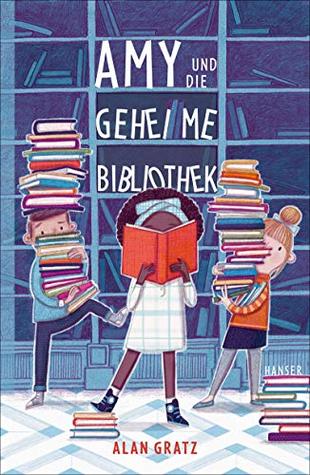
Ban This Book - by Alan Gratz


 When Amy Anne learns that her favorite book, From the Mixed Up Files of Mrs. Basil E. Frankweiler, along with a host of other works, has been removed from her school library she and her friends start the BBLL (Banned Books Locker Library) so that they can share the books with classmates who want to read them. As the book bans continue, and their beloved school librarian Mrs. Jones is replaced by a "shushing" imposter, they decide to fill out reconsideration requests for ALL the books in the library as a form of civil disobedience. They have no problem coming up with a reason for each book, from witchcraft to sexual content to violence to "it might confuse children", or in the case of a book of riddles, it might make kids feel bad if they can't figure out the answer. Never mind that it might make them feel good if they CAN figure it out.

Amy Anne is surprised to learn that there is a field of study called "library science" and enlists the help of Mrs. Jones to set up the BBLL. Mrs. Jones provides Amy Anne with some old equipment including a date stamp card. Once Amy has this she feels like a real librarian and only needed "a pair of glasses on a chain" to be ready for her "official librarian membership card."

One of the banned books is Judy Blume's classic work Are You There God? It's Me Margaret. Mrs. Jones explains that back in the day when due date stamps were used that libraries also used cards and pockets to keep track of who had checked out the books. She shows Amy Anne some old books that still have the cards and pockets. It is here that she learns that the parent behind most of the challenges (Mrs. Spencer) checked out Blume's work multiple times when she was a student at Shelbourne Elementary. Amy Anne "outs" Mrs. Spencer, which, let's face it, she kind of deserved. However, Mrs. Jones does take the opportunity to explain to Amy Anne about patron privacy.


Tuesday, September 10, 2024

The Dragon in the Library - by Louie Stowell


Every library has a dragon sleeping underneath it. The dragon needs stories and quiet to keep it asleep lest it awaken and wreak havoc upon the world. It is also true that all librarians are wizards and are in charge of keeping the dragon in its dream state.

Young Kit discovers that she is a wizard when she meets Faith Braithwaite, Head Librarian of the Chatsworth Library "a boring-looking concrete building with automatic doors that didn't work right..."

I had some concerns with some of the things in this book:

In one passage Faith tells Kit and her friends that there are certain books that they keep away from the general public "because they're dangerous...[they] have power even if you're not a wizard". She goes on to explain that they can change you into a marshmallow if you're not careful, but frankly it just sounds like good old censorship to me. Dangerous books indeed!

In another Faith asks Kit and her friends to help shelve some books: 

"You just need to match the number on the spine to the number on one of the shelves. There's a list of where you'll find each number, but I'm sure you'll get the hang of it quickly". Right, because everyone knows that there is no reason to train people who work in libraries how to properly shelve books. Sheesh.

Faith also asks Kit to do story time, even though Kit doesn't like to read out loud. Kit in fact does a crappy job of it. Well, she just needs to practice. Story time takes more preparation than simply picking up a book and reading it to a group of kids. It's takes planning. At the very least we'd expect that the person conducting the story time had read the book at least one time before! 

Librarians may not be wizards, but we are trained professionals.

One of the sixty books about dragons I'm reading for the year of the dragon in which I turned sixty.


Tuesday, September 3, 2024

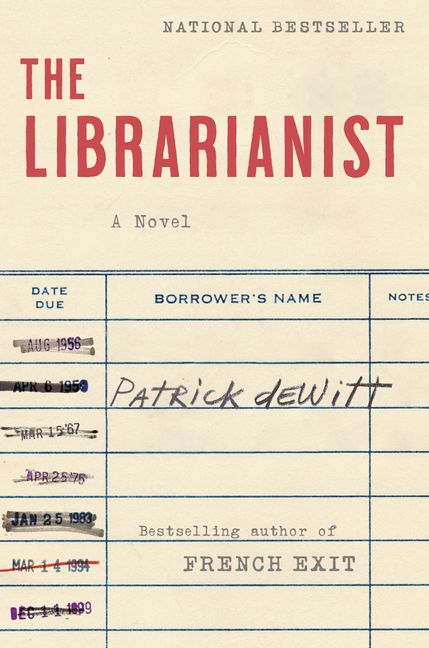
The Librarianist - by Patrick deWitt


Bob Comet is a retired librarian who lives in a mint house. I also am a retired librarian who lives in a mint house (or at least I will once the renovations are done). Beyond this the character in this novel and I don't have much in common. 

deWitt's book reminds me a bit of Anne Tyler's books. There is a lot of description of what happens in the life of the characters, but we don't get a lot of insight into how they processed their experiences. There isn't even much about Bob's library work, although we do learn why he became interested in it. The only passage I marked was this unfortunate description of Bob's boss

Never has there been a librarian less inclined, less suitable to represent the limitless glory of the language arts than Miss Ogilvie. She cared not at all for literacy or the perpetuation of any one school or author, and Bob never one saw her take up a book for pleasure. Her function, as she saw it, was to maintain the sacred nonnoise of the library environment. "What these people do with the silence is beyond my purview," Miss Ogilivie told Bob. "But silence they shall have." The human voice, when presented above the level of a whisper, invigorated her with what could be named a plain hate...

I picked this book up at Thunder Road Books in New Jersey during a recent road trip to Maryland. This bookstore is profiled in The Secret Life of Booksellers and Librarians (which I will be blogging about soon, once my husband and I have finished reading it together).


Thursday, July 11, 2024

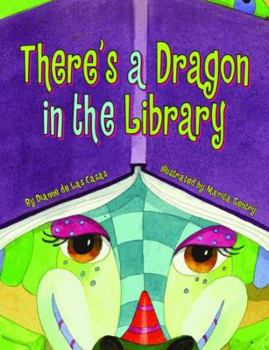
There's a Dragon in the Library - by Dianne de Las Casas


No one believes Max when he tells them there is a dragon eating all the books in the library - not his mother, not his father, not the head librarian, not his teacher. Only Officer Riley suggests that they go and look, but by then it is too late. 

Of particular note is that the head librarian is a man. Because of course the head librarian is a man. Leadership positions in libraries always go to men. We can't really expect otherwise though. It's just so hard to find women in the field.😏

One of the sixty books about dragons I'm reading this year of the dragon, in which I turn 60.

Wednesday, February 7, 2024

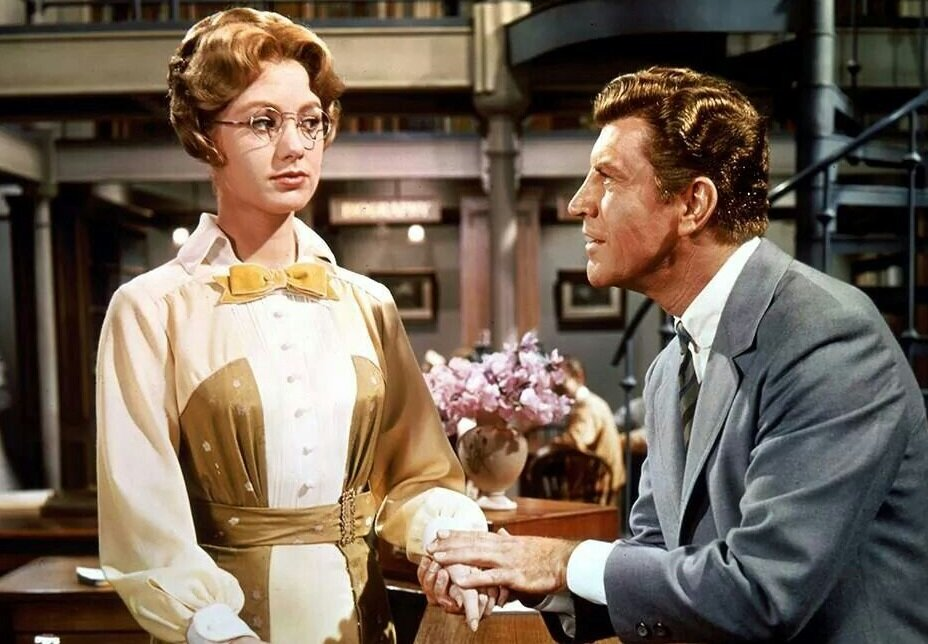
The Music Man (the movie)


Prof. Harold Hill sexually harasses Librarian Marian Paroo in The Music Man 

I was the guest speaker in my husband's class earlier this week. The lesson for the day was how to find information to do research on Coffee. The day before the class he said he liked to start his classes with some music and asked me to suggest something. "How about Marian Librarian" said I. 


We used a video we found on YouTube. I realized while we were showing it to the class that it had been a long while since I'd seen it (certainly not since before the Me Too movement) and so I felt compelled, after watching it with the class, to mention that this display of sexual harassment was completely inappropriate.

Nevertheless James and I decided to watch the entire two-and-a-half-hour movie together that evening (it actually took two nights because the movie is so very long). I can't deny that it is a fun movie with some catchy tunes, even though the cringe-worthy sexual harassment is all too familiar to those of us who work in public services.

There is almost too much to say about this, so I will stick with the highlights.

First of all Shirley Jones as Marian is, without a doubt, the most iconic of all fictional librarians - a "sadder but wiser"... "stuck up"..."maiden lady librarian who gives piano". Lucky for swindler "Professor" Harold Hill (Robert Preston) that type of woman is exactly his "speciality".

What I remembered about Marian was that she curated a fine collection of materials for use by the citizens of River City, Iowa and was a defender against the would-be censors. Important to note, however, is that Eulalie Shinn, the Mayor's wife (Hermione Gingold), complained about what her daughter was reading, but was unconcerned that others might read the same book. Parents always have the right to dictate what their own children can read. Something Mrs. Shinn understood. 

What I didn't remember was Marian's own heinous crime of ripping a page out of one of the library's books! This is simply not acceptable - even if the librarian does believe that she is going to save the City from itself by doing so. 

There were some interesting things to note about the library hours. For instance, when Marian returns from work in the evening her mother asks "Library open later than usual?" "It always is" is Marian's un-ironic reply. The library was also open on the Fourth of July.

There is some serious "shush-ing" going on at the River City Public Library. Even Marian herself gets shushed by some of her patrons.

And Professor Harold Hill? As my late Grandmother used to say about my Uncle Dave "he can fall in a pile of shit and come out smelling like a rose"

Friday, November 17, 2023

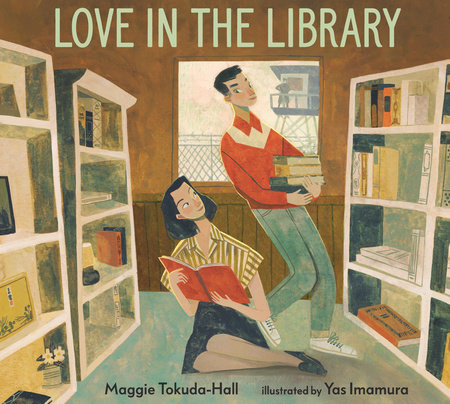
Love in the Library - by Maggie Tokuda-Hall


In her Author's Note Tokuda-Hall tells the readers that this is the story of her maternal grandparents who met in Minidoka, a Japanese incarceration camp in Idaho. Tama (her grandmother) was the camp librarian, although "she didn't know how to be a librarian...In the camps people did the jobs that needed doing." Her grandmother had taken the job because "she liked books". George (Tokuda-Hall's grandfather) came every day to check out books. Tama questioned whether he could actually be reading all the long books he checked out. No, he wasn't reading them all. He was "only human". And the realization that she was the real reason he came every day dawned on her. Their love grew amidst their  whispers. 

George's "voice was so big it barely fit in the library..." Tama "held up her finger to remind him of the rules. They were in a library, after all."  

The Author's note also connects the story of Minidoka to current events. 

As much as I would hope this would be a story of a distant past, it is not. It's very much the story of America here and now. The racism the put my grandparents into Minidoka is the same hate that keeps children in cages on our border. It's the myth of white supremacy that brought slavery to our past and allows the police to murder Black people in our present. It's the same fear that brings Muslim bans. It's the same contempt that creates voter suppression, medical apartheid, and food deserts. The same cruelty that carved reservations out of stolen, sovereign land, that paved the Trail of Tears. Hate is not a virus; it is an American tradition.

Tokuda-Hall's author's note sparked controversy when Scholastic asked her to edit it in order to include the work in Scholastic's diversity-focused Rising Voices collection earlier this year. Tokuda-Hall refused and Scholastic ultimately issued an apology. More information about the request, Tokuda-Hall's response, and a link to the apology can be found in this article from Publisher's Weekly  

Wednesday, January 4, 2023

Only Murders in the Building - Season 2 episode 8 "Hello Darkness"

 I watched season 2 of this Hulu series back in the summer when it first aired and I've been meaning to write about it ever since. Now that I am on sabbatical I had time to re-watch it and make my post.

For the uninitiated Only Murders in the Building is a comedy series starring Steve Martin, Martin Short, and Selena Gomez. The three play neighbors in a posh apartment building in Manhattan who solve crimes  (only murders in the building) together while producing a podcast.

Season 2, episode 8 takes place during a blackout. Two of the other tenants Lester (Michael Cyril Creighton) and Jonathan (Jason Veasey) begin to flirt by asking each other for batteries for their flashlights. Lester invites Jonathan into his apartment where the two begin to get to know each other by candlelight.

Lester is the Assistant Director of Collection Development at the Central Manhattan Public Library.  Jonathan plays a hyena in the Broadway production of The Lion King but yearns for something more. "What could a Broadway star want to be instead?" asks Lester. "Don't laugh" comes the reply. "I've always wanted to be a children's librarian". Incredulous Lester responds "I'm a librarian". "Shut up!" says Jonathan. Lester then demonstrates his wit with the retort "That's our slogan!" 

Their poignant duet of "The Sound of Silence" not only brings these two together, but the entire building as well.


Monday, October 24, 2022

The Book of Form and Emptiness - by Ruth Ozeki

Please note: Because I listened to this book, there may be misspellings in character names, and quotes may not be exactly as written in the print version.

There are too many levels of meta in this one for me to follow them all. The book, in addition to narrating the lives of the characters, is also narrating itself.  

A host of rich characters populates this book: these include Corey, a children's librarian; Annabelle, a would-be librarian who had to leave library school when she became pregnant; Benny, Annabelle's son - a truant who hears voices and uses the local public library to hide out; Aikon a decluttering guru and bestselling author; and a band of colorful library patrons. 

After Annabelle's husband, Kenji, dies in a freak accident she has a hard time coping with raising her son, doing her job clipping news stories for clients, and running her home. As she begins to hoard, Benny struggles with his own mental illness and he begins to have auditory hallucinations. He and his mother share a love for libraries and both find refuge in their local public library. 

I listened to this book on audio, and there was so much in it, I will limit myself here to commenting only on the notes I made while listening.

I start with my favorite quote from the book. Librarian Corey shows up to help Annabelle clear out her house wearing a shirt that reads: "Librarian - because bad-ass motherfucker isn't an official job title".

As she attempts to console Annabelle, who is feeling completely overwhelmed and begins to sob, Corey "shushes" her. As a librarian she, of course, knows from shushing.

The books in the library calmed the voices in Benny's head. Books are described as sacred, and the libraries as temples. Stopping at the library on the way back from a psychiatrist appointment was a treat.

In an attempt to "liberate" the voices from his body, Benny injures himself with a thumbtack. Thumbtacks are described as dangerous, but not as dangerous as books. This was especially striking to me as I consider the new age of book banning that we are currently experiencing. Although I cannot recall the exact context of this description of dangerous books in Ozeki's work, it is appropriate to say that some believe that the ideas found in books are more dangerous than any of the myriad real life-threatening dangers we face daily.

Although Annabelle didn't finish library school, she clearly has a librarian's keen sense for finding elusive information. When Benny disappears she is aware that he may be with his friend who calls herself The Aleph. Searching Aleph alone wasn't enough to find her. Annabelle knew to search for "The Aleph". 

The Aleph is an artist who specializes in snow globes. The best one she makes is one for Benny that features a library scene with books and letters floating in the water.

The question "What is real?" is at the center of this work. It is a question Benny explores at the behest of The B-Man one of the eccentric patrons of the public library. It is what makes this work so meta. Is the book narrating itself, or is it Benny's head? 

Thursday, July 28, 2022

Anything's Possible (the movie)


Kelsa (Eva Reign) likes animals and flowers. She is smart and pretty and loves her friends. She is also trans. Khal (Abubakr Ali) is smitten with Kelsa who is in his art class. He is not sure how his family would take it if he dated a trans girl, and he is sure he would lose his best friend Otis (Grant Reynolds). 

Ultimately, this is simply a sweet teenage romance with a standard boy meets girl, boy loses girl, boy gets girl back arc. The boy-loses-girl piece takes place in the school library, where Kelsa and Khal's loud argument earns them a severe "shushing". 

Khal also has some old card catalog drawers in his bedroom. It is not clear what he uses them for, but they do look cool.

Director Billy Porter's heart shines bright in this one.

Friday, April 29, 2022

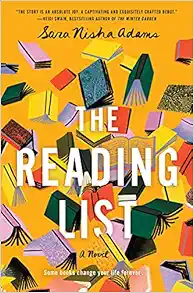
The Reading List - by Sara Nisha Adams


Libraries change lives. The books we read, the people we meet, the physical space, the programs all create the magic, and community of the library. 

When indifferent library worker Aleisha finds a reading list inside of a returned book she not only changes her own life by reading the eight books, she begins to make a difference in the lives of some of the other library patrons as well. Most notable among these is recently widowed Mukesh Patel, who has yet to return the long-overdue book his wife last read The Time Traveler's Wife. Although Mukesh was never much of a reader, his late wife Naina was an avid reader and library user. Through the magic of books (and the library) Mukesh finds a new connection with his beloved granddaughter Priya. It turns out they both love Louisa May Alcott's Little Women and Mukesh begins to think about everyone who is connected by the books they read.

One of the first things I learned in Library School were Ranganathan's Five Laws of Library Science. Although the rules were written almost a century ago, they remain quite relevant:
  • Books are for use
  • Every reader their book
  • Every book its reader
  • Save the time of the reader
  • A library is a growing organism 
Each of these laws is evident in this work about people connecting through books and libraries.

Wednesday, September 15, 2021

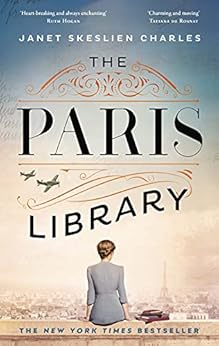
The Paris Library - by Janet Skeslien Charles


Numbers floated round my head like stars. 823. The numbers were the key to new life. 822. Constellations of hope. 841. In my bedroom late at night, in the morning on the way to get croissants, series after series - 810,840,890-formed in front of my eyes. They represented freedom, the future.
So begins the story of Odile Souchet who thinks in Dewey Decimal numbers. She is thrilled to get a job at the American Library in Paris in 1939 where she can put both her library degree and her ability to speak English to good use. She has always loved books and the library, a place she frequented with her aunt as a child.  

Her job becomes a lot more challenging when Nazi's occupy her beloved "city of readers". The subversive librarians (including the aptly named Miss Reeder) find ways to continue to provide books and services to their Jewish patrons, even after the library is closed to them. Nazi's also looted libraries as well as the private collection of "prominent Jewish families" Additionally, censors regularly blacked out news from the daily papers making the sharing of knowledge that much more difficult. "Fake news" in the form of rumors also shakes up the library as a "sanctuary of facts" as patrons share misinformation with each other. 

Shushing is of course a time-honored tradition in libraries (at least as far as popular culture is concerned). While I will admit to having shushed a few exceptionally loud library users (usually university administrators) I have also, ironically, been shushed myself by people trying to study in the library, just as librarian Odile was shushed when she "screamed with joy" after returning to the library after 10 days of being away and seeing her brother's girlfriend Bitsi (who was also the children's librarian). In one passage Bitsi is described as "holding an open book over her head, like it's a roof" as if she is telling "the children that books are a sanctuary".

The story oscillates between Paris during World War II and Froid, Montana in the 1980s. Virtually all of the passages I marked while reading this are in the sections that take place in France. The only exception comes very late in the book. Lily, Odile's young neighbor storms "Dad's wife took away Forever!...She said Judy Blume writes 'smut'.' Censorship is wrong!" To which Odile responds "So is throwing a fit instead of sitting down to have a conversation...You should ask Ellie what she fears." She goes on to explain that "Ellie's scared the book will put ideas in your head, scared you'll want to experiment with sex." Lily retorts "I read Out of Africa and disn't establish a coffee plantation in Kenya!" I of course agree that censorship is wrong. I also agree that having a conversation is better than throwing a fit.

Friday, May 14, 2021

The Midnight Library - by Matt Haig

Full of regrets, recently unemployed, and grieving the death of her cat Volts,  Nora Seed decides to take her own life. In the twilight world between the life and death Nora is surprised to find herself in a library and face-to-face with Mrs Elm, her school librarian from many years before, the person who had told her that her father had died when she was fourteen years old.

The Midnight Library is filled with green books, each one represents a life Nora didn't live in the multiverse. She can pick out any book and find out what her life would have been like if she had made different choices at each of her turning points. There are many possible lives that Nora is given the opportunity to visit. Would she like to be a rock star? a pub owner? a glaciologist? a vintner? What if she had married Dan rather than canceling at the last minute? What if she had just gone on that coffee date with Ash, where would she be now? Is there any world in which Volts is still alive?

Nora also meets other "sliders" - those like her who are moving between lives not lived. Each "slider" has their own guide and space in which to explore their lives. Not all sliders travel via library books - Hugo travels through old VHS tapes in a video store, with his deceased uncle as a guide, for instance. 

In the aptly titled chapter "God and other Librarians" the omniscience of Mrs Elm as Nora's guide is made abundantly clear, as is her role as a librarian. She explains to Nora that "The library has strict rules. Books are precious. You have to treat them carefully." 

The librarian stereotype is on display as well when Mrs Elm admonishes Nora to "Please be quiet...This is a library".

Ultimately Nora wishes to escape the Midnight Library, especially when she realizes that it is about to self destruct, but how does one do that when there are no doors? Mrs Elm to the rescue: "Who needs a door when you have a book?" she asks.

A new spin on an old theme. Anyone who grew up watching The Wizard of Oz won't be surprised by the ending.


Thursday, January 21, 2021

Rufus M - by Eleanor Estes

Back in September I attended a webinar with the librarian's librarian Nancy Pearl. She was doing a virtual book tour for her most recent work The Writer's Library (which I have not yet read). She said something that I wish more people would take to heart: "Any book your haven't read is a new book". I have never understood the obsession some people have with buying some hot new book, as if there aren't literally millions of other things they could be reading while they wait for their turn on the waiting list at the library, or until the book is available in paperback. During the Q&A someone asked about library-centric books and it was here that I learned about Rufus M. 

Pearl specifically said that the first chapter was especially worthwhile for demonstrating the magic of getting a library card. Although the book was published in 1943 this was indeed a "new book" to me. And I imagine even almost 80 years after its first publication that the first chapter will still resonate with anyone who has earned the privilege of getting their first library card. I wonder how many people remember that moment? 

Rufus is tasked with making sure his hands are clean, and learning to write his name before he can get his own card and check out a book. The librarian makes clear both that she wants Rufus to have a card, and that having one is a serious responsibility. She is kind yet firm in her insistence that Rufus learn to sign his own name in order for him to get his own card. 

There is a bit of "shushing" action in this chapter as well. 

There are a dozen other episodic chapters in this work, the library is mentioned again in a few of them. This work will likely appeal to those who enjoy Beverly Cleary's works.


Nancy Pearl discusses her book The Writer's Library


Friday, September 11, 2020

Bats at the Library - by Brian Lies


While I don't much like bats, especially after having had one in my house, I do understand that they are beneficial both as pollinators and as mosquito eaters. In addition to these two helpful qualities, the bats in this book are also library advocates! Bats of all ages find joy in the library at night when they discover an open window. They do research, listen to stories, explore the building, and even get "shushed". 

A lovely celebrations of libraries.

Tuesday, August 18, 2020

The SEAL's Rebel Librarian - by Anne Calhoun


August is Read-A-Romance Month, and while I don't read many romances, I do find them to be good escape. I also like to be thematic, so each August I do a bit of summer reading in the genre. Earlier this month I read some LGBTQ YA lit, What If It's Us by Becky Albertalli and Adam Silvera, which was a sweet story but, sadly, had no librarian. Therefore, I had no choice but find another romance novel to read, one worthy of this blog. And a funny thing happened when I started to Google "romance novels featuring librarians". The autofill completed my search string with "navy seals" before I could type the word "librarian". I laughed wondering why the algorithm would make such a suggestion for me while also thinking that there really is a reading fetish for everyone (and far be it for me to question someone else's choices). But then a really strange thing happened when I finished my search the way I intended. The list of recommendations included a novel featuring both a librarian and a navy SEAL. It seemed the bibliosphere was trying to tell me something, so I downloaded the book and started reading. 

This is a quick read (a novella) which wastes no time getting to the sex. Librarian Erin recognizes that her affair with student/veteran Jack Powell is not sanctioned by the university. "She was in a leadership role at the college, bound by the same rules governing relationships as a professor or administrator." Nevertheless, after initially rejecting his offer of a drink, she throws caution to the wind and invites him to her place (ostensibly for coffee), and then to one of the group study rooms in the library where Jack actually "shushes" Erin and is sure to tell her that they're "gonna have to be quiet". As if she didn't know.

The sex in this one comes early and often, as such just about every possible word choice is used to describe body parts, and articles of clothing. This was unfortunate for me as I really don't find the words "slacks" or "panties" sexy at all, and each was used quite a few times. Final tally: Panties-9; Slacks-6. 

A little better editing would have been in order, especially since the audience was sure to include some anal-retentive librarians. It was unfortunate for me that I noticed the following inconsistency: prior to Jack and Erin's first sexual encounter, when they met by happenstance at the motorcycle dealer where Erin is about to put down a deposit, she is described as wearing a green turtleneck. However, somehow when they got back to her place and undress he's fumbling with the buttons on her blouse. So which is she wearing a turtleneck or a button-down blouse? So distracting.

The most off-putting thing for me though was the use of the word "pussies" to describe those who ride certain models of motorcycles that are not perceived to be as macho as other models. I frankly almost stopped reading when I got to that part. Anyone who is so uncomfortable in his own masculinity that he would resort to this kind of name calling will never find himself between the stacks with this librarian.

Monday, May 20, 2019

Death Overdue-by Allison Brook


It's Mystery Month May and so, although I don't really like mystery novels, I read one. Of course I picked one about a librarian.

This is a rather light mystery about a young librarian, Carrie, who with the help of a friendly ghost, Evelyn Havens (former library employee, and aunt to Carrie's nemisis "prune-faced" Dorothy), solves the 15-year old murder of Laura (another library employee) in the fictional town of Clover Ridge, Connecticut.

Some interesting tidbits worthy of comment here (besides the fact that Evelyn "shushes" Carrie when she first meets her).

Dorothy is quite an unpleasant sort and furthermore had been envious of Laura back in the day "because all the patrons liked her and wanted her to help them". Evelyn had tried to explain to Dorothy that she should smile more and speak in a "pleasant manner" so that patrons would like her too. Dorothy's response had been that
her job was to answer questions and look up information. She wasn't paid to be an entertainer as well 
And here I must give some acknowledgement to Dorothy's point of view. The expectation that we smile, and that part of our work must involve getting people to like us is a burden demanded heavily upon women. Somehow I doubt that if Dorothy had been a man anyone would have made the same suggestion. In fact, I expect that the opposite would have been true. Her serious manner would have instead have been seen as a sign that she knew what she was talking about.

Meanwhile, Carrie endures a bit of "mansplaining" from police Lieutenant Mathers who suggests that she can find out more about Laura's murder from the newspaper articles online, which she can read at the library.

I think the best line though (and what obviously makes this fiction is) when Carrie is offered the job of head of programs and events and is informed that while the work is demanding "the salary's quite good" LOL.

Thursday, May 9, 2019

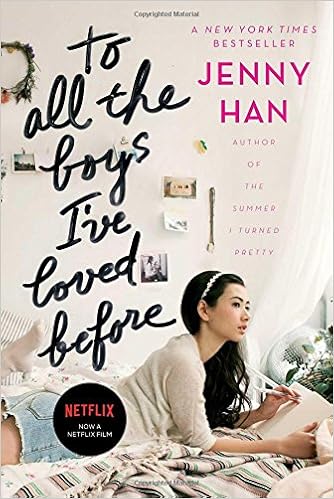
To All the Boys I've Loved Before - by Jenny Han


What could have been a trite YA comedy of errors about a teenager who wants to die of embarrassment was, in fact, a much more thoughtful story.

High School junior Lara Jean has a complicated love life, but at least she knows that the library is a good place to study with the boys she's dating/wants to date/pretends to date. She also considers the library a good place to volunteer (although as far as I can tell she never actually follows through on that plan). And the only library book she mentions is one she bought at the Friends book sale. At least it was cheap (75¢) if not free. The only appearance a librarian makes is, of course, to shush.

I picked up this book at the Little Free Library at Borderland State Park. A fun, quick read.