Showing posts with label reading. Show all posts

Friday, April 29, 2022

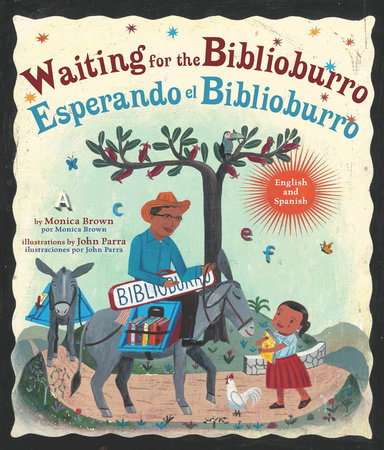
The Reading List - by Sara Nisha Adams


Libraries change lives. The books we read, the people we meet, the physical space, the programs all create the magic, and community of the library. 

When indifferent library worker Aleisha finds a reading list inside of a returned book she not only changes her own life by reading the eight books, she begins to make a difference in the lives of some of the other library patrons as well. Most notable among these is recently widowed Mukesh Patel, who has yet to return the long-overdue book his wife last read The Time Traveler's Wife. Although Mukesh was never much of a reader, his late wife Naina was an avid reader and library user. Through the magic of books (and the library) Mukesh finds a new connection with his beloved granddaughter Priya. It turns out they both love Louisa May Alcott's Little Women and Mukesh begins to think about everyone who is connected by the books they read.

One of the first things I learned in Library School were Ranganathan's Five Laws of Library Science. Although the rules were written almost a century ago, they remain quite relevant:
  • Books are for use
  • Every reader their book
  • Every book its reader
  • Save the time of the reader
  • A library is a growing organism 
Each of these laws is evident in this work about people connecting through books and libraries.

Wednesday, September 9, 2020

This is the Story of a Happy Marriage - by Ann Patchett


In July I logged in to a virtual author event - "Bookshop Author's Unite" - which featured three bookstore owners who were also authors: Jeff Kinney owner of An Unlikely Story in Plainville, Massachusetts (the only store of the three I've been to); Ann Patchett owner of Parnassus Books in Nashville, Tennessee; and Peter H. Reynolds owner of Blue Bunny Books in Dedham, Massachusetts. Fifty-six year old Ms. Patchett spoke first and I especially liked what she said about the pandemic giving her an opportunity to slow down. Without a book tour to go on she was able to enjoy the time she was spending with her husband and dog and wondered if perhaps she should just rethink the whole book tour idea as being a waste of precious resources. She also mentioned that she had recently been having trouble finding something she really wanted to read. As a fifty-six year old myself who also has been taking this time to enjoy spending time with my husband and dog, and wondering how the pandemic might be changing our collective minds about sustainable practices, and who has likewise had a hard time finding a book that I wanted to read past page 50 I could relate, and I wondered if perhaps I had read any of her books. Turns out not only that I had, but that the last line of my blog post suggested that I would have to look for more of her books, but apparently I hadn't. Until now.

I picked this collection of essays mainly because it was on the shelf at the library where I work. The building is open with limited services and hours so although I am mainly working at home I walked over and checked it out. Not surprisingly, as an author Patchett has a lot to say about books, reading, and libraries. 

In the essay "Fact vs. Fiction" Patchett explains about the two kinds of educational experiences one has in college: passive and active

In the first you are a little bird in the nest with your beak stretched open wide and the professor gathers up all the information you need and drops it down your gullet...your only role is to accept what you are given...In the second kind, you are taught to learn how to find the information, and how to think about it, for yourself. You learn to question and engage. You realize that one answer is not enough and that you have to look at as many sources as are available to you so that you can piece together a larger picture.

Helping people to find the sources and to think about them to determine if they are any good is exactly what I do as a reference and instruction librarian. One might argue that the role of the librarian is even more important than the role of the professor here.

In "The Love Between Two Women is Not Normal" and "The Right to Read" in which she describes what happened when Clemson University assigned her memoir Truth & Beauty to the freshman class of 2006, she discusses the problems and rewards of common reading programs, censorship, and, of course, the right to read.

As a person who loves going to author events and readings I could very much relate to Patchett's analogy of going to her first reading and meeting author Eudora Welty as "heart-stopping, life changing wonder" that she would put up "against anyone who ever saw the Beatles" an event she describes in "The Best American Short Stories 2006".

I highlighted just a few of the library passages here. There are many others throughout. 

While I do wish the pandemic were over so we could all go back to some more normal activities one positive thing I can say about all of this is that since author events have gone virtual geography is no longer a barrier to attending them. In fact, since the event in July which prompted this post, I already attended another event featuring Ann Patchett in which she interviewed one of my other favorite authors, Margaret Atwood, on the occasion of the release of the paperback version of The Testaments. My own signed copy of the book, a bonus for purchasing a ticket to the event, arrived yesterday.

Wednesday, August 28, 2019

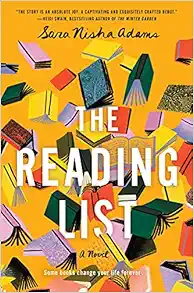
Waiting for the Biblioburro=Esperando el Biblioburro - by Monica Brown


Ana lives in rural Colombia and owns one book. She loves to read, but her village has no teacher, so she has no access to more books. One day she hears the clip-clop of hooves and discovers a librarian coming with two donkeys who are carrying books! The librarian tells her she can borrow some books and he will come back in a few weeks so she can return them and borrow others. Ana not only loves to read stories, she likes to tell them, too, so she writes her own book. A book about the biblioburros!

This is the second book I've read about the Biblioburro, but the first that is written in parallel English and Spanish text, which means this one is my favorite.

Thursday, May 17, 2012

Why Be Happy When You Could be Normal - by Jeanette Winterson


"The trouble with a book is that you never know what's in it until it's too late" proclaimed Jeanette Winterson's Pentecostal mother (identified in this memoir as Mrs W), who kept only six books in the house (one of which was the Bible, and two others were "commentaries on the Bible"). While Mrs W finds her salvation in her faith, the younger Winterson ultimately finds it in the Accrington Public Library, where, ironically, her mother sends her each week to pick up her "stash of murder mysteries". It was in the library that Winterson discovered Jane Austen, Gertrude Stein, and T.S. Elliott. Throughout the book Winterson discusses classic works of literature, and how reading, and writing, changed her life. She talks of books the same way one might speak of a lover, using words such as "pain", "joy" and "betrayal", but also as safety and comfort
Books, for me, are a home. Books don't make a home - they are one, in the sense that just as you do with a door, you open a book, and you go inside. Inside there is a different kind of time and a different kind of space.
There is warmth there too - a hearth. I sit down with a book and I am warm.
Often her memories go back to the Accrington Public Library, with its Dewey Decimal System, and cubicles for "individual study" - right next to the large print book section - to which Winterson observes "Mrs W was nothing if not old-fashioned. She knew that masturbation made you blind....Presumably one thing led to another."

Winterson  speaks well of librarians saying they are "reliable" and even mentions thinking about becoming one herself, as the best, of the few choices, she sees for a young woman from  Accrington where "women couldn't be anything except wives or teachers or hairdressers or secretaries or do shop work....[or]librarians...[she] thought of doing that" but decided she would rather write her own books.

Books, libraries, bookstores, reading, and writing all play important roles in Winterson's life. She is quite philosophical about the way she was raised - book burning and all - as she recognizes that without that denial she might never have learned to appreciate reading, and the life of the mind, it helped her to develop.

Friday, May 4, 2012

Dead End in Norvelt - by Jack Gantos


Although this Newbery-Award-Winning book tells a story of a boy with a true love for books and reading (and using books as building blocks for igloos!) it appears that twelve-year old Jack Gantos did not visit a library during the summer of 1962. It may have been because he was grounded, but more likely it is that there is no public library in Norvelt, Pennsylvania. An internet search of libraries serving the area leads me to believe that  Norvelt residents have to travel to Mt. Pleasant to use the public library.


View Larger Map
Balloons show Public Libraries near Norvelt.

Although grounded for most of the summer, Jack is given occasional reprieve to assist his neighbor, Miss Volker, with writing the obituaries of original Norvelt residents, who drop dead that summer at an alarming rate. In dictating one of these obituaries, Miss Volker uses a library metaphor to demonstrate the importance of preserving information:

"...every living soul is a book of their own history, which sits on the ever-growing shelf in the library of human memories. Sadly, we don't know the history of every person who ever lived....But here in Norvelt we had one of those librarians who collected the tiniest books of human history. Mrs. Hambsy...was the first postmistress of Norvelt and she saved all the lost letters, those scraps of history that ended up as undeliverable. But they were not unwanted. Mrs.Hamsby carefully pinned each envelope to the wall, so that the rooms of her house were lined from floor to ceiling, letter upon letter....You were always welcome to unpin any envelope and read the orphaned letter, as if you were browsing a library of abandoned histories."

Miss Volker is rightly concerned that with Mrs. Hamsby's death, this archive will be destroyed. Library archivists know that treasures (e.g. rare photographs; signatures of famous people) are sometimes found lurking in a forgotten place, as seen in this New York Times story about a recent discovery at the Brown University archives. And the power of  letters in shaping and telling history is evident in this  New York Times story about the release of Osama Bin Laden's personal letters.

Monday, April 30, 2012

Three Books by Pat Mora in Honor of El día de los niños/El día de los libros


Today is Children's (Book) Day. Sponsored each year on April 30 by the Association for Library Service to Children (ALSC, a division of the American Library Association) Children's Day ("Día") celebrates reading and multicultural children's literature. Although many other countries have been celebrating Children's Day since as early as 1925, it was not recognized in the United States until the 1990s, and even so, is not celebrated widely outside of libraries.

Children's author, Pat Mora, originally proposed linking Children's Day with literacy. Her brightly illustrated book Book Fiesta celebrates children, books, imagination, and reading, in two languages (English and Spanish). Children in the work read to each other in cars, planes, trains and "la biblioteca también" (the library too). This work was the 2010 the winner of the Pura Belpre Award.

Tomás  y la señora de la biblioteca (Tomas and the Library Lady) tells the true story of Tomas Rivera. Rivera grew up in a family of migrant workers and loved listening to his grandfather tell stories. When he discovers the public library his love for books and reading is fostered by the librarian. Eventually earning his Ph.D., Rivera became a leader in education. This is a truly an inspirational story about how librarians can change lives.

Sor Juana Ines was a mystic, nun, and poet who lived in Mexico during the 17th century. In Una biblioteca para Juana: el mundo de Sor Juana Inés, (A Library for Juana: the world of Sor Juana Ines) we learn about young Juana who was so fascinated with books and reading from a very young age, that she followed her sister to school before she was old enough, and told her mother that she wanted to attend the University in Mexico City when she grew up because "alli hay una universidad muy grande que tiene una biblioteca con miles de libros" (there is a great big university there that has a library with thousands of books). Unable to attend the university because only men could study there, she became the personal assistant of the viceroy where she had access to the palace library. Recognizing that becoming a nun was the only way for a woman of her time to continue studying she entered the convent where she built "una de las mas grandes bibliotecas de las Americas" (one of the largest libraries in the Americas). This book is a testament to the love of lifelong  learning.

Monday, March 19, 2012

Walden - by Henry David Thoreau

I think the biggest obstacle I have to becoming a hermit (my long-time dream) is that I would miss people. I have suggested to my husband that we build a log cabin and go be hermits together (my friends point out that such a dwelling is more properly called a "love shack", rather than hermitage) but he likes being a New England professor too much to give it up. We have, however, visited Walden pond a number of times since we moved to Massachusetts and I often ponder Thoreau's deliberate residence there, although I had never read his book about it. One of the most interesting things I  learned from  this work is that my fellow Unitarian Universalist actually had plenty of company, and not just of the wildlife / varmit type either. Turns out folks frequently stopped by, and he made his own way in to town on occasion. It seems he found the perfect way to be a hermit, without being lonely.

Walden is divided into 18 thematic chapters. The first two "Economy" and "Where I Lived, and What I Lived for" were rather long, but the rest were shorter essays. One of these is on "Reading" and the importance lifelong learning and reading books, but not just any books, not the "Little Reading" of "several volumes in [the] Circulating Library" that will not help to expand our minds, but rather will keep us as children by keeping "our reading, our conversation, and thinking...all on a very low level, worthy only of pygmies and manikins." As a society we should "not stop short at a pedagogue, a parson, a sexton, a parish library, and three selectman because our pilgrim forefathers got through a cold winter once on a bleak rock with these." Thoreau advocates for villages in New England to "act collectively" to "hire all the wise men in the world to come and teach her (New England)."  Instead of noblemen, let us have noble villages of men."

Thoreau eloquently speaks to both my passions - of reading, and of learning for its own sake. I am afraid that the educational assessment craze will cause colleges and universities to become less effective at teaching students to learn as they (the universities) are forced, through political motives, to move toward "measuring outcomes".

My daugher, Paloma, in deep thought at Walden Pond - Halloween 1999


Tuesday, January 31, 2012

The Fantastic Flying Books of Mr. Morris Lessmore

Thanks to my collegue Chris Brown for bringging this lovely tribute to books, and book lovers to my attention. Plus, we can tell, even without any spoken words, that the protagonist is clearly bilingual!


The Fantastic Flying Books of Mr. Morris Lessmore from Moonbot Studios on Vimeo.
en

Thursday, July 21, 2011

The Right to Read Upheld

Today's Baltimore Sun includes this editorial about the right to free speech, and the right to read in prison libraries.