Wednesday, October 25, 2017

Theft by Finding: Diaries 1977-2002 - by David Sedaris


I went to my fourth David Sedaris event last Thursday in New Bedford (MA). The very next day James and I wrapped up our reading his latest book together. In the introduction to this work of diary entries he makes clear that this is only a "small fraction" of all that actually appears in the 156 volumes of his diaries. And that a different edit "from the same source material could make [him] appear nothing but evil, selfish, generous, or even...sensitive". What I saw, as a fan who has been following him since I first heard him on NPR in the early 1990s, was a person who was all these things, as well as a person who is a regular, if not frequent, user of libraries.

His introduction points out that the "early years, 1977-1983, were the bleakest" and "fueled by meth". I think it is also significant, then, that he mentions going to the library only infrequently during this time period. The word "library" appears three times during the first five years of entries, and only two of those were to discuss his own visits to the library, the other was as part of an overheard conversation at the IHOP - a place Sedaris appears to have frequented more often than the library - between two blind men one of whom talked about "the library for the blind and some good books he'd listened to lately." There is a definite change in the tone of the entries in 1984 when he moves to Chicago, and, I would add, a slight uptick in his frequency of discussing his use of the library, or reading of a library book.

In one of his first entries after moving to New York in 1990 he rambles about working out his "coffee situation". He is not crazy about either the IHOP which while they serve awful coffee (no surprise), they do give customers a whole pot, nor the Bagel Buffet which serves coffee in paper cups (blech) for .60 each. He wraps all this up with this truth: "Now I need a library card." There is no mention at all of the library in any of his 1991 entries, but he makes up for it by making two references (pun intended) in 1992 - one to lament that the library is closed on Lincoln's birthday. After this there is a concerning drop in the number of times the author uses the word library. I can only hope that this was simply an editing oversight, and that a different edit of this diaries would be in fact teeming discussions of all the great library books the author read, and how helpful and friendly the librarians were, but this edit has only mentions the word library twice after 1994 - one in 1998 (Paris) which was only to relate a story told to him about a friend of a friend, who, when he starting flipping through a magazine at a newsstand was told by the proprietor that they were not a "lending library".

I found the final mention of the word "library" in the last entry for 2001. It was poignant in its wistfulness. While contemplating what to wish for as he blew out the candles on his birthday cake Sedaris laments
When told to make a wish, I settled back in my chair, realizing I should have given it some prior thought. One option was an apartment in London, but in the end I wished for the opposite: the absence of things. Over the past few years I've fallen deeper into the luxury pit. I used to get pleasure from sitting at the pancake house with a new library book, but now I mainly buy things and work crossword puzzles.
Here's hoping that we see a resurgence of library use in the second volume.

If you haven't yet discovered David Sedaris, you really are missing some great humor. Find out more at http://www.davidsedarisbooks.com/

Tuesday, October 24, 2017

What's New About Fake News

Last fall I was on sabbatical. My intention during my time of reflection and scholarship was to research how to teach students to evaluate web resources. However, as the 2016 election season heated up I became concerned, as did many, with the proliferation of fake news and falsehoods being reported (both intentionally and unintentionally) in news sources and social media. And so my research was refocused. Ultimately what I concluded was that people need to read more, and read deeply if they are to become informed, critical thinkers, especially where the news in concerned.

I was excited to learn that the MassHumanities Fall Forum this year would bring together a panel of top-notch journalists to discuss the very topic I have been studying and presenting about during the past year. The panel included documentary filmmaker Charles Ferguson; Managing Editor of The Onion Marne Shure; and Claire Wardle, Strategy and Research Director of First Draft. Moderating this impressive group was Pulitzer Prizer winner Sacha Pfeiffer.

Ms. Wardle opened the discussion by admonishing all (panelists and audience members alike) to abolish the use of the term "fake news". She instead identified three different types of information that have been given this moniker:

Misinformation has no bad intent - perhaps something that is mistakenly reported by news media. Once the news source recognizes the mistake they rectify or clarify with the correct information.

Disinformation is deliberate, intentional spreading of news that is not true.

Malinformation is news that while true, or based in fact should not be disseminated. Examples are leaks, and hate speech.

Ms. Shure followed with commentary about satire, which is assuredly not the same as "fake news". Satire intends to train, not trick. Satire is used to help us see a larger truth through the use of humor. She specifically stated that when one of the stories from The Onion starts going viral as a "true" story it means that the writers have failed at their job. I especially liked what she said about Facebook's labeling of "satire" for stories such as those from The Onion. Labeling removes the burden of the "mental labor" required on the part of readers to identify satire themselves. This is not a good thing. Labeling essentially takes away the reader's agency.

I learned some new terms from the panel that helped me to think more deeply about how news is consumed and disseminated:

  • Frankenbiting - splicing together of sound bites to make it appear that a person said something they didn't, even though all the words are theirs.
  • Strategic Silence - a move on the part of the news media not to mention a fake news story, even with the intention of debunking it. Even when they report it as false, it helps the story to spread.
  • Emotional Skepticism - Something that we should all employ before hitting the "share" button (or posting a comment). That which tells us to actually read a news story, and then wait a few minutes before sharing it, rather than simply reading the headline and allowing ourselves to become indignant.
  • Arms race on technology - as new technologies are applied to programs in order to fight malicious information, we can be sure something else will be created in order to combat those. When we allow technology to make decisions for us how long is it before the technology is hijaked? Again, this conclusion mirrors one that I came to myself when I did some research for a presentation I gave at the Tafila Technical University in Jordon this summer. Technology is a tool, but it is not the end answer, (there is never just one answer)! Fresh concerns over consumers' agency arise. Most of us (myself included) do not understand the algorithms being used to tell us what to read. When we let other people, and machines, decide what we see we give up control. 

Once upon a time we all consumed the same news. Everyone in the neighborhood got the same paper, and watched the news from the same three networks on television. Now, each person can choose what they see, and what they don't see. This makes for a challenging way to run a democracy.

A special thanks to David Leonard, President of the Boston Public Library for the "shout out" to librarians at the end of the program!

More information about the forum and the panelists can be found here.  My husband's insights on the program can be found on his Environmental Geography blog.

Tuesday, September 26, 2017

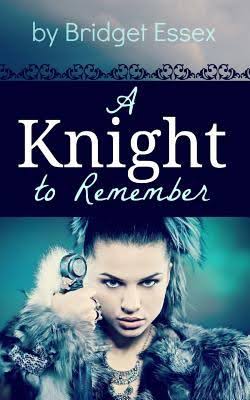
A Knight to Remember - by Bridget Essex


I don't always read romances, but when I do they are about librarians.

One of the tasks in the Book Riot Read Harder 2017 Challenge is to read an LBGTQ+ romance novel. Since I have previously read, and blogged about, a same sex romance featuring men (see my post on Adrian's Librarian), I decided that this year's read-a-romance-month book should be about women.

Librarian Holly doesn't have much in common with her girlfriend Nicole. Nicole isn't crazy about Renaissance Festivals, or Holly's dog, or even (gasp) reading! So when sexy Virago appears in all her knightly-ness to save the world from a supernatural beast it isn't a hard sell for Holly to give up Nicole to follow her fantasy woman.

The book didn't have a whole lot of the straight dope on Holly's library work, except for one section in which Holly takes Virago to work with her. When Holly explains that she works in a library that's "full of books" Virago explains that she has libraries in her world, too. And she loves them.

Holly goes about her day doing library things such as helping her friend Alice with story time. Alice has the sexy librarian thing going with "her long blonde hair...piled on top of her head in a sweeping curve, and her cat glasses twinkl[ing] from a beaded chain around her neck...wearing skinny jeans and a vanilla blouse". Virago meanwhile settles into reading in the castle-like library (with "three brick towers and turrets...and stained glass windows colorfully marching along the side of the building"). The description of Virago sitting on the floor reading is quite sensual (I found it even more enticing than the rather gosh-darn explicit sex scene). After being admonished to be quiet ("with the universal gesture of 'sh'") by fellow librarian Alice, Holly finds her knight
seated on the floor, her back against a shelf of books, her legs folded in front of her gracefully, a book propped up on her lap, and her elbows propped on her knees as she carefully curves her body over the book, utterly intent on devouring it. Her brows are furrowed in concentration, and she traces a few lines from the page with a long finger, entranced by what she's reading.
My heart skips a beat as I watch her read that book. She's so obviously engrossed and delighted by what she's finding between the covers...She seems to be devouring information...
It's no wonder that Holly's best friend Carly reminds her that "librarians are super desirable - they're hot! I mean, they make porn about librarians".

As a librarian herself, Holly understands the importance of super-hero librarians in the lives of others, and remembers the one who inspired her as a geeky gay kid in high school - the one who introduced her to her favorite book The Knight and the Rose. Miss T knew that "everyone need[ed] a heroine like them" and suggests a book about a girl named Miranda who becomes a knight, and falls in love with a princess. 

The book is a "comfort read" for Holly - the one she turns to when she's had a bad day. And so, when Holly's lover leaves her at the Renaissance Faire, Holly eschews her "to be read" pile and instead her "fingers grasp a familiar and well-worn volume" as she remembers the first time she read it, after a good cry in her high school bathroom.

A good librarian book with two different kinds of libraries A fun read overall.

Friday, August 25, 2017

The Mermaid Chair - by Sue Monk Kidd


Set in a fictitious place called Egret Island off the coast of South Carolina, Kidd's book tells the story of Jessie, who falls in love with a monk when she travels to visit her mother, Nelle, a cook for the island's religious brotherhood. Estranged from her mother for the previous five years Jessie is called back to her childhood home by a family friend, Kat, who gives Jessie the disturbing news that her mother has purposefully cut off one of her fingers.

Father Dominick is the librarian in this work. It is through him that Jessie's paramour (Whit) learns that Nelle had taken two books out of the library before chopping off her digit. Legenda Aurea: Readings on the Saints contained the story of St. Eudoria a twelfth-century prostitute who cut off her finger and planted it in a wheat field. Indigenous Religious Traditions relates the story of Sedna, an Inuit sea goddess whose fingers are severed by her father as she tries to hold onto a boat. All ten of her fingers become sea creatures. 

I was most intrigued by Sedna's story. When Paloma was young we often read the picture book Song of Sedna together. The version we had was a bit scary, but not as gruesome as the one depicted in Kidd's book. The story of St. Eudoria, by the way, was an invention of the author.

Well, I guess this just goes to show that books are dangerous. If Nelle had not found those books she probably would still have all of her appendages. The idea that reading can be harmful is reinforced by The Reverend Father, Dom Anthony, who forbids Whit (aka Brother Thomas) from reading anything by the Protestant theologian Dietrich Bonhoeffer when it was discovered the Bonhoeffer's writings were feeding Thomas' doubts.

The library is also the site of one clandestine meeting between the forbidden lovers. I don't think that Kidd intended to write a book with the purpose of demonstrating the dangers lurking in libraries, but when reading only the passages that highlight books, the message is clear.

Wednesday, August 9, 2017

On Pluto: Inside the Mind of Alzheimer's - by Greg O'Brien


O'Brien's book is Bridgewater's One Book One Community Read for fall 2017. The author - a father, journalist, and Alzheimer's patient - tells his story of living with the disease and the pain of watching himself lose control of basic skills. Diagnosed at age 59 with early-onset Alzheimer's his frustrations were compounded by the fact that he was still caring for his aging parents, his mother, likewise, suffering from dementia.

One one occasion, while O'Brien's father was recovering from surgery in a rehabilitation facility, his mother, who could not safely stay home alone, was also cared for there
the devoted staff took her by the hand to the library filled with four walls of books, they asked her what she wanted to read...she scanned the shelves for 15 minutes and then pulled out two books.
'I think I'll read these,' she finally said, not grasping title or author.
The books she chose were Secrets in the Sand and Nature on Cape Cod and the Islands - two books of mine...
'They just felt comfortable in her hands', the nurse told me later.
A true testimony to the power of books.


Thursday, August 3, 2017

Splendora - by Edward Swift


Originally published in 1978, Swift's tale of about the new librarian (Miss Jessie Gatewood) in a small east Texas town features an ensemble cast of quirky characters. When the enigmatic Miss Jessie arrives in Splendora from New Orleans to set up the town's new bookmobile  (really just "a battered-up school bus with shelves") women begin to imitate her Victorian style of dress and vie to become her new best friend. Miss Jessie has eyes for Brother Anthony Leggett, assistant pastor of the First Baptist Church. He is likewise smitten with the new librarian. Each, however, has a secret that they believe may keep them apart.

Beyond her wearing her hair in a loosely twisted bun, Miss Jessie goes all out in dressing the part of a librarian.
That morning she had dressed beyond her thirty-three years in order to meet the town's and the committee's approval. She was well aware that her hemline fell halfway below her knees and a little farther still for good measure. She was secure in her dress of white eyelet over mint green cut with leg-o'-mutton sleeves, a high neckline, and trimmed with white silk ribbons...Her friend Magnolia had designed the dress and had carefully chosen the accessories: white silk, sweet-scented gloves, flowers at her throat, a pocket watch on a hold chain around her neck, and a white sash tied about her waist giving to her dress a slightly blousy effect, so right for her role...from her elbow dangled a white linen bag...and on her wrist hung a beaded reticule inside which she carried a white lace handkerchief, her cosmetics, and a few cigarettes she had no intention of smoking in public. Her lace-up shoes with one-inch heels have her the feeling a a matron, and her gold wire-rimmed glasses and Gibson-girl hair were just the right touches...
This costume is important, especially considering her credentials are fabricated. She has no library degree or training, Nevertheless, she set to work
converting the school bus into a library on wheels. She designed shelves of various sizes and asked the Ag boys to construct them. She sewed gingham curtains with lace trim for all the windows and found space in the back for a small table and three chairs. Then she began stocking the shelves with every title available and ordered more with funds the county provided.
Miss Jessie, furthermore, makes a map of the county "and a list of all the communities and crossroads to be included on [her] stops" and types "hundreds of file cards" - these of course would be for the card catalog, which libraries in 1978 would most certainly still have been using.

I was most intrigued by Miss Jessie's concern over some donated works, many of which "she lamented, are not suitable as they contain nothing that will advance the mind." This kind of thinking among librarians - that we should be gatekeepers of information, rather than connecting people with whatever information they want - was more common in the mid 1800s  (according to Wayne Wiegand's A Part of Our Lives: A People's History of the American Public Library) than it is today, but certainly fit perfectly with Miss Jessie's Victorian ideals.

The rather Victorian courtship between the assistant pastor and the librarian was, of course, hot gossip for the town.
Chester Galloway saw them in his pasture and said that he did not think it looked too good for the assistant pastor and the town librarian to be entertaining themselves on the ground. His main concern was what the young people would think. But his wife, Verna, said that it looked perfectly all right as long as they were carrying a Bible. 
A quick check through spy glasses (and what's wrong with that?!) confirmed that the two were indeed using a Bible to hold down one corner of the blanket.

Their relationship takes some rather unexpected twists, especially when the town conspires to make it the focus of the annual Crepe Myrtle Pageant. Ultimately, the two find their own way, and more importantly, the town library finds a permanent home on the top floor of the newly renovated courthouse.

Wednesday, August 2, 2017

Orange is the New Black - by Piper Kerman


I've been intending to read Kerman's memoir ever since the debut of the Netflix series of the same name in premiered in 2013. After recently watching the fifth season, I finally got over to my public library and checked the book out. Much less edgy than the television show, Kerman's book is, nevertheless, a quick and fascinating read.

While the television show's characters Poussey (Samira Wiley) and Taystee (Danielle Brooks) might have one believe that the prison library is a hub of activity, it was in fact barely mentioned in the book. Most of Kerman's reading materials were sent to her by friends and family, so much so that she ended up with her own personal library, which she was glad to share with others. When she left the federal penitentiary in Danbury, Connecticut she donated all of her books to the prison library. She knows her books are being used when a year after her release she receives a letter from Danbury
Formal and stilted, it was from Rosemarie, and folded into it were two photographs of my grandmother. My cousin had sent them to me in prison...Rosemarie wrote that she hoped I was doing well on the outs, and that she had found these photos in a book in the library and recognized who it was. 
Photographs are among the more innocuous things found in returned library books. For some real tales from the stacks see this post from BookRiot, and this one from BuzzFeed.

Another fellow inmate, Levy, upon being released was interviewed by the Hartford Courant newspaper and described her six-month sentence as a "holiday" with a "wide range of classes" as well as "two libraries with a wide array of books and magazines, including Town and Country and People". All of this, of course was a surprise to her fellow inmates who listened to her complain and cry every day of her incarceration.

In the book's Afterword Kerman (now serving on the board of the Women's Prison Association) points out that the United States has the world's biggest prison population with 25% of the wold's prisoners, but only 5% of the world's population. Low level offenders make up a huge proportion of these inmates. She further explains
Most of the women I know from prison have lived lives that were missing opportunities many of us take for granted. It sometimes seems that we have built revolving doors between our poorest communities and correctional facilities, and created perverse financial incentives to keep those prisons full, at taxpayers' expense. America has invested heavily in prison, while the public institutions that actually prevent crime and strengthen communities - schools, hospitals, libraries, museums, community centers - go without.
Sing it, Sister!