Wednesday, January 10, 2024

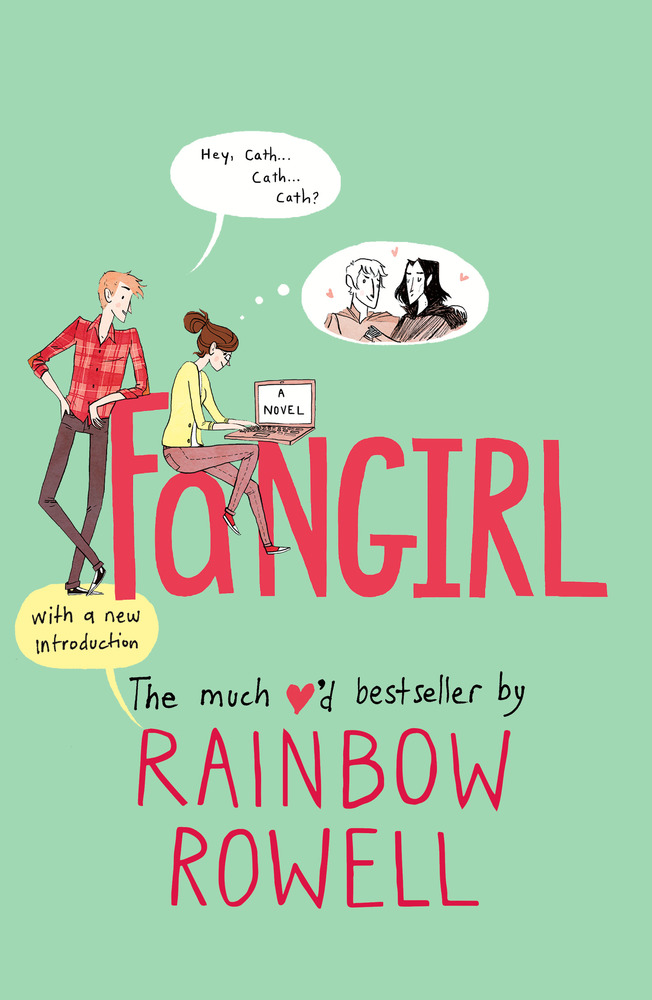
Fangirl - by Rainbow Rowell


Cath and her twin sister Wren are starting college at the University of Nebraska - Lincoln, but in different dorms. Cath is less than thrilled about this arrangement and is more than a bit intimidated by her roommate Reagan. At least she still has her fanfiction to disappear into. Cath and Wren used to write Simon Snow fanfiction together, but Wren lost interest and Cath now writes on her own. 

After getting special permission to take a 300-level fiction writing class Cath meets Nick and the two become writing partners. Nick works at Love Library "(That was the actual name; thank you for your donation, Mayor Don Lathrop Love)" shelving books, although he clearly doesn't take the job seriously enough. He left a cart full of books at the end of his shift because he was doing his homework instead of shelving. When Cath points this out he assures her that "the morning girl can do it. It'll remind her that she's alive". This turns out to be a bit of foreshadowing as we discover that Nick is all to happy to take credit for work that women do.

Cath mostly holds her own in the upper-level writing class, but is taken aback by an accusation of plagiarism when she uses some of her fan fiction as a basis for one of the writing assignments. Her professor is understanding, but will not change the failing grade, or allow Cath to rewrite the assignment. I disagree that what Cath turned in was plagiarized. If she had turned in the same story and used different character names her professor would probably never have realized. Also, I turned in a similar assignment myself as a graduate student (re-wrote a scene from a novel from a different character's point of view). My professor loved it. I got an A.

Cath spends a lot of time in the library, and her full nerd-dom is clear when we discover that she has a bit of a fantasy about "being trapped in a library overnight." She even writes a Simon Snow scene that takes place between the stacks.

Cath finds love (or something like it) with Levi. One of their early bonding experiences involves Cath reading The Outsiders aloud to Levi who has trouble with reading to himself. And really who doesn't love The Outsiders? I've said it before and I'll say it again: reading aloud with another person is never a bad idea. You will always have something to talk about.

Friday, November 17, 2023

Once Upon a Prime - by Sarah Hart


Everything is connected to everything else. All the time. Every day.

This is my mantra. It frustrates me no end that University Administration thinks the humanities don't matter, and that they are somehow disconnected from the programs that teach "real job skills". Hart's book demonstrates "the wondrous connections between mathematics and literature". And it also demonstrates that smart people will see connections between things that might not be evident to others. It was a fascinating read which explained how math is used in some classic works including Moby Dick; Gulliver's Travels; Sherlock Holmes; and  Alice's Adventure in Wonderland. As well we find out why the numbers 3, 4, 7, and 12 figure (pun intended) so prominently in fairy tales. 

Interestingly, in this book about books, the first time a library is mentioned is very near the end. Hart describes the library in Jorge Luis Borges' short story "The Library of Babel". She admonishes readers to "pick up a book of his short stories without delay if you've never read him". And here I must make a confession. I have read "The Library of Babel" (in the original Spanish) with the specific intention of blogging about it here. I love Borges, and he was a librarian himself. The story though, so overwhelmed me that I didn't know where to start to write about it. So, with gratitude to Sarah Hart I use her words here to describe it

His story "The Library of Babel" features a mathematical oxymoron - a finite number of things that somehow have to fill a space that extends in all directions. The story is a first-person account of an inhabitant of the library - which is the universe. This "librarian" spends his life wandering the hexagonal rooms of the library, all of which are identically laid out, reading the books and trying to understand the meaning of the cosmos...

The library is an astonishing thing, says the librarian: it contains all possible books. Every book that has been written, that is being written now, that will one day be written, that will never be written, that has been started and abandoned, that has been banned, that has been lauded, that has never been imagined exists in the Library.

I highly recommend Hart's book (as well as Borge's short stories). And I want to believe that I was the first person to cite Hart's book (which was just published earlier this year). Read my article Utopia in the Stacks to see the citation.

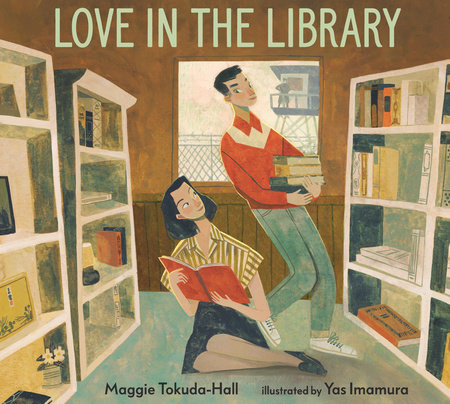
Love in the Library - by Maggie Tokuda-Hall


In her Author's Note Tokuda-Hall tells the readers that this is the story of her maternal grandparents who met in Minidoka, a Japanese incarceration camp in Idaho. Tama (her grandmother) was the camp librarian, although "she didn't know how to be a librarian...In the camps people did the jobs that needed doing." Her grandmother had taken the job because "she liked books". George (Tokuda-Hall's grandfather) came every day to check out books. Tama questioned whether he could actually be reading all the long books he checked out. No, he wasn't reading them all. He was "only human". And the realization that she was the real reason he came every day dawned on her. Their love grew amidst their  whispers. 

George's "voice was so big it barely fit in the library..." Tama "held up her finger to remind him of the rules. They were in a library, after all."  

The Author's note also connects the story of Minidoka to current events. 

As much as I would hope this would be a story of a distant past, it is not. It's very much the story of America here and now. The racism the put my grandparents into Minidoka is the same hate that keeps children in cages on our border. It's the myth of white supremacy that brought slavery to our past and allows the police to murder Black people in our present. It's the same fear that brings Muslim bans. It's the same contempt that creates voter suppression, medical apartheid, and food deserts. The same cruelty that carved reservations out of stolen, sovereign land, that paved the Trail of Tears. Hate is not a virus; it is an American tradition.

Tokuda-Hall's author's note sparked controversy when Scholastic asked her to edit it in order to include the work in Scholastic's diversity-focused Rising Voices collection earlier this year. Tokuda-Hall refused and Scholastic ultimately issued an apology. More information about the request, Tokuda-Hall's response, and a link to the apology can be found in this article from Publisher's Weekly  

Wednesday, November 1, 2023

The Wishing Game - by Meg Shaffer


The description I read of this book before I listened to it was that it was like Willy Wonka and the Chocolate Factory, but with books. That was pretty accurate. 

A gay hermit (Jack Masterson) who writes the wildly popular Clock Island series of children's books announces that he is writing another book after a very long hiatus. Furthermore, he announces that he is running a contest in which the contestants will be invited to his house on the real Clock Island and the winner will receive the only copy of the new book in existence to do with what they will. Lucy Hart is one of the lucky few invited to compete for the book. Her fervent wish is that she will be able to sell the book so she will have enough money to adopt Christopher, a boy in foster care. She gains more than she could have ever expected by the time the game is over.

My husband and I listened to this on audio. It was a good story, and of course featured some libraries. The story also alludes to the current wave of book banning, with Jack Masterson explaining why he has stayed in the closet. He doesn't want his identity as a gay man to prevent people from purchasing his books (or worse, removing them from library shelves).

This book is for everyone who is still waiting for their Hogwart's letter, or searching in the back of their closet for an opening to another world. 

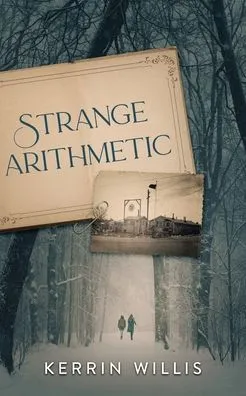
Strange Arithmetic - by Kerrin Willis


In 1945 Maggie O'Callaghan discovers she's pregnant. The father of the baby is an Italian POW being held at Camp Myles Standish in Taunton, Massachusetts. The complications of this situation are many and the resolution is bad all around.

In 2016 Niahm Reilly really wants to be pregnant. The situation is complicated and the resolution turns out to be better than expected.

My husband and I heard this author speak earlier this year at An Unlikely Story Bookstore. We purchased both of the authors' books intending to read them together after we finished Margaret Atwood's recent book of Essays Old Babes in the Wood (which we had just started). Then we learned that Willis' book was our town's One Book One Community selection for this fall, so we moved it up to the top of the pile. We had not known that there was a POW camp nearby. We learned quite a bit of local history from reading this.

Niahm has a special place in her heart for libraries-her deceased mother was a librarian who'd bring her daughter to work with her. However, I cringed at the description of Niahm curled up under her mother's desk by her her "high-heeled feet". WTF?! What self-respecting librarian wears anything other than sensible shoes.


Tuesday, October 17, 2023

What I did over Banned Books Week


October 1-7 was Banned Books Week. In addition to reading a book about an attempted book banning (Answers in the Pages) I was busy educating my community about recent book banning efforts, as well as historical book bans. On Tuesday I began teaching a six-week session at Bridgewater State University's Senior College called Off the Shelves: A History of Book Banning. On Wednesday I led a discussion on campus about banned books with students, faculty, and staff in attendance. The highlight of my week was on Wednesday evening when I participated in a panel discussion at Bridgewater Public Library. The recording is available here:

Bridgewater Book Banning Forum 

It was also covered in the local newspaper.


Answers in the Pages - by David Levithan


Donovan Johnson's mother likes to read the end of books first, so she isn't surprised when she finishes the story. When she reads the last sentence of The Adventurers (the book assigned to her son's fifth grade class) she is sure the two main characters  (Rick and Oliver) are gay. The sentence reads:

At that moment Rick knew just how deeply he loved Oliver, and Oliver knew just how deeply he loved Rick, and the understanding of this moment would lead them to much of the happiness and adventure that came next.

Taking this single sentence out of context she begins calling other parents to express her concern. She takes Donovan's copy from him and issues a formal challenge to the book. All the students in Mr. Howe's class have to turn in their copies while a decision is being made. Fortunately Donovan had the forethought to check out the school library copy so he could finish the story for himself.

Donovan describes the scene in his classroom when the parents come to turn in their students' copies  of the book

There were other parents, like Mr. and Mrs. Fitzhugh (Allison's mom and dad) and Mrs. and Mrs. Pausacker (Kira's moms), who were explaining that they were not turning in their child's copy of the book, because they didn't believe that parents like my mom should have the power to choose what their own children read or didn't read.

Donovan uses the school library computer to send an email to the author of the book in the hope that the question of Rick and Oliver's sexuality will be settled. Donovan also lets the author know that the book would be on the agenda of an upcoming school board meeting.

There are three parallel stories being told in the book. In addition to Donovan's, we see some of Rick and Oliver's story in The Adventurers, and finally we see Roberto and Gideon, two fifth graders who discover their romantic attraction to each other without concern about what others are fighting about. 

The question of Rick and Oliver's romantic proclivities is never settled. And we are left with the question - Does it even really matter if Rick and Oliver are gay?